Financing Queenship with Michele Seah




The Medieval Podcast uses affiliate links
Episode 339
The English queens of the fifteenth century have had a serious popularity boost in the last twenty years, thanks to novels and TV series showing the glamour and drama of their lives. Queenship could have serious advantages – fame and fortune included. But eventually, you do have to pay the piper. This week, Danièle speaks with Michele Seah about where these powerful ladies got their cash, what they spent it on, and why it’s not that easy being queen.
-
Danièle Cybulskie:
Hi, everyone, and welcome to episode 339 of The Medieval Podcast. I’m your host, Danièle Cybulskie.
The English queens of the fifteenth century have had a serious popularity boost in the last twenty years, thanks to novels and TV series showing the glamour and drama of their lives. Queenship could have serious advantages – fame and fortune included. But eventually, you do have to pay the piper.
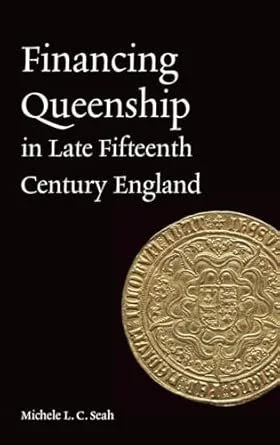
This week, I spoke with Dr. Michele Seah about what it took to pay the bills as queen. Michele is in the history department of the University of Newcastle, Australia, and the author of many articles on money, land, and queenship. Her new book is Financing Queenship in Late Fifteenth Century England. Our conversation on where these powerful ladies got their cash, what they spent it on, and why it’s not that easy being queen is coming up right after this.
Danièle Cybulskie:
Well, welcome, Michelle, it is so nice to meet you, and I've enjoyed our chat already. Thank you for being on the podcast. Welcome to the podcast.
Michele Seah:
Thank you very much. It's a pleasure to be here.
Danièle Cybulskie:
So, we are talking about the late fifteenth century in England. Tell us what's happening in England in the late fifteenth century.
Michele Seah:
You know – your listeners might know all about the Wars of the Roses, so I won't go into a huge amount of detail, but basically about the middle of the fifteenth century, we start to get… Henry VI is the King of England and some of his kinsmen – and they are related – decide to, I suppose, rebel against him might be the right word. So, you get what we call the Lancastrians and the Yorkists, and Henry VI from the throne is from the Lancastrian sort of side of the family, and they basically start to fight. And there are some battles – I don't want to tell you too much about sort of the individual battles – but we basically get a change of dynasty, if you like, on the throne. So, in 1461, Edward IV takes the throne as King of England. And Henry VI is… I suppose deposed might be the right word. So, you've got a total change of leadership, if you like. Different line of the family is now on the throne. And Edward stays on the throne for quite a while. It's about ten years before he's actually briefly sort of driven off of the throne and driven from England. But he comes back only a few months later. He manages to get some help from overseas and he comes back and he takes the throne back. So, the Yorkists – and Edward IV is from the Yorkist side of the family – the Yorkists are now firmly on the throne. And he stays there until about 1483, I think it was, when he dies and his son, who should have taken over as Edward V, is unfortunately sort of pushed to one side. He and his brother become the famous The Princes in the Tower, and everyone thinks that Richard – Richard, their uncle, who has taken the throne as Richard III – everyone thinks that Richard has done away with them. That's not proven yet, but that's, I suppose, the traditional story everyone likes to think. So. You've got a lot of upheaval, a lot of skirmishes, a lot of battles here and there, and it's not a very peaceful time in England during the late fifteenth century.
Danièle Cybulskie:
Right. And all of this ends with the rise of the Tudors, which is going to be important because we are talking about three queens at this time – skipping over one of them, who is the queen of Richard III. But the other ones are going to be important to our story for today. So, let's start with Margaret of Anjou. Who is this woman? Where does she come from? Who is she married to? Tell us about Margaret.
Michele Seah:
Okay, so Margaret's parents – or father, René of Anjou – is really just… He's quite a minor noble. He's got, you know, big ambitions, but he's actually really quite a minor French noble. But he's related to all the families in Europe – or lots of the families in Europe – so he's really quite an important fellow in terms of connections. So, Margaret is, I suppose, offered in marriage to Henry VI as part of a treaty. And I can't remember – again, I can't remember exactly at this point in time what the name of the treaty is, but it goes back a long way. So, England and France have been fighting for a long time, and if anyone is familiar with the Hundred Years War, they'll know what I'm talking about. So, when we get to about 1453, I believe it was – 1453 or 54 that Henry and Margaret got married. The war is still going on, technically, but Henry VI doesn't have a lot of appetite for war. He's not really… He's not really a sort of famous warrior, you know, always wanting to go off and do battle. So, he's keen to find a way to dampen things down, to end the war, to basically bring peace to his country. He's keen to do that. That's not a viewpoint that all of his government are happy with. All of his ministers, all of his nobles – they're not all happy with that. But that's what Henry wants, and essentially that's what Henry gets – at least for the short term. So, Margaret comes over to England, she marries Henry VI and you might think that that's the end of her. But unfortunately, one of the things that happens with Henry is that – and this is one of those things that, you know, people still talk about, like what actually happened to him – he seems to have fallen into some sort of stupor or trance. Doesn't seem to know anyone around, certainly not capable of governing. So, Margaret not quite takes over, but she does start to step up a little bit. And the other thing is that it takes a long time before they have an heir – quite a few years – but once they do, Margaret sort of comes to the fore. Like, you know, she's... She's really… Obviously, she wants to keep her son's rights sort of alive. And I guess this is all happening while the Yorkists are starting to rebel against Henry. Unfortunately, Margaret doesn't have a great reputation. She been called the She-Wolf of France, which is an epithet that's also been applied to Isabella of France – one of the fourteenth-century queens – which is really not quite fair, I think, and I think there'll be plenty of people who will agree with me. Margaret was quite admirable. You know, she stepped up, she did a lot. She fought for her son's rights; she fought for her husband. So, she really did a lot of admirable things, I think.
Danièle Cybulskie:
Yeah, exactly. And I think we need to have sort of this potted history of Margaret to really understand your whole topic, which we will get into as soon as we introduce our main players. So, Margaret of Anjou is the queen. After her husband gets deposed, Edward becomes the king of England and he gets married to an unconventional queen. So, who's this next queen that comes to the throne?
Michele Seah:
Elizabeth Woodville is extremely interesting. I love Elizabeth Woodville. She is probably the first – not probably. I'd say she's the first domestic born queen of England. You'd have to go back a very long way to find a queen of England who's got any sort of roots among the domestic nobles. Elizabeth Woodville is... she's been called a nobody. She was married to a minor knight. He died in the… in one of the battles between the Lancastrians and the Yorkists. So, they were actually a Lancastrian-supporting family. But the story is – and everyone loves this story – the story is that Edward met her, he fell in love with her, you know, he wanted to make her his mistress. She, despite being a widow with two sons, sort of went, no, I'm not going to be your mistress. I'm not going to go to bed with you and be your mistress on the side. Now, this is not an Anne Boleyn kind of thing where you know, she was angling to become queen or anything like that. At least, that's not what the story says. The story says that she defended her virtue and Edward basically just fell in love with her more and more. Decided, look – I have to have this woman. I'm going to marry her instead. So, they had a secret marriage. No one knows exactly when they got married, but they did. So – and only when it became obvious that he wasn't going to be able to contract a marriage with, say, a foreign princess did he sort of bring her out and go, look: I've actually gotten married already secretly and this is my new queen. But she is – by all accounts she was beautiful. Some biographers have called her cold. I can't remember exactly who I was reading who said that she had a cold sort of beauty. She enchanted Edward and that sort of thing. That may or may not be true. You know, the man was his own person after all. I think, you know, if he fell in love with her, why is that an enchantment? So, yes. So that was Elizabeth.
Danièle Cybulskie:
Right. Okay. And our third queen – we need to bring her to the stage – is their daughter Elizabeth of York. Tell us about Elizabeth of York.
Michele Seah:
Okay, so, again, an extremely atypical scenario. Usually when you get – if everything's all hunky dory – there's peace in the land and got the king and queen on the throne, they've got a son and the son, when his father passes away, the son comes to the throne. So, normally you get a king, queen, their son comes to the throne, he marries somebody else. And so, the now dowager queen – her daughter-in-law – would be just someone, you know, totally different and that person would be the next queen. But with Elizabeth Woodville and Elizabeth of York, it's quite different. Now, there is another queen in between them, as you've mentioned. Anne Neville – she's Richard III's wife. But there's not a lot of stuff known about Anne. There aren't even a lot of biographies about… about Anne Neville. I had to leave her out of my work partly for that reason. Now, Elizabeth of York becomes Queen of England because she marries Henry Tudor who wins the throne from Richard III – I believe it's the Battle of Bosworth was the last battle – and he becomes Henry VII and he marries Elizabeth of York. So, that's really quite a different kind of scenario. Now, Elizabeth of York has got a great reputation. She's practically the ideal queen. She and her husband loved each other. They had four children. She was gentle, she was pious, she was devoted to her husband and her children. She really doesn't have any sort of bad reputation at all. Unfortunately not like Elizabeth Woodville and not like Margaret of Anjou either.
Danièle Cybulskie:
Yes. And so, I think it was important to have these little biographies so that we can see what these women are working with, because it's time to get to the actual subject of your book, which is financing queenship. And so, to have an idea of these different queens – what they're up against – I think is important for us to have sort of a foundation here. So, thank-you for walking us through all of that. That is complicated history, and you did great, so thank-you. Okay, so I think the big question that people might be having is: why do you have to finance queenship in the first place? Don't the queens and kings have a joint bank account? Like, what's going on here?
Michele Seah:
It's funny you should say that, because even now, a lot of people still go, well, I didn't know they had their own income, I didn't know they had their own finances. Why do they need their own finances? And I suppose the short answer is, I think it's not so much that they need it – it's partly because that's the way it's developed. And if you look at queens all the way back – queens of England, at least – all the way back in the early Middle Ages – the early Norman queens– there was this sense that, yes, they didn't really need to have their own finances, but they developed, anyway. It's sort of like – again, this is not at all modern day – but think of it as a husband giving his wife an allowance, of some sort. So, the kings start off by giving the queens an allowance, but not necessarily in the form of cash. So, you know, you're not going to have a joint bank account the queen can draw on, or even her own bank account the queen can draw on, but she has to have her own resources. So, the king gives resources to the queen so that she can live as a queen. And it's expensive to live as a queen. You know, you've got your jewels, you've got your clothes. There are things that a queen had to do for which she would need money. So, things like patronage. If she endowed monasteries, if she supported artists, if she wanted to donate arms, you know, to charitable foundations or anything like that, she would need her own resources. So, it basically starts from there. And then one of the other sort of entities, if you like, that a queen needs to spend money on is her own household. Now, a queen does not have a small household. The kings don't have small households. You know, the queens may not have as big households as the kings, but they still have a sizable household. Think of it as one of the very highest echelon-type nobles. You know, they would have households with, say, at least a couple of hundred people serving them, officials, servants, that sort of thing. And they need money for that. They need to run their households. They need to pay the wages. The king's not necessarily going to do that for them. Although you do see – like, if you look at different king and queen couples, if you like – you know, some kings did more of it than others. Others sort of just gave their queens the money and let them take care of it. So, yes, why do they need their own resources? Perhaps it didn't start out as them needing their resources, but it became like that. So, by the time you get to the late fifteenth century, when we're talking about Margaret, and Elizabeth Woodville, and Elizabeth of York, it's the established practice. Queens get their resources and then it's up to them, you know, how they're going to spend it. They have their own officials, they have their own framework, so to speak.
Danièle Cybulskie:
Yes, and I do want to come back around to their households and what they're spending the money on in a minute. But I think it's important to establish, as you do in the book, first, where do they get this money from? Because I think that the sources from which they get their money and their power really tell us about those households, those relationships. Okay, so one of the places that queens get their money from is from the queen's gold. And I'm bringing this up because, as you were saying, this is something that goes back a long way. So, what is the queen's gold?
Michele Seah:
Okay, so the queen's gold is basically… it's an extra fee. Okay. Think of it as: if you are a noble or if you're just someone and you incur some sort of fee that's payable to the king – there's any number of different fees, but, for example, I think… I think one of them was… I believe one of them was a fee for coming into your inheritance. I can't remember the exact technical name for that. There was a name for it. But there's a fee for coming into your inheritance, and if you're a certain level noble, that fee will be payable to the king. Now, that often then triggered an extra payment to the queen. And now why did it come to that? That's one of those things that's debatable. No one's quite sure. All we know is that by the time – especially by the time we get to about the thirteenth, fourteenth century, the queens are really collecting it. It's one of their entitlements, so to speak. The exact amount is usually… It was set in a manuscript. There was a manuscript called the Dialogus. Dialogus de Scakario, I believe that's what it was called. And it set down there that the queen's portion would be ten percent. Okay. And it's usually in the form of gold, so that's why it's called queen's gold. If you're looking at, say, the fourteenth-century queens, there's at least a couple of them for whom queens gold is a really important resource. Like, they earned a lot from it. And I think one of those queens was Anne of Bohemia. I'm not a huge special – you know, specialist in fourteenth-century queens, but I'm pretty sure I remember reading Anne of Bohemia is one of those for whom queens gold is really important. Probably one of the most important resources that she had. But by the time you get to our queens – fifteenth century – it becomes a lot less important. Now why? It's probably at least partly because people didn't want to pay it. You know, they… they – yeah – they… they sort of go, well, yes, I can see I've got to pay this fee to the king. Why on earth do I have to pay an extra ten percent to the queen? It's a bit like a form of tax, if you like, and nobody likes taxes. You know, nobody wants to pay that, those extra bits. So, they always tried to find ways not to pay it. Just flat out refuse to pay it, or sort of pay a portion and then not… you know, not pay the rest. Or sort of go, oh, look, you know, things were a little bit bad this year. You know, the crops weren't so good, or, you know, I'm a little bit short on it. Can I pay you next year instead? And then next year they come back to collect and you say the same thing: oh, it really wasn't that great again this year. So, they always found ways to not pay it. So, by the time you get to Margaret of Anjou, Elizabeth Woodville, Elizabeth of York, queen's gold is something the queens thought they were entitled to, but whether or not they could collect it was a whole different question.
Danièle Cybulskie:
I'm sure people were kicking against this from the beginning, but you can see how people might want to see how far they can push it when it's a French queen – when it's somebody they may not already like – that they might see how much they could get away with. Why would they want to pay this to a French queen who they may not like in the first place? The She-Wolf of France, you know. That might be a good opportunity to try and stop this whole thing from happening, right?
Michele Seah:
Yes, absolutely.
Danièle Cybulskie:
So, because queen's gold is not very reliable at this moment, one of the other ways in which queens are financing their households tends to become more important. And I think that you said in the book that this is the most important way that these queens are financing their lifestyles at this point, and that is through land. So how are these queens coming by land? Because it's actually kind of complicated. If we're talking about women coming into marriage, often they're supposed to come with land, right? Tell us what's happening here.
Michele Seah:
Okay. Basically, what I found was with Margaret and the two Elizabeths, the foundation, if you like, of their resources that they use as queen was what was granted to them as what they call dower. Now, dower is really quite a specific type of grant. And the way the queens got these grants and used them was really quite atypical. Okay. So, if you're thinking of your average fifteenth-century noblewoman, when she got married, she might be granted – she might bring a dowry with her. Okay. Now, the dowry is… it could be in the form of cash or a property or some other sort of… sort of movable-type possession, but it wouldn't be hers. It would be paid by her family to the groom's family, or to the groom himself, and she wouldn't necessarily get any benefit. That's a dowry. Then you've got a dower. And by the fifteenth century, what you find for women in England in general is that if they're widowed – so if their husbands die before them – they're entitled to a traditional dower that's supposed to support them for the rest of their life, unless they remarry. Okay, so that's… that's a dower. It is supposed to support them for the rest of their life unless they remarry. Now, if they remarry, it can go with them – sometimes the dowers went with the women if they remarried – but it would then go back to the original family once they died. Okay. But the point about the dower is that they weren't really supposed to make use of it unless they became widows. Dowers for the queens was different. Okay. And the reason I called them dowers is because that's what they were called in the actual grants. If you look at the manuscripts and you look at the wording, the word “dower” was used. And queens, instead of only being able to use the dowers once they became widows, were actually allowed to use it straight away – or at least by the fifteenth century. Okay, again, this is one of those things that, you know, if you're a scholar – if you're an academic – you can spend a lot of time arguing about this. But our fifteenth-century queens were able to use these resources straight away. Okay. What I found was a difference in the types of dowers they got. So, when you look at Margaret of Anjou, she got this enormous dower. She got something like 10,000 marks, which converted to something like £6,660 or something like that. And that's in, you know, fifteenth-century money, which is still quite a lot of money. A lot of it was in the form of lands – about £2,000 of it. But the rest was in the form of other things. Like, I think she was entitled to the customs – port customs. She was entitled to port customs. She got a certain amount of money from the Duchy of Cornwall revenues. She got a certain amount of money from the Duchy of Lancaster revenues. There were non-landed grants that were supposed to make up to the 10,000 marks. But when you see – when you look at Elizabeth Woodville and Elizabeth of York, the methods for them were totally different. So, their dower grants are almost essentially just lands, right? And they get something called fee farms, which is still landed resources. I won't go into the technicalities of what a fee farm is, but it's essentially still based on land. So, they're all landed resources. So, there's a clear shift from Margaret to Elizabeth Woodville. And I do talk about some of the possible reasons why that happened and, you know, we'll go into that. There's too many reasons. But one of them could be... One of them could be that the finances of the country were really quite bad. Henry VI’s government is known for its financial instability. They had a lot of problems financially. And one of the problems with giving the queen a dowry – oh, sorry, a dower – of 10,000 marks is then you had to make sure she got that 10,000 marks, which wasn't always possible. So, Margaret, for one, had a lot of trouble collecting what she was owed as a dower. And sometimes properties were taken off her – like, for example, the County of Pembroke. All the lands in Pembrokeshire were taken off her by the king to give to somebody else. But because he took them off her – and that meant that she would get less than her 10,000 marks – so you had to make up for it. So, she got other properties and other grants of other lands to make up for it, which is great for her, but it didn't do the government's finances any good. Let's put it that way. Yeah.
Danièle Cybulskie:
Well – and as you mentioned in the book, as well – it didn't necessarily do her relationships any good either. Because if her lands are given away to someone else, then she needs to pick up someone else's and that damages her relationship with that person, which can be really bad, especially if you're a foreign queen and you're just trying to make the rent.
Michele Seah:
Absolutely. One... One of the... There's a… There's a – hmmm. He wasn't a biographer of hers, but he analyzed some of her household accounts. His name was AR Myers. And one of the things he said was that she was really tenacious. She was strict about, you know, pursuing what was owed to her. But I look at it differently. For me, it's – well, that was what she was owed. Why wouldn't she be entitled to pursue debts that were owed to her? I'm not quite sure why I see that she could have done anything differently. You know, if you're owed something, then you want to try and collect it. I mean, that's just common sense. It's just – well, I think it's good business sense as well. You know, she... If she was owed a certain amount, then she should have been able to collect it – or at least try. So, I'm not quite sure why that's sort of a black mark against her. But when you get to Elizabeth Woodville and Elizabeth of York, one of the things that's really different is that they got these lands and they're all, you know, listed in the dower grants, but there aren't any values put against them. There's no total amount. This is what you're going to get as your dower. Even if they had gotten – sorry, this is going segue a little bit, but – the 10,000 marks that Margaret of Anjou got was actually not something that all queens of England had always gotten. The queen before her had gotten that – Richard II's second queen, Isabella of Valois. And she got a dower of 10,000 marks. But with Isabella of Valois, it was a specific condition of the treaty that, you know, her marriage was part of. And instead of treating it as an atypical oh, yeah, it's just that queen, 10,000 marks, the next queen after her – and this is Henry IV, Joan of Navarre; he married Joan of Navarre – she got 10,000 marks as well. They just kind of took it. Oh, yes, the last queen got 10,000 marks. We're going to give this queen 10,000 marks. And that's partly why we get into trouble, because we get down to Margaret of Anjou and she's getting 10,000 marks and really the country's finances are not in good nick. So, yeah, that's part of the problem.
Danièle Cybulskie:
Yes. Well. And then you come to Elizabeth Woodville, who's not only not from another royal family, and she's been married in a secret marriage – secret wedding. And so, this seems like a perfect opportunity to, again, change things up. There's a little bit of a wobble in how things have been done and this might seem a good opportunity to say it's time to reevaluate what we give our queens. Not only because I think, as you're saying, that the realm is financially unstable, politically unstable, but also, she's not a traditional queen, either. And so, maybe this is what they're thinking sort of in the back of their minds. Well, if we are already sort of pausing here to look at what makes a queen, maybe we should pause and see what she's owed as well. And I really think it's so important what you pulled out – that they no longer set a number to what she's owed, and then they don't after that. Once that precedent is set, then it's set for Elizabeth of York, as well.
Michele Seah:
Yeah. If I'm not wrong, it continues into the Tudor consorts as well. I haven't quite looked into this. This is one of those questions that's sort of floating around in my head and I keep thinking I must go and see whether there were actually set amounts for the Tudor consorts, but I don't think there were. So really, that's – to me, that's a major shift in how you're providing for your queens. If you give a bunch of lands, but you don't say, you know, they're meant to amount to, say, £4,000 or whatever, then first of all, you're never going to be pulled up. Like, she's never going to be able to say, oh, look, you know, I lost that bit of property because you took it off me, so now I'm, you know, I'm owed something back because I'm not going to get the total amount that I was owed. Well, she's not going to be able to say that. But it's also better for the king and the queen's reputations, as well. Like, you know, it doesn't look as if the queen's sort of rapacious and, and, you know, sort of greedy and wanting to hold on to everything that she's owed. And the king also starts to look a little bit better. Like, you know, oh, yes, we're not giving anywhere near as much as the last queen got. So, we're doing things better here. You know, we're more frugal. We're more thrifty – all the rest of it. Yeah.
Danièle Cybulskie:
Yes. Yes, I love a good spin. So, before we leave land behind, you made some really important points in the book, as well, about the fact that queens are kind of an exception to a general rule where women might bring property to a marriage. They might be given property sort of nominally in a marriage, but they're not really supposed to be in charge of it when they're married, because that's the husband's job. And yet with queens, you see them taking control as if they are a land owner, even though that land is only sort of given to them for the period of their lifetime. So, can you tell us a little bit about how they administered these lands?
Michele Seah:
Well, what I found was that they had a huge... They had a whole big framework in place. Okay. They had all of the officials. All the documents I looked at, there were a whole bunch of different officials who worked for the queens in managing her lands and her estates. So, one of the most important would have been the steward of the lands. That was a position that was well paid. Also, normally a noble would have been appointed to that position – whether or not it's just in title only, and the work was done by somebody else. Well, you know, that wouldn't be the first time that sort of thing happened. But she had a whole framework in place. So, she had a council, she had receiver general – or at least some of the time she would have had a receiver general – she had a steward of lands, she had stewards – other stewards – below sort of particular regions. She would have receivers for different properties in different regions to collect the money that's owed. If you know anything about sort of manorial studies, you'd know that there are a whole bunch of other more junior official type positions. So, you've got people like the bailiffs, you've got reeves, you've got messors, you've got farmers. And that's not a farmer in sort of the modern sense of the word. That's a farmer – a farmer is a person in that position… They… They sort of work the land, but they're bound to pay what's called a farm. It's a fee. But they pay a farm to the owner. And in the case of the lands owned by the queens, the owner would be the queen, so the farm is paid to her. So, there's all these different positions. So, you see a real hierarchy, it's a proper administrative structure there. The lands are organized into bailiwicks, they're organized into honours or baronies or whatever it is, and there are particular officials in charge. So, she's got all this, this huge framework of people doing the day-to-day operations, running it. She's got the council to sort of, like, look into issues and set policies and things like that, but the queen is the owner. And by no means am I saying that all of them were hugely active landowners, but I think what I did find was that they were probably as active as they needed to be. Put it that way. I think, you know, when you've got all of these officials doing your work for you, all you need to do is really take an overseer role, take an interest in what's happening. Probably you'd have to give some direction to your officials and to your council, but you'd want to be kept informed, you'd want to keep your hand in, so to speak. You know, keep… keep your finger in the pie and sort of be sure you know what's going on. But you don't actually need to worry too hard about it because your officials are on top of it. Yeah.
Danièle Cybulskie:
Yes. Well, especially in such tumultuous time, you want to know what's going on in your lands. Are the people behaving, are they paying? What's going on there?
Michele Seah:
Absolutely.
Danièle Cybulskie:
And one of the things that you noticed that – it was a surprise to me, all things considered, and I don't know if it was a surprise to you, as well, when you were doing the research – that this framework stayed pretty consistent. Even though we were switching entire dynasties at this moment, the framework stayed pretty consistent, so that when a new queen took her place on the throne, the framework stayed there, so that she could sort of just step into the new shoes and just have it – not exactly work the same way, but almost the same way to a certain extent.
Michele Seah:
I don't think I was hugely surprised because again – I suppose if you think about it in more modern terms – like, you know, you're always going to have a bureaucracy. Say you've got an election, and a whole different party comes into government. Well, they're not going to replace everyone who's part of the bureaucratic framework because, well, someone needs to know how to get things done and how to run things. And so, even though the queens changed from one queen to another – Margaret of Anjou is Lancastrian, right? But Elizabeth Woodville was a Yorkist. Once she married Edward iv, she became Yorkist. So, it's a totally different dynasty. So, in some ways, it's not surprising that the bureaucratic framework was kept in place. But it's not something that anyone had said before. No one had really said that about the queens’, you know, bureaucratic framework. You know, did things stay the same? People right at the top might have changed. So, you'd probably get the stewards of the lands changing. You probably get the receivers changing a little bit more. And that's what I did find. Receivers do change – the people occupying those posts. But at bailiff level – you know, at individual land level – the bailiff level, the reeves, the farmers, those people don't necessarily change, especially not if they're drawn from the surrounding areas, especially not their residents, themselves. Why would you necessarily change someone who's doing the job there? Just because, you know, you're a different dynasty from the last one? I think it actually makes sense to have it all in place. And it's really... It's really good for the position. That's one of the things – I kind of thought that's really good for the position of queenship. Like, you know, that's good for queenship, that's good for the position of the queen. It means that it doesn't matter who steps into the role, if you like, things will still chug on. Things will still, you know – life will still go on.
Danièle Cybulskie:
Yes. And it is politically smart, I think, to make it appear that nothing has really changed. England is still England. You can just relax. We got this. You know, when you have a change of CEO, it doesn't necessarily mean everything's going to be destroyed. And so, I think I just… Because things were so tumultuous, maybe I was expecting that people who are feeling so rebellious might want to take matters into their own hands and burn everything down and try and rebuild the system. But thinking about it, having read your book, it makes so much political sense to just say, we are just going to keep it rock steady – even better. It's going to be even better than it was.
Michele Seah:
It was a pleasure, actually, to find that consistency. It's actually quite comforting. Obviously, if the system's bad, that's a whole different ball game. But we're not talking about a bad system, here. We're just talking about how life goes on – on the farms, on the properties, on the lands, you know, how are things administered? People have still got to live. You know, the… the common people, if you like, they've still got... They've got their lives to live, they've got their rents to pay, they've got their fees to pay. All those sorts of things all carry on, no matter who's the king, or the queen or whatever. So, it's… it's comforting. I found it actually quite comforting to see that those things just kind of stay the same at the... at the bottom level, if you like.
Danièle Cybulskie:
Yes. I think that there are probably instances where you have a lot of dynastic change at the top of the food chain and people at the bottom just letting it roll over them, you know, just not really noticing who's changing at the top because, you know, how much does it affect your day to day? To a point. But maybe not… maybe not hugely, depending on who we're talking about. But I mean, each individual has his own life. We don't have time for all that. But we do –
Michele Seah:
That’s true.
Danièle Cybulskie:
– we do have time to talk about one more way that queens finance their households, and that was through wardships. And I think that this is, again, so important when it comes to the role of queens. So, can you tell us about how wardships work as sort of a way to finance queenship?
Michele Seah:
Actually, it's funny you should talk about wardship, because I didn't actually find a lot of instances of the queens having a lot of wards. Sometimes you find that the king's wards are living in their household. So, they're looking after the king's wards for them and they get an allowance for that, I believe. Let me see, was it Elizabeth Woodville received a certain allowance for one? Might have been Elizabeth of York. It was one of the Elizabeths. Anyway, there was a very young, underaged Duke of Buckingham living in her household. But he was the king's ward, not the queen's. So, the king paid an allowance to the queen to look after his ward. And there were probably other instances of that happening – probably other cases of that happening – the queens themselves getting wards. Elizabeth Woodville did at one point… I believe, she tried to get the wardship of a very important heiress, but wasn't able to do so. I forget exactly why. Basically, wardships are really useful to the queen – or the king, for that matter. And one of the reasons they're useful is because when someone's your ward, you get to use their lands – you get you get to benefit from their land. So, the revenues from their lands come to you. And, obviously, the most useful wards to them are the ones with lots of lands. So, if you've got someone who's an underaged heir to lands – he's just not old enough to take possession of his lands, but he's got lots of lands, like the Duke of Buckingham – then those lands are going to be very useful to whoever's got his wardship. And the other thing about wardship is if you've got someone as your ward, you're not just allowed to use their lands, you're also allowed to marry them off. I know it doesn't sound very nice. it really doesn't sound very nice at all. But I'm going to say it anyway. You know, you can arrange their marriage, and you can do very well financially out of that, because someone will pay you for their marriage. And the other way that you might make money out of a wardship is you could sell the right to their marriage. So, you could actually pass them on as a ward to somebody else, but in return, you'd get an awful lot of money for that. Right? But really, the most lucrative way of making use out of a wardship is to just keep them on as your wards and use their land. That's probably the best way financially.
Danièle Cybulskie:
Right. So, we have lands – we have some cash, but we have a lot of lands – we have some wards. And really, what you are saying in the book is that the role of the queen and what all of this financing is for is for building relationships, and working relationships and networks. So, tell us a little bit about how this works. What are queens for? What are they doing with all this money that they are, hopefully, getting?
Michele Seah:
Okay, now, just a qualification, if you like. In the book, I really only talk about two particular entities that the queen would have needed money for. So, the household. She'd really need money to run the household. But also, something called affinities. Now, that's more of a medievalist thing. I don't think it's used so much by early modernists or people – you know, once you get down… certainly not into the seventeenth century. Perhaps during the sixteenth century. But an affinity is a really particular type of entity. It's like a network. It is a network, really, but it's of people who feel themselves to be within your sphere, so to speak. So, if you’re, say, Queen Elizabeth Woodville, and… your affinity would be, first of all, all of your family, probably. And then the people they're married to. And then you've got your… all your highest officials – you know, your… your stewards of lands, your receiver general, your clerk of the jaws, your treasurer – all those sort of high officials in your network. They will all be part of your affinity. It's harder to see whether or not the very lowest of your servants – your household servants, for example – would be part of your affinity. One of the ways some people showed affinities was to dress them up. You know, livery, right? There's a book – I forget who the author is – about the livery collar. There's a collar that people wear and that shows that they belong within the sphere of a particular person. Not necessarily a waged employee, so to speak, but, you know, certainly part of their network. But these are the only two ways that I dealt with that queens would use their money for. There's lots of other things that queens would have needed money for, right? I think I said so earlier. If they patronize artists, or they support charitable foundations, or they want to found schools, or colleges, or that sort of thing, that they would need money for all of that. So, the networks are really important because a queen needs connections, right? You need people to support you, but you're not going to sort of demand that without giving something in return when – demand maybe isn't quite the nicest word. But, you know, you... You expect the support, but you... you will be giving something back in return. The reciprocity is important, right? And you need money for that. You know, to give gifts to… to reward your followers, to be able to put them up for positions yourself. You know, Elizabeth of York… Richard Decans – that was her… her keeper of the privy purse – and she put him up to a forest position. A position in one of her forests. She did this as a… as a form of reward because your followers expect it. You know, people in your network, people in your affinity, they expect it. They give you their service. They are your… Your man, so to speak – or your woman. But they expect something in return. So, you know, it's… It's really important for queens to have all of these networks. Without it, they become very isolated. They've got no support. So, if you – if you're thinking about a particular example: someone like Catherine of Aragon, Henry VIII's first wife, okay? One of the things Henry did when he was trying to get his divorce from her – and this is not something people think about too hard – but he took away her lands. He took away her lands, which meant that she had barely enough money to support her own household, because, of course, he wasn't going to pay for her household. So, she had to drastically cut down the number of servants she had. The size of her household. She wasn't anywhere near able to live as a queen would be expected to live. But more than that, without her lands, without her estates, without her money, she wasn't able to keep her supporters around her, because – understandably – everyone's got to look out for themselves. I know it doesn't sound nice, but everyone tends to need to look out for themselves first, right? So if... If you, as a queen, are not able to support me, I'm going to have to go elsewhere. This is what her people would have been telling themselves, which is very sad, but it's a fact of life.
Danièle Cybulskie:
Yeah. And so having these affinities – having this reciprocity – I think that bringing this to the foreground really puts it into perspective when we're talking about Margaret of Anjou chasing that queen's gold that she needs, because she needs to support herself. Especially if she doesn't have a lot of allies in her new home, she's going to need to – not exactly buy friends, but sort of buy friends. Do favors for people, give them gifts. And so, this also, I think, explains some of the anxiety people may have had when Elizabeth Woodville becomes the queen. And no one's been told about it, and it's all of a sudden a fact, and she doesn't have anything that she can give to people, and so she's going to need to build this sort of portfolio.
Michele Seah:
Right. Yeah.
Danièle Cybulskie:
I think that… that putting it in financial terms the way you've done in this book, re-… sort of contextualizes the situation that these women found themselves in.
Michele Seah:
Yeah. I think sometimes people don't like to think about it, but money sort of supported a lot of everything that they did. They couldn't really be queens. I… I think I have a line in the book somewhere where I say they couldn't be successful queens, but the truth is, they couldn't really even be queen in any way without the resources. Without the money. Now, if they didn't have their own, then their husband, the king, would have to support them. And that's what happened to… Was it one of the fourteenth-century queens… Philippa of Hainault? I think it was. She's known as being a bit of a spendthrift. I think I've got that queen right. She's known as –
Danièle Cybulskie:
Well, she is, she is. And Isabella is, as well. So, you know, it could be either one of them.
Michele Seah:
That’s right. Yeah. But at some point, her husband decided – the king decided – that, okay, look, his queen is spending, and spending, and spending, and, you know, we're going to have to rein it in. And he basically dissolved her – what they call the wardrobe, which is… It's not exactly what it sounds. The wardrobe is also a financial office. So, he dissolved it, and he almost merged their households together again so that he could keep track on her spending. It meant that, you know, her finances were controlled, again, by somebody else. It's not necessarily a nice thing – a nice position to be in when you've been used to having your own... your own resources, I think.
Danièle Cybulskie:
Yes, because it means that every time you want to build a relationship, you're going to have to explain it to somebody else. Here's why I need the money, or here's why I need a new gown. And, I mean, it's interesting when you sort of put it in those terms, because a queen like – Philippa was a queen for a very long time. She understands the job, and she knows what she needs for it. And all of a sudden, she needs to ask for money. You can see why a queen wants to have her own household finances so that she can make these decisions on her own. And I think that it would be better for kings, as well, to not have to deal with those things on top of all the kingly business that he needs to do.
Michele Seah:
Absolutely. Absolutely. Yep. All right.
Danièle Cybulskie:
Alright. So, as we come to the end of our time… You've chosen a really tumultuous part of history, and you've dug into these queens’ finances – and their personalities in some way. The way they spent their money, what they found was important. What was one of the best things that you found as you were going through this? You did your PhD on this, I think – turned it into a book. What was just something that you found that you just thought was an incredible little bit of research?
Michele Seah:
Wow. I think… I think now to when I was looking for the sources for this work, and I started where a lot of people sort of tend to start: with the household accounts. But as I dug deeper… I think the thing about the sources was what thrilled me the most, because as I dug into the sources – and I made several trips to the National Archives in Kew to do this – ss I dug into the sources, I found things that were relevant. You know, should have been among the documents for these queens. But no one really looked at them. They weren't even labeled correctly. That's one of the things I do say in the book, as well: that there are sources that I found – and they're in the appendix – that weren't labeled as queen’s lands, or weren't labeled as being related to the queens. And I found them, and I'm happy I did. I'd love to be able to make finds like that again. I think that there's more that we can find out about these queens if we wanted to dig into their resources. I don't think it's quite as difficult to research these queens as some people might think. It's certainly harder compared to, say, the sixteenth century, where there's so much stuff. Seventeenth, eighteenth century – there's a lot of stuff there. But it's absolutely thrilling. And I loved finding those sources. And look, I love thinking about queens and queenship. I think one of the conclusions that I came to – that I was really happy to be able to make – was that queenship was resilient. The role, the position of queen was a resilient one. It survived. It thrived. It didn't matter who was on it, you know, it still was able to do what it needed to do. I know that sounds really abstract and everything, and maybe it shouldn't be quite as abstract. Maybe, you know, you can't always sort of divide the position from the person. But I loved being able to say, you know, queenship thrived. It really came out of the Wars of the Roses and that tumultuous period – I want to say stronger than ever. Not necessarily, but certainly still standing, still thriving.
Danièle Cybulskie:
Well, I love that. I love so much about this because I think that people may not realize there are more discoveries to be made. I think maybe sometimes people think we've already made all the discoveries, we've already catalogued all the documents, but there's still so much to be done.
Michele Seah:
Oh, there's so much.
Danièle Cybulskie:
And then… And the second point that you mentioned about queenship enduring, I think is so important, especially when we think about this particular period where it was rocky for a while, but it is leading – if we look at it in hindsight – it is leading to a queen who is ruling on her own in the form of Elizabeth I. And so, to see that sort of tumultuous period of queenship and then a super powerful queen that is coming after that – needed all of that structure to be there to be successful – I think it's lovely, these points that you've just made. So, thank you so much, Michele, for being here and telling us all about it.
Michele Seah:
It's been an absolute pleasure. Thank-you very much, Danièle.
Danièle Cybulskie:
To find out more about Michele’s work, you can visit her page at academia.edu. Her new book is Financing Queenship in Late Fifteenth Century England.
To round out the medieval quotes about books and reading this month, I’ve got one more for all the bibliophiles that I know are listening today. This one is from The Ancren Riwle, which was written to advise women on how to be good anchorites. I came across it when I was researching for How to Live Like a Monk, and it really surprised me because it actually says reading is sometimes even better than prayer.
It says, “Often, dear sisters, ye ought to pray less, that ye may read more. . . . In reading, when the heart feels delight, devotion ariseth, and that is worth many prayers.”
I think a lot of us feel delight in our hearts while reading. And while so much advice on living properly – especially for religious people back in the day – is about not doing pleasurable things, it’s nice to know that reading was seen as both pleasurable and worthwhile.
This is from James Morton’s edition of The Ancren Riwle, which he’s subtitled A Treatise on the Rules and Duties of Monastic Life.
Here we are in the last week of the month, which means it’s all happening on Patreon. April 30th is the last day to download The Five-Minute Medievalist if you’re a paid member, and May 1st at 1pm EST is our next live Ask Me Anything. So, come hang out with me for an hour on Friday at patreon.com/themedievalpodcast.
Thank-you to all of you patrons out there, as well as to all of you who let the ads play every week, share your favourite episodes, and rate this podcast with all the stars on your favourite podcast platforms. Thanks also to the few hundred new followers from Instagram – I hope you enjoyed the show. I’m so very grateful to everyone here for keeping this podcast going.
For the show notes on this episode, a transcript, and a growing collection of the books featured on The Medieval Podcast, please visit medievalpodcast.com. You can find me, Danièle Cybulskie, on social media @5MinMedievalist.
Our music is by Christian Overton
Thanks for listening, and have yourself an incredible day.