Five Life Lessons from Ten Years as an Author


The Medieval Podcast uses affiliate links
Episode 338
This week, Danièle celebrates ten years of The Five-Minute Medievalist by sharing some of the life lessons she's learned since the book came out - and some of the lessons that she just keeps on having to learn.
-
Danièle Cybulskie:
Hi, everyone, and welcome to episode 338 of the Medieval Podcast. I'm your host, Danièle Cybulskie.
Well, it's April, 2026, which means it's been ten years since I put out my first book, The Five-Minute Medievalist. And this has been a serious journey, as so many people out there who are listening – who are creating things, whether that is something you're building with your hands, whether it's a book – all of us have learned a lot in the process of putting out these things that we love. And so, for today, I thought it might be useful to talk about five things I've learned over the ten years that I've been an author. Because sometimes I think we need a little bit of a refresher as to what is so valuable about putting things out into the world, even when we're scared, even when we're not sure how they're going to land. So, if you're interested in learning all about the mistakes I made, and the lessons I learned along the way, stay tuned. It's all coming up right after this.
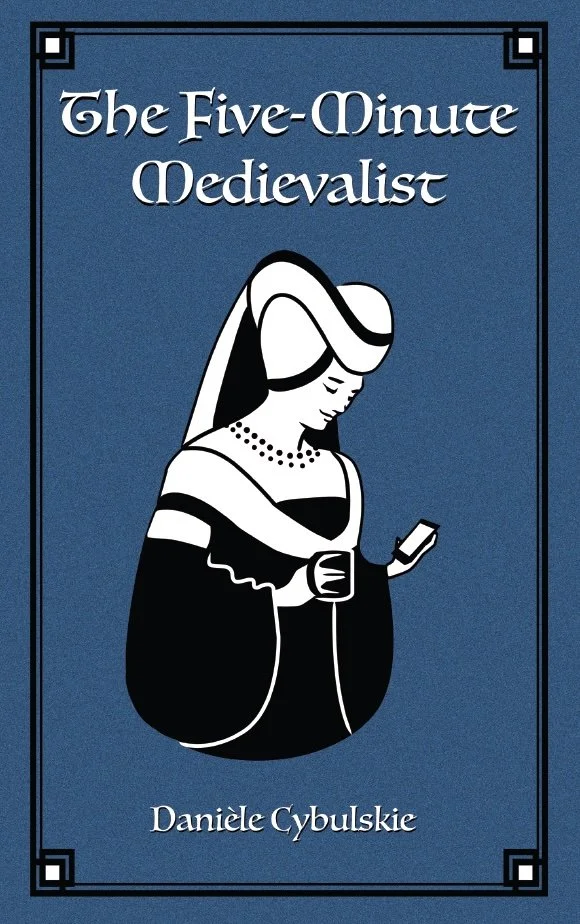
So, The Five-Minute Medievalist is a book that I put together and self-published back in April, 2016. April 6, I think, is the day that it dropped. And it's based on all of these articles that I'd created for Medievalists.net. I picked a bunch of the ones that had had a lot of traction or a lot of interest, and then I added a couple more. And so, this wasn't the first thing that I'd ever written for the public. I'd actually been writing for the Internet for about seven years at that point. But this was the first book I ever put out. And I did self-publish it on Kindle Direct Publishing. I also put it out on Kobo. I had it printed so that… on Kindle Direct you can have it sort of, like, printed out so you have a paper copy of the book as well as a digital copy of the book. I remember going down to University of Toronto and at the bookstore, they had a place where you could self-publish books and it would create the books in front of you. And if you ever get a chance to see these machines, they are super fun and incredible. They have glass windows so you can see the whole process where they're cutting the paper and setting it in the glue. It's super cool to watch. And that was a fun part of the whole process that if you ever self-publish, you should try and see for yourself.
So, the first lesson that I learned when I was self-publishing this book is that nothing beats practice. I regret to inform you that you have to put in the reps. I mean, it is the advice that none of us want to hear. It's something that I've definitely learned since becoming a martial artist as well. You just show up, you put in the reps, and then you look back later and realize that you've actually come a long way.
So, in creating The Five-Minute Medievalist, like I said, I had been writing for seven years, and by the time I put out The Five-Minute Medievalist, I had been writing on a regular basis. And this means I had been creating these articles. They were all very short. The Five-Minute Medievalist articles that are on Medievalists.net are around a thousand words. Because the whole point of it was I was trying to create other medievalists – trying to turn you into a medievalist in five minutes. So, they're all very short, but they were things that I wrote on all sorts of different topics. And I will admit – I will be the first to admit – I didn't always get it right. There are things floating out on the Internet that if I had to look at them again, I would definitely cringe. But this is the thing about practice: is not all of your practices are going to be fantastic. And you’ve just got to get out there and keep doing it.
So, I'm telling you this because one of the things that really has resonated with me – I think I learned it from Dorie Clark, or I heard it from Dorie Clark – and that is that the time is going to pass anyway. And it really resonates with me because the time is going to pass anyway. In five years, you can have done something that you never believed possible, or you could just be in the same space that you are now. And so, I find that really inspiring when it's not inspiring to put in the reps. I know that if I do it, I will be in a completely different place later. And for all of the people who are creating something – maybe you're an author, maybe you're an artist, maybe you're a craftsperson, maybe you're just working on spreadsheets – you know that it's the fastest way to make a whole lot of mistakes and learn about yourself.
For writers especially, one of our superpowers as writers is the differentiation between us and other writers. And the way to do that – to figure that out about yourself – is just to put in the work, put in the reps. Put in the reps. So, this is the first one, is probably the one that you least want to hear, and that is that you need to practice. So, by the time I put out The Five-Minute Medievalist, I had dozens of articles – if not more than dozens – already on the Internet. And it taught me about how my voice sounded when I was writing so that I could add a couple more articles in that and feel that they were consistent in the tone, and feel that they were representing me and the way that I was putting out work. So, yeah, the first lesson is just to put in the reps.
The second thing that I learned is really related to that, and that is that you have to be yourself out loud. And this is really scary to do. In fact, just about everything I'm going to tell you today is really scary to do. You have to be yourself out loud. You have to not try to be somebody else. It doesn't matter how many, for example, academic articles I was reading. That's not the voice that I wanted to put out there. I just wanted to be myself. And I'm telling you this not because it was easy for me to be myself, but because I had to work against a lot of different ideas. For example, I had come up through academia, I'd done my master's degree. And I've been told, and told, and told, don't let people see your real self, your real personality. Don't let people find a weakness that they can exploit later. So, especially in teaching, we were encouraged to not really talk about our personal lives or really give people an invitation into ourselves. And so, that's something I really had to get past. It gives you a lot of sort of imposter syndrome when you're thinking about this is my opinion that I'm putting out there. I'm not really supposed to do that. Who am I to say this? Who am I to be an expert? Especially – medieval studies is full of women, but history in general hasn't really been dominated by women. So, you know, you do think about things like as a woman putting myself out there, do I have to make sure that I have read every single source on every single topic? You have to learn to let things like this go and just be yourself.
So, again, I'm bringing this up in part because I started out writing as an anonymous person. My… my blog was just The Five-Minute Medievalist. When I posted on Medievalists.net, it wasn't under my own name. And I had to come to that eventually and realize that I wanted credit for my own work. I wanted credit under my own name. And so, I had to actually make that shift. And part of publishing this book was to put it under my own name and make it public. Take ownership for it. And that's really… that's really uncomfortable, as well. You know, if you're behind a pseudonym or if you're behind no name, you can't have people come after you in the same way as when you have your own name out there. But I'm saying this especially to people who are coming up through academia and they're thinking about branching out outside of academia: publish stuff under your own name, even if it is quirky, even if it is a little bit outside what you imagine people want from you, because your self – that person that you are, your voice – is the best thing you can contribute. And I'm saying this also because as AI becomes more popular, that is the thing that's going to differentiate you from someone else is your own perspective, your own personality, the way that you express things, especially with something like history. The facts are the facts, but it's how we interpret the facts – how we bring ourselves to the facts – that makes it something different, not the same as everybody else.
And I remember being floored one day because I was speaking with Helen Castor, who I hugely admire as a scholar. She is so diligent, and she's so sensitive to what the material says, and she told me that she reads my work. And what she admires about my work is the way that I see people, the way that I relate to people. And for me, I think this really has to do with reading a lot of fiction and being able to put myself in somebody else's shoes. And so, I didn't realize that was a superpower. But I came to my work as my style. I brought myself into it. I put myself into it, and that's what differentiated me from other people and has to this day. There are lots of other medievalists in this space. But I think that the people who are here – who stay here – are here because I do things my own way. And hopefully you like it. That's why we're here together.
So, if I could say anything to you about putting work out: take ownership for it, put yourself into it, publish it under your own name, and it will make you accountable. And it's also going to be the thing that people probably like best about your work, is just the you in it.
The next thing I want to say – the next lesson that I learned, that I keep having to learn, that it is probably my karma to keep learning my whole life – is that you need to have more faith than you do fear. And I'm not necessarily saying faith in a higher power, but really faith in yourself. If faith in a higher power works for you, great. But you also have to have faith in yourself because you are going to be afraid every time you step into that arena. I often hear people talk about entrepreneurs as being gladiators. They keep stepping in the arena. And it's true that every time you step into a public arena, it is scary and it's going to keep being scary. And even the most arrogant among us get afraid. We quiet the voices. And the people who are not very nice people, or the people who are super arrogant people, maybe quiet that voice with something else that's kind of toxic or undesirable. You can quiet that voice with the knowledge that you're putting something out there because you think it's valuable – the reason behind it.
For me, it's always been about serving people, about putting forth work that pushes us forward in our understanding and our thinking about people, especially people today. People in the past. To me it’s all about helping other people to get further along in our understanding of the past. And so, when I put that front and center, it allows me to get past the fear that is always there.
So, as I said when I posted The Five-Minute Medievalist – or when I created The Five-Minute Medievalist as a book – I'd been writing for the Internet for seven years. And that means I had gotten a lot of flack. I'd gotten a lot of negative comments, I'd had a lot of people telling me I was stupid. And I wasn't sure if this book that I was going to create was going to fly. Not only because people had told me that I was dumb on the Internet for years, but also because there is a part of the book – a huge part of the book – that was already out there, that was already for free. So, were people actually going to invest in the book? Were they going to want to have it as something that they wanted to keep looking at again and again? And I wasn't sure about it, but I had to push past that because I wanted to find out what would happen if I did it.
And so, I gotta tell you, every time I put something out for the public, especially when I post on social media, I find that very difficult. I'm going to talk about that again in a second. But whenever I hit publish on a podcast, there is a moment of fear. I'm just used to it. I just push past it because the why behind it – as people say – the reason behind it, is so important to me. It's more important than my fear. It's bigger than my fear. And so, putting that out there was necessary – necessary every week to push past the fear. And if I can do it, you can do it, too. It's just a matter of getting used to that idea of being afraid; of being uncomfortable and just doing it anyway and seeing what happens. I know that that's difficult. Again, I'm giving you all sorts of very tough love, tough advice, things that maybe you don't want to hear, but it is a lot about pushing past your fear.
And I remember Talking to Deborah McGrady about this before we came onto the microphones to talk about Joan of Arc. We were talking about coming at difficult subjects, or putting yourself out there and expecting to get criticized, or maybe talking about a difficult subject in a way that maybe you don't know how to do. And you've seen me do this again and again on the podcast. It does take courage every single time. I know that I'm not an expert in everything. I know that people are going to come at me – especially on YouTube – and I know that I'm going to flub things. I come from a place of privilege. I know this. And so, I will have blind spots, and I won't know about them until someone tells me about them. Hopefully in a kind way. Not always in a kind way.
So, maybe the bad news is that the fear never goes away, but the good news is that you will get better at facing it the more often you do it. So, the more often you practice – put yourself out there – the better you get at it. Even though it's always going to be a little bit of a push past that instinct for… self-preservation, let's call it. A little bit past the fear. You have to have more faith in yourself. You have to have more belief in yourself than you do fear. And that is a practice more than anything else.
Now, the fourth lesson I learned is a lot more positive. Perhaps you're going to like this a lot better. And that is that everything is an experiment. And one of my favorite books that I read over the past year is Tiny Experiments by Anne-Laure LeCunff, because it really speaks to my personal philosophy – and expands it in a way that I think other people can relate to, as well – which is that everything is an experiment. Anne-Laure talks about the fact that goal setting seems like a great idea. Especially – you set a goal and it's a smart goal, right? Is it measurable? Is it achievable? Can you track it? And you build the steps back from there. And then you have to just take the steps. It seems very simple. You just take the steps to get to your goal and you'll get there.
But for me, sometimes having a goal – a big goal, all my goals are big – sometimes having a big goal can be intimidating to the point at which you get scared. We were just talking about fear. And then you procrastinate, and then you don't want to do it. And so, part of getting past that sort of fear is the practicing, like we're talking about. The believing in yourself. Sure. But sometimes the goal itself, that is very scary.
So, putting out a book: can I do that? What do I have to do to be able to do that? For me, I had to learn all sorts of stuff. And in fact, I put time in just doing the small things. Like, I wanted my tone to be friendly. This is something I'd worked on for a long time. So, I had to figure out what the color of the cover should be. What color speaks friendliness to people? And it turns out that that is blue, which is great because I love blue. I think it looks great on the cover. But I had to look into that, and I had to figure out how to work through Kindle Direct Publishing. I had to figure out how to create tax documents. There was a lot to learn, and so it felt very big at the beginning. But you just have to experiment.
And what I love about this is it turns something huge, like a goal, into something fun. Like, I'm just going to try it. I'm just going to see what I can possibly accomplish. I'm just going to see what I can do in the next five minutes. I'm just going to see what I can do in the next day, in the next month, in the next year. And it just turns down the pressure. If you're just trying something and it's an experiment, you know that you have a hypothesis, it might work – it might prove what you want – or it might not. And if you have this attitude of it being an experiment – not necessarily something that you must achieve; it has to happen, and if I don't do these steps, it's a failure. Especially if it's binary, like, I do the step or I don't do the step, I pass or I fail. An experiment is just play, it’s just trying things out and knowing that the experiment itself is going to teach you a lot.
So, this is again, coming back around to practice. Everything that I tried was new. I mean, when I started writing for the Internet, I didn't even know what a blog was. I had to learn what it was. I had to learn what was going to fly with people. I had to learn a format that was going to work. I learned a lot about putting information at the top so that it makes people want to keep reading. I learned a lot from reading journals and stuff. But it was all just experimenting, trying. What am I going to do this week? What am I going to try this week? And so, experimenting with The Five-Minute Medievalist… I just wanted to see if I could self-publish a book. If I was able to do it. If I could learn how to do it. And I also wanted to see would people be interested in… in getting a book from me? And this is actually vital to, you know, the larger goal of maybe becoming an author.
This might be something that I should mention at this point: I never wanted to be an author. It's hard work, and I wasn't sure I was suited to it until I had just been writing these articles constantly. And I started writing them because I wanted to share with people; because I wanted to teach people. I wanted to share what I was learning. So, I've always thought about this as being teaching – about being sharing – not about writing. And so, the idea of being an author, sort of in gigantic capital letters, was intimidating. And it wasn't something that I ever really wanted to do until I had put in all those reps. And then I got to 2016 and I wanted to know: would people buy a book from me? Would they be interested? Does anybody care that I'm writing? You know, are they actually going to put money down for words that I write? I wanted to find out. And so, it was an experiment and I was super nervous. I wasn't sure that anyone was going to read it except for my parents. Hi, Mom and Dad. I knew you were going to read it. I wasn't sure if anyone else was going to read it. So, I promoted it. I put it together. I think I was tweaking it until the very last minute. And then I hit publish just to see what would happen.
And on that first day I was neurotically checking to see, like, has anybody bought this? Does anybody care? And that first day I sold seventy copies. Have I ever had another day like that? No, not a seventy-copy day. But that's the nature of publishing, right? When something first comes out, you get a big burst and then you hopefully have it continue to sell for a long time – forever. And The Five-Minute Medievalist continues to sell, I'm happy to report.
But it was an experiment, complete experiment. And if I thought of it as being a goal. It would have been too scary to do. If I thought about, like, “I want to be an author,” I would have been too intimidated to do it. So, the way I approach everything is as an experiment. I'm experimenting here with this podcast right now. Sometimes, I have found that when I podcast by myself, people really like it. Sometimes, maybe they don't. I'm not spending time on actual history today. I'm sharing things about me with you. It's an experiment and we'll see if it flies. If people like it, or if they don't like it. The comments will probably tell me soon enough. But if you take that pressure off yourself, and I think, especially if you're at the beginning of your career – I think there are a lot of students that listen to this podcast in general – if you're at the beginning of your career, don't put huge pressure on yourself. You need to experiment and try things out and imagine that it might work. And it might not work. But if it does work, imagine how great that could be. And that's when you have to put your faith in yourself, right? I'm going to try this out and imagine how fantastic the result could be. You have to have, in some ways, a little bit of a delusion if you're going to go for it.
And I think you should go for it. If you have an idea and you know it's great or you even suspect it's great, go for it. Experiment. See what you can do in the next five minutes, month or year, and just see what happens. Because if it's an experiment, it might work and it might not work, but you can just take that pressure off yourself.
So, we've talked a lot about trying things out, about pushing past fear, about putting your reps. All of these things are scary. But here's the Big Boss for me – the scariest thing of all – which is that you need to ask for help. And this is really scary. I know a lot of people who are listening might be cringing right now, thinking about your own experiments, your own things that you're trying to put out. You need to ask for help. And the whole time today I've been talking about The Five-Minute Medievalist, so I'm going to address that in a second. But it's very true for the trade books that I've put out as well: you need to ask for help.
So, coming back to The Five-Minute Medievalist, I learned a lot and I did a lot myself. I did most of it myself. I need to give credit to Peter Konieczny and – at the time – Sandra Alvarez, for putting out my articles on Medievalists.net. So, you know, they were people who had taken my blog further than I thought it could ever go. So, thank-you to them for helping me to do that. When it came to the actual book itself, I had created my own little logo. It wasn't fantastic. So, I asked my youngest brother to help me. And I've – I think I've said this on the podcast before – my youngest brother had gone through education for illustration. So, he's fantastic. He was able to work with my idea and create something much better than I ever could.
When it came to the actual format for the book, I did it myself. But you'll notice, even for The Five-Minute Medievalist – a thing that was based on essays I'd already written – that I self-published, that I was putting out without really being a household name or anything like that, there are blurbs on it. And Dan Jones I had met only once before when I had interviewed him about his work on Magna Carta. Nancy Goldstone I had spoken with for an interview for Medievalists.net talking about her work on Joan of Arc, but I didn't really know her. And I had to get out of my own way and I had to ask for help, and I had to ask for blurbs. And that is hugely uncomfortable, I think, asking people for stuff.
Maybe it comes down to my being a Canadian or whatever, I don't really know. But I do find it difficult to ask for things. I find it difficult to ask for help. And this is something I've had to learn – that I keep having to learn. And one of the things that might make it easier for you is coming back around again to the reason that you're doing it. I didn't put The Five-Minute Medievalist out because I thought it was going to make me a star, or I thought it was going to get me a private jet, or anything like that. I was putting it out because I really want people to learn about medieval history. And so why would I hide it? I need to get this out. And the way to do that is to connect myself with people who are further along in this. And I'm so grateful to Dan and to Nancy and to my mentor, Joanne Findon, and to Peter Konieczny for giving me quotes for this book, because it not only showed me that I did build something valuable, but they helped me. Dan Jones was so much further along in his career than I was, and Nancy Goldstone, as well. They were people who had had multiple books out already. And I hadn't, and they reached back to help me, and all I needed to do was ask.
And so, this is something that I had to keep learning. And here's what I've learned through this process, is that people want to help you. If you have a great idea, if you have a good heart, if you're a decent human being, people want to help you. Especially if they've shown interest before, they want to help you. They just need to know how to do it specifically. And so, you need to lead them to that answer. It's not comfortable to do, especially if, you know, you feel uncomfortable asking for anything in general, or if you feel like this is like sales and it's like used car selling. It can be very uncomfortable.
But here's the thing that I've also realized – coming back around to trade publishing – is that you do get a burst of marketing, usually at the beginning, and then you don't get a lot. And this is not a criticism of my publishers. This is just the business. My publishers have been amazing, so I can't really complain. I just want you to know, as people who are creating, that the market continues. The market moves on. And so, you need to be the person who advocates for your own work. You need to get out of your own way, and you need to make it public, and you need to bring people's eyes to it. Because if you believe in what you've done and that it's valuable, this is something that you have to do. It takes a lot of courage.
And in that spirit, I'm going to share something pretty vulnerable with you. So, here we go. The past ten years have not been really easy for me, emotionally, mentally. I've had to work through some tough stuff. Some of it, you know about, like, having to move a bunch of times. Some of it's very personal. But the point is, I've really had to move through some stuff – and I've done that. I've done that work. In fact, all of the stuff that I use to help myself, you can find in How to Live Like a Monk. So, I don't just talk the talk. I do walk the walk. And in the past few years, I've really sort of dug into myself and worked through things that I have felt have been challenging for me. And so, that has meant that I have spent a bunch of energy on taking care of myself. And I think that that's super valuable and definitely worth it. And if you are in a spot where, you know, you need to take some time to take care of yourself, definitely do that.
The result of that has been that I've become sort of invisible on the Internet. And when you have a public business like mine, you need to be visible on the Internet. And I hadn't put the energy into that because I only had so much energy. I was putting it into parenting. I was putting it into this podcast. I was putting it into working on this book proposal, which is the slowest one ever. But I'm working on it little by little. And so now that I'm feeling better, I need to put more energy into my business.
Because here's what happened. About a month ago, I looked at the numbers, and I realized I was at a crossroads. Because to put out a weekly podcast takes time, it takes energy, it takes research, and it does take money. And so, I was looking at my numbers, and I was at a crossroads. I was looking at it and thinking that I had to make a decision. I could quit. I could leave this business. I could leave this podcast that I had built. I could go in a completely different direction and maybe find it easier to pay the bills, to be perfectly honest with you. Perfectly – well, I told you I was going to be vulnerable. Here we are. And I had to think about this very carefully because I do have responsibilities. I have children. I had to think about whether it would be better for me – better for them – to leave this business and try and find something that could pay the bills better. Or, on the other hand, I could try more things. I could make myself more visible. I could try and create more things. I could try and serve you more than I have been doing, because I had been conserving the energy that I needed to take care of myself.
And so, in the end, I decided I'm not going to quit. But that means that I do need to ask for help. Is this intensely uncomfortable? Why, yes. Yes, it is. But I want to keep creating more things for you. I believe what I'm doing is valuable. I believe what I'm doing is of service – not only to our field, which I care about so much, but to the public. I think that there is so much that we need to know about medieval studies that is coming out in academic books, and I really think it needs to be out there for the public. And I just feel called to do this. I think it's important. So, I'm going to keep doing it – even though it's hard, even though I need to ask for your help – I'm going to try, and I'm going to keep doing it because I think this is valuable.
So, I'm going to be putting myself out there more visibly. And this really means on Instagram, that is a platform where I am located more. And also on the website. I've been adding things to try and be more of service to you, so that the website now has transcripts that you can check out. That you can download. It now has places where you can access all of the books that I put on – at least as many as I've been able to upload; more are coming – so that you can interact with this stuff, so that it's easy for you to access medieval history. So, the more you can tell people about that, the more you can interact with that, the more you can interact with my content on Instagram as I start to create more, the better.
And so, I'm asking for your help to help me become more visible, to get more people involved with the work so that the work can continue. I'm also doing a few things that if you like, hopefully you can check out and tell your friends about. One of them is that I've just revived The Medieval Masterclass for Creators, which I'm so excited about. At the time that I pulled it from the Internet, it was too difficult to manage the cost of having it on Thinkific and balance it with having students in it. There is always a balance there between how much you can invest and how much you're getting back from it. But I'm able to put The Medieval Masterclass for Creators on my own personal website now, which is danielecybulskie.com. So if you're a creator, I'm so happy to bring this back to you because Tom Timbrell is there, Neil Buttery’s there, Katrin Kania's there. And they can show you so much about the medieval world – just really in a tactile way – about blacksmithing, about cooking, about textiles. And I'm just so excited about their work and I really want to share that with you. So, if you're a creator, good news! You can take The Medieval Masterclass for Creators. It is back up. It is on danielecybulskie.com and you can find it and check that out, and tell your friends about that.
If you want to help in a more tangible way, that would be awesome. You know that I'm on Patreon and I'm putting stuff out there. I've been creating the stuff that you asked for on the survey when I put it out in the fall. So, there are new articles every week which are exclusive to Patreon. They are a lot like my Five-Minute Medievalist articles, but you can only find them on Patreon. That's what you asked for, and I have delivered. There are also videos so that you can just be there live with me once a month. If you're a creator or an educator or a student, you can just ask me a question live on Patreon every month. I am there for you. And also, there is, of course, The Five-Minute Medievalist, which you can download for free. All the paid members of Patreon can download it for free, which means you can get it for as little as $1. And I know that sometimes the idea of Patreon can be a lot for some people. The $1 tier is there because I have been a student, especially, and I know that it was really valuable to me to be able to contribute just a quarter to the library. I would get books that were being discarded for a quarter, and that was really important to me at that time. It made me feel like I had agency. So, the $1 tier is there so that if you get a quarter's worth out of every episode of The Medieval Podcast, that is the tier for you.
But I know Patreon is not for everybody, so that's cool if it's not for you. But you do want to just contribute to the podcast, maybe just once. I've created a page on medievalpodcast.com that not only goes through how you can help, but there's also a button now if you just want to give a singular donation – like if you just particularly liked one episode, you thought it was your favorite, and you just want to kick in five bucks, then that's there for you as well. Or if you're a teacher – an educator – you're using my work in your classroom, and you just want to kick in a little bit of money to say, hey, thanks, this was really useful. There is this page now on medievalpodcast.com so you can just find a way to donate if that's useful to you.
Also, I know a lot of teachers are asking me on the regular if I can create a course so that people can learn how to podcast – especially students – and that is in the works, so stay tuned. So, if that if it's useful to you, that will be available very soon.
And of course, for the people who are rating the podcast with stars, that's amazing. If you're listening through the ads, that's also amazing. I get a tiny, tiny, tiny payout for the ads that you listen through. So, I really appreciate that.
I just want to really reiterate that I know if you're listening to this – especially if you got to this point – you are somebody who cares about this work, and maybe even somebody who cares about me as a person, and for that I am super grateful. I know that so many of you are already contributing on Patreon, and I’ve got to tell you: you are the reason that the podcast has come this far; that I've been able to create it for seven years. And so, I'm immensely grateful. And for the people who send me nice comments or the people who like and interact, I'm just so grateful to you for being here.
And I want to offer this as proof that when you create something and you put your whole heart into it, people will respond and people do want to help you. And so here I am demonstrating a bit of courage because I am very fearful that people are not going to get to the end of this episode, or they're going to think it's tactless or something. Here I am demonstrating for you that you can create stuff, and if you think it's really valuable, you should just put it out there and see what happens. Because people will surprise you in the most wonderful, incredible, miraculous ways.
And that maybe is the best lesson that I've learned from doing this for ten years as an author, is that people are just so kind. And I hope that that's something that you can experience.
Will there be people who are criticizing? Of course. That's human nature. But you will be surprised by people's kindness. So, you should just experiment, get past your fear, put in your reps and tell people about what you're creating, because we really need more people who put their hearts into the work and put the work into the world. And how are we going to know about it if you don't ask for help? So, here I am, living this, because I've learned that there are people who listen to this podcast because I'm very transparent with you about how I live, what I'm up against, what I'm creating for you. And so, I do hope that at the end of this podcast, you are coming to it with a sense that what you make in the world is valuable, that people will find it valuable, and that people will want to help you. And I really hope that you put your work out there and you do get to experience this for yourself, because there is no better feeling.
And so, I'm going to cheat a little bit as I finish up because I have been talking a lot about medieval books this month, and I've been giving you medieval wisdom, because I love medieval wisdom. Who doesn't love a primary source? But this week I wanted to bring forth a quote from Shakespeare. And… I adore Shakespeare. I don't consider him medieval, but I do adore him. And the quote I want to leave you with is one from Shakespeare where he says, “we know what we are, but know not what we may be.”
And so, what I want you to take from this is the understanding that you know who you are today – or you have a sense of who you are today, or maybe you're learning who you are today – but you don't yet know who you may be until you try something out, put it out there and have some faith that it's going to land and people are going to love it.
So, on that note, I just want to say thank-you, everybody, for being here, for being on Patreon, for being an incredible part of my life and this community. For the show notes on this episode, a transcript and a growing collection of the books featured on The Medieval Podcast – as well as new information about how to help out – please visit medievalpodcast.com. You can find me, Danièle Cybulskie, on social media @5MinMedievalist or Five-Minute Medievalist.
Our music is by Christian Overton.
Thanks for listening and I wish you all the success in the world.