



The Medieval Podcast uses affiliate links
Episode 366
The eleventh century was a time of big changes across the world. In the Mediterranean, shifting power structures gave rise to a tiny, short-lived Muslim state based around the port city of Denia in modern Spain. Like its more well-known coastal peers, Denia soon became a powerful launching point for learning, trading, and raiding across the sea. This week, Danièle speaks with Travis Bruce about how Denia became its own state, its intriguing pair of rulers, and how piracy and trade on the Mediterranean went hand-in-hand.
-
Danièle Cybulskie:
Hi, everyone, and welcome to episode 366 of The Medieval Podcast. I’m your host, Danièle Cybulskie.
As we’ve seen many times on this podcast, the eleventh century was a time of big changes across the world. In the Mediterranean, shifting power structures gave rise to a tiny, short-lived Muslim state based around the port city of Denia in modern Spain. Like its more well-known coastal peers, Denia soon became a powerful launching point for learning, trading, and raiding across the sea.
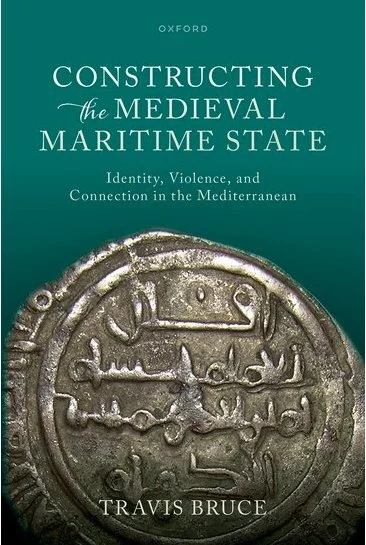
This week, I spoke with Dr. Travis Bruce about Denia. Travis is Associate Professor of Medieval History at McGill University, and the author of many works on medieval Iberia, the Mediterranean, and its city states. His new book is Constructing the Medieval Maritime State: Identity, Violence, and Connection in the Mediterranean. Our conversation on how Denia became its own state, its intriguing pair of rulers, and how piracy and trade on the Mediterranean went hand-in-hand is coming up right after this.
Welcome, Travis, to The Medieval Podcast. We are here to talk about a place that I had never heard of, and I'm so happy that I read your book. So, welcome to the podcast.
Travis Bruce:
Thanks, Danièle. I am very excited to be here and to talk about my book. It's super cool. Thanks.
Danièle Cybulskie:
Yeah. Yeah, it's my pleasure. So, we are talking about Denia, which is a place on the coast of the Mediterranean. And I looked at the maps in your book, and it is the perfect place to have a port city/state. So, how did Denia come to be in the first place?
Travis Bruce:
So, yeah, it is – if you look at a map, it is… it's on that little part of Spain that points out into the Mediterranean. It is the closest point on the peninsula to, like, the Balearic Islands. It is the jumping-off point for routes that go for what they call the, like, Trans-Mediterranean route that goes across the Mediterranean. If you're going to set up a Mediterranean kingdom that's not on an island, I would start there, probably. So, Denia has Greek-Roman origins, but up until the tenth century, it's really just like a backwater – barely kind of any infrastructure, pull-your-boats-up-onto-the-beach kind of port. That's a bit exaggerated. But beginning with the eleventh century, we have the… basically, the complete collapse of the Umayyad Caliphate of Córdoba. And with the fragmentation of that power, there's some thirty-six-plus different regional kingdoms, polities emerge over like a ten, twenty-year period. And one of those is Denia. And it's led by one of the people who had been at the top of power – military, political power – in the Caliphate before: this guy named Mujāhid al-Amiri. And he seems to have had a power base in eastern Al-Andalus – in the eastern Iberian Peninsula – and kind of hops around a little bit along that coast at first. But then, he creates this power base in Denia, for various reasons. And then – even though I don't really like Great Man kind of narratives – in a lot of ways, because of his will to create something using the resources that are there, makes Denia – his son inherits this in a kind of like, kind of like one president claims the successes of the previous president because it takes that long for those things to come to fruition. So, in many ways, like… Ali, like, inherits – his son, Ali – inherits this kingdom. But yeah, Mujāhid turns this backwater port – through conquest, through military infrastructure, naval infrastructure investments, through really like intentional development of intellectual infrastructures, religious infrastructures – into definitely a top-tier port by the middle of the century. So, yeah, it's a really… It's a flash in the pan kind of thing because once they're gone and there's no longer the will to maintain Denia as a place like that because the power is no longer there, it fades back down into a mid-level kind of port. But for the eleventh century, it's a happening place.
Danièle Cybulskie:
Yes, absolutely. We're definitely going to get into why it's a happening place, but I want to get into its creation again for a second because… So, we have the Umayyad Caliphate. It's starting to fracture. And Mujāhid’s like, I'm just going to take over this place. It's going to be mine now. And everybody's okay with it? How does this even happen in the first place?
Travis Bruce:
Like I said, he probably was some kind of military commander, some kind of high-level military political figure in the – we'll just say the Umayyad Caliphate for that region. Probably had control over naval resources, had control over different kinds of infrastructure, and had, we'll say, networks tied to him that allowed him to carry out those responsibilities, and that were localized in that area. And so, when things fell apart, he… Interestingly, a lot of other elite figures tried to participate in reconstructing the Umayyad Caliphate, or propping it up for their own reasons. He very quickly turns his back on that and decides that the best route for him forward is to make the best of what he has in that region. And it's actually not even – it's not only that, because other people do this where they just kind of hunker down in their bunkers and then exert power in that way. He decides to, for a number of different reasons, create his own caliphate. He can't do it for himself because of various reasons that have to do with religious legitimacy – political legitimacy – within Islam. He can't be a caliph himself, but he can find one. He can make one. He basically finds, like, this offshoot scion guy of the Umayyad family dynasty, props him up, the guy accepts, names him caliph of – at this time, when you're caliph, you're just caliph. You can't be caliph of – because you're the leader of the whole community. And then proceeds to run with it. Conquers other areas on the coast of the Iberian Peninsula, conquers the Balearic Islands, and then from there he mints coins, he does all of these things that go with the administrative, symbolic violence of a state – that prop up a state – and then he launches this invasion of Sardinia, which we can get into. So, yeah, he's really different from what we see in other places in the aftermath of the caliphate. He kind of ties all of this together into this package that becomes Denia.
Danièle Cybulskie:
Yes, and I think it's so interesting. Again, you want to avoid Great Man narratives, but this guy is a really interesting figure in that one of the reasons he can't just take over for himself is because he was an enslaved person, right? So, his biography actually has a big impact on his trajectory, I think.
Travis Bruce:
Right. He's super messy. His son is even messier, I think. Or, maybe not even messier, but they are really complex people. I guess everyone is complex, but the pieces that come down to us through the different sources about these two individuals show people who are, in some ways, very aware of their complexities and play off of them, build off of them, and turn them to their advantage. So, yeah, Mujāhid was part of the administrative structures of the Cordovan Caliphate, and much of those – maybe even the majority of those – administrative structures, the individuals who were part of them were enslaved peoples. Which, in a North American context – that's a hard word for us to use because it has a lot of other connotations. But Mujāhid existed on the spectrum of unfreedom/freedom – more in the unfreedom direction. Probably, though, was emancipated at some time during his lifetime. Maybe not. But yeah, he had no genealogy. He had no genealogy on which to base his legitimacy, which in the Islamic world, especially at this point, is its own kind of historical science, because it props up dynastic legitimacy, because it props up these other things. And Mujāhid doesn't have that, and so he doesn't have the credentials to rule a state outright. He can rule it as a delegate. And so, yeah, he needs to create this person – he needs to find this person, prop him up – who can serve as a figurehead. Once he does this, everybody does – not everybody does, there's not thirty-six different caliphs running around – but there are multiple caliphs. Actually, other taifas recognize his caliph for a while because that's useful. But eventually, the majority of the taifa kingdoms recognized a completely fake, symbolic caliph around the mid-century or so, because that's even more pragmatic, even more practical. But yeah.
Danièle Cybulskie:
Well, sometimes you just need a puppet to help you get things done. So –
Travis Bruce:
The thing is, like, what it's also… Like we see with Mujahid, he is in some ways like a precursor to like the Mamluks that we see in Egypt. This is actually a really common thing in imperial structures, is this way that at some point it becomes practical to rely on people who are dependent on you – slaves – to run your administration, because you've got other elites and there's always tension and you need somebody to balance them. So, this happens with various Chinese dynasties, it happens in the Islamic world, happens in the Byzantine – it happens everywhere. At some point those people come together because they do have a common identity, which is their shared unfreedom.
Danièle Cybulskie:
Yeah.
Travis Bruce:
So, that, yeah – it's interesting to see that happening with the Mamluks in the later Eastern Mediterranean, and Mujāhid and some of the people around him kind of are precursors to that.
Danièle Cybulskie:
Yes. There seems to be sort of an inevitability about that, because – like in the other empires that you're talking about – when you have such an educated, capable group of people that are unfree, it seems like that's always going to be unstable, because nobody wants to be unfree. Well, it seems obvious to me that nobody wants to be unfree. So, this is a really interesting guy. He's decided he's going to take over Denia in the name of somebody else, but he's really running it. So, what are his priorities when he's got his own state? What does he decide to do with it?
Travis Bruce:
I think it's better for us to see Denia as, like, a process. It's another thing – like, he doesn't have a state. The state has to be constantly maintained, constantly reinvented, constantly renegotiated with his own people, with people on the outside. And who knows what his ultimate plans were? Maybe he wanted to conquer the world. Who knows? I doubt it. But one of the things that we see with his rule, with a lot of the other taifas, is – I don't know to the extent to which this was an actual need or want to conquer and gain more land or resources, but we see a very aggressive use of state-sponsored military violence on the part of all these states. To some extent, it is to defend their territories, but it also – they're all concerned about legitimacy because none of them have it. They are all like really insecure about their legitimacy. And so, one of the ways for them to defend it, establish it, and communicate it is through state-sponsored violence. Because – to be a bit anachronistic in, like, a Max Weber kind of way – only the state has the right to violence. And so, if you're carrying out violence, then you obviously must be a legitimate political power. And so, I think that part of what he's doing, especially in calling for a legal war – a jihad – against Sardinia… only the caliph can call for that. Only a real, Islamic, recognized, legitimate leader can call for that kind of action. And so, if he is doing that, yes, he's launching this invasion, and it's a really big deal, but he's also laying claim to a very ambitious level of Islamic power. So, I think that's part of what's going on, as well. I think that he is both establishing power, consolidating power, by conquering territories and that kind of thing, but I think he's also very conscious of the ways that he is laying claim to a level of political legitimacy that is beyond what a lot of his peers are claiming.
Danièle Cybulskie:
Yes. Well, I think this is a really interesting distinction that you've made, in that this year we've talked quite a lot about people around the eleventh century – for example, Harald Hardrada – and how when people are trying to establish their legitimacy in a position that they may not have been born into, there is a lot of raiding that happens in places like the Viking world, for example. And one of the things that you get at in the book is that you have to give the elite something to do. That is state-sponsored violence. And you also have to give them opportunities to enrich themselves so that they will feel good about you. And so, as you're saying, the shading is different because the fact that this is built within an Islamic cultural structure means that there are certain rules about who you can attack, how you can attack them, and what your purpose is. So, this is similar to what we see in other places, but also very distinctive in ways that I think you're really getting at well here.
Travis Bruce:
I like that you brought that up. I think… I think this didn't make it into the book, but the same thing is happening with Mujahid, because we always have this idea that rulers are these, like, established things, like in some kind of pyramid of power and all of that. But at any given time, there is always tension between the person who is the ruler and the people below him. And as you say, like, you’ve got to keep them busy. You got to… you got to give them their graft or, like, whatever – their booty. And you have to… you have to create reasons for them to remain loyal to you. And there's a whole number of ways that you can do this, but one of those things, especially in this context, is to constantly maintain this kind of predatory violence. And as you say, we see it with the Vikings, we see it along the Byzantine frontiers, we see this in the kind of North American indigenous context with the Comanche Empire, where, yeah, you are – you're creating raiding parties because it allows the people under you to maintain their military legitimacy, it allows them to enrich themselves, and those kinds of things. And so, the same thing's happening with Mujahid. So, maybe the words are different, but they kind of translate into many of the same kinds of ideas. And so, yeah, Mujāhid is really, really good at that. And we see this happening over the course of the century, as well. It's not just those who are going on raids with him, but also, we see this in the ways that he and his son maintain networks of fortifications in their hinterland. The same thing's happening. They are constantly kind of allowing these people to exercise a certain level of independence that allows them to enrich themselves, and also renegotiating terms of rulership. Not on a constant basis, but more than you would think.
Danièle Cybulskie:
Yeah. Okay, so let's put this specifically in a Mediterranean context, because this is one of the purposes of your book – is to put this in a Mediterranean context. So, we have Denia. It's a great port city, it's a great place for shipbuilding, and we have these raids that are coming out from there. And then you have – I think one of the things you mentioned in the book is you have these outraged accounts from Christianized cities, which we are more familiar with in terms of chronicles, that are like, hey, that's not fair. You can't just come and raid us. But in context, this is totally normal for people on all sides of the Mediterranean, right?
Travis Bruce:
Right. Yeah, everybody's doing this. This is – I think that, depending on the point of view, everyone is a pirate because everyone is engaging in small-scale maritime violence. And from the point of view of the people being violented, they are illegitimate, or there's not this open, engaged war going on. And so, there is – piracy is a question of point of view. It's a question of perspective. Calling someone a pirate is a way to delegitimize them, these kind of things. To not recognize their claims to power. And so, we see, rather than calling these people pirates, they are raiders. They're maritime raiders is what they are. And all of these – whether it's Pisa, whether it's Genoa, Venetians, various ports out of North Africa, Denia, as well – they are engaging in the full spectrum of revenue-generating maritime activities, whether that is trade, whether that is raiding – either at sea or on land – opportunistic attacking of other ships at sea… This is happening constantly. And so, Mujahid, and his port, and the people around him are just part of this whole ecosystem. I think that, though, because of the resources that he had behind him, he was able to attract probably a larger number of people to his banner, and then to invest in more infrastructure so that Denia becomes one of the more successful ports in this. But as you say, in the… like, the rhetoric and the narrative that we have coming out of places like Pisa, places like Genoa – part of the narrative that they are building is that they are fighting against this kind of activity on the part of the Muslims. And Denia and Mujāhid are really good strawmen in that sense because they are successful. And they're well known. They're well known because of the Sardinia conquest, because of other things, but also because – maybe paradoxically – Denia and its rulers maintain relations with those same ports.
Danièle Cybulskie:
Mmhmm.
Travis Bruce:
And so, he's a known quantity that you can insert into a chronicle, or into a saint's life, or something like that. It's like a stock character that has a name, which is very convenient. And so, we see him being used over and over again in this way. Even after he dies, he continues to raid Pisa. In the Pisan Chronicles, like, he's raiding Pisa until, like, after 1050 or something – I forget when – because it's a good thing in your chronicle.
Danièle Cybulskie:
Yeah. And when you have a strawman like that, they can all look the same. It's fine. So.
Travis Bruce:
Exactly.
Danièle Cybulskie:
Yeah, I think you call them – the people in the Mediterranean at this time – Schrödinger's raiders, right? Because they are raiders, or they're –
Travis Bruce:
Or they're merchants.
Danièle Cybulskie:
Yeah, they're – they could be anything until you pin them down. Until you give them a label. And yeah, it's really an important part of your book to mention that this is happening from all the ports in the Mediterranean. It's just a way of doing business. Some of the business is really ugly business.
Travis Bruce:
You know, I think that we do have this point of view that the Middle Ages is really violent, and these people are violent. Maritime raiding is physical violence. But I don't actually see this as being more violent than other periods, necessarily. I think they are engaging in specific kinds of physical violence, but if we think of violence as a form of coercion, and that can damage other people's lives, the amount of damage that they carry out to other people's lives is a lot less than other forms of involuntary coercion that we might see in other periods. I think it's easiest for us to judge the Middle Ages in that way, but I don't want to go too far in that.
Danièle Cybulskie:
Yeah, I mean, it would be a hard case to make to say that eleventh-century piracy was worse than, say, Elizabethan piracy, because I think the people on those boats might have an argument to make about that, right?
Travis Bruce:
Right.
Danièle Cybulskie:
So, you mentioned that Mujāhid tries to conquer Sardinia. Why Sardinia? Why is this important to him? Because it becomes a really important moment in his biography and his son's.
Travis Bruce:
I mean, it's the next stop in this route to the Mediterranean. You go from the Balearic Islands, to Sardinia, to Sicily, and then down the coast. So, it is, it's the next logical stop. It is also easy pickings, in some way. There is residual Byzantine political structure on the island, but that is not very stable, and so he's not going to run into probably as much resistance as if he were to attack Pisa directly, or – I don't know – someplace like that directly. There's that. Sardinia also has a number of different resources, because there's like silver mines in Sardinia, it's a major wheat producer – that becomes important later on in the Middle Ages – and so it has its own resources that would make it appealing to Mujāhid. And so, I think that those are some of the factors. It's close at home, it's along the trade routes. It is possible – it's maybe even probable – that he already is familiar with Sardinia, because, like I said, he was part of the Umayyad military structure before the fall of the caliphate. There were raids going on in that area before the fall of the caliphate. Somebody was carrying those out, and so, likely, Mujāhid was participating in those in some way. One scholar has posited that he might have been from Sardinia, for various reasons. I don't think we need to rely on that to understand why he's going to Sardinia. He was from Sardinia in the sense that, like, he was captured there as a child and then brought – something like that. So, yeah, I think it pulls his power out into a more centralized place within the Mediterranean from which he can really exert some kind of political power over the sea lanes, over the various ports that are around him. Yeah.
Danièle Cybulskie:
Well, at first, it goes well. It goes well enough that he brings his family over. But then it goes south.
Travis Bruce:
Then, it goes south.
Danièle Cybulskie:
That was a bad mistake, as it turns out.
Travis Bruce:
It was! The best-laid plans of mice and men.
Danièle Cybulskie:
Right.
Travis Bruce:
The chronology is a mess. Seems like he was there for a year, something like that. But yeah, he was there. He had established his power stably enough. Looks like he's intending to create his power base there around Cariati, and then the Italian city ports – port cities of Pisa, Genoa, maybe couple others – mount a combined expedition to oust him from the island. If you read all the narratives, it's because Muslims are bad, Christians are good, and that kind of thing. The real reason is that Sardinia is essential for free and unencumbered access to the Mediterranean sea lanes for these ports. And if Mujāhid is occupying this island, then that very much gets in the way of their access to the sea lanes. The fact is, like, after they oust Mujāhid from Sardinia, they start fighting over it. So, it's amusing. And in their chronicles, they use the same kinds of language for their victories over each other as they had used for their victory over Denia. So, I'm not going to say there's no religious tinting to this, but it's certainly not the main thing. And so, the Pisans and Genoese mount this expedition against Mujahid, and then – actually what happens is there's a big storm and Mujāhid’s entire fleet is smashed against the rocks, and he manages to escape, but his entire family is captured. In a great, miniseries kind of thing, his entire family is captured. His mom and his aunt are captured, all of his daughters are captured, and then his son Ali is also captured. Basically, like, his harem, his family structure thing, is captured by the Pisans. He almost immediately ransoms everyone. His daughters and such. His mom and his aunt, interestingly, in a side note, decide to stay with the Pisans, which we can make all kinds of conjectures about. What does this mean about their identity? Probably they were Italian, probably they were Christians. I mean, his mom's name is Jude. They decided to stay with the Pisans, and then Ali is kept as a diplomatic hostage for sixteen years, which I think – as I say in the book, Mujāhid had plenty of money. Like, he was not in any way struggling. He offers a ten thousand-dinar gift to an author to dedicate his book to him, so he's not short on cash.
Danièle Cybulskie:
Yeah.
Travis Bruce:
And so, Ali staying there in Pisa is not a question of him not being able to get the ransom together. None of the sources say this, but I think it's pretty obvious. First, he's offered to the Holy Roman Emperor, who regifts him in this really interesting kind of Maussian-Bourdieuian gift economy kind of thing. The Pisans gift Ali to the Holy Roman Emperor, who then gifts him back to them to hold onto them for them. And so, yeah, he basically grows up there in Pisa for sixteen years.
Danièle Cybulskie:
Yeah. I think you said in the book that Ali is around seven years old – something like that – when he gets captured, and then he does not return to Denia for sixteen years. And by that point, he's kind of a stranger. And this is something that you start the book with, because this is a really interesting moment.
Travis Bruce:
It is super cool. And the sources all say this, like, basically when he gets off the boat in Denia, he doesn't speak Arabic. He's wearing Pisan clothes, and he is a Christian. And this all happens in, like, depending on the chronicle, depending on the source, one or two paragraphs. He goes from being – this is totally like an '80s montage scene where –
Danièle Cybulskie
Yeah, I can picture that. Yep.
Travis Bruce:
Where he's totally, like… You can imagine him, like – and it says – like, Mujāhid personally takes responsibility for Ali's education. By the way, Ali gets like a really bad infection from his late-stage circumcision, almost dies. But yeah, you can imagine like this montage where he's like – I don't know – he's, like, writing with a quill; like, copying down the Quran; he's, like, memorizing things, and then boom: he is, like, a picture-perfect Islamic ruler by the time that he comes to power. So, yeah, it's a really cool kind of transformation of this person. But despite that, as I say in the book, there are still questions about his sincerity, I would say, as a Muslim – when it's convenient to the people questioning that in that way. Which is only normal, I think, in this context, because it is a really common thing for these liminal personalities to be accused of hesitating in their religious convictions. It happens with Ali. It happens with Philip of Mahdia. It happens with other people. Yeah.
Danièle Cybulskie:
Yeah. And especially because one of the contexts in this is that Ali has a brother who wasn't captured and presumably grew up in Denia, right? So, he's, like – he could be the perfect Muslim leader if Ali is not committed to his religion or to his place.
Travis Bruce:
His brother, Hasan. I feel bad for Hasan in some ways. Like, he had been – Ali's gone, and so, in some ways, he's being groomed to be the next leader, and then, along comes his brother who is foisted upon him in a kind of co-rulership kind of situation. And what's clear is that Hasan is also recognized as the heir designate by the other taifa rulers.
Danièle Cybulskie:
Yeah.
Travis Bruce:
He… In this kind of conspiracy that he puts together, the ruler of Seville sends him – I don't know why he needs to go to the ruler of Seville for this – but sends him a military slave who's going to infiltrate into Ali's, like, I don't know, bath or something. He's going to kill him. So, he's in close relations with the ruler of Seville. His sister is married to the ruler of Valencia, and so he has close relations with him. And so, he is already part of this kind of Iberian power network. And then, yeah, Ali avoids assassination and then is able to take hold of the reins of power very quickly, and oust his brother, and convince the other taifa rulers that there's nothing in it for them to continue to support Hasan. So, Hasan is a blip within a blip of Denia’s history. But, like, he puts out, like, a lot of coinage. He is really invested in maintaining his power. In the brief time that he is around, he puts out coins, he's maintaining relations. But yeah, Ali manages to oust him from power in a very effective way.
Danièle Cybulskie:
Yeah. And so, this is actually a more complicated moment for people who are in Denia than it may initially appear, because there's Hasan. He's been there the whole time, and he is probably super devout and everything they want. There's Ali, who's the prodigal. He's come back. He's reeducated. But he's also cosmopolitan in a way that is really important to the rest of your book, right? He's been in Pisa in a good family – in that it's a well-connected, it's a wealthy family. He's got an education. And so, that informs how Ali is going to rule. And so, if you're at the top in Denia, I think this is a tough choice between these two brothers when it comes down to, okay, now we have to decide who we're going to back.
Travis Bruce:
You know, I think it is a tough moment, but Denia under Mujāhid – and under Ali, as well – seems to be also this kind of interesting place in that there are a number of individuals with various degrees of unfreedom. Basically, Mujāhid himself also takes charge of – or takes responsibility for – educating the slaves in his court. Educating the people who are unfree in his court. Replicating the education that he himself had gotten. I think he very much has this project of – had he known about them later – of creating a Mamluk state, I think.
Danièle Cybulskie:
Yeah.
Travis Bruce:
Because there are a number of people within his court that are former slaves, are slaves, that are captives from other places. And so, I think that, in some ways, the composition of the elites in Denia allows for somebody like Ali more than we might see elsewhere. It might also be that maybe Ali was less powerful than Hasan. And so, for the elites to turn their backs on Hasan towards Ali, it might be a question that Ali would have been more easily manipulated or controlled. Because all of Mujāhid's viziers – at least three of them – they all continue on under his son. And so, we could also see this as some kind of thing where basically, like, they take Ali and then, because they can control him, who knows? But it is a… In kind of, like, deep state kind of way, the state continues on.
Danièle Cybulskie:
Yeah.
Travis Bruce:
Mujāhid’s state, Mujāhid’s diwan – his bureaucracy – recognizes Ali as the ruler and continues on in the roles that they had had before. And he seems to be hesitant. He seems to be a hesitant ruler. At the end of the taifa, when it was being conquered by Zaragoza, He is really indecisive about what he should be doing, because Zaragoza is invading and they are about to take a couple of fortifications, and Ali sends letters to the governors of those fortifications saying, surrender. And then he sends out another letter saying, don't surrender. And so – and it seems to have been, like, after discussion with his advisors. And the sources do say that he didn't really care about ruling so much as he cared about enriching himself. So…
Danièle Cybulskie:
Well, I mean, it's a good point because – as you're saying – years and years later, his dad is still being accused of being a pirate, and people are not as fearful of Ali for whatever reason. Maybe they think that they can just work with him because he's malleable in a way that his dad was not.
Travis Bruce:
Right. Presumably, there were relations between Mujāhid and Barcelona, or Mujāhid and Pisa, but the traces that we have are all with Ali. There's this great letter that's sent from Ali to Ermesinda, I think, of Barcelona – the count's wife. And to some extent, this is just the nature of the protocol, like how you write letters, but it's a really nice letter. All we have is the protocol, but it's a very, very friendly letter that he is writing to the Countess of Barcelona, which shows us that there is definitely some kind of direct relationship going on there. And we don't have that for Mujāhid, so who knows?
Danièle Cybulskie:
Yeah, who knows? But one of the things that I think is interesting about Ali's rule is that he continues to reach out into the Mediterranean. So, I don't think any of the piracy has stopped, but he's reaching out to Alexandria, for example. He's helping the Fatimids, which maybe he doesn't necessarily need to do, but it seems like a good idea. Or, he's having trade relationships with these Italian states, and maybe they see him as somebody who is maybe not committed to Islam – or they want to see him in that way. Either way, he seems to have connections that you would think could lead Denia to continue to be a successful state. But that's not how it happens in the end.
Travis Bruce:
I mean, they fall to another – they fall to a more successful state that had more resources. But I think it is also true that Ali just didn't maintain the military networks in the hinterland that he needed to. But after Mujāhid’s death, there is still maybe even more small-scale maritime violence that is coming out of Denia and its ports than there was before. There's no more large-scale invasions, but Denia is definitely – like, most of the tangible, verifiable accounts that we have of violence coming out of Denia or its dependent ports all come from the later half of the century. And so, it's not that Ali is in some ways pulling back from this violence. I think it's just that we have, parallel to that, somebody who is perhaps directly invested in the development of commercial relations with those same ports.
Danièle Cybulskie:
Mmhmm.
Travis Bruce:
And so, yeah. We see ceramic traces of trade between Denia and Pisa. We do see clear indications of boats going back and forth between Barcelona and Denia. And so, it's not that it's one or the other. I think that it's just that we have these two parallel forms of exchange that are going on between Denia and these different places. And at the same time, Ali, as you say, is extending his reach, or at least amplifying the reach that his father had established across the Mediterranean. As you say, he is writing directly to the Fatimid caliph in Egypt – sending gifts to him, receiving gifts from him – in a fairly ambitious diplomatic program. So, yeah.
Danièle Cybulskie:
Yeah. Well, I mean, these things can exist at the same time, and this is why I think you picked Denia as a case study. So, as we come to the end of our time, tell us why Denia is such an interesting case study when we're trying to look at the way that the Mediterranean functioned – especially in the eleventh century, but throughout the Middle Ages.
Travis Bruce:
Because it doesn't work. It doesn't… it doesn't work in the sense that – as historians, we're not objective. We think we are, but we're not, and we always project our own biases, or our own ideals, or who knows what, onto the things that we're studying. And so, we – me, anyone else starting this project – I expected to find, like, certain kinds of relationships. I expected to find – as the early-twenties-kind-of-person that I was – oftentimes dichotomous, or oftentimes, like, binary in some kinds of ways. And man, Denia is messy in ways that are really, really interesting. And that – maybe any subject would do this, but I feel like as I've grown as a scholar, Denia has grown, as well. There are so many opportunities for me to see the kinds of nuances that I've come to understand in history in Denia, in its sources, in the way that those sources are constructed – these kinds of things. And so, there's that. Also, I think that Denia is good topic for rethinking the ways that we understand the medieval Mediterranean. Because, despite the fact that there are lots of really great works in the last twenty years or so that have revolutionized, in many ways, how we see Christian-Muslim relations, and religious relations, and such within the Mediterranean – trade, what have you – I think we're still stuck in a certain kind of perspective in medieval history. And so, because of Denia's really intimate relationship with both the Islamic world and the Latinate world, it allows me to, I guess, question in some ways the paradigms that we have just assumed work for the medieval Mediterranean.
Danièle Cybulskie:
Yeah, well, I mean, this sort of a study is what's essential to unwinding those dichotomies that you were talking about a second ago.
Travis Bruce:
Right. I hope that's what it does. That's what I wanted to do.
Danièle Cybulskie:
Well, we will let the people decide, I suppose. Thank-you so much, Travis, for being here and telling us all about it. I hope people will engage with your book and see the ways in which you have taken these things apart so that we can look at them more closely. So, thanks for being here.
Travis Bruce:
Thank-you so much for having me and giving me this opportunity. I really appreciate it.
Danièle Cybulskie:
To find out more about Travis’ work, you can visit his faculty page at McGill University. His new book is Constructing the Medieval Maritime State: Identity, Violence, and Connection in the Mediterranean.
In this episode, Travis and I talked about piracy being in the eye of the beholder, and this is definitely not a new idea. In fact, there’s a pithy little passage in St. Augustine’s City of God that addresses this head on. The story goes that Alexander the Great had arrested a pirate and decided to question him. Augustine writes,
when that king had asked the man what he meant by keeping hostile possession of the sea, he answered with bold pride, “What you mean by seizing the whole earth; but because I do it with a petty ship, I am called a robber, while you who do it with a great fleet are styled emperor.”
This little mic drop moment is courtesy of Marcus Dods’ translation of The City of God.
Thank-you to all of you for being here to learn about all sorts of new topics each week, for listening, for sharing, for letting the ads play, and for becoming patrons on Patreon. Patrons get their episodes ad-free and just in time for the Monday morning commute, as well as getting new articles each week, and livestreams every month. They also get my eternal gratitude because without patrons, this podcast would become history. To find out more or to join the community, please visit patreon.com/themedievalpodcast.
For the show notes on this episode, a transcript, a list of the books featured on The Medieval Podcast, and more, please visit medievalpodcast.com. You can find me, Danièle Cybulskie, on social media @5MinMedievalist.
Our music is by Christian Overton.
Thanks for listening, and have yourself an awesome day.