The Fifth Crusade with Thomas Smith




The Medieval Podcast uses affiliate links
Episode 362
Last week, we took a look at the first hundred years of crusading, and the tactics involved in fighting in and around the crusader kingdoms of the Middle East. In this episode, we follow the crusaders as they shift their lens southward to Egypt, and make a bold attempt to capture one of the biggest prizes of the day. This week, Danièle speaks with Thomas Smith about why the Fifth Crusade targeted Egypt in the first place, how this campaign differed from the many that had come before, and just how close this crusade came to changing history as we know it.
-
Danièle Cybulskie:
Hi, everyone, and welcome to episode 362 of The Medieval Podcast. I’m your host, Danièle Cybulskie.
Last week, we took a look at the first hundred years of crusading, and the tactics involved in fighting in and around the Crusader kingdoms of the Middle East. In this episode, we follow the Crusaders as they shift their lens southward to Egypt, and make a bold attempt to capture one of the biggest prizes of the day.
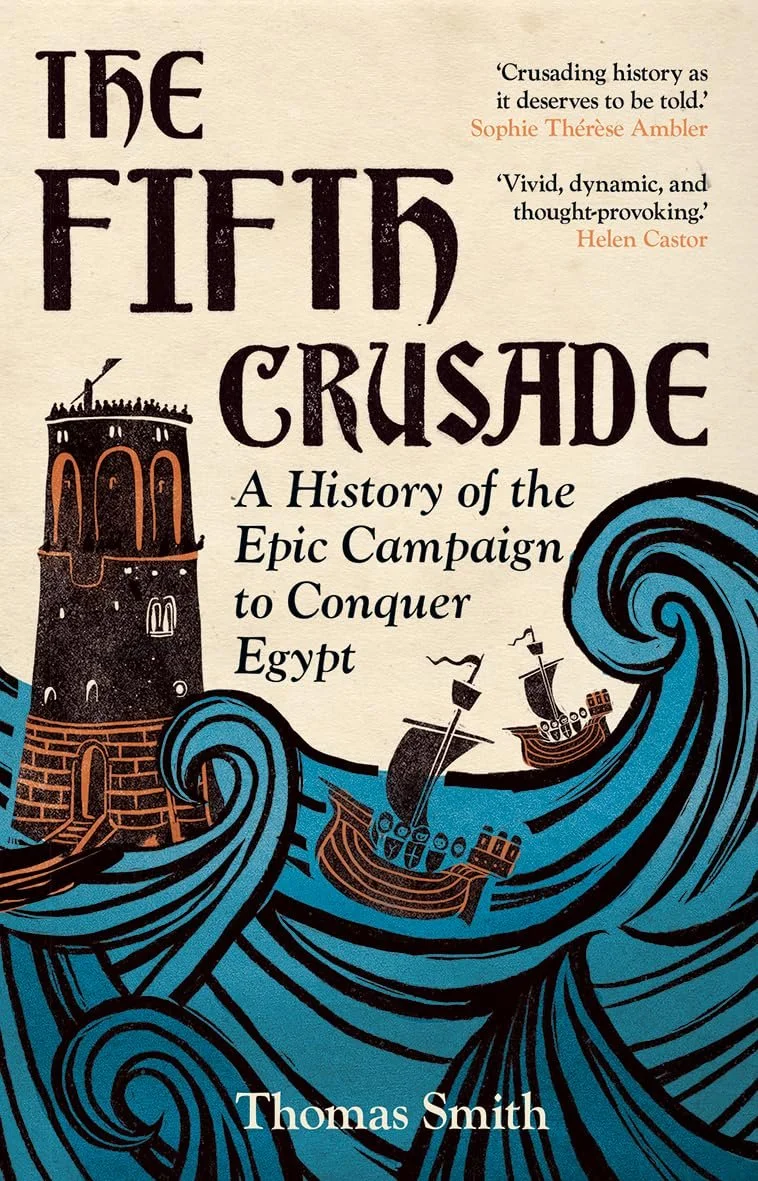
This week, I spoke with Dr. Thomas Smith about the Fifth Crusade. Tom is Keeper of the Scholars at Rugby School, an honourary researcher at both Royal Holloway and the University of Kent, and the author of Curia and Crusade: Pope Honorius III and the Recovery of the Holy Land, 1216-1227. You may remember Tom from his episode back in 2024 where we talked about Rewriting the First Crusade: Epistolary Culture in the Middle Ages, a book which Peter and I both picked as one of the best of the year, and one that has since won the Best Book Award from the Society for the Study of the Crusades and the Latin East. Tom’s new book is The Fifth Crusade: A History of the Epic Campaign to Conquer Egypt. Our conversation about why the Fifth Crusade targeted Egypt in the first place, how this campaign differed from the many that had come before, and just how close this Crusade came to changing history as we know it is coming up right after this.
Well, welcome back, Tom. It is so good to see you and to see your book just making waves out there. It is just awesome. Welcome back to the podcast.
Thomas Smith:
Thank-you so much, Danièle. It's such a pleasure to be on your wonderful podcast once again.
Danièle Cybulskie:
Thank-you. So, you are now writing about the Fifth Crusade. You started – or at least the one that you were on here last for, an award-winning book now – is about the First Crusade. Why'd you skip the middle bit? I'm sure people were asking you to do it, right?
Thomas Smith:
Well, the Fifth Crusade is really a project that I've wanted to do for a very long time. So, it's a topic that I was fascinated by when I was an undergraduate, and my lecturer at the time, Barbara Bombi, introduced me to it and said how great this was. And I just found the setting incredible. I'd never thought really about the Crusaders in Egypt before, and it conjures up all these vistas, I think, of Templar Knights fighting along the River Nile in the land of the pyramids. And it just seemed so incongruous, and really exciting, and interesting, and very different. And I did a lot of academic work on the Fifth Crusade for quite a long time, but all the time in the back of my mind, I always had this thought: this would make an amazing book for a popular audience – for a trade audience – to bring this incredible story to a wider segment of society. And I did a book about this from the papal perspective. It was very much an academic study of papal letters and letter-writing cultures. But I always had this thought in my mind: I think there's a great narrative here. There's a really exciting story. And I really wanted to tell this in a different way and in a different style. So, I was really, really very lucky to have the chance to tell this story to a wider audience.
Danièle Cybulskie:
Well, you were right, because it is a great story and it's told very well. In fact, this is a crusade that I think tends to get less of an intense treatment when people are looking at it sort of elsewhere, especially in trade publications. So, you really dig in here, and you can see your joy. It's a great book. It's a great book. So, you start – well, let's start at the beginning. Why the Fifth Crusade? Why now? We're coming up after the time when Richard the Lionheart, Philip Augustus have been in the Holy Land. They've come back. Why do we need a new crusade at this moment?
Thomas Smith:
So, this is a really exciting period in the history of the crusading movement. It's a time of great experimentation. And with the Fifth Crusade, the thing that really sets it out is the setting. So, the crusade takes place in Egypt, and this is the first major Western expedition to invade Egypt. And there's a number of reasons why they do that, and we can track these back across decades, to the end of the twelfth century. But really, to put this into context, we need to turn the clock back a little bit further. So, if we go back to 1099, the First Crusaders captured Jerusalem, and they carve out four Crusader States in the Holy Land. For the first half of the twelfth century, these are robust political units. They managed to capture the coastal territories, and they start to push out into the hinterland. But this all starts to get more difficult from the second half of the twelfth century. So, you see the rise of Muslim leaders – people like Zengi, Nur al-Din, Saladin – and they begin to push back against the Crusader States. This culminates in the loss of Jerusalem and most of the kingdom in 1187 at the Battle of Hattin, which listeners will probably know from the film Kingdom of Heaven. So, the Kingdom of Jerusalem, the Crusader States, are very much reduced now. They're reduced to really a series of footholds along the coast of the eastern Mediterranean, and they've lost the main reason they were there, which is the city of Jerusalem. So, after 1187, the whole crusading movement changes from one of celebration and reinforcement of the Christian control of Jerusalem to one where the crusaders are trying to recover Jerusalem, recover the rest of their possessions, and to place the Crusader States on a surer footing in the long term. So, the Third Crusade – obviously it's very well known – fails to recover Jerusalem. The Fourth Crusade is a complete disaster. It diverts to capture the Christian city of Constantinople, which is not really in the standard playbook for a crusade. So, the Fifth Crusade is the first opportunity for the papacy to launch an expedition which is going to try and retake the Holy Land. And it's going to put into place something called the Egyptian Strategy, which has been debated at the courts of Europe for decades. Actually, during the Crusade of Richard the Lionheart – at the end – they discuss whether Richard should actually go and invade Egypt. The reason why is because Egypt is the base of the Ayyubid Empire's power. Egypt, as everyone knows, is a very fertile region because of the annual flood of the River Nile, so this makes it a very good region to grow grain in. And if you can export lots of grain, you can get lots of money through trade, and this allows the Ayyubids to build up the biggest army, basically, in the region. And this is mostly funded through the wealth of Egypt. So, the Ayyubid Empire at this time stretches from Egypt in the south through Palestine and Syria in the north, and it reaches a bit to the east, into Mesopotamia. So, this is a really huge territorial unit. It's a really major political force in the region, and most of it is funded from the old power base of Saladin, which he had built up in Egypt. So, it's been long debated at the courts of the West that if they want to retake Jerusalem and hold on to it and the rest of the Holy Land for the long term, what they need to do is they should strike at Egypt first. So, they… In doing so, they would deprive the Ayyubid Empire of the source of its great wealth. They would take that for themselves, and therefore that would be a two-way swing. So, the Ayyubids' army would be much weakened as a result. They haven't got as much funds to pay for a big army, and the crusaders themselves would be able to benefit from those funds – from sales of grain and being on rich trade routes. And then they can pay for a major mercenary army to supplement the standing army of the Kingdom of Jerusalem and the military orders, and then they'll be able to retake Jerusalem and hold on to the Holy Land in the long term. So, it really makes a lot of sense why the Crusaders invade Egypt. So, the Fifth Crusade is the first one to put this strategy into place successfully and to really see if that can change the geopolitical situation in the Holy Land and reverse the fortunes of the Crusader States.
Danièle Cybulskie:
Yes, well, one thing that you can say about the Crusaders is they are ambitious people, and for the early part of the… the crusading movement – you know, I've just talked to Nic Morton, who is a friend of ours, last week on the podcast, so people can get that background listening to that episode. So, I want to talk about this Egyptian Strategy for a second before we start getting into the nitty-gritty, because a question that I've sort of always had about this is, when we have the Crusaders coming in the 1090s, they're looking for Jerusalem, knowing that they're going to have to sort of fight their way there, capture some cities, all of that stuff. So, when they're looking to capture Egypt, do they have that whole… that whole big idea – the whole big strategy – in mind at the outset? Or are they targeting like, we're going to have to take this city and then we'll rethink things? Because, like, there's… there's a sense where you could think about, like, if we topple Cairo, we'll topple the entire Sultanate at the same time. Do you think that they had that gigantic goal in mind right at the beginning?
Thomas Smith:
I think that's the ultimate overall goal. I think that's very clear in their minds about what they're trying to do. But I think they also have a more minute strategy, which is based on taking particular cities. And they very much do have a strategy – as we've seen in the works of Steve Tibble, that the crusaders do have a strategy there – and they do have one on the Fifth Crusade, as well. This develops over time, as well. I think probably we'll talk later about the prophecies, as well, which foretell that they will conquer the rest of Egypt.
Danièle Cybulskie:
Mm-hmm.
Thomas Smith:
So, they have a clear strategic aim. It starts with the city of Damietta, and then they're going to try and work their way down the River Nile towards Cairo. But it's also being fueled by this belief in prophecy, as well, which intertwines with the military, strategic objectives of the Crusades. So, I think they definitely do have a plan, and they also go about the reduction of the city of Damietta and the conquest of Egypt in a very methodical way. So, I think they definitely know what they're doing, and they have a plan, and they are trying to enact it.
Danièle Cybulskie:
Well, I have this question in part because many of the decisionmakers have never been to Egypt, right? And this is going to become relevant later.
Thomas Smith:
Yeah.
Danièle Cybulskie:
So, you know, it's so ambitious when you look at a map to say, we'll just do this, and this, and this, and then it'll all happen. So, I have wondered in previous moments thinking about this crusade if they had the entirety of Egypt in mind. Okay, so when we – when you start the book, you spend some time on Innocent III. And, you know, this is something that you've spent some time on – doing some research about the papacy and the Crusades especially. But it feels like you wanted to talk about Innocent for a minute here. So, let's talk about Innocent. He's a very important person at this moment, and you kind of place him at the heart of this crusade. So… so what's… what's Innocent's role here?
Thomas Smith:
So, the Fifth Crusade is really the brainchild of Pope Innocent III. He's wanted to get a crusade to Egypt off the ground for quite a long time. Obviously, he launched the Fourth Crusade as well, which originally was going to go to Egypt. But as we mentioned, it gets diverted and captures Constantinople. So, he's long had this idea and wanted to put this Egyptian Strategy into place. He's one of the most active crusading popes in the whole history of the Middle Ages. So, he launches a whole series of expeditions. He's sponsoring crusades in the Baltic, in the south of France against the Albigensian heretics. He's sponsoring the – what we might term, not unproblematically – the Reconquista in Spain. So, there's holy war going on across all the fringes, basically, of Europe at this time. So, he's very much involved in crusades. He's very much enthusiastic in terms of trying to get a new expedition off the ground, and of course, the ultimate goal is to try and recover Jerusalem. So, he launches the Fifth Crusade with a letter called Quia maior, which he sends in 1213 to everybody in the West, essentially. And this is read out – it should be read out – in every church in the West. It forms the basis for preachers, as well, crafting their sermons. And so, he launches this huge preaching campaign across Europe to recruit as many soldiers as he can to go out to the Holy Land, and to Egypt, and to try and get a crusade off the ground, basically.
Danièle Cybulskie:
Well, for people who are looking at sort of the bigger picture, Innocent is also the guy behind the Fourth Lateran Council in 1215. And we're going to talk about who gets involved in this crusade, and if 1215 is hitting a note for people, this is also the year of Magna Carta. So, you know, if you're wondering why King John didn't make it on this crusade – they're busy at this moment. So, who gets mostly involved in this crusade? Because this is an important part of your book – sort of who gets involved in this crusade, picking out the people who are going to be the major force – because it's a little bit different in this one than it has been in previous ones, right?
Thomas Smith:
Yeah. So, in previous crusades – say we look at the Third Crusade – you'll be looking at the main lead – you have three very clear main leaders of that crusade. So, you have Frederick Barbarossa, the Holy Roman Emperor; you have Richard, King of England; you have Philip Augustus, the King of France. So, it's very clearly delineated along the lines of different kingdoms, and they're led by kings. But the Fifth Crusade it’s quite different, actually. So, we're seeing, really, mass recruitment across Europe. So, we see lots of recruitment in England, in Scandinavia, in France, Italy; loads in Germany and the Low Countries; lots in Central Europe, as well – from Hungary and Austria. So, we're really seeing mass recruitment across Europe, and it's really widespread. We have a couple of really big, major league leaders of this crusade in waiting. So, the most famous is Frederick II, who is the Holy Roman Emperor-elect and King of Germany. He takes the cross, also in 1215, at his coronation in Aachen, and it's widely expected that he is going to be the overlord of this crusade. But as we'll see, actually, things don't go quite to plan there. You also have another king, as well. So, Andrew II, the King of Hungary, is a major leader of this crusade, who, I argue, has been passed over, really, by scholars. And I think the potential of his crusade has not previously been appreciated. But when we look very carefully through the papal correspondence, you can see in those letters that the papacy is clearly gearing him up to be the overall commander of the crusade – at least until Frederick II arrives. You've also got – if we go one rung down the social ladder – you've got rulers and leaders like Ranulf VI, the Earl of Chester. He's a major political force in England, and he leads one of the most important contingents on the crusade. And actually, later stories are sung of him and his crusading deeds. He's mentioned in the same breath as Robin Hood. So, in the poem Piers Plowman, he gets a mention that people know songs about Earl Ranulf and his Crusading deeds. So, he's a really famous figure in the Middle Ages. Perhaps not so famous now, but undeservedly so, I think. Then if we look to the East, there is another king involved, as well. And this really muddies the waters in terms of who is actually in command of the crusade. So, the papacy and King Andrew II of Hungary very much think that he is going to lead the expedition. But in the East, in the rump Kingdom of Jerusalem, John of Brienne, the titular King of Jerusalem, thinks that he is going to lead the expedition. It's his territories they're going to be fighting for. And he is looking to annex Egypt to the Kingdom of Jerusalem to set up a new Crusader State, in effect. So, we have two kings there who expect to be leading the expedition. That is a source of problems very, very soon after the beginning of the campaign. And then you also have a third king, Frederick II, in waiting, who is always in the background, and they're expecting his arrival on the crusade. So, there's a kind of fluid situation with the leadership where it's not quite clear who exactly is going to be in overall command. And that, as we will see, will hamstring the expedition at some key moments later on.
Danièle Cybulskie:
Yes. And while we're looking at the people who are in charge on the Christian side, who's in charge on the Muslim side, here? Because while – especially when I was talking with Nic last week – there are so many power players in the Middle East, but when it comes to this crusade, we're really talking about a few really important ones. So, who's in charge in the Sultanate?
Thomas Smith:
So, we're thinking about two really important figures here, and you're exactly right to emphasize that the Ayyubid Empire at this time is actually in a sort of semi-fractured state. So, Saladin was the most famous leader of the Ayyubid Empire, and he's really the one who forges this… this huge swathe of territory, as we've mentioned. But when he dies, then it's really up for grabs. And there's not someone who has quite the same force of character as Saladin. In the end, it goes to his brother, al-Adil. He's the person who's ruling the Ayyubid Empire at the time of the launch of the Fifth Crusade, and the Fifth Crusaders fight him initially. But he dies fairly soon after the beginning of the campaign, and the leadership of the Ayyubid Empire then goes to al-Kāmil – so, his son – and he takes over. But there's a lot of squabbling between other powers, basically, who are looking to take control of the Ayyubid Empire. So, one of the key themes during this crusade is that Sultan al-Kāmil – he's a really good military strategist, but actually he's fighting on two fronts simultaneously. He's fighting the Crusaders, but he also has to keep an eye on his political rivals in the rest of the empire. And at some key points, they threaten him and he has to leave the crusade to put those uprisings down, basically. So, it's quite an uncertain position for the Ayyubids at this time. It's a really good time for the Crusaders to invade because you don't have that iron grip over the empire that Saladin had once had. So, it's looking very good for the Crusaders at the beginning. Very propitious.
Danièle Cybulskie:
So, let's talk about the campaign, then. We have all of these people gathered from all over Europe. They're teaming up. They decide they're going to hit Egypt. And there's a sense that the Muslims know that they're coming, right? So, al-Kāmil knows that they're coming. So, what… what happens next? What happens at the beginning of the campaign?
Thomas Smith:
So, you're exactly right: they do know the Crusaders are coming. They've sealed a truce that expires in 1217, and the Crusaders are really planning this as a sort of preemptive strike to get boots on the ground for exactly when that truce expires. So, both sides know there's no extension of the truce, there is going to be war at some point, and they're used to waves of Crusaders coming over. So, this is not unexpected at all. Once the Crusaders arrive in the Holy Land, they assemble at the city of Acre. This is the capital of the Kingdom of Jerusalem since they've lost the city of Jerusalem. And all of the Crusader armies begin to assemble here. And we start to see, already, clashes between King Andrew II of Hungary and King John of Jerusalem. They're tussling in a contest over the dominance for leadership of the Crusade. So, they start a series of raids in the Holy Land before they invade Egypt. Now, this makes a lot of sense. There's been bad harvests in the region in that year. And so, the Crusaders need to collect supplies. They also need something to do before all of the armies have arrived. So, it takes quite a long time actually to assemble these various diverse Crusading forces from across Europe who are sailing at different times. So, they engage in a couple of raids that are actually really quite successful, but these are really brutal chevauchées. So, we want to imagine, here, the Crusaders plundering villages, burning them to the ground, killing the inhabitants. There are going to be columns of smoke across the skyline of Palestine. And what they're trying to do is they're trying to denude the Ayyubid forces of their military strength. They're sort of probing there to see what they can do, scoping out the strength of al-Adil at this time. They also try and take back the fortification on the top of Mount Tabor. So, there's an isolated hill, a really large hill there, which is very near to Acre. The technical, geographical term that I learned is it's a monadnock, which is… it's a hill in, like, an isolated, very flat, plain landscape around it. So, if you imagine a really big hill, on the top of this, there is a big Muslim fortification. This is actually mentioned by Innocent III in the papal crusade call as one of the reasons why the crusade should be launched: that the Muslim fortification of Mount Tabor is putting Acre at risk. It's threatening the capital of the Kingdom of Jerusalem. So, the Crusaders try and take that. They march up this hill. It's really heavy going. There are discrepancies in the sources as to whether they have siege equipment with them. John of Brienne, the King of Jerusalem, and Andrew II of Hungary are both tussling for control here and for dominance, and they're trying to prove their leadership of the army through their deeds. But basically, it's a failure. They don't manage to capture Mount Tabor. They have to withdraw. That's really kind of the end of the campaigning season. There's a third campaign, which is launched by a smaller section of the army – which is not authorised by their leaders – that is a complete catastrophe. They're attacked by robbers on the roads, they have terrible weather, and they're roundly defeated and sent back to Acre. So, the Crusaders in this Holy Land Crusade of the crusade have done some pretty good work, actually. They've sort of probed the Ayyubid defences, they've tested themselves in battle. They haven't been defeated, but they haven't succeeded in capturing Mount Tabor. But they've got some supplies, and they've started to learn to work together as an army. But this is where Andrew II and John of Brienne fall out. Andrew II seems to have gone off in a huff, basically, that he was unable to take overall command of the army despite all of his best efforts. We have a really nice source where it says that he convenes a council of the whole crusader army in his red royal tent. And the idea is there that, you know, as it does today, the location of a meeting signals the power dynamics. He's trying to bring everyone to him to show that he is the leader. They come to meet him. But he nevertheless never manages actually to turn this into uncontested dominance. So, he's upset with this, and he leaves the crusade. He then marches back to Europe. So, now the crusade is under the sole command of King John of Jerusalem. But we've seen, here, a number of problems raising their head. John of Brienne, the King of Jerusalem, has managed to establish himself as the overall leader at this time, but his position is not unassailable, actually, and he's quite nervous and jealous of his position. And we're going to see that emerge later on in his dealings with Frederick, and his fears around the arrival of Frederick II. But the Crusaders have started to work together, and they've decided now they're going to go and attack Egypt. So, they get their forces ready and start to sail south, then, to invade Egypt.
Danièle Cybulskie:
Yes. And so – this is something I always end up talking about when I'm talking about the Templars with people, is that the longer you've worked together, the easier it is to work together. And I'm bringing this up because something that we haven't mentioned yet is that Innocent, as usual, says you get indulgences if you go on crusade. If you're a crusader, you get all of these benefits for your soul. And something that you mentioned as being kind of interesting when it comes to this particular crusade is most people find those vows or – or take those vows – with the idea that they're going to be there for a year, and then they're going to leave. So, when it comes to, okay, we're going to go attack Egypt now, you have people that are finally working together, but then it's constantly changing who's actually there.
Thomas Smith:
Yeah, there's a change going on in the crusading culture at this time. So, you're exactly right. On previous crusades, most Crusaders had stayed on the campaign until they either die, or the Crusade is successful, or it's defeated. So, most of the Crusaders are going to be committed for most of the campaign, and that's really a result of the way that they travel. Mostly they travel by foot in the First and Second Crusades. The Third Crusade, they start travelling by ship. And you start to see there the beginnings of some of these changes in the crusading movement culture, when Philip Augustus sails back to the West during the Third Crusade, leaving Richard the Lionheart to his own devices. And we're also seeing some developments in the actual formalization of this crusading culture. So, at exactly the time of the Fifth Crusade, we're seeing an indulgence of remission of sins being offered to participants in the Albigensian Crusade in the south of France for only forty days' service. So, you only have to campaign and fight for forty days, and then you can go home. You've won your indulgence of remission of sins, so why would you fight for longer? So, we're starting to see here the foundations of the crusading movement beginning to shift underneath the Fifth Crusade. And as you say, the average length of service on the Fifth Crusade is one year. And really, the thing that facilitates this is the location: the fact that it's happening on the coast in Egypt, that people are sailing there, and you have two… two seasonal sailings across the Mediterranean – around Easter and in the autumn – and they bring reinforcements and supplies, but they're also taking people back who have decided that, I've campaigned for long enough, I'm going to return. So, the Fifth Crusade strategy is really determined by this rhythmic series of arrivals and departures. It's almost a carousel, as some scholars have called it, of arrivals and departures. And this is a real problem because you're losing experienced troops, you're being sapped of that experience and knowledge of how to operate in this really hostile environment. On the other side, you're getting new troops coming in, new reinforcements, as well. But this really imbalances the strategic direction of the crusade in a way that other crusades hadn't really had to deal with. So, this is a time of great experimentation in the crusading movement, but also some developments that are less advantageous.
Danièle Cybulskie:
Yes. And speaking of experiments, let's send our crusaders to Egypt, where they are attacking a city on water. Tell us about Damietta.
Thomas Smith:
This is fascinating. One of my favourite parts of the crusade is trying to imagine this lost city of Damietta. So, I think the name Damietta probably doesn't ring a lot of bells today. It's not as important as it once was. In the Middle Ages, Damietta was as important as Alexandria. So, it was one of the two main ports through which trading is being done, basically, in Egypt. It's on the Damietta branch of the Nile. And the reason why Damietta is less important today than it was back then in the Middle Ages – and why that is underappreciated – is really as a direct result of the crusades, because it's attacked by the Fifth Crusade. It's also later attacked by the Seventh Crusade. And actually, the Ayyubids, the rulers of Egypt, decide to destroy the city to stop the Crusaders being able to attack it again, because it's such a great base for these military invasions. So, Damietta is then destroyed, and it is rebuilt over time, of course. But then, also, you get the silting of the Nile. So, there's hydroelectric projects in the modern period, as well, and just the natural silting of the delta that means that Damietta loses its advantageous position. So, in the Middle Ages, it's right on the coast. This is a great port city on the Mediterranean. This is where goods are flowing in and out of, but its modern position is actually further south now from the coastline because of those changes in the… in the geography of the Nile Delta. So, it's not the important trading city that it once was. Damietta in the Middle Ages has a massive triple set of walls – huge walls – each higher than the last. If you imagine a modern three-tiered wedding cake, we have a contemporary depiction of Damietta by the great artist and chronicler Matthew Paris, and he shows it in this way. It looks like a modern wedding cake. And so, you have these huge walls, you've got a massive stone chain tower in the middle of the River Nile, as well, and this controls access to the river – upriver to Cairo – by means of a huge harbour chain. And this is a major city. It's a major set of fortifications, and it has about 20,000 souls inside the city. So, this is a really major, major hub, basically, for trade, and it's really, really well defended. These walls are made from the remains of – the remnants of – Ancient Egyptian pyramids. So, there's one sultan who, at the end of the twelfth century, actually dismantles Ancient Egyptian pyramids, uses the stones to rebuild the fortifications of Damietta. We've got a great account that one of those pyramids was made of quartz, as well. So, we have to imagine, here, I think, a really quite incredible city with incredible history. And the Crusaders are obviously going to target this. They need a port city. Damietta is crucial in terms of their overall Egyptian Strategy. You cannot march south towards Cairo if you don't have a port city because you can't have a major enemy fortification behind you. But also, you need access to a port, of course, to get supplies, to have lifelines of communication, reinforcements back to the West. So, the crusader strategy is: we're going to hit Damietta first. Once we've captured Damietta, then we can begin moving south and taking out the rest of Egypt.
Danièle Cybulskie:
So, as you're saying, Damietta is right on the Nile, it's right on the ocean, it's a wet place. Where do you even start to attack a city like this? Because there's not going to be a lot of places to put your army.
Thomas Smith:
No, exactly. I think what's really fascinating is the Fifth Crusade gives us an insight into some lost military technologies from the Middle Ages that may not be familiar to all readers. So, what I found so fascinating is they have flat-bottomed landing craft that are specifically designed and developed for attacking the Nile Delta. And these are just like the Higgins boats that are used on D-Day in 1944, but just seven hundred years earlier. So, they're flat-bottomed, they've got a landing ramp at the front that can be dropped down, they're rowed by a series of oars – long oars out the side – and you can row these quickly to shore, and you can disgorge fully mounted knights – fully armored knights mounted on their horses, ready to go. And so, that's what the Crusaders do. They have a fleet of these landing craft, they sail to – row them to – shore really quickly, they hit the coastline, they drop the ramps, these knights charge out, they engage a Bedouin cavalry force on the beach and defeat them. There's a Frisian Crusader who performs this amazing deed, according to one of the primary sources. The Bedouin are so far off that they think he can't possibly hit them. He drops to one knee, and he swivels his body and throws a javelin, and this incredible deed – it travels a great distance and strikes one of the Bedouin dead from… from his mount. And the rest of the Bedouin are then terrified, and then flee the scene. So, the Crusaders have a beachhead. They set themselves up on the west bank of the River Nile. There's an abandoned mosque that they use as headquarters, and they set up their camp there, and they fortify their camp. So, they're on the west side of the River Nile. Damietta is on the east side, and between them and the city is this chain tower. So, they need to take that out first. And as I said, this is a crucible for the development of military technologies. The Crusaders here, when they try and capture this chain tower, they try everything. They even try – they have this plan to dig under the River Nile and try and undermine the tower, but they don't get very far with that. So, that doesn't work very well. But in the end, they try assaulting it with siege ships. They find it really difficult. The defenders have got Greek fire. So, Greek fire is almost like a medieval napalm. It's a chemical-based, naphtha-based chemical weapon. It can be delivered in ceramic hand grenades that are a bit like big, Christmas baubles made of clay that you can then fire and throw, and then they explode. And this liquid – you can't put this out with water, so it will burn on top of water. We don't know exactly what the recipe for Greek fire is, but it's heavily used in this campaign. It's really, really familiar to the Ayyubid forces defending Egypt, and the Crusaders are encountering this, really, for the first time, a lot of them. This is a pretty terrifying weapon. They mention in the primary sources that it strikes from above like lightning. So, this is probably in those ceramic hand grenades. It could be in the form of flamethrowers. We have manuscripts from the twelfth century which show ship-mounted flamethrowers that use Greek fire. So, it could be that they have one of those. We don't know which method it is. But the Crusaders are really struggling to capture this chain tower, and the solution is developed by a German schoolmaster. He's a man out of place, perhaps. He's called Oliver of Cologne, and he's spent a great deal of time recruiting for the crusade, and he's accompanied a really large contingent of German and Frisian crusaders. And he knows ancient military manuals really well, and he develops a unique floating siege engine that's two ships lashed together, and on top, they build a wooden tower. It's almost like a fortress, and they cover it in coated animal hides to protect them from Greek fire. And then, there's a rotating platform with a huge siege ladder on the front. And he designs this and funds it. And he watches this as it attacks the chain tower. He writes his incredible eyewitness account of this. It's really, really quite fascinating. It gives us a real good glimpse into what the crusade is like – the actual action at the front line. And they managed to capture the chain tower. A Frisian crusader, again, plays an instrumental role here. He's armed with a modified agricultural flail. It's basically a medieval nunchuck, which is quite… quite a common weapon, actually, in the Middle Ages. It's really a peasant weapon, but it's really, really handy in this sort of situation because it's a really good close-quarter combat weapon. It's fast, it's very easy to handle. And you've got to imagine these guys on this siege ladder and the churning waters of the Nile are pushing the siege ships. There are crocodiles in the water. I don't know if they're encountering them at this very moment, but there's lots of dangers around them. And you've got arrows, and javelins, and Greek fire flying down from the chain tower. And this nunchuck basically is a really, really good weapon to use in that situation because you can use it very well one-handed. So, we have this eyewitness account that this freezing Crusader – he's called Hayo of Fivelgo – he is the second person to storm the chain tower, and he takes out the sultan's standard bearer. He's recorded to have lashed out violently to the left and the right with this agricultural flail. Which he's modified to put iron chains between it, as well, so it makes it even more deadly. It's just two big wooden sticks connected with an iron chain. He's put more chains in it. So, this is really quite a dangerous weapon, and he uses it to deadly effect. The Crusaders in the end capture the chain tower, and then they're about to besiege the city of Damietta. But they're operating in a region that's exotic for them. A lot of them don't have knowledge of operating in this kind of region. As you said, this is a really lush, watery landscape. I think when we imagine Egypt – we think about a crusade in Egypt – we think about sandy vistas and deserts. But actually, really, this is a very lush, verdant landscape. The Crusaders are really shocked when they arrive at how green it is, how many trees, and bushes, and orchards, and fruit trees, and birds, and fish. They write all about this in these eyewitness accounts. They're really excited by this, but they don't know how to operate here. So, one of the – there's two big dangers they encounter from this natural landscape. One is the muddy, marshy waters of the Nile. So, some of the Crusaders, they're learning how to operate in this environment. They drink some of these waters. It's very hot, obviously, on the Nile Delta. And they die in agony, basically, writhing on the banks of the Nile from having drunk the muddy waters of the Nile. And we have eyewitness accounts that describe this kind of harrowing sight. You've also got crocodiles, as well. They're really fascinated by crocodiles. Most of them have never seen one before. They've read about them in books. They've heard about them. They call them cocatriz in Old French. And they write these really detailed descriptions of how dangerous these crocodiles are. They're really fascinated by the fact that – they say they eat their young, their own young, just after they've hatched. And I imagine – I think, probably, some of the Crusaders must come to a sticky end, as well, at the hands of these crocodiles. So, they're operating in a really dangerous landscape, and they're really learning how to fight this crusade from scratch.
Danièle Cybulskie:
Yes. Yes, absolutely. Those crocodiles are really well fed after this because… because they don't win the chain tower on the first try. So, the… They are very fat crocodiles, I think, at this time. But we're talking about innovation. In… in the end, what happens is they… they use a tried and tested strategy when it comes to Damietta, which is a siege. This is something that they are used to. So, how do they capture the city?
Thomas Smith:
So, once they manage to get across the River Nile, which is actually more difficult than they imagined – this takes quite a long time – they manage to encircle the City of Damietta proper. So, up until this time, they've been besieging the chain tower. The citizens of Damietta – their daily life has changed very little. They're obviously concerned about this, but actually food is still flowing in and out of the city gates. This is all fine, as far as they're concerned. But once the Crusaders manage to enact a strict blockade of the city, everything changes. Even the very soundscape of the city changes. So, the Crusaders start hammering the city walls and towers with their trebuchets – these huge catapults. They're even firing in really gruesome ammunition. So, there's a lot of brutality going on in this conflict on both sides. And the Crusaders actually decapitate some of the enemy that they capture and have killed, and they shoot their – launch the decapitated heads into the city to try and terrify the populace into submission. So, the experience of the citizens becomes pretty dark pretty quickly. They also can't get fresh food in and out of the city anymore, so they're reliant on their grain stores. Now, the Crusader sources actually go into quite a good amount of detail about the specifics of the grain that you can grow in Egypt and that's held in Damietta, and it's very abundant in terms of grain, but actually, you can't store it for very long. So, the citizens of Damietta, after the siege drags on for quite a long time, start to run out of food. So, their position really becomes really quite precarious quite quickly. So, the Crusaders are trying to take the city. Al-Kāmil has arrived – the sultan. He's trying to dislodge the Crusaders. So, the Crusaders have a fortified camp. They've dug trenches. They've got sharpened wooden stakes to defend themselves. They have sentry duties, and al-Kāmil is trying to dislodge them. They fight quite a series of battles before the walls of Damietta. The Crusaders are trying everything they can to take the city. So, they're battering it with their trebuchets. They managed to destroy one of the towers, pretty much. They're launching amphibious assaults. They're trying to undermine the city. They try infantry assaults using something called cats, which are thankfully not the feline variety, but they're – if listeners know their ancient siege weapons, they might know cats are kind of wooden protective shields that they use over them. It's a kind of a long, protective shield for a battering ram, and they try to batter the gates down, but they have no success. In the end, the siege goes on for so long – this is one of the longest sieges from the history of the Crusades, and I think one of the… one of the least appreciated, and really has been forgotten. But actually, the siege goes on for eighteen months. This is a major siege from medieval history, generally. This is a majorly disruptive event in world history that involves tens, if not hundreds of thousands of people directly. And this is a really major event. And what happens on the 5th of November, 1219, is that the Crusaders finally manage to capture the city of Damietta, and they do it through the slow, unglamorous weapon of starvation. They just starve the citizens into submission. Death, hunger, famine, disease is tearing through the city. And on the night of the 5th of November, there's a papal legate – a delegate who is really the spiritual leader of the Crusade. He's called Pelagius. He sends a crack troop of commandos, effectively, with special siege ladders. And at nighttime, they approach the city, they weave their way through the broken remnants of some of the fortifications, and they burn through the outer gates of the first wall. They climb, they get through, they start to climb up the next wall and try and burn through the next gate. And the sight that greets their eyes in the night of 5th of November is almost apocalyptic. There's virtually no one left to defend the city. There are bodies lying everywhere in the streets. That's the first thing they see. And as they break into the city and begin to plunder the city, they realize that most of the citizens are dead. And we have these really harrowing accounts by Oliver of Cologne, who goes into the city, and he describes what he sees. And he sees families lying dead. He describes infants dead at the breasts of their dead mothers. It's a really, really horrible scene. And we get this really harrowing account of the effects of the siege on the citizens of Damietta. But the Crusaders have captured the city. They begin to plunder the city. The authorities try to get this under control, and then they start to divide the loot, and divide the accommodation in the city in terms of the towers, and they start to refortify the City of Damietta. This is a glittering prize. The City of Damietta is the first major city that the Crusaders have managed to capture on a major Western expedition really since the First Crusade in 1099. So, this is a huge development in the history of the crusading movement. They're beginning to develop and establish a brand-new Crusader State in Egypt. And I really think this is often unappreciated. Underappreciated, certainly, because of the way the Crusade ends. And I think people then look back and think that this is one of those overlooked crusades, but really, undeservedly so. This is a majorly disruptive event in world history. It is one of the most important developments in the history of the crusading movement since 1099. And this is a major cause for celebration in the West among the Crusaders and their supporters. So, the Fifth Crusade has really started to turn the tide in terms of the fortunes of the crusading movement, and shifted the geopolitical situation in the Near East. Potentially, at this stage, it looks like this could lead to some sort of permanent change in the fortunes of the Crusader States.
Danièle Cybulskie:
Yes. Yes, and they're so confident that they immediately make it an archbishopric, I think, right? They're like, well, this is ours now. We are going to be taking over the rest, so we're going to need an archbishop here. They're very confident. Again, these are people with huge ambitions. And I mean, I want to go through all of the things in your book, but we don't really have a lot of time for it. So, I guess we have to sort of, like…. sort of scoot closer to the end in that they take Damietta. Obviously, they want to take Cairo. They're feeling pretty confident, especially because they kind of do have the Muslims on the run here, where they're feeling, like, a little bit under pressure because of this success. And in the book, you mentioned that they – the Christians – are able to take another town very easily, and so this is all looking great for the Crusaders. They decide to press their advantage, even though they're still waiting for the Holy Roman Emperor to come, and this is a major part of the narrative. I don't know if we're going to have time for it now, but it's a major part of the narrative. They're waiting for Frederick II to show up. He hasn't yet, but they're like, we have to go for Cairo. So, tell us about their… their strike for Cairo.
Thomas Smith:
Yeah, this is the endgame of the Crusade, and this is where everything starts to fall apart. So, as you say, they're waiting for Frederick II. They're sort of hamstrung really in terms of the overall strategy. There's a period of delay after they capture Damietta where they can't decide what to do next. They refortify the city. This is all good stuff. They capture Tinnīs, as well, the city slightly further to the east of that. So, they're starting to really assert their dominance in the Nile Delta. Things are looking good in terms of a push on Cairo. But Frederick hasn't arrived. John of Brienne, the King of Jerusalem, he decides to leave the expedition for quite an extended period to pursue a crown in Armenia. So, his position's quite uncertain, as I mentioned earlier on, and he has a claim to the throne of Armenia. So, he leaves, and the Crusaders then really can't decide whether to push on or not. And in the background, all the time, there's this carousel – this revolving door of arrivals and departures – during the seasonal passages. And this really dictates the course of the Crusade. But by summer 1221, finally, the Crusaders have the momentum on their side. The papal legate, Pelagius, has been pushing for action for a very long time now and has been struggling to get traction. But the arrival of some major imperial contingents under Ludwig of Bavaria and Count Henry of Malta really swings the balance in his favour. And he manages to get the Crusaders to agree to assemble and strike at Cairo to the south. And in the background, as well, another key thing is their belief in prophecy. And that's going to become, I think, crucial in actually explaining what happens to the Crusade. So, very briefly, while they're on the crusade, they discover these Arabic books of prophecy. One of them is called The Book of Clement. And in this book, it foretells that the Crusaders will capture Damietta, that they will capture Tinnīs, then they will go on to capture Cairo. And then, a Christian emperor from the West – whom the Crusaders identify, understandably, with Frederick II – will arrive in a newly-recovered Jerusalem. He will meet there a Christian emperor from the East, whom the Crusaders identify with the legendary figure of Prester John, who's confused with Genghis Khan, who – the Mongols are on their way. They're making advances against Islamic forces in the East. But they definitely don't want to be friends with the Crusaders. But the Crusaders don't know this, so they think then that what they need to do is they need to capture Cairo before 1222 so that the Christian emperor from the West and the Christian emperor from the East can meet in a newly-recovered Christian Jerusalem in 1222. And we have to understand that they are marching to a prophetic timetable, and if we don't understand that, we… we can't really explain what happens on the Crusade. And I think lot of previous scholars have misunderstood why the Crusaders do what they do when they do it. So, it's summer 1221. The River Nile is just about to flood. This is the worst possible time to launch an invasion of southern Egypt, but the Crusaders do it anyway. Why do they do it? Well, they know that the Nile is going to flood. They've been operating there for four years. They're not ignorant of this at all. They write about it in their chronicles. You have these nilometers that are being used, as well, that can measure the flood of the Nile. So, they know all about this. They're not doing this because they're ignorant of that. They're doing it because they have to fulfill these prophecies. And they believe, then, that because these prophecies have foretold their previous successes, that then of course they will succeed, despite the flood. And that explains why they march out in the summer of 1221, just as the Nile is rising. So, they start making their way south. Sultan al-Kāmil is fighting them. The Crusaders are doing a really effective fighting march. It's the same tactic that is used by Richard the Lionheart on the Third Crusade. So, the Fifth Crusaders, they have their ships on the River Nile. This is on their right flank, so they're being protected from the water. In the centre, they have their knights and the noncombatants. And then, on their left flank, they have heavily-armoured infantry with large shields. Sultan al-Kāmil is using traditional tactics that are current in the Muslim world. He's using light horse archers who are harassing them, riding around, loosing volleys of arrows at them repeatedly, peppering them with arrows, trying to break them down, trying to make them break formation. But the Crusaders hold fast. They advance so far south, they pass the burnt-out remains of al-Kāmil's palace at Shirimsah. And he must – this goes up in flames, and they march past its smoking ruins. They really feel like they've got, as you say, the Ayyubids on the run. All the indicators seem to show that. There are Muslim sources that tell us that some of the citizens of Cairo begin to panic when they hear the Crusaders are on their way, and they begin to evacuate the city. So, it looks like if the Crusaders can make it as far as Cairo without the army breaking down, they might be able to capture the city and then have conquered basically, in effect, most of Egypt – certainly, the key nerve centres of Egypt. They make a mistake, though. They make a really crucial strategic error. They cross a small stream as they're making their way south and they end up then – if you imagine a downturned triangular island, basically. So, you've got two branches of the Nile running either side, the Crusaders advance to the tip. They need to cross the River Nile, the next branch of the Nile, to get across and continue marching south to Cairo. They've covered really quite a long distance. They're only about two weeks from Cairo now. They've been marching at a very steady pace. Quite slow, because they're being harassed by al-Kāmil, but they're making a lot of progress. They're really not that far away from Cairo. Only another two weeks, and then they can start to besiege the city – if they even need to besiege it at all, if it's been evacuated. It's at this point that Sultan al-Kāmil shows his tactical genius. So, he has a much better working knowledge of the Nile Delta, and he uses that to his advantage. As the Nile waters begin to rise, the Crusaders really struggle to make it across the River Nile. He basically sort of besieges them with big catapults. They can't go down to the water. Men and animals are killed when they try and go for water on the Nile. They're kind of hemmed in. And then what he does is a stroke of genius. That small stream that the Crusaders had passed, and they had written it off as being strategically insignificant. With the rising floodwaters, that is now a navigable waterway. And what al-Kāmil does is he sails ships back down the Nile, up that stream, and manages to surround the Crusaders. So, they're now on the tip of this island, essentially, in the Nile Delta. They're surrounded on all sides, and the Nile waters are flooding. So, their operational opportunities – possibilities – are really diminishing really quickly right now. They get to a stage where they realise they're stuck, they're running out of food, they can't advance any further. So, they have two options, really. One is to stay put. They think that Frederick II is about to arrive. The imperial contingents have said he is on his way. They're expecting him possibly to arrive within a matter of days, or even weeks. So, if they could just hold out for a little bit longer, maybe Frederick would arrive to save them. The other option is to try and fight their way out. The Crusaders delay, they discuss what to do, and in the end, they realize that there's nothing for it. They have to try and fight their way out or they're going to die on the tip of this island, basically. So, they decide to enact a covert, nighttime retreat because they're completely surrounded. This is where things start to go really wrong.
Danièle Cybulskie:
Yes.
Thomas Smith:
So, the Crusaders have got large stores of wine, and this is just too tempting for the Crusaders. They can't leave it behind. During the day before this covert, night withdrawal, the Crusaders have a massive day-drinking session under the burning Egyptian sun. This is August, 1221. There are records that they don't mix the wine with water. They don't dilute it like they should. So, I think we've got to imagine them getting totally plastered, basically, under the sun, drinking this wine, drinking it dry. By the time, then, that this covert, night withdrawal is supposed to begin, a large part of the army is completely drunk. We have eyewitness accounts that that there are some who are passed out in their tents. They cannot be roused. Some who are passed out in the roads. Some are so drunk they wander off into the flooded fields around the Crusaders. They're never seen again. And the Crusaders then begin to try and withdraw. Now, some of the Crusaders – probably the same ones who are really drunk – decide to set fire to their tents. So, we have to imagine a nighttime scene, here. The element of surprise is crucial. Some of the Crusaders set fire to these tents, the flames lick up the tents, the embers are rising into the night sky, and of course, what does this do? This alerts al-Kāmil to what the Crusaders are doing as these tents start going up in flames. And as the other drunk Crusaders see this, they think this is a great idea, too, and they set fire to their tents, too. So, al-Kāmil falls upon them with his forces. They're sitting ducks, really. They're flooded out by the Nile. Operational movement is really constrained by this. It's nighttime. You've got these tents on fire. We've got to imagine a really chaotic scene. The Crusaders who are not completely passed out and drunk run for the ships. The ones who are inebriated are just left behind, and they're just killed. The ones who run to the ships – basically, the ships are too heavy. There's too many people on them. They capsize the ships and they sink with all hands. This is a completely chaotic scene. The next day, the remnants of the Crusader forces, they're completely flooded out. Al-Kāmil also opens up the sluice gates. So, they have a really advanced irrigation system in the Nile Delta. So, he makes their situation even worse by opening these sluice gates, floods the Crusaders out completely, and they realise, we have to sue for peace or we're all going to die here, basically. So, they decide, then, to open up negotiations with al-Kāmil, and the terms they make are these: that they will return the City of Damietta without a fight in return for their lives, and for the safe withdrawal from Egypt. And that's what they agree. We have an amazing manuscript miniature which shows the two sides lined up with the watery fields and the City of Damietta in the background – this foreshadowing of the return of the city. That's the deal they strike. Sultan al-Kāmil then looks after them incredibly well. He emerges from the Fifth Crusade as the great hero. He's a real paragon of chivalry – even more so than his famous uncle, Saladin, was. He gives the Crusaders food, he gives them safe passage, and he protects them really well. He holds his word, and all of the Crusader accounts mention just how magnanimous he is towards them. And they're really surprised, and they even mention in the in the chronicle accounts. They can't believe they're being treated so well when they've killed so many of… of his people, basically. But he protects them, and they take word back to the City of Damietta, and the defenders of the city are furious when the Crusaders on the campaign relate they've surrendered the city without a fight. They absolutely cannot believe what has happened. They scrabble around. They work out, can they actually defend the city? They realise they can't. They hand the city back over to al-Kāmil. And the Muslim sources remark on how well the Crusaders have refortified the city, and they're so pleased that they didn't have to fight for it. Because it took the Crusaders so long to capture the city, and the Crusaders now have refortified it. They say it would have been impregnable, which – obviously no fortification is completely impregnable. But giving up Damietta, just for the lives of the leaders is robustly criticised in the West. People are really angry about this – that the Crusaders have saved their own skin. And I think what we need to draw out here is the real significance of the City of Damietta. That this was a major prize. This was the first really major turning point in the history of the Crusades after 1099. The first major success that they have. They've captured this great city, they've started to carve out a brand-new Crusader State. They are shifting the geopolitical situation in a way that has never been seen before. They come very, very close to almost toppling the Ayyubid Empire. Things could have been very, very different. And I think that when we think about the Fifth Crusade, we shouldn't just read backwards from the failure and say, this was a damp squib. This was anything but. This was a huge war that involved, as I said, tens, to hundreds of thousands of people. It goes on for four years. We're looking at a major conflict in world history that goes on for the same length of time as World War I – almost as long as World War II – but it's really been forgotten. Unjustly so. And it also has a longer significance, as well. So, the Crusaders – the Fifth Crusade, actually inspires future Crusaders, as well. So, Louis IX, the great Crusader King, a few decades later, in the middle of the thirteenth century, he invades Damietta. So, again, he follows the playbook of the crusade – the Fifth Crusade – page by page. He takes Damietta, he marches south towards Cairo, he gets stuck at Mansurah, as well, and also defeated there. Now, I think we can see this as a series of defeats. But actually, I think what it proves to contemporaries is not that the strategy was ill-founded. I think it proves to them that the strategy was the right one, that the Fifth Crusade very nearly topples the Ayyubids, and therefore, they should repeat it and try again. It was only their failure at the very end, when they gave up the City of Damietta to save their own lives, that led to the failure of the whole crusade. So, I think the significance of the Fifth Crusade has been greatly underappreciated, and I really hope that readers will enjoy discovering this adventure and this really disruptive event in world history.
Danièle Cybulskie:
Yes. Well, I mean, it's very easy to judge when you're not the one who is being flooded out in the middle of the Nile, with crocodiles, with these arrows flying at you from all sides. Like, it's very easy to judge from a place where you're not experiencing that. But I do think it's important to get to the epilogue because we have teased that, like, Frederick is supposed to be coming – the Holy Roman Emperor. Everyone's waiting for him. He doesn't come until the end. And then he does! And it's like, he just walks in. So, tell us what happens with Frederick because we can't just leave people hanging.
Thomas Smith:
Yeah. No, I really wanted to… So, this epilogue of the book – I really wanted to cover that because I think the Fifth Crusade – the legacy of it – goes on a lot longer, and it's really important to know what happens next. So, Frederick II is the very mistimed Fifth Crusader. He does eventually go oncCrusade. There's a series of misadventures where he pushes the papacy, its patience, to breaking point, basically. And actually, when he finally departs on the Crusade after years of delays and broken promises, he gets really ill. A plague rips through his fleet, and he actually has to return to port when he's underway already. The new pope, Gregory IX, then excommunicates him. So, he throws him out of the church, essentially. He's now become a spiritual pariah. And then, you have this really perverse situation where you've got an excommunicate emperor who then goes to the Holy Land on crusade, which is something that's never really happened before. Then, he manages to recover Jerusalem, not through fighting, but through cutting a deal with Sultan al-Kāmil. They've actually been negotiating secretly for quite a long time before the crusade. And al-Kāmil, I think, is kind of frustrated with having to keep fighting off these Crusaders who just want Jerusalem. And Jerusalem, strategically, is not very important. It's actually, really quite a hard city to defend and hold on to. It's very important, spiritually, both for Christianity and Islam, of course. So, both sides want control of it. But actually, I think he realizes that, well, we can just give away Jerusalem. And then we'll retake it at some point in the future, and it will stop the Crusaders continually coming back. So, he strikes this deal with Al-Kāmil and hands over Jerusalem into the hands of an excommunicate. So, Frederick II manages to do what no other crusader king had managed, and in a way that no one had anticipated. And this causes quite a lot of problems, actually, I think – that he's in conflict with the papacy. They're not quite sure how to deal with this. But he sees this as the fulfillment of those prophecies. I think when he's crowned king in Jerusalem, that is ultimately the final act in that prophecy in The Book of Clement saying that the Christian emperor from the West will arrive in a newly-recovered, Christian Jerusalem. So, what I've tried to do in the book is not to show Frederick II as being really cynical. I don't think he is. I think that's to misread the evidence. I think he's certainly a wily negotiator and diplomat. He's certainly out for what's best for him, but every medieval king and queen is. So, you know, he's not out of the ordinary in doing that. But I think this opens up this really exciting moment at the very end when he's crowned. And I think the potentiality of that moment – thinking about what it means for the future of Christianity and the Crusader movement – all of that is encapsulated in that moment when the crown is placed on his head in the City of Jerusalem. And that's where we finish the book, kind of with things left a little bit open. But ultimately, the goal of the Fifth Crusade having kind of been achieved in a roundabout, and slightly strange and unexpected, way.
Danièle Cybulskie:
Yeah, it's just such a jaw-dropping moment because you're like, we just did all of this stuff, and then he can just walk in and he just sits on the throne, and it's just… What just happened? What just happened?
Thomas Smith:
He didn't have to fight any crocodiles at all. He just shows up.
Danièle Cybulskie:
Not a single crocodile. Yeah, well, and I think that one of the things that's a really important takeaway that I think has really showed up in this conversation, and in the book, as well, is just how impressive al-Kāmil is, as well, because he's seen this coming. In a way, he's alright with giving away Jerusalem because he's already dismantled its defenses, so it's fine.
Thomas Smith:
Yeah, yeah.
Danièle Cybulskie:
But there is so much – there is so much more in your book. It's just a really… It's a wonderful book, and I'm hoping that all sorts of people read it. I mean, you've already made the case for it, but let's hit it one more time. Why is it that everyone should learn about the Fifth Crusade?
Thomas Smith:
So, I think it's about human stories, the human interest. And I think, really, it's an unjustly forgotten, major episode from world history that involved so many people that has just been written off, basically. And I think it's so much more than that. So, I think what it offers to people is: firstly, it's an incredible story. An amazing adventure where you've got Crusaders and the Ayyubid forces fighting in the land of the pyramids. They're walking in the footsteps of the ancient past, and they're very much aware of this, and they write about this, and they must have encountered ancient Egyptian remains. We know they do. They're building city walls out of the pyramids. So, they're operating in this incredible landscape. I think it offers us a chance to reflect on the changing nature of crusading warfare in this period. And it's really a huge shift in the geopolitical situation that has, really, been forgotten, I think, by a lot of people. So, it's really great to be able to shed light on this. And I think that the key thing is it shows, also, the importance of historical hindsight, that actually, really, this has been forgotten because of the abuse of hindsight. People have looked at this saying, well, we know how it ends, so therefore what went before isn't really important. We're going to write it off, and it's not worthy of telling this to a wider audience. But I think it should be told to a wider audience because, up until that point, it looks very, very different. And that's what I've tried to do in the book, is actually to take a crusade that fails. And really, we can read this as any episode of history where there's a big defeat, or it's declining towards a fall. People don't necessarily know it at the time. They're not operating under that same logic. And I think that when we strip that away, it gives us a different way of looking at history. The other thing I would say is that I've tried to draw out some of the stories of different people, different experiences that maybe won't be quite as familiar to audiences who've read about the Crusades before. So, the Fifth Crusade gives us a really interesting glimpse at the lives of some of the people who are crusaded, in the sense of the people who are actually the targets of crusades. So, we have Muslim children who are captured by the Crusaders, and they're spared slaughter, but they're forcibly converted to Christianity, and then they're sent back to the West to be brought up in Christian ecclesiastical institutions. This is kind of mind-blowing.
Danièle Cybulskie:
Yeah.
Thomas Smith:
Like, think about what's going on here. And I think that we have to approach that from a perspective – I think this looks really deeply problematic from a modern perspective. From a medieval perspective, the Crusaders are really proud of this. They're writing about it in their letters, saying how proud they are of their conversion efforts. So, I think it offers us a glimpse of thinking about, firstly, the experiences of the crusaded, but also about the nature of relations between Christianity and Islam in this period. That it wasn't a simple, binary clash of civilizations. That model's really been debunked now. And so, I think the book should give some more evidence for that. But we also start to see the experiences women and children on the crusade, as well, who are really often written out of crusading history. So, the Fifth Crusade – we have incredible evidence for female Crusaders who take the cross off their own back. We have a number of wills of Italian women from Genoa who take Crusading vows with no male kin at all. They just go on their own. So, we're seeing here, I think, that crusading is not just about men, and elite males. It's about a much wider segment of society. And we have an incredible example from someone on the Crusade. There's an Italian crusader called Barzella Merxadrus, and he is dying in the crusader camp in 1219, around Christmas time, just after the Crusaders have captured it. And he makes an incredible will, and we can reconstruct this little world of the crusaders from his will. And one of the things we realize is not only what he's wearing, what type of armor he has, and who he leaves his money to, but also the experience of his kin. His wife is with him. She's called Giulietta, and she is fighting on the crusade with him. She's sharing a tent with him. And he's really worried that when he dies, that his – their other compatriots from Bologna are going to take her portion of the plunder from the crusade. They're going to take possession of their shared tent, and she won't have access to that. So, we can start to think about what female experiences are like on the crusade. We know that children are on this crusade. I think children are on the vast majority of crusades, but they're virtually never mentioned. But they are mentioned in the Fifth Crusade. So, what an incredible experience, and strange and peculiar upbringing to be brought up – to grow up – on a crusade as a child. It's incredible. And they're also winning plunder from the captured City of Damietta. So, I think the Fifth Crusade offers us these incredible insights into medieval experiences of a really wide section of society that normally we wouldn't see, and normally we wouldn't associate with crusading. So, I hope what the what the book does is it shines a light on an event. I think people know the Crusades really well, but I think this is something new, it's something fresh, and it's such a great story. And I'm really so pleased to be able to tell it to a wider audience.
Danièle Cybulskie:
Yes. Well, I enjoyed it so much, and I know that people will enjoy it, too – the way that you've told it, the enthusiasm you have for it, and all of these different stories that you've brought out. And so, I'm so pleased to have you back-to-back with Nic, as well, who has all of these perspectives that play off each other. And it’s, of course, just such a great, great time seeing you, Tom. You're looking well, and I'm happy to see you winning. So, thank-you so much for being back on the podcast.
Thomas Smith:
Danièle, it's such a pleasure. Thank-you so much for having me on. It's a real pleasure, as always.
Danièle Cybulskie:
To find out more about Tom’s work, you can visit his website at thomaswsmith.co.uk. His new book is The Fifth Crusade: A History of the Epic Campaign to Conquer Egypt.
In this episode, Tom mentioned how magnanimous Sultan al-Kāmil is to the crusaders when they surrender, and this is one of the moments that really stands out to me in the story of this Crusade. So, I’d like to read a passage about this event from the “Darmstadt manuscript” that Tom has included in his book. The scribe writes,
those whose parents, sons, and daughters, brothers and sisters we killed with various tortures, whose property we scattered or whom we cast naked from their dwellings, refreshed us with their own food as we were dying of hunger, although we were in their dominion and power.
I wanted to take a second with this because it is truly a remarkable moment, and one that really demonstrates the human capacity to choose differently. That, more often than not, there is the option to be compassionate, and that we can choose kindness.
Thank-you, as always, for kindly choosing to be here each week, listening, sharing your favourite episodes, letting the ads play, and becoming patrons on Patreon. This week, Tom’s episode is available on video on Patreon as the second part of my little experiment with video, so if you’re interested in checking it out, please visit patreon.com/themedievalpodcast . I’d love to hear your thoughts on it.
For the show notes on this episode, a transcript, a list of the books featured on The Medieval Podcast, and more, please visit medievalpodcast.com. You can find me, Danièle Cybulskie, on social media @5MinMedievalist.
Our music is by Christian Overton.
Thanks for listening, and have yourself an awesome day.