The Life and Voyages of St.Brendan with Gordon Barthos
The Medieval Podcast uses affiliate links
Episode 341
Just in time for his feast day on May 16, we’re looking at St. Brendan, an Irish saint whose holy encounters included island-sized whales, lava-slinging smiths, and rodents of unusual size. This week, Danièle speaks with Gordon Barthos about St. Brendan’s epic odyssey, his long-standing popularity, and just some of his incredible adventures.
-
Danièle Cybulskie:
Hi, everyone, and welcome to episode 341 of The Medieval Podcast. I’m your host, Danièle Cybulskie.
Yes, I am super sick this week, but I can’t wait to bring you this episode of The Medieval Podcast, so let’s go.
Last week, we talked about Mary Magdalene, a saint who had some seriously big adventures as the star of her own late medieval play. This week, just in time for his feast day on May 16, we’re looking at St. Brendan, an Irish saint who might as well have looked at Mary Magdalene’s adventures and said, “Hold my beer.” We’re not just talking about spiritual heavy lifting. We’re talking island-sized whales, lava-slinging smiths, and rodents of unusual size.
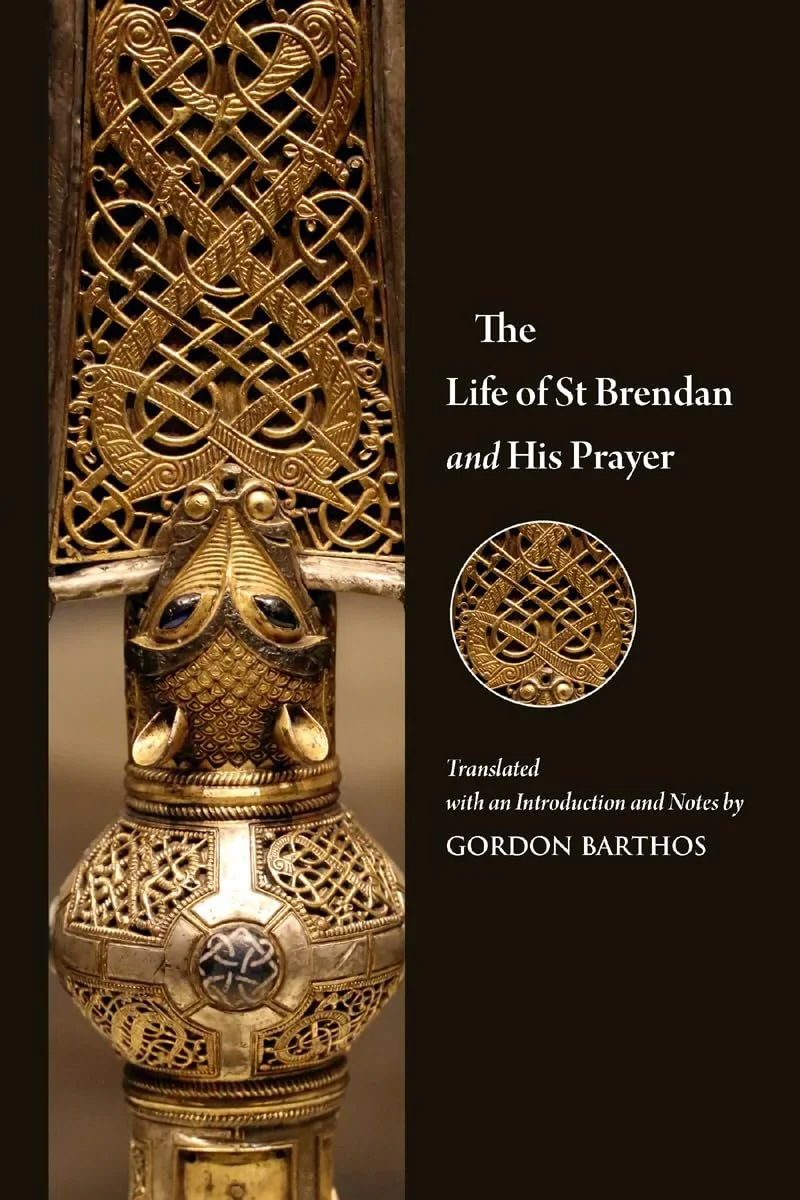
This week, I spoke with Gordon Barthos about the life of St. Brendan. Gord is an independent scholar with a heavyweight pedigree as the winner of the Governor-General’s gold medal for academic excellence in the humanities during his stint at university. After a long and prestigious career as a journalist and commentator with The Toronto Star, including time spent as national editor, Gord has returned to his roots in medieval studies. His new book is The Life of St. Brendan and His Prayer. Our conversation on St. Brendan’s epic odyssey, his long-standing popularity, and just some of his incredible adventures is coming up right after this.
Well, welcome, Gord. It is so nice to meet you. And as I was saying to you before we turned on the microphones, this is a really fun read – this read of St. Brendan's life. So, thanks so much for being here.
Gordon Barthos:
Well, thank you for inviting me and I'm glad you enjoyed the book.
Danièle Cybulskie:
Well, you were telling me just before we started that you have a connection to St. Brendan that brought you to this work. To working on this life. What is the connection to St. Brendan that brought you here?
Gordon Barthos:
Well, I grew up in East End, Montreal. There was a pretty good-sized Irish community there at the time. And I attended St. Brendan Grade School, and St. Brendan Parish in Rosemount, in the East End. The parish church was really a humble wooden structure, but it was constructed in the shape of a huge boat. So, it's an upturned boat sitting in the middle of Rosemount. And when you go into the church and look at the ceiling, the rafters of the church look like the ribs of a giant ship. It's a very, very unique structure. And of course, it serves the Irish community that came to Montreal in the mid nineteenth century. They were fleeing famine. They came to Montreal, New York, Toronto. St. Brendan the Voyager – The Mariner – was one of their favorite saints because, of course, they all came over on ships.
Danièle Cybulskie:
Yes. And he's a big figure in Ireland. He's been eclipsed by St Patrick, but he is still a big figure for the Irish community. So, let's get into St. Brendan. Who is this guy in historical time and space?
Gordon Barthos:
Right. Well, I make a small case in the book that St. Brendan's stature was, by the late Middle Ages, akin to that of Patrick and Columba and Bridget. These are Ireland's three national saints. Brendan was distinct from them in the sense that his work was in the west of Ireland. He's associated with the Ireland that's across the Shannon toward the west. And unlike Patrick, who was a Romanized Briton, and Columba, who was mostly associated with Iona in Scotland, and even Bridget, who was associated with the obedient area of Leinster under the English, Brendan was a bit of a bad boy of the west. And basically, all his foundations were west of the Shannon River, in areas where the English political rule and culture never really took full hold. So, those areas stayed more Gaelic, and Brendan came to be associated with the Gaels of Western Ireland. So, I dub him the saint of the Gaelic West.
Danièle Cybulskie:
Absolutely. And what century are we talking about for the real-life St. Brendan?
Gordon Barthos:
He was a saint of what we used to call the Dark Ages. We don't use that term anymore. But he lived in the sixth century. He was born in 486. He died at the ripe old age of ninety-eight in 578. And he made his voyage – his famous sea voyage – as a relatively young priest. Most histories, or biographies, of Brendan say he made his trip when he was an old man, but that's not the case. As the Life tells us he was about thirty, thirty-five when he made his trip. He was a genuine historical figure in Ireland. He's mentioned in the early Irish annals. Now, they're credible from about the year 500. So, that's around when he was born. They give his dates. They record that he founded Clonfert in 560. They record that a local king, King Forggus, promoted a Law of Brendan, a Lex Brendani around Longford – Longford is in the middle of Ireland – in the year 744. And he's mentioned in a whole bunch of works, including Adomnán's Life of Columba in 700 and in The Life of St. Malo in 870. He's also listed in a whole bunch of lists of saints and martyrs in the seven hundreds and eight hundreds. So, he's got a real historical pedigree. The man was clearly an actual man. And the church celebrates his feast on his death day, which was May 16th.
Danièle Cybulskie:
Well, it's important to establish him as a real man because his hagiography – his saint's life – is pretty out there. And so, it's important to establish this was a real guy. He did establish a monastery. He is somebody who... who had a life that was important at the time. But then, later on, we have this life that's written about him. So, tell us about this life that's written about him. Like, it is written at a time when it needed to be written. What's happening in Ireland in the twelfth century?
Gordon Barthos:
Well, the Anglo-Normans, or the Cambro-Normans, came in to Ireland – invaded Ireland – effectively in 1169. And the place changed utterly at that point. They swept in, took over the areas to the east of the Shannon and basically grabbed the land and imposed their rule. But they were not completely uncontested at the time. The O'Connor family – and for the century before the Norman arrival, the O’Connor family had established itself as the high kings of Ireland – and they battled the English. Turlough O’Connor was the most famous king. He was the first king of Connaught, in the west, to become High King of Ireland. He was an amazing figure. He subjugated Munster. He had a fleet of ships on the Shannon. He raised armies. He paraded a piece of the True Cross around Ireland to… not establish his rule, but to glorify himself as king. And he patronized Brendan's family. Oh, he also diverted the course of a river at one point to create a floodplain to keep his enemies at bay. So, he patronized Brendan's establishments at Clonfert and Annaghdown in the areas under his control, and used Brendan's stature, if you like. He used Brendan's foundations. He used Brendan's international reputation. Brendan had an international reputation by that time. And he used Brendan's devotees who followed Brendan's cult to advance O’Connor prestige, advance O’Connor interests – advance O’Connor claims to territory – and to fend off the English. And he was quite successful at it. Turlough was before the English invasion, but after him, his son used all these mechanisms, if you like, to help hold the English at bay and advance his own high kingship. At the time, that was Rory O’Connor, his son. So, Brendan's legend – of course, Brendan had been long dead, dead for centuries. But Brendan's legend by that point was of material use to the Irish kings.
Danièle Cybulskie:
Yes. So, we have this turmoil that's happening in Ireland. And it is important to mention that it's kind of a subtle dig at the English. Not a huge dig at the English – that probably wasn't going to be very politic. But there is a subtle dig at the English when Brendan meets St. Gildas, and I think St. Gildas says that he's not fit to judge St. Brendan. Well, then there is another point where Brendan has a vision – and he's not going to tell us and doesn't tell anyone what the vision is – but the vision tells him that England, especially, is going to fall into heresy – or fall into disbelief – shortly, and for a long time.
Gordon Barthos:
That's right. That's exactly right. As you said, it's a sneaky dig. This is Brendan in his bad – well, Brendan's biographers imagining him as the bad boy of the west taking the English down a peg. Of course, everybody was absolutely terrified of heresy in those days. There was none in Ireland. So, this was not a problem. And the Irish were faithful Roman Catholics. Faithful to Rome. But there was some heresy in England, and I think the Irish were just taking the English down a peg there.
Danièle Cybulskie:
It's a perfect time to do it in the twelfth century. Okay, so we've talked a little bit about why St. Brendan is important. We've talked about the fact that there is a ship that's associated with him. Can you tell us – I mean, this is a long poem, or a long work – but can you tell us what St. Brendan did? Because I think most hagiographies – most saints’ lives – are about converting people. But St. Brendan is more of a voyager. Tell us about his story.
Gordon Barthos:
Yeah, the Brendan dossier – the Brendan memorial – falls into, really, three chunks. There's his Life, which is kind of a monastic biography. It's a saint's life. There's his Voyage. Now, his voyage was a seven-year expedition at sea – with fourteen monks at the beginning – to find a hidden land in the sea that God would provide to his followers at the end of time. This would have been a kind of a foyer to paradise. He travels for seven years and he finally finds it. This is the story that captured European imaginations for, like, a thousand years. The third element of his dossier after his life story, his voyage story, is the long prayer that's attributed to him. The Oratio Sancti Brendani – The Prayer of St Brendan – which is a sort of an Irish prayer, a defensive prayer against sin, against perils, and all sorts of things. It's a very defensive kind of thing. What secured Brendan's reputation down through the ages was the story of his voyage. It's a sort of a pilgrimage of the soul toward God, if you like. But it's also a monastic handbook. It's a way of telling monks what's important. What's important is following the monastic rule, saying the psalms – singing the psalms – attending mass, being brotherly, trusting in God's providence, and living a quiet monastic life in obedience. These are all big, big themes in the voyage story. But that's not why it was famous. It was famous because it's a tale of derring-do and adventure on the high seas. And it brought Brendan and his monks in contact with just every kind of wild critter. They camp out on a giant sea monster – perhaps a whale – on Easter. And when they put their cooking pot on the whale to boil, the whale gets edgy and starts sinking below the waves of the sea, terrifying the monks. Brendan, of course, has been bright enough to stay in his boat, so he's not worried at all. But then the monster, as time goes on – traditionally, the whale in medieval iconography was associated with the devil. And you would camp on his back, and he would submerge in the waters and send you into hell. In this case, the sea monster is basically sent by God as a providential act. He helps them celebrate Easter on his back. Ultimately, they do find the promised land. Apart from the sea monster, Brendan and his crowd encounter Satan on the high sea. They traveled not only to the gates of paradise, they traveled to the gates of hell. At one point, demonic smiths on a volcano throw molten lava at his boat. Other fallen angels appear in the guise of birds. They're given a respite from hell. These are angels in hell. These are the fallen angels. They're granted a respite on Sundays – on holy days – from hell because God is merciful and he lets them come up to the earth to sing God's praises. Now, Thomas Aquinas would have had a fit at the thought of this. If you read the Summa, it's perfectly clear that angels are intellectual beings. And once they've made their choice against God, that's it. There is no change. They're in hell, period. So, this is a kind of a genial Irish take on, you know, giving the angels a bit of a break. What else do they do? Oh, there's all kinds of other sea monsters. There's a griffin, there's a giant girl. There are so many wonderful stories associated with the Voyage of St. Brendan that that's what caused people to be so enthralled with it and to take it into their hearts. And it's still being read in our own day. In the 1960s and in the 1970s, there were two famous translations of the Voyage into English by Webb and O’Meara. Both of them excellent, excellent translations. And just about ten years ago, some Italian scholars translated it into Italian. So, the story lives to our very day. But as you said, it's only part of the Brendan story. It's not the whole story. It's the story of seven years of his life. He lived to be ninety-three.
Danièle Cybulskie:
Yeah, well, there are some really amazing things in the story and things that he comes back to when he establishes his monastery. And there are moments where it's tough for the monks. He'll just throw in, Oh, yeah, while we were on the sea, we did this thing. It's really... These reminiscences are amazing. Well, one of the things that we talked about on the podcast just a few weeks ago… I was talking with Pete Jones about the Seven Deadly Sins, and he brought up Judas, and how Judas gets a respite from hell every once in a while. And St. Brendan comes across Judas, right?
Gordon Barthos:
He does. He does. He comes across Judas, and he tells it as a sort of a reminiscence. I guess I should explain. The manuscript that I translated is in the Bodleian Library. It was done around 1300. And the way it's structured is it… it wraps Brendan's life around the voyage story. So, you get the first thirty years of Brendan's life, until he becomes a priest, then he goes on his voyage, and then he comes back and the story tells the rest – the remaining fifty years of his life. So, it's kind of wrapped around in the voyage story. He tells the story of meeting Judas chained to a rock in the sea as a reminiscence after he comes back from his trip. This is something he recalls from his trip. And, in the Brendan version – in this manuscript version – Judas is not given a respite from his tortures. He's still tortured on the rock. In the common version of the Navigatio – the one that was more popular – Judas, like the angels, is given a bit of a respite. But our author avoids that theological pitfall and tells the Judas story in a briefer form and with no sense that we like Judas.
Danièle Cybulskie:
Yeah. Yes. We're not supposed to like him.
Gordon Barthos:
No, they pity… they pity him, but they don't like him.
Danièle Cybulskie:
All right, so St. Brendan's whole idea when he's going out on his voyage is he's going to find this island, and he's going to find places where – they're holy places, where you find people who are worshiping God. He's not out to find monsters, and he doesn't find a lot of the type of humanoid monsters that people find when they're out to find Prester John, for example. But as you're saying, he has certain stops that he has to make for seven years. Why does he have to make these stops for seven years? What's he trying to do here?
Gordon Barthos:
That question takes us back to the voyage story as a kind of a monastic handbook, if you like. Repeatedly in the story, it reminds us – it reminds the monks in the story – that there are four seasons to their voyage. Let me… If I can remember now, it's Lent, Easter, Pentecost and the Nativity – Christmas. So, he meets various people in his story at these critical moments. Essentially, it's a reminder of what the church calendar – the monastic calendar, but also the church calendar – was. So, that forms part of the formation of monks. The story was written, I think, partly for Brendan's monastic community, but also partly, of course, for a general readership. The monasteries loved having these stories because, apart from anything else, they glorified the abbot, or the monk, who was the patron of the monastery. Of course, they raised his status, but they also invited – attracted pilgrims to the abbeys. And of course, the pilgrims would bring in money. So, I think we know what all that means. This is early ad – part of this is early advertising.
Danièle Cybulskie:
Yes, we need fundraisers. Well, it's interesting because, as you say, this does seem to be instructional in that he has to arrive in one place on Holy Thursday. He has to arrive to another place for Easter, which is the back of the whale. And then he has to go somewhere else, and he has to spend this time until Pentecost. And I think one of the things that you're talking about that really speaks to monks, too, is that God is always providing food for them – but he's not providing, like, roast beef. It's always like, wow, it's a loaf of bread, or it's pure water from a spring, or you get a fish. And that's about it.
Gordon Barthos:
A bit of fish. That's right. Fish on Friday. That's true. Now, you know, in the Navigatio – in the voyage story – all of these wonders occur to Brendan. The steward – the providential steward – provides them with food at appropriate moments. God saves them from monsters. God directs their pilgrimage to the secret land that they're looking for. That's in the Voyage. In the Life, Brendan is much more active. He creates miracles. He is the source of miracles. At his birth, angels attend him, and there's a great light. As a young priest, he draws water from the parched earth. He raises the dead. He presides over miracles at mass. When snow falls, it doesn't fall on him. All of this sort of stuff. When he commands the gates of churches that are locked, they burst open at his command. So, Brendan is a much more active figure in the Life part of his story than he is in the Voyage, where he's more a kind of passive recipient of God's grace.
Danièle Cybulskie:
Yes, he's interpreting what all of these signs mean. And he's talking to the birds who are the fallen angels, and they're telling him things. And he always… he's always one step ahead, which is really fun. Like when he tells the monks to get off and create their fire – their cooking fire – on the back of the whale, but he stays on the boat, which is kind of… I don't know, I think that's kind of hilarious. And it's because he's wise enough to know that something is going to happen. He needs to keep the boat there, so that when they all run off the back of the whale, they'll have somewhere to go.
Gordon Barthos:
He's a very – yes, he's… In that sense, he's a very serene character. The monks are always running around with their hair on fire and Brendan is always saying, chill out, man. You know, take it easy. It's interesting that this hagiography of Brendan – the Life and the Voyage – they definitely depict him as a saintly figure and the monks really as good people, but they're not idealized. They're not idealized figures. The monks tend to be self-righteous, cranky, and they're ‘fraidy cats most of the time. When an Irish girl flirts with Brendan, he takes a horsewhip to her, and then he gets upbraided by his bishop who says, geez, you know, chill out, man. You mentioned the wonderful places they stay on their voyage. One of them, Brendan, says, oh, I want to stay here. And the abbot of the place again upbraids him and says, no, no, you're going against God's will. Just shove off, get the boat moving. You're moving on now. At another point on his journey, he sees two sea beasts fighting. One of the beasts calls on St. Bridget for help. And Brendan is miffed because Brendan is standing right there. Why didn't you call on me? So, he goes off to Bridget and he says, what am I, chopped liver? And Bridget says, your problem is, since I was a nun. My mind has been completely fixed on God. It has not changed. And you – the world chases after you and you're basically distracted by the world. And that's why the monster appealed to me. So, she really puts Brendan down. The other thing, too, is the life casts a real whack of shade on the monks. One monk kills another monk with an axe, another one's a thief, another one is pigheaded. As a group, as I mentioned, they're all scaredy cats. They're mistrustful of providence, scared for their lives. They're whiners, they're wrathful, they're unruly. One is a complete self-righteous prig and… Well, in his case, it's Good Friday and they turn up at a monastery and the poor guy who runs the monastery has nothing to feed them but bacon. And, of course, you can't eat meat on Good Friday. But Brendan and the monks are obedient to the monastic rule, which basically says – as Mom always did – eat what's put in front of you. So, Brendan and his monks all eat this salt pork – bacon – on Good Friday, breaking the rules. And the other monk, the self-righteous one, spits out the pork and he only eats bread. And when they wake up the next day, the pork that Brendan and the monks ate is the purest, whitest bread. And the bread that the self-righteous monk ate was swarming with worms and vermin. So, he got his comeuppance. And you have to feel that the composers of Brendan's life enjoyed dissing some of their fellow clerics and pointing up some of their human flaws.
Danièle Cybulskie:
Yes. Well, I want to mention that – for the people who haven't read this yet – the monk that gets killed with a hatchet in his head also gets called forth by Brendan, and he shows up on Brendan's doorstep with the hatchet still in his head, which is quite the visual. I love it.
Gordon Barthos:
Yeah, absolutely. There's a whole slew of marvelous stories in both the Life and the Voyage that has kind of endeared them to us down through the ages. You know, Brendan does all the garden variety miracles that a saint will do, right? He foretells the future, he raises the dead, he exorcises demons, he cures the mute, draws the water from the dry earth, he cures pestilence, he domesticates lions, he finds gold in the ground, does all this stuff. These are sort of common medieval tokens of sanctity. You'll find most of the saints doing most of this stuff. I think St. Bridget hangs her cloak on a sunbeam at one point. Most saints do wonderful things, but Brendan's legend goes further. It has its own marvelous stories. When he's traveling along the road and some guy is being attacked, a bunch of enemies jump out from behind a bush and attack a man. And he flees to Brendan for protection. And Brendan causes the attackers to mistake a standing stone by the wayside. These are tall – six-foot tall – standing stones. He makes the attackers believe that stone is their enemy. So, they go crazy, hacking and bashing at this stone and lop off its head, thinking they've killed their enemy, when, in fact, he's been perfectly safe, shielded under Brendan's holy wings. So, that's one story. The whale and the cooking pot's a story. And you know, the other things we've mentioned: the Good Friday dinner, the killing of the monk with a hatchet. These are kind of extra-special stories that figure well past the normal legends of saints. They show a peculiar Irish love for this kind of crazy story, in addition to, you know, all the miracles saints perform because Jesus performed them. While the Irish saints can go a step further.
Danièle Cybulskie:
Yes. Well, one of the fun things about him taming lions is that the lions are found near St. Gildas' place. Like, the lions are in Britain, just hanging out there, devouring people.
Gordon Barthos:
Well, the interesting thing there is, of course, he makes his trip to Britain kind of as a penance, but when he shows up, his power is evident. That's where he blows open the gates of churches. Snow doesn't fall on him, he domesticates the lions. At the end of it, the British monk begs him to stay and take over and rule the place, which is a kind of another Irish way to dis the English. But Brendan, of course, has no interest in this, and he just wanders off and goes his own way, says, no, not for me. I'm going to end up back in Ireland. Not staying here with you.
Danièle Cybulskie:
Yes, well, and I think if I have this right, he says something like, what is the world to me? I don't care. And then he leaves. And I think that's the point where he sees the sea monsters and they're not paying attention to him – they're paying attention to Bridget. And then Bridget's calling him out on this, being like, obviously the world is something to you because the sea monsters are ignoring you.
Gordon Barthos:
That's true, that's true. Well, that's part – I think you've hit, really, on, I guess, what I think of as the iconic statement from Brendan. You know, what is this world to me? And it's kind of – you're in the midst of this rollicking adventure, and all these wonderful stories, and marvelous islands, and angels, and all these wonders of this world. And Brendan, really, at the end of it, says, no, it's means very little to me. Later, in another – in the Irish version of his life, he acknowledges – as he's close to death, he acknowledges – that he fears dying. He says, I'm afraid of traveling alone. I'm afraid of judgment. I'm afraid a judge is waiting for me. So, it's another sort of endearing – if you like – an endearing element to him.
Danièle Cybulskie:
Yeah, I love that moment because there are so many perils on the sea. And this is much later in his life. And while he's facing all the perils on the sea – sea monsters and giant cats – and we didn't even get to the rats. We need to get to the rats in a second. But he's very stoic. He's very able to put his faith in God, and God does rescue him. But he does say in those moments he's scared of dying. And he says it to his sister. He doesn't say it to a fellow monk. And I think that's a really nice little moment, too.
Gordon Barthos:
That's right. Well, he has a special relationship with his sister. As a youngster, as a... as a child, he sees his sister's face shining with the light of the moon, and he also sees angels as a young child. So, he's really looking at sort of God's grace, you know, pouring through his sister. And he visits her. Yeah, they have a close relationship. She's running her own… she's running her own convent, of course.
Danièle Cybulskie:
Mmhmm. It's just a nice little moment. And it did surprise me because, having read a lot of these saints lives, rarely do you see that moment of doubt that is like that. Especially – many of them are martyred, and so they're pretty secure in their faith before they're martyred. Rarely do you ever come across a moment like this.
Gordon Barthos:
Sort of a family moment? Well, there's another one in the Brendan story, actually. He converts his own father. He's born – his mother is a Christian, but his father is a pagan. And it's only when he comes back after his sea voyage that he converts his father to the faith. And at that point, his father joins a monastery, and his mother joins a nunnery. And it's just a nice… sort of a nice touch that he comes back. And the abbot, who was busy with converting thousands of people as Christianity made headway in Ireland in the 500s, goes through a good chunk of his life, and then comes back and actually manages to bring his father into the fold, as well.
Danièle Cybulskie:
Yeah. And for somebody who doesn't spend a lot of time… It almost seems like the missionary impulse for conversion is sort of at the sidelines of his story – at least in the big version of his story. Probably not in terms of the actual man's real life. But it's nice to have his dad being one of the converts.
Gordon Barthos:
That's right. Well, he also, in terms on the conversion scale, he also meets King Diarmait. Now, King Diarmait is a pagan when Brendan meets him, and he's wearing a big gold collar, – a torque – around his neck. And Diarmait has a vision of angels taking the torque from around his neck and handing it to Brendan. And so, that's a sort of a telegraphic way – or an imagistic way – of speaking to the time, which was a time of conversion. Diarmait has some claim to being the first Christian High King of Ireland. And here we see angels giving his authority to Brendan, which is, you know, another powerful image. And that speaks to the politics of Brendan as a saint of the… of the Gaels, as well.
Danièle Cybulskie:
Yes. Yeah. And we're talking about these sort of humanizing moments in Brendan's life where he's not always the perfect saint. And one of the moments – the reason that he goes to Britain in the first place – is that he sort of dares a boy to take his chances, and the boy dies.
Gordon Barthos:
Yes. Yes. He puts a boy in charge of his boat, and the boy's brother says something to the effect of, he's too young. You're putting him in danger. So, Brendan says, if you think he's in danger, you go. You go, watch the boat for me. So, the second boy goes and watches the boat, and the tide comes in, sweeps him out, and he drowns. And then he goes and asks people, what should I do about this? And they say, you should go on a pilgrimage to Britain. And it's on his pilgrimage to Britain where he meets Gildas, the British priest, and shows that the Irish are superior – in that context, anyway.
Danièle Cybulskie:
Yes, absolutely. Well, I mean, there's this whole long context of these arguments in the background between what is superior in terms of Irish spirituality, British spirituality. So, that's always boiling in the background. I'm actually surprised it doesn't come out more often in this, but maybe it's about who this is aimed at. They don't necessarily need to explain this to the people who are going to be reading this Vita.
Gordon Barthos:
Not entirely, but it does come out. In fact, there's two particular instances where Brendan is at pains – or his biographers are at pains – to show how orthodox the Irish Church is. At mass in Britain – with Gildas present, Brendan says mass. And during mass, a human finger appears on the paten, and human blood appears in the chalice. And Gildas is horrified and says, God's vengeance is about to fall on me. And Brendan says, chill, man, I'll protect you. But it's a way of showing the Irish believed in the doctrine of the transubstantiation of the Real Presence, which was a doctrine promulgated by one of the church councils. The Lateran Council,1215, I think it was. And at another point, a dead monk appears before Brendan and begs Brendan and the monks to pray for his soul. And so, they pray for his soul, and he appears all black and as if he's just come from hell. And they pray for him for a couple of days, and he keeps coming back in lighter colors. He finally comes back, and he's clearly been saved from hell by prayer – posthumous prayer. And this is another reference to another church council that stressed the efficacy of prayers for the dead.
Danièle Cybulskie:
Yes. Can you save someone? Did the prayers actually work? Do they actually deliver people? And the answer is, yes, they do. Okay.
Gordon Barthos:
One can only live in hope.
Danièle Cybulskie:
I do want to get to St. Brendan's Prayer in a minute, but first we have to tell people about the rats. So, they're on a voyage, they come across an island of huge rats. And Brendan's like, okay, you. It's your turn to be a martyr. Tell us about this.
Gordon Barthos:
Really, I think it's one of the stories that I found the most difficult to interpret. Commentators have had a heck of a time trying to pin it down. It appears, to me, to be a case of a late-coming monk. Okay, this is somebody who comes late in life, and yet he's the first, if you – let's get past the rats – he's the first to go to heaven. And he does so because he follows Brendan's instructions implicitly. So, he's a late convert. He's a genuine convert. And he sacrifices himself, albeit in an absolutely ghastly way. He sacrifices himself, essentially, to obedience. And there was hardly any higher-value virtue for a monk than being obedient. That's what the monastic structure prized most of all: obedience and humility. And this is an example of both of these things at once, although it is another example of the Irish love of excess in storytelling.
Danièle Cybulskie:
Well, I love this moment. Because there are these huge rats and they're, like, salivating. They look just absolutely terrifying. And Brendan says, it's your turn to be a martyr. And the guy says, thank-you. And then he just goes and he gets brutally eaten by rats. And once he does, they just bury his bones. But, I mean, it is spectacular.
Gordon Barthos:
That's right. Well, better him than me, I can tell you.
Danièle Cybulskie:
Yeah, exactly. Okay, so leaving behind the spectacular, you do have Brendan's prayer in here. Why did you decide to include it? Because there are some… some aspects of it that are pretty standard. But why did you feel it was worthwhile to put in here?
Gordon Barthos:
For a couple of reasons. There's a few Brendan Prayers floating around out there – just short little things that really don't have much to do with Brendan. Whereas this thing is a very substantial prayer. It's a... It's one of the longest Irish lorica. These are very lengthy prayers for deliverance – deliverance from sin, deliverance from physical troubles and dangers. They characterize the kind of medieval attitude. The world was a fairly scary place, and these prayers address that sentiment. It's the third – as I mentioned – it's the third big element that's associated with Brendan. It's… If you want Brendan's dossier, you need the Life, the Voyage and the prayer. So, it was very popular. Not as popular as the voyage, but it survives in twenty-five manuscript – different manuscripts. That's a popular prayer. It has multiple references to the Trinity, which is a characteristic of Irish prayer. They were very devoted to the Trinity. It draws on the Litany of the Saints. It has a huge, long section on biblical deliverances – on famous people from the Bible who are rescued by God's providence from, you know, everything from the pit, to lions, to you name it. It has some very strange names for God in it, which hark back to a kind of a medieval tradition of learned literature, sort of arcane literature. It has the Confiteor prayer, acknowledging sinfulness, and it has other prayers. Interestingly, it seeks remission – it asks for remission from sins past and present, but also sins soon to be committed. So, it's kind of... it's protecting you against the sin you know you're going to commit in twenty minutes, and you may as well ask for forgiveness now. It has a couple of elliptical allusions to the voyage. So, there's a few passages where it seems to link up to the voyage story, but its main feature is it makes extravagant promises of remission of sin for both the living people who say the prayer and, again, dead people for whom the prayer is said. And, rather sacrilegiously, it claims to have the worth of a hundred masses and a hundred readings of the Book of Psalms. This is an extraordinary claim, and I'm sure that that is one of the things that assured its survival, and its popularity down through the ages. It's fairly only tangentially connected with Brendan, but he was said to have composed a prayer at the end of his voyage. And in fact, this prayer – the most recent editor believes it was composed at around the same time in the… around 800. So, two centuries after Brendan's death, at around the same time when the Life and the Voyage stories were coming into circulation. And scholars generally think that the Life influenced the Voyage. So, the Life came a little bit before the Voyage. And it's in the Life where we have a reference to the prayer Brendan composed at sea.
Danièle Cybulskie:
Well, you can imagine how that might flow out, in that people are saying, he didn't found the monastery ‘til he's seventy-seven. He didn't die ‘til he was ninety-three. What did he do with his life? Well, here's the answer. At least seven years of it. He's on the sea.
Gordon Barthos:
Yeah, absolutely. Well, this whole project got started because I was interested in the Brendan story, and I thought, well, I'm going to write a biography of him. I mean, biography. I'm going to put together the historical materials as best I can to tell his life. And when I started to do that – I started my research – I discovered this manuscript written around 1300, sitting in the Bodleian Library in Oxford. It contained just pretty much what I was planning to do. It wrapped the Life around his voyage. So, it told you all about Brendan the guy. It had a lot of historical – actual historical – features in it, and a whole lot of craziness. And I thought, rather than put my own spin on the Brendan story, it might be worthwhile to take this manuscript from 1300 and translate it for an audience. And the Pontifical Institute of Medieval Studies at the University of Toronto thought it was not a bad idea and got on board. And one of the professors there – Professor Ann Dooley, who is an amazing person – helped shepherd the book into production, and it's now going into its second printing. So, I'm quite pleased. And I was spared the trouble of having to actually write my own biography of the man.
Danièle Cybulskie:
Well, I'm so glad that you brought this forward because, like I said, I've read a lot of saints’ lives, and this one definitely stands out. So, I'm so glad. And congratulations on second printing. That's awesome.
Gordon Barthos:
Yeah. Well, thank you. Well, as saints stories go, this is a very long one. Very full, very rich, very complex. If you want an introduction to the whole arena of saints’ lives in the Middle Ages, you could do far worse than starting with Brendan, because everything else – arguably apart from the life of Patrick – everything else is going to seem pretty short and curt by comparison.
Danièle Cybulskie:
It's so true. It's definitely memorable. And I think that having you on the podcast is going to get more people interested because they are going to want to know what happens to St. Brendan. Because it is pretty spectacular. So, thanks so much, Gord, for being here and telling us all about it.
Gordon Barthos:
Oh, it's an amazing pleasure to be here. Thank-you so much. It's wonderful to see somebody who's just so interested in pretty much every aspect of medieval studies. It's been a real pleasure to be here. Thank you so much.
Danièle Cybulskie:
To find out more about Gord’s work, you can visit his book’s page on the Pontifical Institute for Medieval Studies’ website. The book is The Life of St. Brendan and His Prayer.
I was thinking about what would be a good motivational quote for this week, and I just kept coming back around to St. Brendan’s own catchphrase, which is, “What is the present world to me?” For Brendan, this was a mantra that brought him back to what was truly important when he was faced with a big decision. In the grand scheme of things, how important were worldly things to Brendan? Not very important. He kept his eyes on the prize: which was heaven. So, if you’re faced with a big decision this week, think about it in terms of your big, long-term, bucket list goals. Will this decision get you there? If not, follow St. Brendan’s example, and let it go.
While you can hear in my voice just how sick I’ve been all week, one thing that’s kept me feeling good is all the support that I receive from you listeners each week. Whether you’re sharing episodes, rating the podcast, letting the ads play through, or becoming a patron on Patreon, your support is what keeps me going. And speaking of Patreon, why don’t you stop by this week and tell me what your favourite recent episodes were? Or settle in with one of the exclusive articles that I write every week just for patrons. It’s the place to dig into each topic and have your say. So, check it out at patreon.com/themedievalpodcast.
For the show notes on this episode, a transcript, and a collection of the books featured on The Medieval Podcast, please visit medievalpodcast.com. You can find me, Danièle Cybulskie, on social media @5MinMedievalist.
Our music is by Christian Overton
Thanks for listening, and have yourself an amazing day.