



The Medieval Podcast uses affiliate links
Episode 364
It’s one of the most well-known burial sites in the world, its treasures drawing thousands upon thousands of people to the British Museum each year, and its discovery the stuff of Hollywood. For over a millennium, the mounds at Sutton Hoo hid not just gold, but the secrets of early medieval shipbuilding. This week, Danièle speaks with Martin Carver about what was found at Sutton Hoo, what we know about the people buried there, and what we can learn from walking – or sailing – in their footsteps.
-
Danièle Cybulskie:
Hi, everyone, and welcome to episode 364 of The Medieval Podcast. I’m your host, Danièle Cybulskie.
It’s one of the most well-known burial sites in the world, its treasures drawing thousands upon thousands of people to the British Museum each year, and its discovery the stuff of Hollywood. I’m speaking, of course, of Sutton Hoo, where, for over a millennium, its mounds hid not just gold, but the secrets of early medieval shipbuilding.
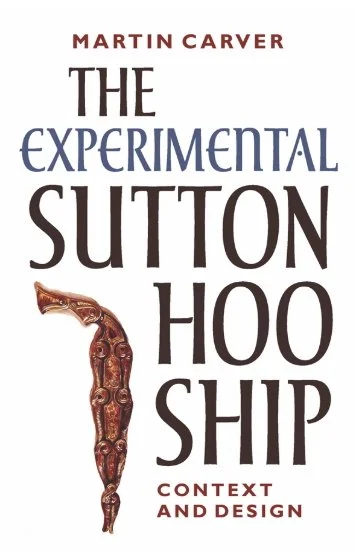
This week, I spoke with Dr. Martin Carver about the Sutton Hoo ship. Martin is Professor Emeritus at the University of York, and the author of many works on Sutton Hoo, early Britain, and archaeology, including several textbooks archaeologists listening will remember from their own coursework. His new book is The Experimental Sutton Hoo Ship: Context and Design. Our conversation on what was found at Sutton Hoo, what we know about the people buried there, and what we can learn from walking – or sailing – in their footsteps is coming up right after this.
Well, welcome, Martin. It is so nice to meet you, and we've been having a lovely chat before we turned on the microphones. It's time to have a lovely chat with The Medieval Podcast audience. Welcome!
Martin Carver:
Thank-you very much, Danièle. Delighted to be here.
Danièle Cybulskie:
So, you were just telling me that you fell in love with archaeology and just sort of jumped into it. Do you want to tell us what hooked you?
Martin Carver:
Well, I think what really excited me before I became an archaeologist – well, I was in the army at the time – but what really excited me was the period of what used to be called the Dark Ages. So, it's what? Fifth to eleventh century in England, and Wales, and Scotland, and Ireland. And it was a time where, at least to start with, there was no overall controlling empire. Roman Empire had gone away, and the island of Britain was left to its own devices. And they did a lot of very interesting things. But the thing they didn't do very much of was writing down what they did. So, the history is very thin until you get to the late Saxon period. But the archaeology, by contrast, is very vocal. So, I got fascinated by it. I think the things that survived well – like the poetry of Taliesin and Urien, and so on – they were very interesting to me because I was interested in poetry, too. So, if anything got me into archaeology, it was ancient poetry. Well, it sounds a bit daft, but it wouldn't if I was talking about, say, The Iliad. People would understand it better, I think. But Britain also had its heroic poetry, and that's what appealed to me.
Danièle Cybulskie:
I think that that is – you're not the first person to say this. It's… A lot of the time, it's the beautiful, beautiful poetry from that moment that really hooks people and I think makes them really interested in the early Middle Ages. I've heard this before, so it's not just you, but I love how you were a military man hooked by the poetry of the early Middle Ages. So, the book that you're here to speak about is about the Sutton Hoo burial. And I think when people – if people – have heard about this before, they picture a helmet, but may not know anything else about it. So, what is the Sutton Hoo burial?
Martin Carver:
Well, Sutton Hoo site is in Suffolk. It's in southeast England and it's on the River Deben. So, it overlooks this river, which flows down to the North Sea. And all it was, when it was rediscovered, was a lot of little humps and bumps – little sort of squashed mounds. And it had attracted interest in the – well, the nineteenth century were fond of digging mounds and they had a go. And then later on, Mrs. Pretty – who owned the house at Sutton Hoo – she was an interesting person who liked archaeology. She'd been to Egypt, and she discovered lots of exciting things that had been done in the past there. And when she got home, she wondered about her own mounds and got Basil Brown, who was – who worked for the museum, to come and have a look. So, it started as a fairly low-key thing where she just said, I wonder what those mounds are that I can see out of my bow window across the valley. And when they started, they dug trenches, which was the thing to do in the 19– well, it was the 1930s, really. And Basil Brown dug trenches through three mounds and realized that they weren't quite what they were expected to be. So, they were expected to be Bronze Age mounds, but they actually turned out to be Anglo-Saxon in date. Anyway, that was exciting. So, then she started to say, let's do some more, shall we? And Basil Brown said, yes, okay, we'll come back next year. What would you like me to do? And she said, I want you to dig this one. And this one was the biggest. And so, that's what happened. 1939, Basil and Mrs. Pretty's… some of Mrs. Pretty's staff – her gamekeeper and her gardener – joined him. So, the three of them set about cutting a trench through Mound One. As they say, the rest is history. It was an extraordinary discovery. I can tell you lots about it, but I don't want to spend all the time in 1939 because although that was the big discovery of the ship and all the treasures in it, and like, I can tell you more about that if you like, but of course, my own involvement wasn't really until the 1980s.
Danièle Cybulskie:
Right. So, they found this burial, and as you've said, there was a ship and there were some treasures. What else? What else did they find there? And one of the things I think is really exciting about Sutton Hoo is that some of it had been grave robbed, but this hadn't. So, tell us, tell us what is in these graves. What is found there?
Martin Carver:
Well, this is unusual, anyway, in that it had a very big ship in it. There was only two mounds that have had ships in. One… one was this one, and the ship was ninety feet long and in a trench. And then Mound Two, the ship was about unknown length, but something like sixty or seventy feet long. And that had been placed above an underground chamber. So, we are in a sort of theatre, here, where each mound is slightly different. The people who are building the mounds have got something in mind, and we don't always know what that is, of course, but it's celebrating a person. It's celebrating the person in the context of the beliefs at that time. Putting somebody in a ship means they're going somewhere in a ship, and – to Valhalla, or whatever the imagined prospect of heaven is like for those particular groups of people. They're not Christian yet. Christianity is on its way, but it hasn't reached these early English. And these early English have a lot of relationships with Scandinavia, Denmark, Norway, and Sweden as they now are, where of course those traditions continued there. They went on with ship burial long after the English had been converted to Christianity. So, we're looking at a very interesting time where people are very loyal to their origins, many of which are across the water. And then they're also being impressed by the power of what amounts to a sort of Christian empire which is developing across the Channel. And so, you can read a lot of that into the Mound One burial. I made a map of Europe showing where all the finds came from originally after the analysis had been done on them. And it's really quite impressive. They were finding things in this mound that had been made in Byzantium, it's sort of in Istanbul now – that area – in Syria, as well; in North Africa, yes, as well. I mean, it's extraordinary. They could be tracked there. So, they'd got there somehow. And it either told you that there was a very special gift-giving operation in celebration of the dead person. Or it's said that there was open routes and that people were actually going from Suffolk to Byzantium in the seventh century AD. Well, that's also been explored quite recently again – or, I should say, sort of resurrected quite, quite recently. It does seem as though some of the warriors that were buried at Sutton Hoo – or some of the warriors associated with leaders buried at Sutton Hoo – it does seem as though they were… well, they were going down and fighting with the Byzantines against the Persians. And so, that's exciting and interesting, and it sort of opens it up. So, instead of feeling that no one's ever heard of Suffolk in the seventh century, makes them feel they're part of a much bigger… a much bigger world.
Danièle Cybulskie:
Yes, and we've been speaking about Offa not too long ago, King of the Mercians. We've been talking about Harald Hardrada just recently, and how he went and was a mercenary in Byzantium. And so, it's one of the things that comes up very regularly on this podcast: that there is quite a lot of contact between people from very far away. And this is just, I think, one of the really exciting things about that discovery in Mound One is all of those different pieces that you've talked about that are coming from all over the place. And it's not just Mound One, because one of the things that you mention also is that there are burials of women around this time in this place that have elephant ivory, for example, as part of their accessories. So, you know, this contact is not unusual, and yet it's still so exciting to see a collection in one place.
Martin Carver:
I agree, and we are a bit inclined to think of Britain as cut off while everybody else is becoming richer and more civilized. But that's not the case. I think that it puts you in mind of lots of things. But one of the things it puts me in mind of is the ship. I mean, in order to get to these places, you need a boat. And what we know about the Anglo-Saxons is they arrived in boats. They arrived in small boats in large numbers, and then they seemed to have developed the island. And the idea that they were actually then going forth and exploring Europe – presumably going along the rivers and getting into the Mediterranean and so on – that's one of the exciting things that we – which is why we started to construct this ship, of which more in a minute.
Danièle Cybulskie:
Yes. I do want to come back to both Mound One and the ship. We're going to spend some time on the ship in a minute, but I want to sort of clarify one thing in that… So, we're talking about this huge burial – ninety-foot ship – so, the person in it is very important. But when we're talking about the site as a whole, I need to ask you to elaborate. Is this like the pyramids where you have one pharaoh and everybody else who is in this pyramid is dead at the same time? What's this like in terms of, is everybody who's buried at Sutton Hoo buried at the same time? Is this one giant burial? What's happening?
Martin Carver:
Very good question. Well, the thing is that we didn't get a chance to address this question until long after the first discoveries in 1939 and until long after the war had ended. And in fact, these were the excavations that – well, the British Museum started it, and then other… other organizations joined in. This all happened, really, in the early '80s. They had a competition to see who would be… who would be the person to come and dig the site. And that's how I got to be there. I just answered the advertisement. Well, it wasn't quite as easy as that.
Danièle Cybulskie:
And the rest is history.
Martin Carver:
But I did, anyway. And to cut a long story short, what we came up with was that there were three consecutive burial sites at Sutton Hoo. So, Mound One was in one of them, and Mound One had lots of other mounds. It had It had about eighteen mounds, at least, that we know about now, all on that same piece of ground. But there was a cemetery earlier than that – that's to say between the fifth and seventh century – and that was slightly to the north. And then there was a third cemetery which was later than that, and that had people who had been hanged and thrown into pits. So, it had become a site of executions. And so, my job was to try and make a storyline out of this which people would be able to follow, and which would be a real addition to history rather than simply being a source of wonder. It still is a source of wonder, but… but it was a bit more than that. It was, I think, a slight rewrite of the early history of England. So, the first cemetery was classic Anglo-Saxon inhumations and cremations with furnished graves. So, the if they're inhumations, they were furnished with sword and shield if they were men, and with jewelry if they were women. And in cremations, things got put on the pyre, so it's a lot more difficult to know exactly what… what there was there, but… but you can see a certain amount about it. And that was a sort of family cemetery, but not particularly rich. Not outstandingly so.
Danièle Cybulskie:
Mmhmm.
Martin Carver:
Now, that ceased sometime in the early seventh century. And at that time, a few hundred meters south, the mound cemetery began. And in its early form, it consisted of small mounds with cremations inside. And its later form, it had big mounds with ships inside. So, even that cemetery – which perhaps only lasted fifty years from about 600 to 650 – even then, there was some progression happening with some sensitivity to the historical events at the time being shown in those burials. And then after that, in the early eighth century, we start getting these clusters of executions, one ‘round Mound Five, which was the earliest of the elite mounds, and then another on the side of the cemetery, where there was a track which people followed, so that they'd see the gallows – which we also found – and they'd realize that there were people here who'd gone against the government in some way. So, out of those three cemeteries, we've been weaving a narrative which tells us about how England was, first of all, started off by incomers coming up the River Deben, in this case, and then had a big bid for kingship. So, kingship was what we think we see at Sutton Hoo. So, instead of being, you know, tribal and local, they began to be royal and international. And then that happened during the time when the English were still pagan and still very much allied with their Scandinavian relations. And then, after that, Christian kings came and treated the royal burial ground of the pagans as a place to dispose of those that had resisted the conversion. Well, at least that's my story, and so far, nobody's attacked it very vigorously, so I think it's got a chance of being right.
Danièle Cybulskie:
Well, it makes sense if you're trying to make a statement about leaving the pagan roots of the country, or countries – kingdoms – that we're talking about in the past, it makes sense to give these sort of ignoble burials next to the royal burials. And I think that – again, something I mentioned a second ago – I think people thought that these royal burials were kind of emptied of their treasures at that point. Like, I don't think people were putting hanged bodies next to treasures on purpose. I think people thought they'd been looted already, but this is how it's turned out. So, this, as you're saying, coming up with a narrative, people have… have had a lot of imagined narratives about this ever since it was discovered. So, who do people think is the king – or we're speculating is the king – buried in this ninety-foot ship in Mound One?
Martin Carver:
Yes, I think that stayed pretty steady. The original suggestion came from H.M. Chadwick. So, he's a very distinguished Anglo-Saxonist. Everybody who does Anglo-Saxon language knows about Chadwick. And he wrote some marvelous books about early England, and notably The Heroic Age and The Beginnings of England – all sorts of really penetrating books. He's a historian, but he also was very interested in archaeological results. And when he heard about the Sutton Hoo burials being dug in 1939 – the big one, particularly, the Mound One – he came chugging across from his holiday home in Wales and came and visited the site, looked at it, looked at some of the finds that had come up. This beautiful metalwork, wonderful, gold metalwork, silver objects. And there was no doubt that it was extraordinarily wealthy. Well, one of the most wealthy burials ever found in England. And as he took his leave, he said, it's the burial of Rædwald. Of that, I have no doubt at all. So, this would be a cue for most historians just to start a campaign anti-Rædwald and think of something else. But it didn't happen because I think he did make a very good case. And people who've tried to overturn it have not really had enough evidence to do so. Rædwald's mentioned by Bede, which makes him doubly interesting. So, he occurs in the history of the English that Bede wrote. Well, Bede has sort of mixed feelings about Rædwald. He doesn't like Rædwald because Rædwald did convert to Christianity in Kent, and then, when he got back to Suffolk, he decided that – or his wife, in fact, said, that's a ridiculous thing to have done, and now you've alienated everybody. And so, make your mind up. And he said, well, I'll erect an altar to Christ, you know, as well as our gods. And she said, oh, brilliant. Now you really have annoyed everybody rather than just one group. But he persevered, and she persevered, too. And when he was approached by Æthelfrith, and asked if he would murder Edwin – Edwin was the heir in Northumbria who had taken refuge with Rædwald, you see. And he told his wife, I've got a really good deal. I've been offered enormous quantities of gold just to kill our guest. And she said, that's even stupider than anything you've said up to now. Because if you do that, we won't have any friends at all. And so, he said, alright then, and promptly raised an army and went and attacked Æthelfrith. So, he was biddable in a sort of – not in a very good way, but he did seem a rather attractive character, if only because he could change his mind so readily. But that's why I think he got a place in history quite easily. And the predecessors, well, they were a bit shadowy. There were names, but they weren't really – they didn't feature in anything. And the later ones tended to be Christians. So, Rædwald was in a good position to be remembered by later Christian writers like Bede, of course. But he was early enough to be representative of the last of the English pagans.
Danièle Cybulskie:
Well, first of all, I have to say, you can read Bede's Ecclesiastical History or History of the English People to me anytime because that was a hugely entertaining rendition of Bede. I love it. So, this could be Rædwald who's the king who is buried there. One of the things that you mentioned in the book is that – and this is something that I think is also pretty consistent when people talk about Sutton Hoo – is that people feel this poetry of it. Feel this… this Beowulf quality of it. And one of the things I thought was really beautiful in this book is that you said that burials like this, they are a poem. So, can you tell us more about the actual objects that are found in this ship in Mound One?
Martin Carver:
Yes, I think a poem written in artifacts. That's what I was thinking. And you can imagine this ship: it's long and hollow. It's like a big rowing boat, really. And then in the middle, there is this chamber built of very large timbers originally. And then in the chamber, according to me, and I should say most – well, not most, but… some people don't agree with me. But according to me, there is a… there's a coffin. A big coffin. It's a big, oak trunk coffin, if you see what I mean. Hollowed out oak trunk.
Danièle Cybulskie:
Mmhmm.
Martin Carver:
I… I'm saying that because we dug another mound, Mound Seventeen, that had a small one in, and it had the same kind of clasps to keep the lid on as you find in the Mound One burial. Although the… the coffin itself is controversial, but it makes a lot of sense because there… there can be done some things inside it, and something things on top of it. It also explains why they couldn't find evidence for a person, because the person would be in a coffin, and the amount of decay that was happening there with wood on both sides – or all sides really – would mean that it would… the body would vanish, particularly in Sutton Hoo, which has a very acid sand. We did some experiments on that, too, and it does digest anything organic really quite thoroughly. But metal, of course, stays in place. So, there was regalia, in my reading, on the lid. That regalia was a sword, for example. There was a purse, and there were belt buckles, and also other little buckles, which made it look as though originally, the garment had been like a Sam Browne. You know, those military belts where there's a belt around the middle and then there's a strap over the shoulder. Those all connected with these buckles. They would make good sense, I think. So, wonderful objects, then, associated with the person. But even more, so that there's a heap at the feet in the coffin – if you agree with me – was a great pile of clothing. And those textiles, they survived in a remarkable way. You know how if you have a bonfire and put lots of newspaper on it, when everything else is burnt, the newspaper that's got lots of layers is still there. And the textiles behave a little bit like that. So, you get little sets of textiles, one on top of the other, and then, the rest of it has disappeared. So, although the conditions aren't good, but an enormous amount of interest was – objects were retrieved. So, if you've got the person in the middle, then, with their clothing and their regalia, then, at one end, there's more regalia in the form of a special, long, iron standard. And at the top of it, there's something like a little flambeau, as though you'd put a fire in it. And those had four bull masks out on each side – bulls' heads on each side. So, it's difficult to put into words, but it certainly was very evocative. There was a scepter made of a whetstone. There was a lyre, which was detected rather than found. The bits of the lyre were found. This is true of a lot of Sutton Hoo. A lot of the objects there were… were broken when the roof had fallen in on the burial chamber. And then, subsequently, anything organic had been very vulnerable. But they were all put together by the British Museum, led by Rupert Bruce-Mitford, who had a marvelous team after the war. Virtually every single object that we now have and is in the museum – or on loan – they have been, so to speak, reconstructed by this British Museum team. It's an amazing achievement. And they've all been published in great detail, as well. So, there's gold, there's silver, there's bronze, there's some traces of wood. There's iron. There's certainly – well, very occasionally you get little scraps of textile, as I was mentioning. But altogether, almost as though it was evoking the hall. Drinking horns, drinking vessels, as well. They were provided and they would be on top of the coffin, in my view. So, the thing was set out as though for a feast. And the great man was laid, so to speak, under the table with his personal effects.
Danièle Cybulskie:
I love this. It is, as you say, very evocative seeing – imagining these things together. And I have to say, I've looked at those papers that we were talking about before we turned on the microphones, where sometimes you get very dry facts. And I found that your description – and also the illustrations that you have in this book – helped me to picture this a lot better. So, I mean, congratulations on that. I have seen the exhibit at the British Museum, and it is so impressive. For anyone that has not seen it, it's worth seeing. So, let's talk about the ship, because this is what has brought us here together today. This is a gigantic ship. Why would he be buried in a ship? We have an idea that he might be transported somewhere else, but, like, tell us about this ship, because it is – first of all, it's disappeared, pretty much completely. I think what archaeologists did to put it back together was just to look at the rivets. Tell us what is so amazing about this ship.
Martin Carver:
Well, I think there's the different ways of seeing its role in society, if I can put it that way. There's different ways of seeing it. I think one is the kind of ritualistic way where ships have always appeared on Scandinavian prehistoric etching on rocks, and so on. In other words, if you live in a watery or a sea-girt place, ships are bound to feature one way or another. And with them, you'll get some kind of, let's say, pagan iconography. So, I think they're – in that way, they're not that unusual. But in a different way, and – slightly different way, anyway – you can see them as a very important mode of transport, along with the horse. And horses, interestingly enough – and not just in England, or just in Scandinavia, but all over Europe – burying horses is really quite common. Warriors buried with their horse, or sometimes with lots of horses buried around an important figure. Boats are, if you like – you know, they're the sort of horses of the sea. But they're, again, like the horse, tremendous status involved, which has never completely gone away. I mean, you've only got to think of today, when somebody gets very rich, they buy a yacht. Or if somebody wants to impress the village, they buy a horse – a very good horse, or a racehorse. You know, I mean, people have not stopped loving horse racing since the Anglo-Saxon time. So, in the end, it isn't that strange. But I think the power would be much higher. There would be not that many people who couldn't easily see the importance of a ship, or the importance of a horse. So, ship is a big boat, and there are little boats, as well, that are found, right down to sort of three-metre-long canoes, which have been found same period. In the seventh century at Snape, for example. So, one gets a feeling that every farmer had one, or two, or three, you know, to go out onto the… into the rivers to get to a new field, and so on. But only some people had sizable-looking ships. And there's only one ship that's slightly bigger than Sutton Hoo, and that's not found until 1042. The Sea Stallion from Glendalough is a Viking ship. And that's… that's a long time after this. So, we're talking about the seventh century rather than the eleventh. And in the seventh century, this was a ship which would be very hard to match anywhere in the northern parts of Europe. So, I think it was going to be important. But a reasonable person would also say, yes, but why did you have to reconstruct it? Surely… surely one can see the –
Danièle Cybulskie:
This is my next question.
Martin Carver:
– see the photographs. I mean, why go to all that trouble? So, I think the first way I'd answer that is saying that everything found in Sutton Hoo Mound One – and indeed in the other mounds where they'd survived – all those things had been reconstructed. And, as I mentioned, with extraordinary skill by the British Museum. So, it was really just the last artifact that never got reconstructed.
Danièle Cybulskie:
Mmhmm.
Martin Carver:
And one can see why not. First of all, it appeared that it wasn't very well preserved, in that most of the wood had rotted away. It had rotted away, but it left telltale signs of itself. So, if you can imagine standing in 1939 above the trench, you can see various things very clearly. One is that there is rows of iron rivets. And these were the rivets that first – the first discoveries that were made by… by Basil Brown and his colleagues. Rows, and rows, and rows, all in situ still, because the ship had been sitting in a trench. And the rows of rivets which held the planks together were still in rows. So, you could immediately see how – not only how big this ship was, but what shape it was as well.
Danièle Cybulskie:
Mmhmm.
Martin Carver:
Also, although the wood had mainly gone, where the wood was very thick – and this applies to the frames that run across the ship from one side to the other – these are… these are the frames which support the rowers. And those survived as a sort of hollow crust. And so, standing well back and taking a photograph, you can actually see these… these frames crossing, crossing, crossing across the boat. So, we now know that there were thirty-six of them, for example. And also, there were other clues given by the vanished wood. So, on top of the gunwale, the sort of top plank of the ship – or what would have been the top plank – they managed to find it, in 1939, shadows – shadows in the sand shaped like a big thorn – and realized that they were set. They didn't find that many of them, but there were enough to see that they were set at intervals along the gunwale, and that they were obviously there to pull oars against. So, this was a rowing ship. So, that's also – that's quite a lot of information. And although there were some naysayers – when I started in my turn to try and get the ship reconstructed in the early '80s – although lots of people said, well, you can't, the evidence isn't good enough, actually the evidence is good enough because although the wood wasn't well preserved as it would have been in the sea, for example, the shape was well preserved, which it isn't in the sea because the wooden ships fall to bits, and the planks are sort of washed all over the place. And it's not so easy. You get better bits preserved – of course you do. But as for the whole vessel, well, I think Sutton Hoo wins out to a certain extent. So, on that basis, we went ahead and tried to work out how to build it. And then, looking to the future, we thought, well, we've got a reason for building it. It's the only Sutton Hoo find that hasn't been reconstructed. We've got a future which we think is going to be very determinate for English history. First of all, the actual ship, when it's built, is going to be very much more impressive than a dark patch in the sand, however big that patch is. It's going to be impressive, too, when it's on the water. We're going to find out by putting it through trials what it was actually for. You know, was it a fighting ship or was it just a sort of ceremonial ship where a king could recline on cushions while being rowed up and down the Deben? So, those things are in reach, I believe, from the parts of the experiment which haven't happened yet. Because we have just got to the point where the build is nearly finished.
Danièle Cybulskie:
Oh, that's so exciting. Well, one of the questions that you're asking in reconstructing this ship is whether it had a sail or not, right? So, what are – what's your thoughts on the sail?
Martin Carver:
Well, my thoughts on the sail are they're probably slightly suspect. And the reason for that is that I sailed on a Viking ship in '88, which capsized and sank to the bottom and threw us all into the field. And I saw –
Danièle Cybulskie:
And yet you want to do it again.
Martin Carver:
Well, no, but I saw how easily that can happen, if you see what I mean. I think it's – and that's a ship which is not dissimilar to the Sutton Hoo ship. And various maritime experts have been studying this over the years. And you know, if you talk to the most brilliant of the reconstructors at Roskilde in Denmark, you know, they're pretty confident that they can build Viking ships which not only sail, but they can tack. This is extremely important because if your ship can't go slightly against the wind, then it's really hard to escape from an onshore gale. You'll get blown on the rocks. But if you can work out how to tack, then you can make some headway. Well, my conclusion of my experience with… with the… with the replica – it was a reconstruction of the Oseberg Ship – was that they could tack, but we couldn't.
Danièle Cybulskie:
Yeah.
Martin Carver:
This is often… this is often the way with experimental archaeology. And I thought, well, I think they – we just didn't do it right. And Vibeke Bischoff, one of the… one of the most brilliant people who work in Roskilde, she redesigned – or reconstructed – the Oseberg ship very successfully, and found that if you balance it right – if you put all the ballast in the right place, and so on – yes, it can sail beautifully, and it can also tack. So, I think we will find that we need to do the same kind of homework, and we will end up with a ship that can sail. But although everyone who's working in the ship's company never stops saying, when are we going to sail? Because that's what they want to do, because that's the most sort of prestigious thing to do with a boat, I suppose, at that time. I've been very vocal at trying to persuade them that there are dangers in getting sailing right, and so the most important thing for this particular construction is to test it as a rowing ship, because we know it was one. I'm not saying it wasn't a sailing ship, as well, but we know it was a rowing ship, so you must give the rowing ship its chance to express itself. And I think that rowing and river journeys are very underrated.
Danièle Cybulskie:
Mmhmm.
Martin Carver:
I think it's because the Vikings have been so super successful, not only as raiders themselves, but also their reconstructors. They've had marvelous voyages – very successful, lots of publicity, and so on. But that is sailing between one port and another. And I wanted to see how we get along the rivers of Britain, and also the rivers of the continent. And sailing, you couldn't – you can do, but rowing, of course, is much simpler, as far as that's concerned. So, I feel that the rowing story needs to be told. And I think all the evidence that we're going to make when we're rowing needs to be very carefully recorded. And once it's recorded and put in an archive, and once the publications of the rowing trials are out, okay, then we can try and sail.
Danièle Cybulskie:
This definitely sounds like the voice of experience, right? Putting the experiment in experimental archaeology. And it's making me think about Cat Jarman – now Cat Spencer's – book, River Kings. And I do think you're right in that river transportation is underrated and was such an important part of this time. This period. Okay. So, I think there is so much reconstructive archaeology that's happening – and I'm thinking about Notre Dame being reconstructed – so, I think people will be asking: what sort of rigor are you applying to the reconstruction? Are people using power tools? How is this being reconstructed?
Martin Carver:
Yes. Well, we're trying to be as authentic as possible. And the first principle is that we're going to build – reconstruct – the ship found under Mound One in 1939. In other words, not just evoke what might be an Anglo-Saxon ship. This is something that's going to be, as near as we can possibly make it, exactly the same as the one that was put into the grave in the seventh century. So, it has to be built of oak because we know that oak was it – what it was built with. And it has to have iron rivets because the rivets that we found were of iron. Some people thought it might be better to use copper because it lasts longer. But that's true, it does. But I think we have to stick to what we found.
Danièle Cybulskie:
Mmhmm.
Martin Carver:
So, that's important. And then, I think the measurements are pretty okay. We got – we had good plans made in 1939, better ones still in 1975. And then, we made a digital one later on. So, we've got quite good evidence for that. However, for the rest, the principles we've adopted are that you have to look at the evidence there is for this ship in levels. So, Level One is things that are known, and that is the materials used to build the ship, the plan, and so on. And then the next one is things that are partly known. So, partly known is the number of oars, for example. They can be experimented with. And then, things that are barely known. And things that are barely known are because we've got really no evidence for them. But we can find out what other people did at that time. Take the luting. This is what material would you use to put between the planks. So, nothing left between the planks. But we can guess – or we can deduce – from other… other ships built at the time or earlier what they did, and then use that. And so, each of these stages has a possible route to what you might call an educated guess. Then the last, after the partially known, becomes the unknown. And an example of that is whether… whether the ship sailed or not. And again, even though it's unknown, by looking hard at what was going on at the same time, what other ships had done beforehand – and to some extent, I think one can justify using ships that were built later. A very good example of this is that the one of the very best accounts of how ships are handled – ships with a sail handled – even though it's much later, is the pictures in the Bayeux Tapestry, where you can see them setting off, you can see them setting the mast, you can see them jumping overboard and take – carrying the anchor to the beach. You could see the horses jumping overboard, for that matter, as they – when they got to the beach. So, there's so much detail in that tapestry – or embroidery – that you can see that the world wouldn't have changed hugely from that. So, you can reach back to earlier ships, and you can reach forward to later ships, and still be authentic and still be… still be well-reasoned in… in what you choose to do, I think.
Danièle Cybulskie:
Yes. Well, I mean, I wanted to get you to explain this part of it because, like I said, there are a lot of people that are interested in doing reconstructive archaeology themselves, and a lot of people that like to watch how this is done. We have all sorts of examples. And so, when you're taking on such a huge and iconic project, I need to ask you how it's being done. So, we've talked about how you definitely want people to row the rivers first, then it might do ocean voyages – or, at least, small voyages. And then one of the things that is a name of the project is to see how to get it to its burial place, right? So, tell us about this last step that the ship is going to take – or going to be tried out as.
Martin Carver:
Yes. Well, I think I should just say – just interpolate – some of this planning is also guided by how to include the public. So, as I already mentioned, the thing about the Viking ships were that they spent a lot of their time on the open sea where the public couldn't see them. One of the reasons I like the idea of voyages along rivers is that it not only connects with Anglo-Saxon place names, where landings could have been made up the Thames, and Trent, and so forth. But today, it means an awful lot of people will be able to see… see this ship. And because it's being rowed, a lot of rowing clubs can take part. So, do you see? It's got… it's got… I think it's got more of a social conscience than… than most of these reconstructions, which usually only involve two or three people. And the public are allowed to see what they've done, but not experience what it's like to live in a… in a round house or… or row a boat. So, I think that's one of the things that, you know, for me, that's really… that's really important. When it comes to the voyages across the sea, I'd prefer just to cross the Channel and then go up rivers in… in the continent. And also, because we are a project that depends entirely on donations – so, now we're getting down to the nitty-gritty, here –
Danièle Cybulskie:
We will get there.
Martin Carver:
We have a much better chance of staying solvent if we can stop at lots of places, throw a party, and get the big buckets out where people can make contributions. And I mean, our whole project is funded by small donations, not big ones. So, it's been quite successful. So, you better ask me that question again because I diverted you.
Danièle Cybulskie:
So, when you get to the end of all the voyaging –
Martin Carver:
Oh, yes.
Danièle Cybulskie:
– the idea is to also see how it'll go over land, right?
Martin Carver:
That's right, and to take it back to the original place of burial, which, of course, is now owned by the National Trust. So, this is the chance for the National Trust to have its say and to enjoy the – it's already enjoyed the publicity that we got from the film, The Dig.
Danièle Cybulskie:
Right.
Martin Carver:
But I think they could also enjoy the fact if the boat comes back and sits there for a bit, they'll get lots of people visiting, as well. They don't want to keep it. We've tried to suggest to them they might want to keep it, but whether they do or not, its… its future home has to be in Woodbridge where it was built, or near where it was built. And what we're hoping to do, then, is to set up an exhibition, if you like, so people can visit the ship at intervals. I will also mention that we're being filmed by… by Time Team – you probably know about them – and they've been collecting – putting together, stitching together – the story of the ship during its build. And we hope that they'll be able to follow us during trials, too.
Danièle Cybulskie:
Yes. And that brings us to my last question – probably my last question, actually my second-last question, I think – which is how do people get involved if they're excited by this?
Martin Carver:
They get involved by contacting – well, there's two different things, here. One is more digging at Sutton Hoo, which may happen, and that's the National Trust. You get in touch with the National Trust for that. National Trust at Sutton Hoo. If you go on the internet, you'll soon find out the Sutton Hoo contacts at the National Trust. The second is specifically about the ship and the ship's company, which works from The Longshed, which is just across the river from Sutton Hoo. That's its own organization. Its email is saxonship.org, and that's got a very energetic project manager, Jacq Barnard, and she's always – she's managed to recruit an immense team of volunteers. We have 176, I think, now, volunteers of whom about twenty are actually building the ship. And the others do what they know how to do, which is to put on exhibitions, and parties, and communicate, and give talks, and all those sorts of things. So, she's created a marvelous cohort of people who are… who are doing so many different jobs. And it's a… it's a very happy ship. I mean, if you go and visit the site, which I hope you will – just behind the railway station in Woodbridge on the bank of the Deben – you'll find a lot of people there who are not only very keen to tell you all about the ship, but so patently enjoy it, themselves. They just love – you know, if you find an old man in retirement and hand him an axe, and he'll chip away all day happily with it. It's very, very good for your mental health. So, we are very proud of our very happy crew.
Danièle Cybulskie:
I love that. People who are doing what they love and sharing it with the public, which brings me to my last question, which is: this burial site – this ship – has captured your imagination for a very long time. What is it that keeps you coming back to this… this particular burial?
Martin Carver:
Well, okay. Unfinished business is one thing. My… my… my role in archaeology is to produce books, and hopefully books which the public will like. And Sutton Hoo is a site that keeps on giving. So, I published books about the dig, and about the early dig, and about what we did, and all those things. And now I've published a book on the ship, which came out in January. That's the first book, and I've just finished writing the second one, which is on the build. So, what keeps me coming back to it is that I'm still working for it.
Danièle Cybulskie:
Mmhmm.
Martin Carver:
But emotionally, I've never forgotten my first visit to Sutton Hoo, which I did with my companion Madeleine – my wife, now. And we sort of walked along the riverbank and then came to this terribly overgrown set of… set of mounds. And since then, we've really looked after it like a garden, and taken all the bracken away, and mowed it and… and so on. And it looks beautiful. And then we had times there where we were the only people there. We also asked students to come and be guards in the early days because there was a bit of a feeling that the metal detectorists were being excluded from this. Well, as indeed they were, but it was important not to have some random digging there. So, we were always in charge, and always – you know, there, living in caravans in the woods. And by day, I used to play golf by hitting a golf ball from Mound One to Mound Two, Mound Two to Mound Three, Mound Three to Four – just practicing my chipping, you see. And in that way, I discovered another mound, which was underneath a tree. And I was trying to get beyond it, and I kept hitting this early mound, and realized it was a mound. So, that was Mound Seventeen. That was the one that had the horse in. So, let nobody say that golf is a useless activity.
Danièle Cybulskie:
Well, I love that. And one of the best parts about your interest in this is that it is personal. And I think that there was a time when we weren't supposed to admit to having a personal love for a particular time or place, and now it's okay to do that. And I love this because I think people should be enthusiastic and passionate about history, as you are. So, thanks so much, Martin, for being here and telling us all about Sutton Hoo and the experimental ship.
Martin Carver:
Well, thank-you very much, and thank-you for being so passionate about history, too.
Danièle Cybulskie:
To find out more about Martin’s work, you can visit his webpage at martincarver.com. His new book is The Experimental Sutton Hoo Ship: Context and Design.
For this week’s quote, I looked to an early English source: a poem called The Wanderer. In this poem, the speaker talks about how a man should suffer in silence – something I wouldn’t agree with on the whole. I’m more of a “troubles shared are troubles halved” kind of girl. But the speaker does make a good point when he says, “anxious thoughts can bring no remedy.” There’s a point at which thinking more doesn’t do any good. So, if you needed that reminder today, here you go.
My edition of The Wanderer comes from A Choice of Anglo-Saxon Verse by Richard Hamer.
If you enjoyed my stints on This is History the last couple of years, I’ve got good news for you. Dan Jones is coming to my hometown, which means I get to play host. If you’re in or around Toronto on November 10, come see us at the Church of the Holy Trinity downtown, where Dan will be launching his new book Castles: A Fortified History of the World. Check out benmcnallybooks.com or my Patreon page for the details. Can’t wait to see you there!
And thanks for being here each week, listening, sharing your favourite episodes, letting the ads play, and becoming patrons on Patreon. It’s patronage that makes this work possible, which is why I love patrons so much I write new articles each week, and show up live there for a chat every month. If you’d like to find out more, or to become a patron, please visit patreon.com/themedievalpodcast .
For the show notes on this episode, a transcript, a list of the books featured on The Medieval Podcast, and more, please visit medievalpodcast.com. You can find me, Danièle Cybulskie, on social media @5MinMedievalist.
Our music is by Christian Overton.
Thanks for listening, and have yourself a fantastic day.