


The Medieval Podcast uses affiliate links
Episode 363
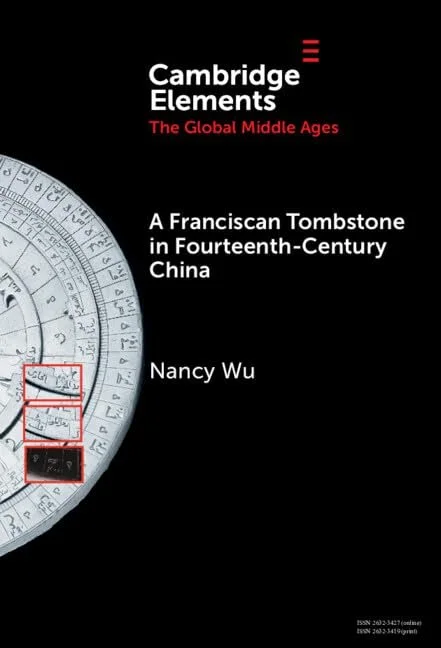
Earlier this year, we looked at the journey a pair of Eastern Christians made from their home near Bejing to Europe in the thirteenth century. Today, we’re investigating some incredible archaeological evidence of Franciscan missionary activity on the farthest shores of China. This week, Danièle speaks with Nancy Wu about a fourteenth-century Franciscan tombstone found in Quanzhou, what the religious community there was like, and what a tombstone can tell us about art, culture, and technique.
-
Danièle Cybulskie:
Hi, everyone, and welcome to episode 363 of The Medieval Podcast. I’m your host, Danièle Cybulskie.
Earlier this year, we looked at the journey a pair of Eastern Christians made from their home near Bejing to Europe in the thirteenth century. Today, we’re investigating some incredible archaeological evidence of Franciscan missionary activity on the farthest shores of China.
This week, I spoke with Dr. Nancy Wu about a fourteenth-century Franciscan tombstone found in Zaytōn, or modern Quanzhou. Nancy is Educator Emerita at the Metropolitan Museum of Art, and the author of many works on medieval art, as well as being the co-author of the official guide to The Cloisters. Her new book is A Franciscan Tombstone in Fourteenth-Century China. Our conversation on what we know about the Franciscan presence in Zaytōn, what the religious community there was like, and what a tombstone can tell us about art, culture, and technique is coming up right after this.
Well, welcome, Nancy, to The Medieval Podcast. It's so nice to meet you, and I really enjoyed the book. So, welcome.
Nancy Wu:
Thank-you so much, and thank-you for having me.
Danièle Cybulskie:
So, this is a book about a Franciscan tombstone from fourteenth-century China. What's going on here? How is this even discovered in the first place? Because I think people don't really know much about the Christian presence in China at this moment. So, how did this come to light?
Nancy Wu:
It is a very unknown history of the early history of Christianity in China, I admit. Most people think that the Jesuits were the first ones to arrive in China. And it is true, the Jesuits were very visible, and Matteo Ricci is a name everybody knows. I got into this because both of my parents' families came from what was called Zaytōn – the city that I studied. And so, when I started visiting that city in the early 2000s, I was taken to the museum where I saw these tombstones. The majority of them are Muslim with Arabic inscriptions, but then you have this one Franciscan in Latin. So, it sort of made an impression on me. And when I was looking for a new subject to do my research on, I said, well, I had been trained as a medieval historian all my professional life, but this is my family's origin, so to speak. So, why don't I combine the two, sort of the personal and the professional, and see what I can get out of it? Little did I know that one can make a big topic out of just one stone block. And I think the problem with this history is that these tombstones were not discovered until the twentieth century. Prior to that, there had been some descriptions – some texts, particularly the Franciscans' own texts, and I described in the book they were not very much known, either. The Franciscan texts from the fourteenth century were quickly transcribed into a manuscript in the fourteenth century that has been kept in the libraries in France, in Paris, and in Italy. But nobody seemed to know about them until the seventeenth century, when the Irish Franciscan historian Wadding transcribed and translated some of those Franciscan texts – again, only known to a very limited number of people. It's really the quintessential niche topic. And it was not until the nineteenth century when Anglophone primarily missionary and missionary scholars, I would say, that discovered this material and started writing about the texts, but in the absence of the tombstones. So, once the tombstones became to be unearthed, I think there was more effort to study it. So, I really came late in the game, so to speak. Other people had done the research. But I like to think that I came with very fresh eyes, because this was not my material. My specialty is Gothic architecture. So, I came in by reading a great deal. I read everything I thought I needed to read. And I had many, many questions, because this was not my métier. But I think the questions actually allowed me to broaden the scope of my research resulting in this book.
Danièle Cybulskie:
Yes, absolutely. And I think this book is really necessary. And I'm actually happy to talk to you about it at this particular moment because only a couple of months ago, I was speaking with Thomas Carlson about Eastern Christian monks who were traveling from Beijing into Europe. So, it's nice to have this sort of alternative look at what Christians are doing in China, especially because, as you say, we don't know a lot about this. And it's probably worth taking a moment to give some credit to another intrepid scholar named Wu, whose work made this tombstone come to light. Do you want to tell us a little bit about his story?
Nancy Wu:
Sure, and I should confess that I am related to him.
Danièle Cybulskie:
Okay.
Nancy Wu:
He was a cousin of my grandfather's, but I've never met him, unfortunately, and he died, unfortunately, already in the late '60s. So, he came from a Christian family and studied biology in college. After college, when he went back to his home city, known as Zaytōn, he somehow realized – encountered the tombstones as the city's walls were being demolished due to urban renovation. And so, he somehow realized that these tombstones meant something. But as a biology teacher – high school teacher – and with a college degree, he was able to manage English but not the other the languages that were required to understand the tombstones. So, he worked closely with mostly Anglophone missionaries in that city who were primarily practicing medical doctors. So, with them and through his wife's connection – his wife was Catholic, a Chinese Catholic – so, he also knew – Wu also knew – the bishop of the city because of that connection. So, he was well-connected in that he was able to get assistance from these foreigners to help him do research, to help him understand this material. By extension, some of these missionaries also spread information about these tombstones outside of China. So, it was wonderful he befriended many foreigners. It was also unfortunate that he befriended a lot of foreigners, which was one of the major crimes was alleged during the Cultural Revolution that brought on his death. So, he has become very famous in the field of maritime Silk Road studies in China because Zaytōn was a major, if not the most important, seaport in the network of maritime traffic connecting East Asia all the way to East Africa. So, it's a very important part of the role that China played in this global traffic that many people are aware of. So, I think he's become sort of an iconic figure in this field, in the studies. Although I never met him, I have met – and I'm in contact with – his son, who inherited his father's scholarship and continued to publish on the history – medieval history – of this city. So, I consider myself very lucky to have this connection with these two important scholars who have really brought this subject to light, so that people understand it.
Danièle Cybulskie:
Yes, absolutely. And he's such an important part of this story, I wanted to make sure we did not leave him out. So, let's move to what things must have looked like in Zaytōn at this time. What were things like there in the fourteenth century?
Nancy Wu:
Unfortunately, fourteenth-century Zaytōn is no more. When you go there today – which is called Quanzhou, which is a very old name anyway, but this is the name used by the Chinese – there's very little physical remains left there. But we know something about the city wall, the footprint of the city walls. The Buddhist temple – Kai Yuan Temple – is still standing, and the moat that used to surround the city wall is still partially visible. So, we can sort of get a sense of the footprint of the city. Oh, and very important: the biggest mosque is still standing today. But there's nothing left of the Franciscans. Now, several decades ago, one of the city gates was being excavated, and archaeologists found a lot of stone blocks. Some of them had carved crosses and lotus on them. Again, they are just architectural components completely out of context, so we don't know where they came from, but we must imagine that there were buildings built for the Franciscans. From texts, we know there were either two or three in the city, and there was probably a friary – a friar's house – outside of the city wall. So, we must imagine that some of the buildings, or liturgical furnishings of the buildings, were decorated with carved cross and lotus. So, yeah, unfortunately, physical remains are very scant today.
Danièle Cybulskie:
Yes. Yes. And part of the reason for that comes down to one of the dynasties I was talking about a couple of weeks ago, again, on the podcast with Craig Clunas – we were talking about the Ming Dynasty. What did the Ming contribute to the destruction of this history?
Nancy Wu:
Well, I think primarily two things, but not limited to these two. One is that the early Ming Dynasty was fairly closed in. They expelled foreigners from Zaytōn, in part because the southeastern coastline of China was constantly being pillaged by pirates. A lot of them are from Japan. I don't think they're only from Japan, but a lot of them are from Japan. So, it was, in part, a defensive move to ask the foreigners to leave. So, the Franciscans left with all the others. And the other thing is that the Ming Dynasty also wanted to reestablish Quanzhou's city walls, which had been started much earlier on. So, the location of the foreigners' cemeteries happened to be just outside of the city walls. So, they became very natural – were very convenient sources for construction material. So, a lot of the tombstones and tomb components went into the city wall. And that's why it was not until the 1920s, when the city walls were beginning to be demolished, when these components – these wonderful carvings – came to light. So, these were the two, I think, main reasons why the Franciscan history has disappeared from us.
Danièle Cybulskie:
Right. So, we're looking at a moment before the Ming have come in. So, we're in the Yuan Dynasty. Hopefully I've said this correctly.
Nancy Wu:
Yes.
Danièle Cybulskie:
This is not my… this is not my first language.
Nancy Wu:
No. No, you did.
Danièle Cybulskie:
Thank-you. Thank-you. And so, this is a Mongol dynasty, and we have, as you mentioned, in Zaytōn, a whole bunch of different foreign factions there. We have Eastern Christians, we have Muslims, we have Jews here. What were the Franciscans doing here? Why were they sort of sending themselves – or inviting themselves – here at this moment?
Nancy Wu:
We would have to go back to the thirteenth century, when the Mongols – not necessarily the ones ruling China, that didn't happen until later in the thirteenth century – but earlier, the Mongol troops were going westward in today's Poland and Hungary. They were really wreaking havoc in Europe. So, the European royalty and the papacy got together. They were trying to figure out how to deal with the Mongols. Alright. So, one thing was to try to send missionaries east to convert the Mongols, because the Europeans faced an even bigger threat, and that would be the Mamluks: the Muslims that were largely in today's Egypt. So, the Christians in Europe – some of them believed that a lot of the Mongols were already intermarrying with the Nestorians, or people of the Church of the East. It might just be one more turn for them to make to become Western Latin Christians. So, with that in mind, William of Rubruck and these early missionaries started going east. But it was not until the 1290s when John of Montecorvino arrived in Beijing – today's Beijing – and started his missionary work. He was probably fairly successful. He wrote two letters back to Europe in 1205 and 1206, and by 1207, the pope says, I'm going to send more missionaries to China to help you out, and to consecrate you as the Archbishop of Beijing. So, seven bishops went. Andrew of Perugia was one of them. Only three arrived, as far as we know. And also, in addition to the archbishop in Beijing, they also established a bishopric in Zaytōn. So, why did they pick Zaytōn to establish a bishopric? I don't know. That was my question, but I cannot find any answer to that. But I suspect in part because of its cosmopolitan population. Let's remember, it was from Zaytōn that Marco Polo left China. I mean, it was really a huge and important seaport at the time. So, I would imagine the presence of the Muslims, and the Nestorians, and all the peoples living in Zaytōn would have been potential converts in the mind of the Franciscans.
Danièle Cybulskie:
Well, and you do say in the book that the Franciscans and – especially Italian – merchants, they tend to be good friends, if not brothers, when it comes to this sort of activity. Do you want to say a little bit more about that?
Nancy Wu:
Yes. Let's move back to the Mediterranean. So, the Mediterranean is surrounded by, in part, Italy, and Genoa and Venice were major trading ports where a lot of the Italians would cross the Mediterranean to go up to today's Turkey and then to go up across the Black Sea to today's Crimea, for example. But other people were doing that also. A lot of the merchants – the Armenians, for example. And so, for the Franciscans – or for the Mendicants, not just the Franciscans. The Dominicans were very much into missionary work, as well. For them, it was just much safer for them to team up with the merchants for these travels, because travels were obviously very arduous at the time. So, that's one reason. Another thing is that the Franciscans – and I would imagine the Dominicans, too – would offer the kind of pastoral work that these merchants needed outside of Italy, outside of their homeland, right? So, it was a mutually convenient and practical alliance. And that alliance continued in China. So, both in Beijing and in Zaytōn, we have the Franciscans telling us that they had either the Armenians or the Italian merchants building churches, giving money, giving endowment to the Franciscans. So, it's not new. It's a continuation of this alliance from Western Asia, Central Asia, and now in East Asia.
Danièle Cybulskie:
Well, as I was reading your book, it occurred to me that the Franciscans are the perfect choice if you're going to bring clergy with you, because first of all, they are dedicated to poverty, so they're not going to take much, and they also are an order that doesn't require a lot of books the way the Dominicans do, so they are ready to travel. It's part of their mission, and they're going to be easy companions to travel with, so it makes a lot of sense that you'd have a lot of Franciscans paired with merchants. So, Andrew is the one who's the person's tombstone that was discovered. When Andrew gets there, as you've said, it seems that there's support, especially from the Armenian community and the merchant communities. What does he start doing once he gets to Zaytōn?
Nancy Wu:
All we have is this one letter that he wrote. The other letters did not mention him per se. So, we know when he arrived in Zaytōn, probably 1322, and he became the third Bishop of Zaytōn. By that time, there were at least two churches in Zaytōn. What the Armenian lady did was she had a church built, which was supposedly beautiful. And when Zaytōn became a bishopric, that church status was elevated to that of a cathedral. And Andrew's contribution, in part, was to build this hermitage or church or friary. It's really not clear what he built. It sounds like a friary – where the friars can live. So, he said there were twenty some cells, and there were rooms for the prelates. It was the most beautiful in the province, and so on, and so forth. He loved it so much that he would split his time: sometimes staying in the hermitage, which is outside of the city, and in the church that's within the city. So, I would think that this construction project was a major one that he did. Another thing that's very interesting is if you were to compare his letter with something written by his colleagues, he seemed to be more practical and more realistic in terms of their successes or failures. You know, he was willing to say, we did this much, but, you know, these people just refused to convert. Or, they converted, but they refused to practice the right way. I mean, he was more, you know – more honest, shall we say? And I can only imagine it has got to be so difficult. Because the majority – I counted, this is not very scientific, but – of all the tombstones that we have had so far, about 75% belonged to the Muslims. And they came from everywhere. And about one quarter were Nestorians using different languages. And there was just this one Latin tombstone that belonged to the Franciscans. So, they had to have been statistically the minority, any way you look at it, ethnically or religiously. On the other hand, since their mission seems to us was to convert the Nestorians and the Mongols, because of that connection – that religious connection – they could probably be more focused on targeting these particular groups. And I think I mentioned in the book that John of Montecorvino in Beijing also built churches, and he had what I believe to be wall paintings. And, you know, if you go to Italy today, the churches – particularly Franciscans’ – full of… covered with wall paintings, the wall paintings with narratives from the Bible. And he wanted to have inscriptions or captions, but these captions were written in three different languages, but not Chinese. So, that tells me that their targeted audience were not the majority, were not the Chinese, but were these foreigners who already had one foot into Christianity, so to speak. And the Nestorians were Christians to begin with. It's just a different sect. So, I think it was a very interesting mission for the Franciscans to be active in this extremely pluralistic society of Zaytōn.
Danièle Cybulskie:
Yes, and I love the optimism there where they're like, let's just build enough room for dozens of people to come and be Franciscans with us.
Nancy Wu:
Right.
Danièle Cybulskie:
It's going to be great.Nancy Wu:
Right.
Danièle Cybulskie:
But it’s not super successful.
Nancy Wu:
But that never happened, yeah.
Danièle Cybulskie:
And in part, as you're saying, they had to work through interpreters the whole time, because I think this is probably a regular occurrence where people – we've seen Franciscans going into Mongol territory, learning their language – languages that are closer, geographically. But it seems from what you were saying that the Franciscans that you've discovered in this research, none of them actually learned to speak Mongolian – any local languages. So, they were always working through interpreters, and that's got to be a real stumbling block when it comes to missionary activity.
Nancy Wu:
Yeah, and they admitted that themselves. This is their own admission that they were not able to… they were too old to learn the language. So, it's got to be very difficult. I don't envy them.
Danièle Cybulskie:
Yes, you were talking about other letters written by Andrew's colleague. I think it's Peregrine that was writing the letters, and he was saying something like, the Buddhists listen to us, they listen to us really well, but then they don't practice very well.
Nancy Wu:
Right, right. Yeah.
Danièle Cybulskie:
I think that's really interesting, imagining these really enthusiastic Franciscans having these long-winded conversations with Buddhists, but then it not turning out the way that they had planned. And as you say, I think that… I think that you said in the book that Andrew reports back that they didn't have a single convert from their target group. Not one. And they keep asking for reinforcements from Europe, and they don't arrive, right?
Nancy Wu:
Well, I think the Black Death was also beginning to happen in Europe, so I would imagine it was difficult for Europe to send reinforcement at that point. I mean, we're talking about the mid-fourteenth century. The Black Death was all the rage in Europe. Yeah.
Danièle Cybulskie:
Yes. Yeah. And not to mention all the wars that are going on, and you have to – if you're going by land – you have to pass through war zones. It's not an easy time for this. So, much of your career has been dedicated to art. You've worked at The Met, so you spent quite a lot of time in this book looking at the tombstone, itself. So, let's get into that. What is actually on this tombstone?
Nancy Wu:
First of all, it's incomplete. It's been chopped off top and bottom. Fortunately, the top still retains the lower half of the cross and lotus motif. It's very worn, but it's there, flanked by two flying beings. I'm trying to be careful, but they're obviously angels. And below this cross and lotus motif with angels is a square area with Latin inscriptions that gives you – hopefully, it's not completely deciphered, as you know – the name of Andrew, Perugia, Bishop, Zaytōn, and also the date of his death. A lot of people say it's 1330, 1332. I refuse to commit myself because I really cannot read the last number, so I just say 1330s? So, this is all we've got. All we've got from this tombstone.
Danièle Cybulskie:
Yes. And I think one of the most fascinating parts of the book for me was where you get into how these inscriptions would've been carved, because your argument is that this probably would've been done by local craftsmen – Chinese craftsmen – and that the ways that they inscribe tombstones were really related to how they did this when they were looking at calligraphy. Chinese characters. So, can you tell us about the ways in which these would be inscribed? Because I think this is really fascinating and something I had never encountered before.
Nancy Wu:
Thank-you for saying that, because it troubled me when most scholars feel, I think justifiably, that the reason that the inscriptions, the letters, are so difficult to decipher is because they're the work of someone who did not understand Latin. And in the beginning, I said, well, that sounds good. That sounds logical. But then I started talking with – and you mentioned that I've worked at The Met, so I'm very, very lucky to have a lot of colleagues in the Department of Asian Art to sort of talk to me and sort of guide me in the right direction. So, they reminded me that the Chinese had a long tradition, really long, from the fourth, fifth century, of carving characters on stone using two particular methods. One is you simply write in red paint whatever you want to carve directly on the stone, and you just sort of carved the letters out, right? And apparently – I have not seen any myself – very, very infrequently, you can still find a vestige of the red paint on the stone. The other one is a little bit more cumbersome. So, you write the characters on a piece of paper, then you put a second piece of paper that is somewhat transparent over the first, and you trace – because the second piece on top is transparent – so, you trace the characters below. So, you have on the second piece the characters. Then on the back of the top piece – where you already have the characters – on the back of it, you use red paint, black paint, whatever paint, to trace the outlines of these characters. Then you apply this piece of paper onto the stone, so the paint gets transferred to the stone, and that's how you carved. So, I read quite a bit about this method, and there are some, you know, books in English, books in Chinese. I said, wait, if this is the way they carved things, this carver didn't have to learn Latin, didn't have to know Latin, right? So, that's one thing, how this was carved. Another thing that had been noticed by a lot of people is that these letters on Andrew's tombstone are very, very small, and they're in minuscule. They're in lowercase. They're not capital letters. And most tombstones in Europe are in capital letters – majuscule. So, what's going on? And also, the field of the inscriptions is fairly small in comparison to the overall width of the tombstone. So, I said, why left so much margins on both sides when almost all the other tombstones, for whatever religion, discovered in Zaytōn, the inscriptions would occupy the entire width of the tombstone? So, why, why, why, why, why? So, I came up with my speculation. I'm the first one to admit, my speculation is someone who knew Latin, most likely a Franciscan, wrote the inscription on a piece of paper or on the stone directly. I don't know. And it's a handwriting thing. It's a book hand. I think I used this term. It's a book hand. So, when it's transferred to the tombstone, it appears to be very small. And I have encountered – I have been shown – a rubbing of the tombstone. So, I was able to sort of pretend I was writing the Latin over this rubbing. And it's like we today writing a letter by hand. It's about that size. It's not any larger, right? And so, this anonymous carver received this piece of paper, transferred it onto the stone in whichever of the two ways that I discussed, and then traced the characters, and voilà, there you have it. So, that's my speculation. I cannot prove it because I don't know who this poor guy was. But I felt it's a very logical solution to answer those questions.
Danièle Cybulskie:
Yeah.
Nancy Wu:
That the text field is too small, that the texts are very small… so on, and so forth.
Danièle Cybulskie:
Yes. And if they're working through translators, maybe this carver thought, I'm just going to use exactly what's here.
Nancy Wu:
Right. Right.
Danièle Cybulskie:
I'm just going to put it on. I don't –
Nancy Wu:
Because that's the way they did it with Chinese. It's not that they invented a new method to deal with a foreign language. This is the way they trace characters from paper to stone since the sixth century, since the fifth century.
Danièle Cybulskie:
Yes. I mean, we don't know if the carver spoke – well, we know he probably spoke Chinese, but we don't know if he could read it either, so this just works for him, right?
Nancy Wu:
Right, right, right, right.
Danièle Cybulskie:
Yeah, and if there is a very small contingent of Franciscans, it's going to be difficult to get this to happen in a way that maybe looks like something from Europe. And that's perfectly fine because they're using what they have there. And one of the things that they have there is sort of a template for what a Christian tombstone should look like. But not a Franciscan tomb. So, can you tell us a little bit about this?
Nancy Wu:
I would say Muslim, too. So, foreigners’ – non-Chinese – tombstones, all look alike. They all have this kind of a multi-arched top, and they all have these little, tiny, raised frames along the edges, and their decorations are pretty similar. And I think I described some of that in the book. For the Muslim tombstones, the decorations can be figural but very abstract. You can have cloud patterns, you can have the moon, you can have running scrolls, but, you know, nothing human figural. And for the Nestorians, there's got to be the cross and lotus. It's just got to be there. And the inscriptions can be in many different languages because the Nestorians came from, you know, different areas in Central Asia. So, Wu, the person who discovered Andrew's tombstone in 1946, actually described it to have had a multi-arched top that got hacked off by the stonemason. So, we know that it too had this foreigner overall outline. And I will remind everyone also that in the 1340s, there were two tombstones that were subsequently discovered in the 1950s, in a different city about 1,000 kilometers north of Zaytōn, for two Italian merchants: a brother and a sister. Their tombstone also had this kind of a multi-arched top. So, this seemed to be a format reserved for the non-Chinese. Typical Chinese tombstones had a curved, round top. So, it's very clear that Andrew's tombstone was regarded as a foreigner's tombstone, not necessarily Franciscan, not necessarily Nestorian, not necessarily Muslim. Foreigner’s. Non-Chinese.
Danièle Cybulskie:
Well, I'm thinking about the elements of the cross and lotus that you were talking about, as well. This seems to be something that a stone carver is like, well, the Nestorians like that, they're Christians, maybe I'll put it on this one. And again, if there's a language barrier, obviously it's going to be even trickier to be like, well, no, we want it to look like this. Or maybe they worked with even maybe a prefab one – something that already existed. So, tell us a little bit about this Christian motif that you find on a lot of these tombstones. Well, the ones we can find.
Nancy Wu:
Right. So, the cross and lotus motif. It's a cross rising from a lotus blossom at the bottom, almost like a throne supporting the cross. And this first – I was going to say first appeared, but that's not correct. The earliest surviving example is on a stele almost three meters tall that was discovered in the seventeenth century outside of one of the Tang Dynasty capitals, Xi'an. So, it's sometimes referred to as the Xi'an Stele, but I'll just say Nestorian Stele. It was erected in the seventh century, and it has inscriptions in both Chinese and Syriac. The Chinese part talks about the arrival of the first Nestorian priest in the seventh century, and how this religion just blossomed and disseminated all over China with great success. And the Syriac text at the bottom of the stele simply gives you a list of dozens of Nestorian priests; their names and their titles. But on top of the stele, where there is a titula saying this is the stele of the dissemination of the religion – the luminous religion – from Daqin, which most people think refers to Byzantium. So, above this titular plaque is a little, tiny – no larger than the palm of my hand – is a very clearly-incised cross rising from a lotus flower, flanked by stylized cloud patterns. So, this has been held on by all the scholars. Ah, this is the earliest thing. It is the earliest that we have so far. Then, the same motif appeared on a funeral pillar that was discovered in 2007 – really recently – that was created in the ninth century for a Nestorian lady who was not Chinese. So, that appeared. But in that particular case, you have not just the cross and lotus, but you also have two flying beings. Okay? So, this became the one motif that only appears in Nestorian art in China – not in Central Asia, not elsewhere. This is a very exclusively Chinese phenomenon in terms of Nestorian iconography. So, this is the design. This is the motif – cross, lotus, angels – that appears on Andrew's tombstone. Now, the Nestorians and the Franciscans hated each other in the fourteenth century, thirteenth century. We know this. They hated each other. William of Rubruck says that. John of Montecorvino says that. You know, they all say that. Okay? So, before me, a lot of the scholars are trying to explain this. So, the predominant theories are well, this is the Nestorians' attempt to incorporate Buddhist motif – and that is the lotus – that would appeal to the Chinese whom they wanted to convert. Or they simply wanted to integrate into Chinese society where Buddhism is very popular, so we look less foreign to you, right? And in terms of this design appearing on the tombstone of Andrew, some theories involved that this is the Franciscans' attempt to address the potential converts by having this design on the tombstone. You can ask any Chinese you know, Danièle – no Chinese will go to a cemetery to look at other people's tombstones in order to be converted. You know, cemeteries are very hallowed places, and a little bit scary, also. Also, it's not a place for you to linger. You go there to pay respect to your own ancestors, and that's what the Chinese will do. And on top of that, why should a Franciscan bishop, no less, ask for a Nestorian – quintessential Nestorian – image, when the two sects hated each other?
Danièle Cybulskie:
Mmhmm.
Nancy Wu:
So, one, I attribute this to the unknowing Chinese craftsman, who simply – we just discussed that – who lumped this Franciscan tombstone with the other foreigners' tombstones. The other thing is, I feel that the Franciscans, then, once they received this tombstone, they would have to accept it.
Danièle Cybulskie:
Mmhmm.
Nancy Wu:
They accepted it because it was used, right? How could they accept it? How did they reconcile this animosity with the Nestorians with their own beliefs and whatever? So, I found the Franciscans' theological basis – the emphasis on the cross, particularly the cross as the Tree of Life – that would help them make sense of the lotus. The botanical element at the bottom. And the other thing is the flying angels, and I think I cited two beautiful Cimabue paintings – wall paintings – in San Francesco in Assisi. That is a very familiar composition. Always, you have angels hovering atop the cross of a crucifixion scene. So, either iconographically, that is the Tree of Life, or formally, that is the angels hovering above the cross, are both very familiar – not just familiar, but important theories that the Franciscans believed in and were very much aware of. So, I speculate that these are the reasons why the Franciscans were able to accept this otherwise completely Nestorian image.
Danièle Cybulskie:
Yes, because here are these images that are on the tomb. We've already paid for it. What are we going to do with this? And as you say… What I really love about this whole book that you've written – and I will confess, this is the first time I've come across your work – and what I really liked about it was that you have this really robust critical analysis based on all your scholarship, but you can also put yourself in the shoes of people who are far from home, or having problems communicating what the carver's trying to do, what the Franciscans are trying to do. And I think that is the best way to approach history is by looking at the practicalities based on all of the scholarship that you can bring around it. So, having looked at this, what is it that… that you think makes this particular tombstone – I mean, we've talked about a lot of the things that are unique about it – but what was it that makes you want to spend this much time with it? Makes you think that this is so valuable to the history of not only art, but also this place in Zaytōn?
Nancy Wu:
The more I worked on it, the more I appreciated how this damaged, worn, difficult-to-read tombstone can tell us so much about the history of Christianity in China, and also the effort and scholarship of missionaries – of foreigners. So, the Nestorians were first expelled from China in the ninth century, soon after the Buddhist pillar – the ninth century pillar – was created. They returned in the fourteenth century, but they were expelled again, along with the Franciscans and other foreigners, in the fourteenth century when the Ming Dynasty took over, around 1368. Then in the seventeenth century, it was the Jesuits – again, foreigners – who didn't discover the Nestorian stele in Xi'an, but brought it to the attention of the world. In Europe, at least. They were the ones who studied a great deal about the stele, the inscriptions, everything. Okay? And then in the late nineteenth century, early twentieth centuries, when Anglophone – these mostly Anglophone – missionaries arrived in Zaytōn, they jumped into this early history of Christianity and did a lot of work about the Nestorians, and about the Franciscans, because by then we have the little primary texts that we have about the Franciscans were becoming available. So, the missionaries also did that. And it was the missionaries – some of them, and it took me a while to track down who they were, because Wu Wenliang mentioned their names in Chinese. And so, I don't know who is Dr. Ku? What can be Ku? Could be Cooper, could be anything. So, it took me a while to track them down. So, they were very willing to help him, but they, too, were expelled in 1949 when the communists took over. So, I think it's more than history repeating itself. It's more than these foreigners got expelled. It's also that when they came back, they got involved in studying these histories. So, their descriptions, including the Franciscans' own descriptions of fourteenth century Zaytōn, help us today understand. It's a little bit like Marco Polo. You know, Marco Polo's description of China helps the Chinese to understand their own country the way it was in the fourteenth century. I've shown pictures of this tombstone to people who don't know this history, and most people are like, what? This is what you're studying? But I find that if we are willing to look into it, to dig deep into it, there's just so much information that can come out of this stone block. So, that's the one thing I'm really happy about, to have this opportunity to work on it, to get to make some sense out of it, to really read the primary documents in Chinese, in Italian, in Latin, in whatever, to try to piece together what might have happened. And of course, I also learned that primary documents are not to be trusted a hundred percent.
Danièle Cybulskie:
Yes.
Nancy Wu:
Right? But on the other hand, to also allow me to, I hope, to make informed speculations. about the things that we have no way of knowing historically. So, I'm happy that I have done it.
Danièle Cybulskie:
I'm happy that you've done it, too, because I really enjoyed it.
Nancy Wu:
Thank-you.
Danièle Cybulskie:
And I learned so much, and I think that it's just one more stone on that way of building us up to learn more, and more, and more. And I think that's so important, especially work that's being done on China in English. Many more of us can learn more about this stuff. So, thanks so much, Nancy, for being here. It's been an absolute pleasure talking to you.
Nancy Wu:
Thank-you. And thank-you for having me.
Danièle Cybulskie:
To find out more about Nancy’s work, you can visit her page on LinkedIn. Her new book is A Franciscan Tombstone in Fourteenth-Century China.
It occurred to me that an appropriate quote for this week would be one from St. Francis, himself, who was also a traveller, even briefly joining the Fifth Crusade that we talked about last week. In his Admonitions, Francis lists how servants of God might live best, and one of these nuggets of wisdom is as relevant to us today as it might have been for Brother Andrew as he travelled far from his home. St. Francis writes,
Blessed is the servant, who would so love and fear his own brother, when he is far from him, as when he is with him, and would not say anything behind him, which he could not with charity say before him.
It’s pretty easy to find beautiful and relatable quotes from St. Francis online, and if you’d like to know more about his turn as a crusader, you can read my article on Patreon.
Which brings me to my moment to thank you, as always, for being here each week, listening, sharing your favourite episodes, letting the ads play through , and becoming patrons on Patreon. It’s patronage that makes this work possible, so patrons have my eternal gratitude. If you’d like to find out more, or to become a patron, please visit patreon.com/themedievalpodcast .
For the show notes on this episode, a transcript, a list of the books featured on The Medieval Podcast, and more, please visit medievalpodcast.com. You can find me, Danièle Cybulskie, on social media @5MinMedievalist.
Our music is by Christian Overton.
Thanks for listening, and have yourself a wonderful day.