Translating Hell with Stephen Hopkins




The Medieval Podcast uses affiliate links
Episode 356
From gruesome visions of torment, to Sunday holidays from the flames, to absolutely epic images of Jesus freeing lost souls at the point of a sword, medieval people couldn’t get enough of their fire and brimstone. The question is: why? This week, Danièle speaks with Stephen C.E. Hopkins about where medieval people got their ideas about the afterlife, how they adapted these ideas across cultures, and why everyone was so obsessed with hell.
-
Danièle Cybulskie:
Hi, everyone, and welcome to episode 356 of The Medieval Podcast. I’m your host, Danièle Cybulskie.
Medieval people loved romance, they loved encyclopedias, and they loved their saints’ lives. But one of their absolute favourite things to read about was hell. From gruesome visions of torment, to Sunday holidays from the flames, to absolutely epic images of Jesus freeing lost souls at the point of a sword, people couldn’t get enough of their fire and brimstone. The question is: why?
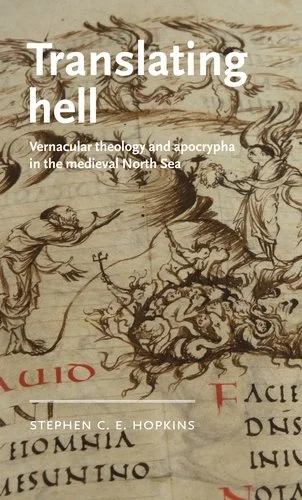
This week, I spoke with Dr. Stephen C.E. Hopkins about medieval ideas of hell. Stephen is Assistant Professor of English at the University of Virginia, and the author of many works on heaven, hell, and apocrypha, including his book Old English and Anglo-Latin Biblical apocrypha. His latest book is Translating hell: Vernacular Theology And apocrypha In The Medieval North Sea. Our conversation on where medieval people got their ideas about the afterlife, how they adapted these ideas across cultures, and why everyone was so obsessed with hell is coming up right after this.
Well, welcome, Stephen, to talk about hell. And I'm first of all, I have to congratulate you for all the many amazing puns that you have in your book. Welcome to The Medieval Podcast.
Stephen Hopkins:
Thanks so much. I've really been looking forward to this. It was very easy, you know – it was tantalizing to not… to have all those puns at my disposal.
Danièle Cybulskie:
And there's another one – tantalizing – right there. So, this is sort of an idea of how this day is going to go, I think, for people who are listening at the other end. Okay, so you're talking about hell. Why study this at all when we're talking about the Middle Ages? Like, why did this catch your interest?
Stephen Hopkins:
Yeah, that's a great question. So, when I was in grad school, one of the first, you know – I took a Beowulf seminar, as you do when you study Old English, and I was really interested in Grendel's mere, where Beowulf is about to dive beneath the water and there's a fyr on flode, it says in Old English: there's a fire on the flood. And I was really interested in that scene and sort of, like, how spooky it is. And so, I started digging into the sources and analogs, and inevitably a lot of the scholars said, well, really, if you want to understand this scene, you should read the Gospel of Nicodemus. And I was like, the gospel of what?
Danièle Cybulskie:
Yeah.
Stephen Hopkins:
You know, like, I was familiar with the four canonical Gospels, but hearing about this fifth gospel really caught my attention. And so, that's got me down the rabbit hole of apocrypha in general. And I started learning about these non-canonical scriptures. You know, I started reading about all the different genres they come in, and how they imitate scriptural forms, and things like that. But really, by the time I got to my dissertation, the question for me, you know – I'd sort of been hell-pilled at that point. And so, I'd read Dante, you know, multiple times just for fun. And I really got to the question of how did we get from, like, the handful of Bible verses about hell? Because in the New Testament, there's really only, like, six unambiguous references to hell – very few – and a couple of ambiguous ones. And then the old – you know, the Hebrew scriptures/Old Testament, depending on your tradition, is even more ambiguous, right?
Danièle Cybulskie:
Yeah.
Stephen Hopkins:
You can even ask, did they have a hell? But anyway, my question was, how did we get from those handful of ambiguous references to this full-blown, schematically complex, symbolically rich hell that we see in Dante? What happened in the middle? And so, the answer that I sort of stumbled into over the course of the dissertation was hell and apocrypha are tightly intertwined. Apocrypha helped make this happen.
Danièle Cybulskie:
Well, that begs the question, what are apocrypha? And you do mention in the book that it's a little confusing. So, if people are listening at home and they're confused about this word, tell us what you mean here by apocrypha.
Stephen Hopkins:
Yeah, so the simplest way to define it is apocrypha are non-canonical scriptures, right? So, they look and sound like scripture. They're often written in the same sorts of genres, the same sorts of styles. You know, there are apocryphal gospels, there are apocryphal epistles, often from Paul or someone. There are apocryphal revelations/apocalypses. All the genres that you'll find in the canonical scriptures, there are apocryphal counterparts to them. So, they look and sound like scripture, but they were not universally recognized as authoritative or as inspired – or maybe they were, but only temporarily, right? So, they didn't survive either the test of time or the test of geography, is what I say in the book. They either were not considered canonical for long or else they were not considered canonical everywhere. And so, actually, if you look at Bibles today, you'll see that your tradition – or, you know, whichever tradition you're looking at – actually shapes the number of books that are considered canonical. If you're an American Protestant, you know that there are sixty-six books in the Bible, but if you're an American Catholic, there are, like, seventy-two. And if you In the Ethiopic Orthodox tradition, there might be seventy-eight. Same for the – yeah, so the Greek Orthodox tradition, as well has a higher number. So, some – in other words, some things that we might think of as Americans as apocryphal texts are considered completely normal canonical books in other traditions. But then there's also another sort of ring outwards of apocrypha that have never been accepted everywhere – or anywhere really – and they're just purely chaotic fun.
Danièle Cybulskie:
Yes, the medieval world is full of these amazing stories, and it's hard to know… I think it would be really hard to know, if you're just a regular person in the medieval world, what is actually considered to be, you know, the truth. Is it acceptable? Is it not acceptable? And these things, as you're saying, they are a bit slippery.
Stephen Hopkins:
Yeah, I think what you're gesturing at is what we might call the canonical/apocryphal boundary was not very clear. And I think part of that dynamic… like, part of something that's really interesting about that dynamic is there were lists that were drawn up of books that you specifically were not supposed to read, right? There's this thing called the Gelasian Decree, which supposedly was issued by a pope that it's named after, but it turns out it's probably a forgery. And at any event, it was considered authoritative in the Middle Ages. It probably actually is, like, forged a century afterwards. But this list is like… it's actually just a list in Latin. These are the books that are prohibited to read. Do not read these. And then colon, and then you get all the books. Some of those items are fairly obscure. Some of them are quite well known, like the Gospel of Nicodemus, or The Vision of Saint Paul. But what's ironic about that list, of course, is that it was extremely popular. You can find it in a lot of manuscripts all over the medieval world. And honestly, by circulating a list of banned books, they sort of ensured the popularity of a lot of these texts. So, yeah, you have things that basically – it was almost a shopping list of like, if you want to read forbidden books, check this out, but don't, right? It's spiritually dangerous.
Danièle Cybulskie:
Yeah, exactly. I think there were a lot of confessions happening, like: I went and read this book anyway. Now you have to explain to me what's true and what's not true. So, let's start at the beginning. If we're talking about the canonical texts, the ones that are familiar to everybody, what does it say about hell in the Bible? What do we know about it? Is it a fiery lake? What does it say?
Stephen Hopkins:
Yeah, so, the very few references that are made in – especially if you're looking at the four canonical Gospels, You know, Christ does talk about hell, but it's usually in parables. So, right off the bat, you have to ask how literally it's meant to be taken. He mentions that there's a lake of fire in one parable. He mentions that there's a worm that devours. You know, it's sort of traditional imagery that's associated with the space of Gehenna, which is, you know, possibly a trash dump outside of Jerusalem. And there's a whole folklore that's grown up around explaining and glossing that. But yeah, I'm trying to think: what else do we have? We have a somewhat ambiguous reference in 1 Peter that says that when Christ died, he preached to the spirits in prison, and it mentions Tartarus. So, again, is Tartarus the Greek term? Is that the same as, like, Hades? Is it the same as Sheol? Is it – you know, there's all these terms that get used to refer to hell. The word hell itself doesn't, you know – is not Greek, obviously. So, it's not even possible for it to be in the New Testament. The Latin word that it usually glosses is inferos, right? The lower regions. So, again, there's this sort of, like, nebulous cloud of ideas that have to do with the afterlife, with the grave, and with where people go after they die. There's not a lot of clarity, right? It seems like the other big thing – scene – to look at would be maybe the final judgment that Christ mentions in Matthew 25 and 26 when he describes there will be the sheep and the goats and he's going to sort them out, right? And the goats will be dismissed into the outer darkness where there's wailing and gnashing of teeth. Like, that's it. Does that sound a lot like Dante's Divine Comedy? Not really. It's extremely thin. And I think that that ambiguity, all the open-endedness of it, the lack of definition, is probably what drove a lot of people to want more. That's one reason I think why we have all these apocrypha in general is that you have the canonical texts, but they often raise more questions than they answer. And so, if you're going to say that, like, vast numbers of humanity are going to wind up in hell and it's not going to be pretty, obviously, most of your audience is going to be like, well, not pretty in what way? Like, how is this going to apply to me? What should I be afraid of? Right? Why aren't you telling me more about it? And yeah, you can search the scriptures, but there's not a lot to go off of. So, inevitably and invariably, people turned to apocrypha to try to figure out more.
Danièle Cybulskie:
Right. And so, you're mainly focusing in your book on two books, and the first one is that book that answers the question in some ways – is The Vision of Saint Paul, where you get a tour, you get to find out what happens. So, tell us what is in The Vision of Saint Paul.
Stephen Hopkins:
Sure. Yeah. So, The Vision of Saint Paul – I like to think of it as sort of the beta version of Dante's Divine Comedy. It's our first, like, immersive tour of hell. Ironically enough, it comes from a passage – a canonical passage. So, in 1 Corinthians 10, there's this really weird moment where basically Paul seems to be addressing… There were concerns about Paul's legitimacy as an apostle. After all, he never met Christ in person. He was a latecomer. If you believe the narrative in Acts, he was actually helping persecute the early church, maybe. And so, now, all of a sudden, he's claiming he's one of the good guys, and he's claiming that he's in charge, despite not having any of this apostolic authority. So, in the context of that epistle, he is sort of addressing people who raise that concern and say like, why should we listen to this guy? He's not really the real deal anyway. And, oddly enough, he starts, like, slipping into the third person when he does it in the canonical letter. And he says, look, I'm not going to – I'm not going to brag about apostolic authority, but if I were going to, I know a guy…
Danièle Cybulskie:
Yeah.
Stephen Hopkins:
… who was taken up to the third heaven and had a vision of mysteries that cannot be revealed. And he was forbidden from speaking of them, period. Right. And so, that's sort of his mic drop where he's asserted his authority. He said, look, I haven't seen Christ, but, like, I was actually taken up into heaven, which is something that other apostles can't even say. And he just leaves it at that. So, the very premise of The Vision of Saint Paul is: I know I just said that I am forbidden from telling you what I saw, but let's go ahead and talk about it anyway.
Danièle Cybulskie:
Mmhmm.
Stephen Hopkins:
And there are even manuscripts where it begins – where the letter is introduced with a quotation from 1 Corinthians 10, with that verse. And I'm like, okay, you could read that as maybe canonical permission to copy this text, but it does seem on its surface to sort of preclude its own existence. At any rate, so, The Vision of Saint Paul picks up where that leaves off and says, you know, he was taken up by some… by an angel, and shown the mysteries of heaven and hell. So, it opens up with this actually strange scene where we find out that – and this is actually what the text says is its own excuse for why it needs to be written down in the first place – there's some important stuff about the afterlife that humans need to know. And the most important first thing you need to know is that we all have guardian angels who sort of watch us day and night. And every night at sunset, our guardian angel goes up to God and narcs on us, and tells about the good or the bad things that we did. And so, like, right there, the text is saying, you know, get your act together, right? It's a text that's very concerned with showing you the consequences of your bad behavior, and why you should clean it up before it's too late. After that, Paul is taken up to paradise. We won't bother with the paradise stuff. It's kind of long, but shockingly stratified heaven. There are multiple heavens, you know, and regular people can only be on the first level. People who have been martyred are at a higher level. You know, there's all this hierarchy built into it. After that, Paul is shown hell, which is also – in the Dantean way, right? Dante is actually riffing on this – it's the first time we see this sort of schematized hell where there are different classes of sinners who are classified by their sins, and they're also punished in ways that are symbolically symmetrical with that sin. So, people who were compulsive liars or couldn't be trusted, they are hanging from trees by their – flaming trees – by their tongues, or people who were fornicators are submerged to the waist in fire, right? It says to their belly buttons – their umbilicus – but, you know, that's a Latin euphemism. So, yeah, this is the first time when Paul has sort of shown this… the whole sort of shape of hell, and we're supposed to look at that and say, oh, I need to stop doing those things, so that I don't wind up with those people in that, you know… in that horrible position. Some people interpret it as a, you know, pedagogical text – almost didactic in that sense. But at the end of the day, you know, it's very much concerned with showing us the consequences of not being a Christian, or not being the right kind of Christian. Interestingly enough, if you read it carefully – and it is kind of long, it's, like, fifty chapters in the long Latin version – what does Bart Ehrman say about it? He says that if you read The Vision of Saint Paul, you might be under the impression that the only people in hell are other Christians. Because actually, yeah, there's no mention of heathens. There's no mention of anything. It's just bad kinds of Christians who are breaking the rules, which tells us a little bit about the sort of fourth- and fifth-century monastic environment in which we think that text was first composed. It's monks who are saying, like, we're the most elite Christians. Look at all these losers who are not doing it right, and they still wound up in hell. But it becomes wildly popular. It's one of the most well-attested texts in the Middle Ages. There's more than four hundred copies of it, which, if you compare to Beowulf's one copy or something, you know, think… think of whatever iconic medieval text – Canterbury Tales: there's not that many, you know. Half a dozen early copies, or so. We've got four hundred of The Vision of Saint Paul. It was all over the place. That's one of the two texts that I focus on in the book.
Danièle Cybulskie:
Yes. Well, I mean, I could see why it's popular, because if you are being told every week on Sunday that you're going there, you kind of want to see what it's like, right? You kind of want to know what is waiting for you there. And one of the things – I think, if I've got this right – this was sort of based on a previous text, which is The Vision of St. Peter, in which there are sinners who are like, I didn't know this was going to happen to me. And so, that, you know, there's questions about, like, do you have to know that you're sinning to end up there? So, you need a book that's going to tell you these things.
Stephen Hopkins:
Exactly. Yeah, yeah. The Apocalypse of Peter is the earliest, earliest vision of hell that we get. It's originally written in Greek. It seems to just go extinct in the manuscripts after about the fourth century. And one reason for that may be – this is slightly conjectural, but – it seems to be that The Vision of Saint Paul… you could almost think of it as an evolution of that text. And so, like we never see any Apocalypse of Peter in Latin regions at all. When it gets trans– like, you could almost say, when it gets translated into Latin, it becomes The Vision of Saint Paul, and then it goes viral. But Paul also becomes wildly popular even back east where they were using Greek. So, it sort of supplants the original text. Interestingly enough – I sort of talk about in that first chapter of the book – The Apocalypse of Peter, especially in its earliest iterations, seems to… yes, it gives a tour of hell, and yes, you're right, the people in hell – some of them are surprised that their bad behavior has gotten them in hell. And, you know, you can wonder, like, is the text being sort of sarcastic? Like, should they have known better? It seems to imply that they should have known. Like, Christ does give lots of warnings in his teachings about it. So, like, they can't be too surprised, right? But there's also hints of what you might call universalism in that original text where, yes, there's all this horrible suffering going on in hell. Yes, these people are being tortured horrifically and graphically, but it's not forever. Peter and this sort of – this idea sort of gets, I will say, transferred to Paul, but then tweaked and contained, you might say. So, in the earliest ones, it sounds like Peter throws a fit and says, this is awful. Why are we letting this happen? And Christ says, well, okay, yeah, it is a lot. So, any souls that you want to pray for, we'll rescue them. We'll rehabilitate them. This hell will be purgative, in other words, and they'll be in paradise, and everything will be good in the end. That's only in the earliest versions – like, the Ethiopic version tamps down on that. So, you can sort of see an early church controversy right there playing out in the manuscripts. By the time we get to the Latin tradition, though, in The Vision of Saint Paul, Paul also has a similar breakdown at the end of his tour of hell. It's too much. The text tells us it's just too much. He actually starts weeping and crying, and he asks his archangel guide – it's usually Michael – why is God allowing this, right? If he's all-powerful and he loves us, why did he make these people in the first place? It would have been better for them if they weren't born. And first off, the angel says, like, are you more merciful than God? Do you know better than God? But there is a tradition called Sunday Rest where Jesus comes down and says, okay, yeah, I know this is, like, tough to watch. It is just. But because I have so much mercy and compassion, I will give all of these sinners in hell one day a week off of their sufferings, and it's going to be Sunday. So, every Sunday, they've got that to look forward to. And this sort of motif… it undergoes a lot of evolutions in a lot of regions, but in many of them, the souls wind up being extremely excited for Sunday because they say that that one day of being, you know, out of the flames is so delicious and so perfect that it's better than, you know, being alive and back on Earth, which is kind of ironic because – right? – all these people in hell wind up basically going to church every Sunday, and it becomes the best part of their existence. They literally sing praises to Christ all Sunday, and then they go back to their tortures for the other six days of the week.
Danièle Cybulskie:
Yes. And if this is sounding familiar to people, that's because we talked about The Voyage of Saint Brendan earlier in spring. So, that's one of the places this comes from, is this tradition of getting Sunday off. We're going to come to Ireland, I hope. I hope we'll have time for everything in a minute. But this idea of who is this just for, who is this fair for, also leads to probably the development of the Gospel of Nicodemus. So, tell us about this gospel that you're saying is, in some places and some times, accepted as basically a fifth gospel.
Stephen Hopkins:
Yeah, yeah, yeah. So, the Gospel of Nicodemus is interesting. Paul – The Vision of Saint Paul – is, you know, very popular. Four hundred-plus manuscripts. Gospel of Nicodemus is arguably slightly even more popular. I think the census of the Gospel of Nicodemus that Zbigniew Izydorczyk published thirty years ago, he had like four hundred fifty-plus manuscripts, and now that number is slightly higher. And that's in Latin alone, right? So, that – and not counting all the vernaculars – it's extremely popular. It's even put after the four canonical Gospels in a few manuscripts that we still have, like the Royal Bible in London. What's interesting to me about – and why I chose these two texts in particular – is not only because they were clearly, like, in terms of manuscript number count, the most popular texts out there, which seemed significant to me, but also because they represent, I think, two sides of the same coin. If we're talking about hell, we could use hell to talk about suffering, torment, justice – basically, retribution in a sense. We live in a really nasty world where really bad things are happening. Spend five minutes on social media and you'll see what I mean. So, in some sense, it makes sense that we're crying out for justice. We just hope that we're on the right side of it and that we're not the ones in hell. So, that's maybe the retributive strain, the… the Vision of Saint Paul side of the coin. The Gospel of Nicodemus is interesting because it's actually kind of the opposite. By turning its attention to hell, by giving us a glimpse of hell, it's really not interested in the torment or any of that. What it's interested in is the rescue. It's interested in sort of hope from hell. And so, its main narrative motif is sometimes called the Harrowing of Hell in medieval literature. And it's this idea… basically, you know… I think, you know, I said that The Vision of Saint Paul comes from the question of, you know, well, what did Paul really see when he had that vision? The Gospel of Nicodemus is maybe an even more basic question. It's the question of what happened after the Crucifixion on Good Friday, but before the Resurrection on Sunday? What was Jesus doing in there? Was he taking a nap? No, it turns out actually his soul descended into hell, and he liberates all of the prophets and patriarchs, or the main characters from the Hebrew Bible. People like Adam and Eve, and Abraham, and all the prophets – the major and minor prophets – are all down there waiting in darkness is what it says. It doesn't necessarily say that they're being tormented, so it might be a separate place if you want to get really picky. Maybe it's the Limbus Patrum, right? A Limbo of the Fathers. It's not totally clear. But when it says that they're… they're all sort of down there in the darkness, and all of a sudden they see a great light pierce the darkness, and Isaiah pops up and says, ah, you know, remember when I said that prophecy about a people stuck in darkness have seen a great light? You know, it's like the Christmas passage. This is what I was talking about, right? And then all the other prophets come up, and they sort of recite their line where they say their prophecy that they delivered about Jesus. And so, he comes down, he crushes the gates of hell, he takes Adam and Eve by the hand, and he leads everyone out of hell. And it's actually a very joyous text, even though it is, you know, ostensibly hell-centered. When you take those two texts, they answer a lot of your basic questions about what is hell, where is it, what is it like, who goes there, when will they be there, for how long will they be there, why does it exist in the first place. They really flesh out sort of the theology of how does God mete out justice, what does that justice look like, and what does it mean for you and me, right, when you take those two together. So, I think that is why they were so ubiquitous is because they really did answer a lot of the questions. Not everyone in the Middle Ages was happy with the answers that they provided. Ælfric is particularly thorny in England about, don't read that thing, it's crap. He says it's a foolish book for foolish people. Augustine isn't fond of it, either. But nevertheless, they have to speak out against it because it's so popular, because it did work for so many people, apparently.
Danièle Cybulskie:
Yes. And so, moving into the rest of your book, you're talking about places that are not at the heart of the initial Christian movement, right? So, you're looking at the North Sea, and all of these different communities around there. So, this is missionary activity in which people are going to be asking, what happened to my ancestors? Like, they weren't Christians, they didn't have the opportunity. What happened to them? And so, when you have something like the Harrowing of Hell, well, okay, this works for us.
Stephen Hopkins:
Yeah, thinking about conversion and sort of the identity crisis that it might pose, then, as well as now. But if you think about, you know, especially somewhere like Iceland, where traditionally these settlers who sometimes were Vikings – we think about Valhalla and dying a glorious death in battle, you know, these stereotypes about their warrior culture – they… it was already kind of baked into their culture to, like, revere their ancestors. They told sagas about the glories of their ancestors. They wanted to hear about the adventures and, like, sort of the big exploits of these people who had gone before. It's not very nice when the missionary comes up and says, yeah, all those people that you care about, and that you've devoted, like, all your time and energy to making cool stories about, they're all in hell. So, you should just forget about that and focus more on the Virgin Mary, or on John the Evangelist, the perpetual virgin.
Danièle Cybulskie:
Yeah.
Stephen Hopkins:
You’re like, uhhhhh…. There's actually like a – I don't know if it's totally apocryphal or not, but there's a story about – it's at the beginning of my Old Irish chapter where we hear about the Irish missionary Clement, who is preaching to the heathen Saxons on the continent. You know, this is basically modern-day Germany. And this heathen king is, like, ready to be baptized. And as he's at the baptismal font, a missionary says, you know, do you embrace Christ? Do you reject all of your ancestors and their ways? And the king goes, wait a minute. Wait, wait, wait – all my ancestors are in hell? They can't be with Christ? And supposedly the priest says, yes. And then he says, well, I would rather be in hell with them than with this wimpy Christ. And so, supposedly, Radbod steps away from his baptism, and that's why the Irish Clement winds up preaching a sort of form of universalism by saying, like, well, actually, maybe there's a way to sort of grandfather your ancestors into heaven, so then you'll convert now.
Danièle Cybulskie:
Yeah, we can figure this out. Well, one of the things that you say that I actually wrote down as a quote because it's brilliant, and it really encapsulates this, is that you said the afterlife was a space under construction. Which is true. Because they were trying to figure out how this is all going to work. And one of the things you talk about is, like, experimenting with ideas, and how is this going to work? And we were just talking about The Life of Saint Brendan: Judas gets Sunday off. And Judas is a case for where's the full stop, right? Like, does he get a pass? And so, there's this really interesting thing that you've brought out in the book where there's the Harrowing of Hell, right? So, Jesus goes down and he releases all the people who deserve it, but Judas misses the window – like, purposefully misses the window. So, tell us what happens to Judas, here.
Stephen Hopkins:
Yeah. Yeah. So, one of the things that that Old Irish chapter is thinking about is this sort of obsession that I noticed in Old Irish texts with the timing and the mechanics – the precise mechanics of salvation. When does it happen? When did the Harrowing of Hell happen? You'll even see in Irish apocrypha – this is something that didn't make it into the book, but something that is so near and dear to my heart – there is an Irish apocryphal text that begins with the question, as so many Irish texts do, how long did Adam and Eve live in Paradise before the fall? And then it'll say, ní hansae, which is the typical Irish: not hard, not difficult; it's not hard to say. And then they'll rattle off two completely contradictory answers. They say, it was either twelve hours, or it was a hundred years.
Danièle Cybulskie:
Mmhmm. One or the other.
Stephen Hopkins:
And so, what they mean is we have apocrypha, and one of them says this, and the other one has this totally different answer. Here are they both. Enjoy that. And so, you know, in this sort of intellectual climate where you have people who are very devoted to studying the Bible in its most literal level of exegesis, you know – sort of a historical context and sort of what is happening in the plot – you have questions arise about, okay, so if Jesus harrowed hell, he was…. So, he went down there on Saturday of Holy Week and he rescues a bunch of people. Who? And when precisely did he rescue them? Should we be celebrating Easter, like, at midnight because that's when the resurrection technically starts? 12:01 AM on Easter Sunday? Those are the kinds of questions that lead to these questions. And so, they take Judas. There's a lot of texts about Judas in Old Irish, you know, which makes sense because if you think about sinners, Dante stuffs Judas into Satan's mouth for a reason, right? He's the arch sinner. He's the one who personally betrays Christ for some pocket change, right?
Danièle Cybulskie:
Mmhmm.
Stephen Hopkins:
So, it doesn't get worse than that when it comes to humanity. So, if, if we can tell stories about Judas, we can use him as sort of a test case to see like, what were the rules? What were the limits? So, with that in mind, apparently, one early version of the Gospel of Nicodemus implied that when Christ harrowed hell, he emptied hell. He took everyone out who was in hell up to that point. Now, maybe that means that people who go to hell after, you know, 30 AD or, you know, CE – whenever you think the Crucifixion is – maybe that means that those people are trapped in hell forever, right? There's more – we can argue about more details later. But apparently, this idea is in the water in Ireland because in this homily in the Leabhar Breac, Judas somehow knows about the harrowing in advance. Apparently, Christ told him about it. And so, he's under the impression that when Christ gets to hell, everyone's getting out. And so, the text tells us – this homily…. like, this is a text that was preached to people – this homily says Judas hanged himself, just like in the Gospels, on purpose because he was trying to get to hell before Jesus because he wanted to get out with everyone else. And so, it's this sort of logical test case of like, well, if the Harrowing really was universal, did it apply even to someone as awful as that? But then, the homilist comes in and, you know, saves the day, and says, well, the good news is Jesus caught wind of this wily plan, and so he actually magically froze Judas's soul in stasis so that it was, like, delayed. And he finishes the Harrowing, and then when everyone gets the hell out of hell, then Judas's soul sort of flies in, and the gates of hell slam shut right behind it. He's the first soul that's trapped there forever, you know? Almost like Looney Tunes timing.
Danièle Cybulskie:
Yeah, it's like a bear trap. Like, what a relief. But I mean, like, it's being told to people who obviously want that relief. Like, there are some people who don't deserve to get out, you know? This is the sort of argument that you have whenever you're talking about divine punishment. Like, there are some people who are really bad. What happens to them? And so, for those Irish people who are listening, it's fine. The worst of the worst, he's stuck there. Don't worry about it.
Stephen Hopkins:
Yeah, it is a way of asserting that, like, one: okay, if some people are getting out of hell, the good news is that shows that God really is merciful, and that he's not this, like, inhuman monster that is just, you know, torturing us like some, I don't know, three-year-old with a magnifying glass frying ants, right? For pure sadism. But it also means that there are rules, and that there is justice, and that can actually give us a lot of hope that this whole Christian endeavor really is fixing the world. And it might, you know… it does raise some questions. It is problematic because then you could always spend more time thinking about like, well, what are the rules of purgatory? And, you know, from the twelfth century on, people do spend a ton of time tinkering with that until the Reformation says enough. You know, it does… it sort of allows you to solve the classic problem of theodicy, right? The goodness of God. If God is really truly omnipotent, if he can do everything, if he's all-powerful, and if he is all-loving, how could he create people, supposedly give us free will, and then also punish us for sins that we may or may not be able to help because of original sin? Right? There's sort of a paradox there. And these narratives about the Harrowing of Hell sort of allow you to sidestep some of those issues. Of course, in answering some questions, they raise many more. And that's where my book steps in – to document a lot of these experiments.
Danièle Cybulskie:
Yes. Well, one of the things that's making me think of is where you're talking about the… the angels that go up at sunset every night and tell God what we've done. Some of them are like, do I have to keep watching this every single day? And God's like, yeah, because I'm giving them as much time as possible to repent, and they have all this time, and then if they don't take it – if they don't take the opportunity – then, I will judge them forever, and it'll be totally just. So, like, that question comes up, too. Why do we have so long to keep sinning?
Stephen Hopkins:
Exactly.
Danièle Cybulskie:
And the answer is: so that we can repent.
Stephen Hopkins:
Yeah, yeah. He's giving us more time for… for more grace until time is up. So, yeah, trying to save as many people as possible while still having the rules.
Danièle Cybulskie:
Yes. Okay, so we talked about Ireland. I think we're only going to stop for a second in England because the other cases, I think, are less familiar and perhaps more interesting. But England has that subheading that I have to congratulate you for: Hell is Othered People, which is brilliant. And it really is talking… in this chapter, you're talking about how there is a space – hell is a space, or becomes a space – for people that don't belong with the rest of us. So, do you want to tell us a little bit more about that?
Stephen Hopkins:
Sure. Yeah. I'll try to keep it brief because I know we have a section–
Danièle Cybulskie:
We’ve got two more to get to.
Stephen Hopkins:
Not to downplay the Old English chapter because that is technically my day job, but in some ways, I think England was maybe more tethered to orthodoxy because they had maybe a stronger, more centralized church. You have people like Ælfric and Aldhelm, who are very worried about people following the rules. At any rate, we've got this text called the Penitence of Jamnes and Mambres, which is an extremely obscure apocryphal text. Even most apocryphal scholars have never heard of it. It is listed in the Gelasian Decree. It also is barely attested in the manuscript record, period. We have some Greek papyrus fragments, and that's, like, it. And then we've got this Latin – bilingual Latin/Old English – text that seems to be completely unrelated to the Greek fragments. It's about the same two dudes, but the story that it tells, which is – it's only, like, a paragraph long – doesn't really correspond to anything in the Greek fragments that we have. So, my personal theory is that someone – some monk, some enterprising monk in England – saw that list of banned books and said, De Penitentia Iamne et Mambre, that sounds awesome. We should have that text. And went ahead and wrote a short text about it. And if that's true, then that sort of doubles down on what I'm about to say. I call that section Hell is Othered People because a lot of the language… even though it's only a paragraph, there is a word that is used repeatedly to describe these brothers. So, I guess I should back up and say, Jamnes and Mambres are not entirely apocryphal characters. They're all kind of canonical. They do show up in 1 Timothy. The Pauline author there says that there's these jerks who are getting in the way of my ministry, and they are obstructing God's work, and they are just like Jamnes – or, he says Jannes and Jambres, actually. Their names are slightly different. And what he's referencing there – and there's no other explanation – what he's referencing there is an apocryphal tradition, actually. So, we have a case of a canonical letter citing an apocryphal text. These are the two brothers, supposedly the court mages of Pharaoh back in Egypt, back in the Exodus. These are the two guys who supposedly withstand Moses and Aaron, and try to perform magic tricks to sort of show that the Egyptian gods are just as powerful as Moses' God. So, anyway, we've got this weird little apocryphal text about them, and all it really says is that Mambres – who is apparently the younger brother – has survived his brother. His brother died at some point – doesn't really say why – but he's out there on this hill and he has – it says he opens his brother's, you could say, magical books. In the Latin, it says libros magicos. But in Old English it says drylican bec, and that is the druidic books, basically, of his brother's devil worship, his deofelgildes. And so, he… what he does, basically, is – it's necromancy. He conjures his brother's soul up from hell, and then his brother does the most hilariously older brother thing you can do, right? He lectures his younger brother about what a screw-up he is. He says, I've come up from the flames of hell, where it's cramped and dark and horrible, and I've come up to warn you that if you don't treat your neighbors better, if you don't give alms, then you will be in the same place as me. And that's, like, the whole text. That's pretty much it. So… What's wild about it, though, is the manuscript that it shows up in – the Cotton Tiberius manuscript – has one of, I think, the most magnificent illustrations that we have from the pre-conquest English period. It's this huge – and I have… I have the picture in the book – this huge, full-folio image, which is pretty rare this early, of this hairy, shaggy demon reaching out of hell at Mambres, who's standing on this hilltop with this little druidic book, and there's corpses – the whole, like, side of the hill has been, like, blown open. There's fire, there's corpses in there with, like, wolves and serpents gnawing on them. And so, part of what I do in that chapter is I look really closely. The image kind of tells us more than what the text does. The text has a couple of things that say – that reference druidism. Now, we don't totally know if they were aware of the etymology of dry. But there is at least some lexical evidence to suggest that the term is consistently used for a specific kind of dark magic, whether they associated it with Irishness or not. But then you look at the picture, and you've got, you know, these – hæþens in Old English – these heathens who are, like, literally drawn out in the heath, right? On a hillside. Sort of implies that necromancy and black magic are things you have to do out there away from – cities are somehow inherently Christian-coded, or at least towns, right? I mean, this is early medieval England, so like, what is a city? London is like five thousand people or something at its height. Hamlets, I guess. At any rate, so… so, in other words, the… the countryside is the place where you're likely to find druid magic. Forbidden magic. You're likely to see devils rip open hillsides. Witchcraft works out there. It's suspect because it is everything that we good Christians who stay in town are not. And so, you know, this is sort of one of the instances where I just show that, like, hell is used for maybe what people would think of as the most obvious use for hell. Hell is used to show who doesn't belong. Who the weirdos are; the outcasts. And, in this case, it's the English saying that, like, the Irish are suspiciously hell-coded.
Danièle Cybulskie:
Yes. And you brought up – at the beginning of our conversation – you brought up Beowulf and the Grendelkin, who are Cain's kin, who very much hell-coded, as well. So, this – I'm not skipping it because it's not interesting. We did spend some time on it. It's more that I think this is really familiar to people, but there's so much there to dig into.
Danièle Cybulskie:
Uh-huh.
Danièle Cybulskie:
Yeah.
Stephen Hopkins:
It's a very… Yeah, I agree. It's the most intuitive use of hell, I think, is to show who the bad guys are.
Danièle Cybulskie:
Yeah, exactly. And speaking of the bad guys, let's move to Wales because when we're talking about hell and bad guys, it tends to be the other guy.
Stephen Hopkins:
Yes, exactly.
Danièle Cybulskie:
Okay. Tell us how hell is used in a political sense in these Welsh texts you looked at.
Stephen Hopkins:
Yeah, so the texts that I focused on in that chapter are actually kind of weird within the corpus of the book, because they are mostly poems – bardic praise poems – by the Gogynfeirdd, which are the – if you translate it literally, it means the not-quite-as-late bards, middle bards – from about 1200, or so. So, this is a particularly fraught historical period in Wales, because after 1066, you have all these Anglo- Norman border lords who – well, first I guess they're just Norman, right? And then they become Anglo-Norman after oppressing the English for a hundred-plus years.
Danièle Cybulskie:
Mmhmm.
Stephen Hopkins:
And then, once they get done with that, then they keep expanding and they build a whole bunch of castles all over the Welsh Marches, and they're trying to dispossess – they're trying to do in Wales what they did in England. They're trying to root out the local nobility and replace it with themselves. They're trying to colonize, in other words. And so, these Welsh bards, though, do something that's really fascinating, and they start looking at apocrypha about hell, and especially the Harrowing of Hell, and taking that motif, which, as I've already referenced earlier, is really quite optimistic when you think about it. You know, if hell is like supposed to be the most too-late moment ever, then the Harrowing of Hell offers you hope even, even in that darkness, right? Christ could still save you. Nothing is beyond his ability to fix, right? And so, they latch onto that: that sort of eschatological hope – almost apocalyptic hope – that the New Jerusalem really will come down. There'll be a lot of violence when it happens, but ultimately, it'll be paradise again. And they take that hope and they map it onto their political situation. So, they start – they make praise poems. Normally, they would make praise poems to their kings or their lords, and in that tradition, if a lord gives you gold, you are obligated – legally bound – to repay him with praise that will sort of promote – you know, it's PR. It's medieval PR. It will promote their reputation, it will make other people think that that is a really good lord, and then they will rally to the lord when fighting needs to happen, basically. And then, in return, like, it sort of establishes this relationship where the poet can ask for – nawdd is the term in Welsh. It's sort of this legal favor category where you can ask for, basically, special favors from the lord. And so, that whole tradition already existed for real human bards and real human lords. Some bards at some point decided to transfer that whole relationship schema over to themselves and Christ, and so then they start making bardic praise poems to Christ. When you do that, there's a natural problem. Normally, what you praise a king for is kicking butt and taking names. Christ is famously pacifist, not a lot of butt-kicking, unless you maybe count throwing tables in the temple, right?
Danièle Cybulskie:
Mmhmm.
Stephen Hopkins:
So, what do you do? How do you give Christ a glorious military career? Well, they turned to the Creed, and they saw the clause in the Apostles' Creed that says that he descended into hell, and then they sort of dug into the apocrypha about that, and basically latched onto those moments and said, those are Christ's glorious military exploits. He smashed the gates of hell. That's a siege, man. So, they praise him for that sort of thing, and then they make the turn to their own political moment and say, just like you did there, where you conquered the neighboring region of hell, you know, sort of this uncanny border enemy, – wink-wink, just like Anglo-Norman England – why don't you come here and do that for us now? We're invoking the legal privilege of nawdd to ask you, out of your grace and favor for us. Now that I've written this cool praise poem about you, please come here and fulfill your obligation and kick the Anglo-Normans out.
Danièle Cybulskie:
Mmhmm. It's fascinating to… to map these things on, and they work in a really simple and elegant way, but they also tell you so much about what people are thinking at this time. What is occupying them. Which is, of course… I'm thinking mentally, but physically, they're being occupied, as well. And so, thinking about this in terms of reciprocity is really interesting, here, but thinking about this in terms of the once and future king – the OG once and future king – is going to come back, and he's going to make everything right, and we just need to wait for it. But it is… There are some sort of surprisingly violent nuggets in this. I think he's, like, stabbing, and his cross is full of gore, or something like that.
Stephen Hopkins:
Yeah, yeah, yeah. A sword of gore.
Danièle Cybulskie:
It’s wild.
Stephen Hopkins:
Yeah. Yeah. Yeah, he stabs the serpent in the mouth with his sword of gore, I think, which is the cross, right? So, he's, like, literally stabbing Satan in his open mouth, which is – I mean, I think that would make a really great tattoo, frankly.
Danièle Cybulskie:
It would definitely be one that raises conversation, I think, right? Yeah, so we have this sort of militant version of Jesus, which is very different from one that you have in the English chapter where he just sort of, like, melts the gates of hell.
Stephen Hopkins:
Mmhmm.
Danièle Cybulskie:
Here, there's stabbing happening, which leads me to the Norse example, which is perhaps the most militant. I know that it might be semi-blasphemous to say this out loud, but it made me think of these AI images where you make your… whoever, a regular person, just so epic. In that, all of a sudden, it's Jesus – who we know from the Gospels is a pacifist – and he's on this white horse ,and he's got blood-spattered vestments, and he's got a sword. Like, all of a sudden, he is this imagined Norse figure of complete kickassery, really.
Stephen Hopkins:
Yeah, yeah, yeah. But this is not AI in the traditional sense. This is actual intelligence, right? This is, this is Icelanders who knew their apocryphal sources, and their apocalyptic sources. And so, when they go to translate the Gospel of Nicodemus, they call it Niðrstigningar saga – which is just literally the saga of the descent, right? the downgoing saga – because it's Christ going down to hell. When they translate that into Old Norse, they basically grab at every – there aren't a lot, but – they grab at every military moment that Christ has – the Harrowing of Hell – and they combine them. They put him on a white horse because in Revelation, if you read that as an apocalyptic end times text – which not everybody does or did – but if you do, then, you know, it says that he'll be there on a white horse, and he will kill the dragon, which is sort of read typologically as Satan, and that will be sort of the final triumph of good over evil. And so, they map that moment that's supposed to happen at the end of time onto, like – they take all the symbols and map it onto the moment of the Harrowing of Hell.
Danièle Cybulskie:
Which is so inspiring for people who are familiar with the Norse traditions before the missionaries arrived. You want to invoke that sort of emotion, that sort of heroic moment that they are used to – that they can relate to, in a way.
Stephen Hopkins:
Yes. And the brilliance of it… Basically, we've talked about all the most boring parts, frankly, even though that was cool. That's why it's such a good text, right? What's especially amazing is the way that this text has been through a few subtle changes – has been made to resonate with Old Norse mythology – in ways that… we don't see anyone else in the Middle Ages doing this sort of symbolic work. So, the thing that really caught my attention when I first read this text in Copenhagen in the archive… The text starts off as a fairly straightforward translation of the Gospel of Nicodemus – the Hell Redaction – which is the back. The fun part. We skip the trial with Pilate, and all of that – boring details. We just start with the descent into hell. It says that when Satan hears about the Crucifixion… There's this debate before the gates of hell where basically – and this happens in the Latin original – where we get Hades, and Death, and Satan as three separate personified characters. And so, they're all having a bit of a debate over – sorry if you can hear that [siren]
Danièle Cybulskie:
Yeah.
Stephen Hopkins:
Unfortunately, my office is close to the university hospital. Anyway, we're having this debate before the black gates of hell between Satan, Hades, and Death over whether this whole crucifixion idea was a good idea or not. Hades is firmly of the opinion that Satan has made a tactical blunder, and Satan is portrayed as pretty stupid in the Gospel of Nicodemus, in general. And so, basically Hades says, should you really have killed that guy? Like, he's coming down here, isn't he? And Satan's like, no, don't worry about it. We killed him. There's nothing he can do. When people come down here, they're trapped. And Hades goes, yeah, but that's the guy that, like, made me vomit up Lazarus just a few days ago. It seems like he has the power to take people out of here. Why did you do this? And Satan says, don't worry, I saw this wimp crying. He was crying –
Danièle Cybulskie:
Yeah.
Stephen Hopkins:
– in the Garden of Gethsemane. So, we know he's afraid of death, therefore he's mortal, therefore you don't have anything to worry about. So, it's at this moment in the Old Norse version… he hears about the Crucifixion happening, like, right now, and he's like, I want to go watch. And this is not in the Latin version, obviously, but in the Old Norse version it says that he shapeshifts into the Midgard Serpent, flies to Jerusalem to devour Christ off the cross, and that when he does, the cross falls on him, and it catches him, and the text says, like a fish on a fishhook, or like a mouse in a mousetrap, or like an Arctic fox in a snare, which is possibly the most Icelandic metaphor that's ever been metaphored. And so, in this moment, we have Satan becomes the Midgard Serpent, and then we have the Midgard Serpent getting caught on a fishing hook and being defeated. If you know your Norse mythology, that screams another story in Hymiskviða. This is the Eddic poem in which Thor goes fishing. Sometimes it's translated as Thor's Fishing Trip. He goes fishing for the Midgard Serpent. The Midgard Serpent is sort of his old nemesis, right? Trolls in general and Thor don't get along, but the Midgard Serpent is his ultimate enemy that he's supposed to face one-on-one at Ragnarök, and they kill each other. Spoilers for those who don't know. In this myth, Thor gets in a boat with a giant named Hymir, and they go sailing, and they're out to try to catch the Midgard Serpent, and he does catch him. And in most versions Because Hymir is so terrified, right? Like, Thor and the Midgard Serpent are fighting so mightily with the fishing rod that Thor's feet burst through the bottom of the boat, and so Hymir is terrified that they're going to sink and get eaten by the serpent. And so, at the last second, he cuts the fishing line, and the Midgard Serpent swims away and lives to fight another day. Thor is so mad at him that he hits him with his hammer. But in this version, it seems like Christ is actually finishing the job that Thor couldn't. In other words, Christ out-Thors Thor. He does the thing that Thor almost did. And even at the end of time at Ragnarök, Thor is supposed to die from the Midgard Serpent, and the Midgard Serpent is supposed to die from Thor's blows. And so, here we have typologically, you know, that myth of Hymiskviða is basically being used to explain how the Harrowing of Hell works, from a salvation standpoint. The Midgard Serpent is supposedly, in Norse mythology, this world-encircling serpent. And so, you know, metaphorically, symbolically, where all the whole world, all of us, are caught in the coils of this serpent. And of course, serpent imagery resonates nicely with Genesis, and the narrative of that serpent that got us all into this mess in the first place. It also echoes nicely with the dragon serpent in Revelation that is going to be cast down and defeated. And so, you get all of these things sort of symbolically brought into one here, and Christ is able to catch him and sort of outsmart him in this way that is really quite satisfying. And then, after that, he's able to go to hell and do his usual – you know, he rides up on a white horse, and he delivers all the souls there. You read something like that – and I remember the first time I read it, I thought, that was awesome. Why did they do that? Because, especially if you read Old English, you'll know that there are basically no pre-Christian myths that survive in Old English. When they converted, for whatever reason, they forgot everything. The only reason we even know the names of a handful of their gods is the days of the week, right? Woden's Day, Thor's Day. That's about all we have. Thursday for Tyr, and Frigg for Friday. We don't have any stories about them. We don't have any myths or poems, nothing. One question I've always had is why do we have all the Norse myths? But then, my other question is: why is this translator using Norse mythology to basically shed light on, or help, Christian biblical exegesis? Or, at least, apocryphal exegesis.
Danièle Cybulskie:
Yeah, I mean, when we think about people who are bringing this new idea of Jesus – like, this person who is born in an arid area – bring it to the north, like, how are you going to make this translate? You work with what you've got. And the story of Thor and the Midgard Serpent is pretty awesome, and it also maps really well. And when you're talking about having Satan, and Hades, and Death are different people – I think in this story, as well, this version of it – you have Hades, I think, is bound at the foot of the cross, as well. There's Loki. And he's taken care of, as well. You've just mapped this all perfectly so that you can take care of it all.
Stephen Hopkins:
Yeah, yeah, yeah. The resonances are… It's amazing to me that someone picked up on them, and then that they sort of worked to polish them to make them shine even more. And so, my ultimate question in that chapter is, why? What's the payoff? Why do this? And I think what they did was they created a really interesting logical loophole, because not only have they explained the Crucifixion and how the Harrowing of Hell applies to you, audience member, but, you know, through the use of these Norse myths that you're already familiar with, and that you already enjoy. But it actually does a lot more symbolic work than that, because all of a sudden, by using the Norse myths to sort of shed light on this pivotal moment in salvation history, right? I mean, like, the Crucifixion and the Resurrection is like… it's at the center of the Creed because it's also, you know, in the Augustinian view of things, it's the center – it's the central moment of history where everything changes from bad and decayed to good finally. Like, there's finally like the theology of the universe sort of pivots on this moment.
Danièle Cybulskie:
Mmhmm.
Stephen Hopkins:
And in that moment, they've… they've shown you that basically the old heathen myths… Thor's Fishing Trip sort of typologically prefigured this moment of salvation. So, in other words, they're basically using their local mythology as their own local Old Testament. They are reading the Norse myths like Christians in other times and places looked to the Hebrew scriptures and said, ah, you know, Adam and Eve said this thing, well, that's fulfilled in Christ. Moses crossed through the Red Sea, that was a type for baptism. They're saying Thor caught the fish – caught the Midgard Serpent – well, that's a type for Christ killing Satan, and delivering us all out of hell. So, it's this really amazing moment that allows them to basically hang on to their Norse myths, because all of a sudden they're important. It's like that's God's local, partial revelation, somewhat distorted. There's some not-safe-for-work content in some of the Norse myths, but, you know, it's maybe what you would expect from heathens. They got the message a little bit confused, but God was trying… In other words, God was singling out the Norwegians and Icelanders – the Old Norse speakers – as a people who were being called into Christianity even before it existed. It gives them a special destiny. It gives them a reason to cherish their old myths, rather than having to get rid of them.
Danièle Cybulskie:
Yes, and… Exactly. And if this all happens before the Harrowing of Hell, maybe your heroes are okay in the end, as well, because, you know, they might have been released.
Stephen Hopkins:
Uh-huh. And it's good to know about them because God used them to explain how Christianity works.
Danièle Cybulskie:
Yeah, it can… it can all fit neatly together in a way that people can accept. And I think that the idea of, like, psychologically accepting the stories is such an important part about why the apocrypha exists in the first place, because sometimes when things are not explained, it's so much harder to accept them, right? When the Christian is saying, well, everyone's going to go to hell, and if you're only looking at this vague description of it in the canonical Gospels, it's hard to really understand and accept it, as we're talking about – you know, throughout this conversation. It needs to be translated into a way that people can understand, which is, of course, the entire premise of your book.
Stephen Hopkins:
Yeah, yeah. And I think that that act of translation… One of the things I hope that the book shows is just: A) how much imagination it takes to use those few reference points, you know, in the canonical scriptures and then sort of build a story around them – how much creativity that takes – but also how much room that gives those storytellers. How much agency it gives them, how much power it gives them to sort of reshape reality. When we talk about hell, we are also talking about this world. And when we talk about who belongs there, we're talking about people right now, right? We're talking about our neighbors, we're talking about our friends, we're talking about our enemies. And so, how you see hell can shape how you see the world around you, and what justice means, and what the possibilities for salvation and redemption really are.
Danièle Cybulskie:
Yes, exactly. And that is the perfect place to wrap up what has been a fascinating conversation. So, for people who want to learn more about hell and the way that it developed – because you do tell us more about Dante right at the end – people can read your book. Thanks so much, Stephen, for being here. It's been a pleasure.
Stephen Hopkins:
It has. Yeah. Thanks so much for having me on.
Danièle Cybulskie:
To find out more about Stephen’s work, you can visit his faculty page at the University of Virginia. His new book is Translating hell: Vernacular Theology and Apocrypha In The Medieval North Sea.
In an episode on hell, the obvious place to find a good medieval quote is from Dante’s Inferno. And one of the ones people still use as inspirational comes from Canto XXVI. It says, “Consider your origin: you were not made to live as brutes, but to follow virtue and knowledge.” Sounds good, right? So, who in hell spoke these words? That was Ulysses – also known as Odysseus, everyone’s favourite summer blockbuster hero. The silver-tongued Ulysses says he used these words to inspire his shipmates to forsake the safety and comfort of home, and to set sail beyond the horizon, where they were all drowned. So, what’s the moral of the story? Be brave, follow virtue and knowledge, but always wear your lifejacket.
Thank-you to all you beautiful souls for supporting this podcast by letting the ads play, sharing with your friends, and by becoming patrons on Patreon. And I’m sure there’s a special place in heaven for patrons because it’s patronage that allows this work to continue. To find out about how to listen ad-free, read exclusive articles, and join me live each month, please check out patreon.com/themedievalpodcast.
For the show notes on this episode, a transcript, a collection of the books featured on The Medieval Podcast, and more, please visit medievalpodcast.com. You can find me, Danièle Cybulskie, on social media @5MinMedievalist.
Our music is by Christian Overton.
Thanks for listening, and have yourself a heavenly day.