Harald Hardrada with James Turner




The Medieval Podcast uses affiliate links
Episode 360
In this episode, we’re looking at a legendary figure who thought ruling England would be one more step in his quest to be the dominant power in the North Sea. His legendary prowess in battle was known from Sicily to Orkney, and his name was Harald Hardrada. This week, Danièle speaks with James Turner about Harald’s travels, his conquests, and his place in the wide world of the eleventh century.
-
Danièle Cybulskie:
Hi, everyone, and welcome to episode 360 of The Medieval Podcast. I’m your host, Danièle Cybulskie.
Last week, we took a look at the life of a storied king from early England, and this week, we’re looking at another legendary figure – one who thought ruling England would be one more step in his quest to be the dominant power in the North Sea. His legendary prowess in battle was known from Sicily to Orkney, and his name was Harald Hardrada.
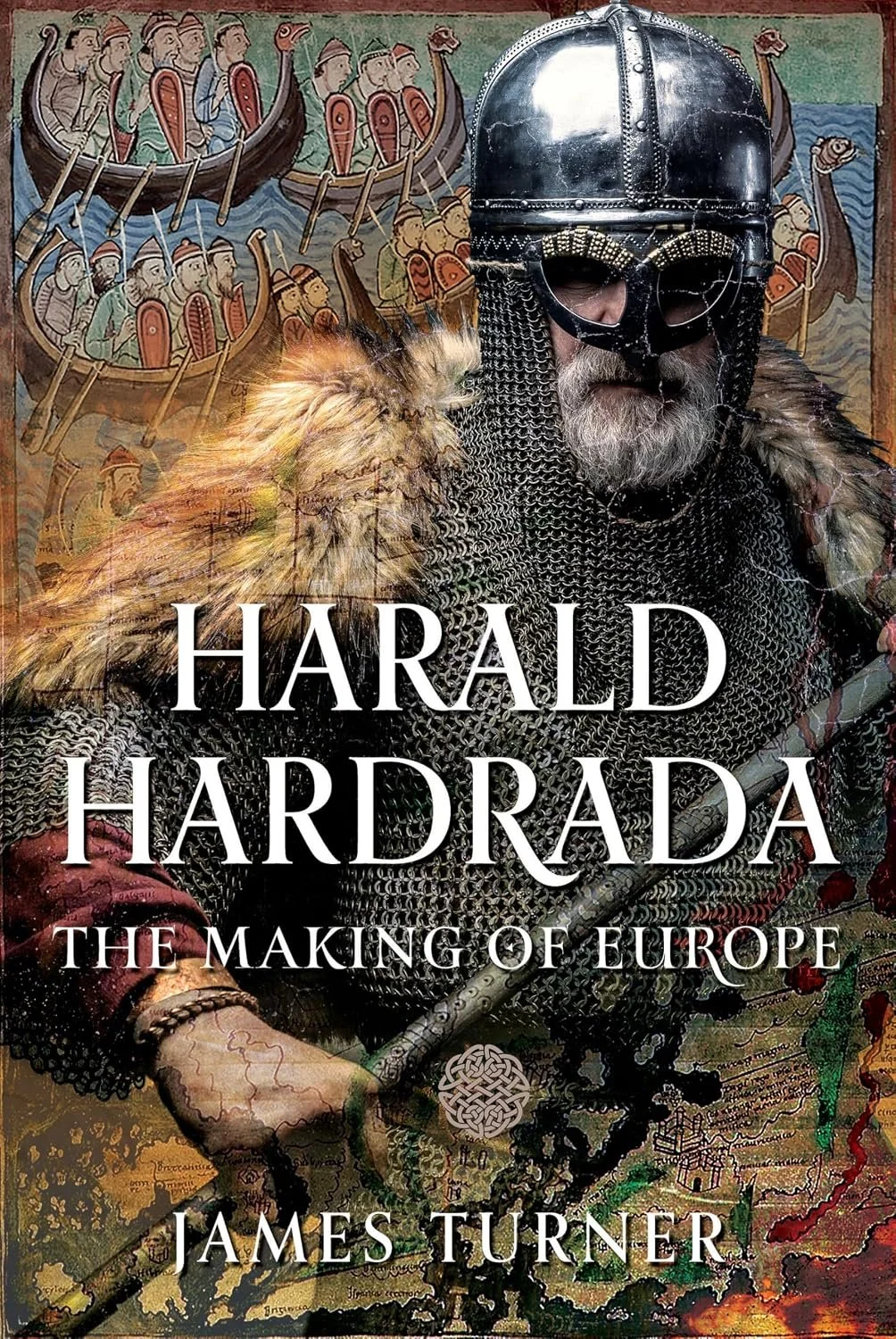
This week, I spoke with Dr. James Turner about the life of Harald Hardrada. You may know James from his many articles on Medievalists.net, or his books, Royal Bastards of Twelfth Century England: Power and Blood, and The Scottish Rebellion against Robert the Bruce. His new book is Harald Hardrada: The Making of Europe. Our conversation on Harald’s travels, his conquests, and his place in the wide world of the eleventh century is coming up right after this.
Well, welcome, James, to talk about Harald Hardrada. I always have to, like, stop and think before I say this guy's name. This is coming on the heels of talking about Offa, as well, so we are well into the Early Middle Ages, here. Welcome.
James Turner:
Oh, hi. Thanks for having me. I have to do the same thing when I spell his name every single time. I, like, stop and go: where does that “r” go, again?
Danièle Cybulskie:
It's not particularly difficult, but, you know, I stumble on it all the time.
James Turner:
Yeah. Yeah, there's something tricky about it.
Danièle Cybulskie:
Alright. So, we are in the eleventh century, in Norway. Tell us what's going on at this time and in this place.
James Turner:
Yeah, well, the eleventh century, I think, is sort of seen as one of the most formative times in European history. You know, it really sets the bones for what Europe becomes. A lot of, like, the policies that are going to shape the European narrative in the next thousand years really, like, are set down in a recognizable form to us in the eleventh century. That's true for Scandinavia as much as anywhere else, where you have Kingdom of Denmark, Kingdom of Sweden, and, at the beginning, maybe a Kingdom of Norway? It's not quite clear. That's still, like, a much looser amalgamation, really – sort of buoyed up in part by the advantages he's got from converting to Christianity in terms of centralization and organization. Towards the very end of the last century, Harald Bluetooth becomes king of a unified Denmark and then starts sort of a semi-imperialist attempt to subjugate the surrounding cultures or polities, Norway and Sweden. But Danish overlordship of Norway is actually fairly offhand. It's not necessarily what we would see as, like, an occupation. They kind of rule through the Jarls of Lade, who are a prominent family in the north of Norway, and kind of run a fairly, like, soft form of overlordship. And then Harald Hardrada's elder half-brother, King Olaf II – well, king's an interesting one, because he basically has a group of other jarls in the backwaters of Norway proclaim him king. He doesn't really have a very broad base of support. But he tries to leverage resistance to Danish overlordship as a way to build support for his reign, and as a way of constructing his own authority.
Danièle Cybulskie:
So, as Harald is starting to grow up, he's seeing his older half-brother with this vision for a more unified Norway – or at least one that he has more control over. Is that right?
James Turner:
Yeah. And Olaf is very much Harald's role model. Harald – we call him Hardrada, which means “severe” or something along those lines, but most of his contemporaries would probably have known him as Harald Sigurdsson, which is his patronym. Sigurd himself is known as Sigurd Syr, or Sigurd the Piglike. That's not a particularly kind name, but I think it's fair to say he probably wasn't an amazing role model if you had plans to grow up to be a famous king and conqueror.
Danièle Cybulskie:
Well, in some ways, the reputation that Olaf has in the years afterwards makes it seem like he wouldn't be a great role model either, because this is the guy who becomes Saint Olaf, who's supposed to be known for being a great Christian man – and I think this is something that you push back against a little bit in the book.
James Turner:
Yeah, I think a lot of backing the church is a big theme in a lot of these, like, eleventh century sort of hegemonies that are emerging now. But I think it has a lot more to do with what the church gives them, which is access to infrastructure, with sort of learned, literate people they need to actually run a taxation system and administration. And of course, just sort of the enhanced legitimacy the church can give. You know, you're not just some tyrant now: you're part of a cosmic order. I don't really think there's much evidence that Olaf himself was particularly pious. That seems to be a later creation, particularly because it contrasts well with Harald, who, I would argue, does a lot more for the church during his eventual reign in terms of establishing it as an entity with the eleventh century version of bricks and mortar – I guess staves and timber – for Norway. But crucially, he doesn't end up looking very good in some of the histories because he spends a lot of time in the East in service to the Byzantine Empire. So, he imports a lot of Byzantine clerics into the sort of nascent Norwegian church, which very much annoys the Archbishop of Bremen, who traditionally oversaw the Christianization of Scandinavia, which kind of led to a minimizing of his contributions to the church.
Danièle Cybulskie:
So, it becomes Olaf who gets the credit for Christianizing Norway, but things don't really go super well for Olaf's bid for power. What happens to Olaf, and then what happens to Harald as a result?
James Turner:
To be fair to him, I think Olaf does remarkably well, considering where he started from. He's kind of taking on the superpower of his age in a guerrilla war. He also ends up fighting the King of Sweden, Olaf Skötkonung – because he's aligned with the Danes – and Cnut the Great. And then he ends up fighting the Swedes, but eventually forms an alliance with them. So, I think he convinces them he can be a counterweight to sort of Danish hegemony and supremacy in the area. And things are going pretty well, more or less, until Cnut intervenes personally. He launches a massive invasion fleet paid for with a lot of English gold, a lot of English and Danish soldiers, because, of course, Cnut, in his own words, is the king of Denmark, England, Norway, and some of the Swedes.
Danièle Cybulskie:
Yeah.
James Turner:
Which… I suppose it shows he's this new kind of hegemonic monarch where this is the way medieval Europe is going to go. Where personal and dynastic connections are going to become a lot more important than tribal or cultural affiliation. Anyway, Olaf. Epic battle. Defeats this invasion fleet, only to discover that it's actually just the vanguard of Cnut's army.
Danièle Cybulskie:
Yeah.
James Turner:
And there are even more troops on the way. So, he ends up having to flee Norway, goes to the court of his brother-in-law, Prince Yaroslav the Wise of Kyiv Rus’. And then, after a year sort of lying low, Jarl Haakon of Lade – Cnut's sort of man in Norway – dies, and Olaf rushes back to sort of take advantage of this power vacuum, only to actually be defeated not by Cnut but by an alliance of Norwegian nobles who don't recognize his kingship. They see it as an imposition. They see him as an upstart. And, I think, probably some of their leaders want to be recognized as Cnut's new agent in Norway. They team up and they defeat and kill Olaf at the Battle of – sorry, I'm not really good with Norwegian pronunciation, which has probably made this book a very strange choice, but – Stiklestad.
Danièle Cybulskie:
So, Olaf was just a man with an idea that was too early, too early. He's too early for his time.
James Turner:
So, yeah, I think, I think in many ways that's fair. Yeah. As we'll see, his son Magnus – at this time just a child – eventually becomes king. But I think what really fuels that is that after this all goes down, the Danish occupation of Norway becomes a lot more brutal, and they start trying to tax it in earnest, and really exert authority rather than their previous sort of laissez-faire attitude. Obviously, that makes a lot of Norwegian nobles think, well, maybe, like, a homegrown king who would stop this isn't such a bad idea after all.
Danièle Cybulskie:
Yes. And so, they start to look to his son. But in the meantime, Harald has to leave Norway and he goes to the court of Yaroslav the Wise. This seems to be a great place to be for a young man who is on the up.
James Turner:
Yeah, he's just fifteen at the time, and it seems like he participated – and may have even been wounded – in the battle that his half-brother's just been killed in. So, yeah, he kind of also has to get out of Norway, and you couldn't do much better, I don't think, than Kyiv at this time if you were a young, exiled noble looking to set yourself up. In fact, he's not even the only exiled prince in Kyiv at the time. Yaroslav's also given shelter to two of Edmund Ironside of England's sons. So, there's two English princes there, as well, and shortly they'll be joined by a sort of claimant to a Hungarian throne, Andrew, who later becomes King of Hungary.
Danièle Cybulskie:
Yeah. So, this is the place to meet people, and it also is the place where Harald starts to begin his career as somebody who has a real sense of how to conduct a military campaign, right?
James Turner:
That's right. Yaroslav has a lot of connections to the Scandinavian world. Rus’ principalities are kind of a fusion of Scandinavian trade posts mixed with local Slavic towns. And Yaroslav, as well as Kyiv, controls Novgorod, so he controls all the trade from Scandinavia down to the Black Sea and the Mediterranean, which is a big source of his wealth. He's previously fought his brothers – as is the Kyivan Rus’ custom – for control of the principalities.
Danièle Cybulskie:
Mmhmm.
James Turner:
But shortly after Harald joins, he allies with his biggest rival, and they actually attack westward into the nascent Kingdom of Poland. And Harald is – well, obviously, the sagas written three hundred years later are very keen to big up Harald's role, say he was commander of this whole expedition.
Danièle Cybulskie:
Mmhmm.
James Turner:
But it seems like – from other evidence – that Yaroslav, for whom Scandinavian mercenaries are a big source of his military power, puts him in charge of, like, a small band and gives him, you know, a seasoned advisor. Yeah, and he takes part in this campaign, and they sack a few towns, win a few battles, and sort of put back the emergence of Poland as a full polity back a generation or two.
Danièle Cybulskie:
Mm-hmm. Well, I mean, he's not going to be commanding things as somebody who has just sort of joined the court at fifteen.
James Turner:
Yeah, it would be a bit of a big ask, I think. And he's lost the only battle he's fought up to this point. But on the other hand, there's a lot of Scandinavian traders moving through Kyiv Rus’, and itinerant mercenaries. So, having a Scandinavian royal is probably, like, a good focus point for some of this, like, loose population and to, like, harness them. So, he's kind of taken under Yaroslav's wing.
Danièle Cybulskie:
And eventually he decides that this is all well and good, but maybe it's time to go south. Why do you think he decides to leave the court?
James Turner:
I think, partly, his nephew Magnus is in court already, so Yaroslav already has a Norwegian prince, and one with probably, like, a better claim to the Norwegian throne. So, there's not an issue of him being semi-held hostage, you know. His political value is kind of limited. But I think, really, it has more to do with the appeal of where he's going, which is Constantinople, and the Eastern Roman Empire. We often just refer to it as the Byzantine Empire for, you know, the sake of convenience. But hard to overestimate the sort of glamour and appeal that Constantinople had to someone of this period, just in terms of, like, imperial pedigree and sheer wealth. And of course, the Byzantines are almost always at war, because they've been on-and-off trying to control the Mediterranean – you know, formerly the Roman Pond – for the last three hundred years, since the emergence of Islam and the collapse of their eastern provinces. So, if you are a young mercenary looking to make a name for yourself or trade off your royal connections, it's a great place to be.
Danièle Cybulskie:
And one of the things that you're sort of at pains to point out in the book is that this isn't a weird decision for someone from Scandinavia to make – to go down to Byzantium. Like, I think that one of the things that you… you bring up in the book is that people have this idea that the Scandinavians are over here and that's what they are worried about and only concerned with their neighbourhood, but really, it's not a strange thing to find Scandinavians in Byzantium.
James Turner:
No, no. Sorry. Yeah, like I was saying, Kyiv Rus’ is made wealthy and important through the trade links forged by Scandinavians – by the Vikings – in the past two centuries. So, you know, they get everywhere. And, quite famously, the Byzantine emperors have the Varangian – or Varangian, I'm not sure how you'd say it – Guard, who are a more or less standing body of Scandinavian mercenaries in their service. At this point, though, one of several bands of mercenaries who are almost, like – rather than one organization, like a troop type, I suppose, regularly employed by the Byzantines. But in the next century, they'll become really quite central to Byzantine military power and prestige.
Danièle Cybulskie:
So, I'm guessing that because he is so well-connected – Harald's so well-connected – that he doesn't have to go scrounging for work when he arrives in Byzantium. He's quickly picked up by this guard of the emperor, right?
James Turner:
Yeah, that's right. I mean, he comes with five hundred troops already.
Danièle Cybulskie:
Yes.
James Turner:
So, that's a pretty good bargain. I mean, you could argue really the five hundred troops come with Harald in the sense that, like, the emperor – from the emperor's point of view, we've got some new Scandinavian mercenaries. They happen to have a leader we'll have to deal with. But that's more or less how all of these mercenary groups work. Yeah, so he's quickly folded into the structure of the Byzantine military and guard, which I think is probably less regimented than we often suspect, and is probably made up of several of these private warbands. And he's very quickly – within a few months – sent off to participate sort of as a marine in Emperor Michael's unfolding naval campaign against piracy. The line between pirate and naval elements of these now slightly fragmented Muslim polities across the Mediterranean is, like, a matter of debate.
Danièle Cybulskie:
Yes. Piracy being in the eye of the beholder.
James Turner:
Yeah, that's right. Like, is Sir Francis Drake a pirate or a hero?
Danièle Cybulskie:
Right, exactly. And so, I think from the emperor's point of view – Emperor Michael's point of view – first of all, you have all these troops with a special skill. They are used to managing the seas. But also, you don't really want to have them hanging around In the town, so it's great to send them off. So, what sort of things are they doing on this campaign against pirates in the Mediterranean?
James Turner:
Sailing around, having fun, doing what comes natural.
Danièle Cybulskie:
I just realized that was an unfair question. We do have like –
James Turner:
It's all right. I'm sure the nitty-gritty of the campaign was fairly long periods of waiting and then hitting people with axes when your boat got close enough to them. I think the nature of the campaign was it was quite dispersed. You know, there wasn't any major engagements. It was sort of like an extended policing action. But then, soon afterwards, Michael does invade the Levant, and Harald's recalled to be part of that expedition, as well.
Danièle Cybulskie:
Yes. And so, this might be a good moment to say that the sources – as you were talking about just a little bit earlier – the sources that give the most colour to this are the sagas, which are written much later. And those sagas say, you know, he went to Jerusalem and he conquered a bunch of towns in Africa. What do we have a more solid sense of he actually did there? Like, do you think that he was part of any sort of foray towards Jerusalem, or do you think he made it to Africa? What do you think?
James Turner:
Yeah, I'm not sure. Well, firstly, the problem with the sagas is they don't understand the difference between Asia Minor, the Middle East, and Africa. It's all one thing to them, which is in some ways forgivable if you're in thirteenth-century Iceland, but not, like, hugely helpful to us. Well, luckily, Harald actually appears by name in certain Byzantine sources and contemporary histories. They talk about his participation in the invasion of Sicily, and then the Bulgarian rebellion – but that all comes slightly later. They don't make any specific mention of him ever reaching Jerusalem like they say in the sagas, or accompanying the emperor personally. I mean, he does emerge from this period – he's been rewarded by one of the official titles, or offices, that the Byzantine emperors love to give in their very complicated and out-of-control bureaucracy, which has caused a bit of confusion because it was originally – two centuries ago – a title for an elite bodyguard, but is now just recognized him as a valued soldier and kind of middle-ranking bureaucrat.
Danièle Cybulskie:
I think we've all encountered titles like that.
James Turner:
Yeah, yeah, yeah, that's right. It’s really lost it’s sheen over the years. So… So, I think from evidence is that he definitely participates in this campaign because he has to have earned that acclaim somehow, but he's probably not a very important part in it, to be honest. From a Byzantine point of view, they start thinking it's worth mentioning him by name in Sicily, which is obviously the next big campaign that the Byzantines launch.
Danièle Cybulskie:
Well, and Sicily is one of the fun places when it comes to the sources because he has some really clever tricks in Sicily. Do you want to talk about that? Tell us about those tricks.
James Turner:
Well, yeah, it's worth touching upon, with the caveat that I think I should say these are all definitely made up. They have historical value, but in what they tell you about what thirteenth-century Scandinavians want from a king, rather than the reality of how the invasion played out. Yeah, Harald does all sorts of clever tricks. My favorite, I think, is when they start playing a ball game. The exact rules are never specified, but they're besieging this town in Sicily. Sicily's obviously filled with great fortresses from antiquity, and they start playing a ball game outside the walls, make a lot of noise, make a big show of having a lot of fun. All the defenders of the walls start watching them and getting into the game, picking sides, and then very slowly they start edging the game closer and closer to the wall. And then, having lured the defenders into a false sense of security, just as they're debating the finer points of gameplay, they rush the walls and take the defenders completely unaware.
Danièle Cybulskie:
Yeah, that's a good one. I also like the one with the birds.
James Turner:
Oh, the birds. Well, I mean, that's a bit unpleasant if you're a bird, I think. But yeah, he attaches burning tapers to the birds' feet and then lets them loose, and they return to nest in the… rookeries and eaves of the town they're besieging, and obviously set fire to all the thatch roofs and stuff. I mean, I'm fairly sure I've heard Genghis Khan did that, as well. I think that's – I'm not sure where that originally comes from, but I think it might just be like a bit of a trope that heroic authors love to bring out every now and then. But one that I think – the most self-aggrandizing one is that he fakes his own death. You know, lays out in like an open casket sort of thing. And, according to the sagas, because he's such a famous and great man, the defenders rush out in order to capture his body so they can benefit from the prestige having buried him in their church will bring them, which is quite dubious, I think, given – I mean, I'm sure there were churches in the town, but given it was ruled by the Zirid Muslims, I think it was probably unlikely they… they were so excited about the chance to get Harald's body that they would abandon all of their defenses.
Danièle Cybulskie:
Well, it's a great story, though.
James Turner:
It is, yeah. No, no, it very much is. I think it's worth touching on that Heimskringla, Snorri Sturluson's Icelandic saga, I think has a lot to – Iceland has just been subjugated by thirteenth-century kings of Norway. So, I think, on the surface, it's, like, showing they're on side and celebrating that shared legacy. But I also think there's a bit of a slightly hidden subversive note to it where, by celebrating people who have thrown off Danish overlordship and created a free Norway, they're inviting the question: maybe Iceland can do the same thing at some point in the future. So, I think all those sagas are very much like reflecting upon thirteenth-century Icelandic concerns rather than anything remotely related to the campaign in Sicily. But they are… they are very colourful and fun.
Danièle Cybulskie:
Yeah. I mean, you want to include these in, in your book because they're just so fun, and that's what you've done here. So, I think most people are interested in Harald's role in the north, so we're going to send him there in a second. He comes back to Byzantium, and he decides he wants to sort of retire from working there, but they don't really want to let him, so he has to sneak out. And I think this is something that you said is in the more reliable sources, as well, right?
James Turner:
Yeah, yeah, that's right. Again, in a sort of a contemporary Byzantine history, historians make a note that while Harald's been in Italy and Bulgaria fighting for Byzantines, it's been a series of palace coups, which for some reason in Constantinople is always like – the palace is very permeable in Constantinople. It almost always spills over into, like, street fighting, and factions of bureaucrats can somehow mobilize mobs in, like, a very strange way. It's kind of, like, hard to visualize today. So, there's been a lot of fighting, they've gone through Michael III very quickly. He didn't last. So, the new emperor is quite reluctant to let Harald go, presumably because his position isn't particularly secure yet, and he's got, like, quite a few campaigns in mind in the future. Harald just sneaks off, though. Takes all this treasure, and leaves. I mean, the saga sources – I just said we should more or less ignore them, but – they claim that Empress Zoë is in love with Harald, and that's why she wouldn't let him leave, and she wants him to be her husband, and become a new emperor. I'm not sure why he would turn that offer down if it was available.
Danièle Cybulskie:
Yeah, Zoë being the conduit to power, that's in fact the whole problem.
James Turner:
Yeah, that's right. She's the last member of the Macedonian – well, her and her sister Theodora are the last members of Macedonian dynasty, which has ruled the Byzantine Empire for the last eighty or ninety years, and really, been the architects of its sort of Renaissance/return to power.
Danièle Cybulskie:
Yeah. He doesn't seem like someone who would be like, nah, I don't want to be the emperor of this entire place.
James Turner:
Yeah, I mean, given his, like, behavior later on, it's not that he's shy about seizing power. Yeah.
Danièle Cybulskie:
Yeah. That's probably what leads him up north, because at this point – if I have my timelines correct – his nephew Magnus has basically achieved what Olaf wanted to, where Magnus is kind of ruling over Norway, right?
James Turner:
Well, he's kind of flipped the script entirely. He's almost ruling over Denmark, now. He's invaded it and there's still some resistance to his rule, but he's making good progress. It's really a complete turnaround. It just shows history's always more subtle and interesting than, like, fiction, because if you were writing this story, Harald would return, and throw out his ancestral enemies, and reclaim his family's throne. But in fact, you know, he comes back and that's already been done.
Danièle Cybulskie:
Yeah. Yeah. Although I think that's something important that's going to be relevant later is that it's not weird for people to co-rule at this time. So, do you think that that was what he was looking to do, possibly, was to co-rule with his nephew Magnus?
James Turner:
It's entirely possible. Spoilers: Magnus doesn't survive very long after they begin co-ruling. So, you know, that could just be misfortune. It's not immediately clear how he dies, though.
Danièle Cybulskie:
Sometimes that's a hint in itself when people are like, I don't want to say how he died.
James Turner:
Yeah, no, exactly. And it's just when the tension between the two of them really begins to bubble up and cause problems.
Danièle Cybulskie:
Mmhmm.
James Turner:
So, it might not be, you know… but it was very fortuitous for Harald, anyway, I suppose, is a way to say that. So, he leaves Byzantine service, he marries Elisiv, a daughter of Yaroslav, so gets him on side. He enters a kind of alliance with the King of Sweden, Sweyn, the maternal nephew of Cnut the Great, who's now become sort of the centre for Danish resistance against Norwegian overlordship. What a difference a generation or two makes. And basically, they begin a guerrilla piratical campaign against Magnus's forces, and then Harald switches sides as soon as he has the leverage to.
Danièle Cybulskie:
Yeah, exactly. To clarify: the first thing Harald does is work against his nephew and undermine him.
James Turner:
Yeah, that's what I'm saying.
Danièle Cybulskie:
Yeah, just for clarity, there's so many people involved in this part of the story, I just want to make sure that people know that.
James Turner:
No, and they all have the names of brothers and ancestors.
Danièle Cybulskie:
Yeah. Like at first, Harald wasn't so concerned about his Norwegian kin – or his Norwegian people – that he wasn't ready to… to go and undermine their position – undermine their king, which he does. And then, as you say, he switches sides as soon as it's convenient.
James Turner:
Yeah. I think as soon as he's with leverage in order to do so. So, what happens is Magnus invites him. Worried about this escalating further, or even, like, the war reaching Norway, he invites Harald to become his co-king, on the proviso that he shares with him the enormous cash reserves Harald's been able to build up from serving the Byzantines and looting his way across the Mediterranean.
Danièle Cybulskie:
So, we have these two co-kings. It doesn't last for too long. Magnus has some sort of accident, or he dies somehow.
James Turner:
Yeah, just as they've – things are looking good, they agree to invade Denmark because I guess Harald has to undo the damage he's done. That's gone completely out of control now. Sweyn's run away with the bag and made himself King of Denmark. The saga version of this is that Sweyn and Harald, allies against Magnus, have a drunken argument when Sweyn denies that Harald's banner has magical qualities to it.
Danièle Cybulskie:
Yeah.
James Turner:
And then Sweyn tries to murder Harald in his bed that night, but luckily Harald has foreseen this might be a possibility and put a stump in his bed and put the covers over it. And so, he springs out of a cupboard or something and goes, aha! After Sweyn’s axed this weird facsimile. It's kind of like the eleventh-century equivalent of a baseball with a face drawn on it under the pillow.
Danièle Cybulskie:
And it works!
James Turner:
Yeah, yeah, exactly. They agree to invade Denmark, and then, more or less as soon as they land, Magnus dies, somehow. Could well have been fighting the Danes, who knows? But horror of horrors, Harald realizes the Danish aristocracy wants to go back home and bury Magnus. They think, since the main king's dead, let's just call off this invasion, which kind of, I think, primes Harald to the realization that he's going to have to do a lot of work to get to where he wants to be in Norway. Even as, like, the sole king.
Danièle Cybulskie:
Yeah. And this came to an interesting point in your book where you're talking about… he's married Yaroslav's daughter. They have some children, and she comes from amazing stock, not only the Kyivan Rus’, but also, I think, Swedish royalty, as well.
James Turner:
And her sister’s the queen of France at the time.
Danièle Cybulskie:
Right. Yeah.
James Turner:
So, they're a very well-connected family. It would be hard to marry into a better one at this stage, really.
Danièle Cybulskie:
Yeah. And in later centuries, that might be enough for people to find Harald's rule to be legitimate. But in Norway at this moment, they're like, well, we're still not sure about this guy. So, he has a second marriage in order to solidify his power right there at home.
James Turner:
Yeah, he marries Tora, a member of a pretty powerful family in central Norway.
Danièle Cybulskie:
Yeah, and I think that you said – I mean, it's not weird at this time to have two wives. But I think they –
James Turner:
No, particularly if… You can kind of get away with – if you marry one in church and just have one as a secular thing, it's perfectly alright because the church has only just started to push marriage as a sacrament. That hasn't filtered all the way through to the aristocracy, particularly up in Scandinavia, yet.
Danièle Cybulskie:
Yes, and why not take advantage of such a convenient situation? But I think that what you said was that Harald has all four of his children – two daughters from his first wife, two sons from his second wife – within quick succession, and then he doesn't have any more children, which is kind of interesting.
James Turner:
Yeah, it is interesting. And it's actually not very clear if his first wife has died and that's why he's remarried. Again, some of the later sources say that she came to Orkney with him in the invasion of England, but could that have been his newer wife? Yeah. I'm not really clear.
Danièle Cybulskie:
Yeah, exactly. And so, this is interesting because, I mean, it sort of goes to show that it's not enough to have connections to the rest of Europe. You still have to have connections within Norway to have any sort of legitimacy. And he does sort of consolidate his power better in Norway than he has before, but he never really makes the inroads into Denmark that he wants to.
James Turner:
Yeah, I would say – I think it's worth remembering again that his half-brother is killed just because he thinks there should be a king of Norway, right?
Danièle Cybulskie:
Mmhmm.
James Turner:
And that was only fifteen, sixteen years ago at this point. And Magnus does alright, but I think he's propped up for a lot of that by his aristocratic allies, some of whom were the very guys who killed his father. I think really the kingdom at that stage is more or less a mutual defense pact against the Danes rather than what we would think of as a polity. I think that's probably one of the reasons why he's so willing to accept Harald, is that the influx of money he's going to bring is… is going to let him put down stronger roots and build some royal authority, which of course is what Harald does after Magnus's death. Sometimes building royal authority means pretending to ally with a rival and then killing him and his son at the subsequent celebration feast. Harald does do that. More effectively in the long term, probably, is systematic policies. Like, he takes efforts to minimize the size of the aristocracy's military households – how many men they can keep at once – while at the same time building, like, a very large and well-funded royal, military household. He fosters the growth of the church, which is a very important factor in any sort of centralizing efforts during this period. And he's also – from his time in the Byzantine Empire – he's really come to appreciate the benefit of hard cash to any form of central government or royal administration. So, you know, while most taxes were sort of paid in kind – you know, in goods and stuff – Harald starts building mints across Norway, where before they had one or two, but they mainly relied on English coinage, actually.
Danièle Cybulskie:
Yeah. In fact, we were talking quite a lot about that last week when we were talking about Offa. So, it seems like –
James Turner:
Oh, great. Yeah.
Danièle Cybulskie:
Yeah. Harald is not the brother who becomes a saint. He's the brother who gets called Harald the Severe. So, we see this in his rulership of Norway. And then in the interests of time, we do have to get to England. So, what do you think turns his attention to England?
James Turner:
I think, as you said before – and I completely forgot, because I was so excited to talk about him in Norway – yeah, Denmark's not going well for Harald. He keeps raiding it, and for some reason that doesn't make them any more willing to make him king. He wins a few battles but isn't able to follow up on them. I think what draws him to England is he probably wants to rebuild in some fashion under Norwegian hegemony the North Sea Empire of Cnut the Great. England is a exceptionally rich place at the time, not necessarily because of its natural bounty, but because it's exceptionally well administered and has quite efficient taxation system for the time. So, the opportunity’s come up, basically, because Edward the Confessor's died. It's not really clear who's going to take over from him. There's a lot of claimants, and Harald has this bizarre claim that he's inherited from Magnus, where Magnus claimed that having defeated one of Cnut's sons – Harthacnut, the King of Denmark – they had agreed to become each other's heirs. So, Harald says, well, I was Magnus's heir. So, one degree of Kevin Bacon away from medieval hegemony. Yeah, so I think he's coming to England mainly because he wants to reunite the Scandinavian world, of which England had been part of. There's a lot of cultural exchange there, of course, in previous generations. I think it's really significant that rather than go straight to England, he goes to Orkney to sort of position himself as the head of the sort of Norse Gael community, and – who have all these Scandinavian settlements in the Scottish Highlands and both sides of the Irish Sea. And I think, you know, that's Harald looking forward to what happens once he successfully captures England. Then through them, he'll be able to exert influence or even just military power, into Scotland, Ireland, and Wales. So, I think Harald's in the mood for empire building. He's served the Byzantine emperor, he's seen what a powerful, centralized government looks like. He's done his best to create one in Norway, more or less out of nothing. And I think England and its resources would really make that possible for him.
Danièle Cybulskie:
So, tell us about the campaign. So, he's gathered his forces – allies – in Orkney, the – as you're saying – the Norse Gaels, all around this area. What's the campaign like?
James Turner:
Yeah, well, he's also allied with Tostig, Harold Godwinson – the new King of England's – younger brother and the exiled Earl of Northumbria. So, he rendezvous with Tostig, who's brought with him a collection of English and Flemish troops, and Tostig's good friends with the King of Scotland, so they've brought some Scottish soldiers with them, as well. So, it's not just a Norwegian invasion: it's a surprisingly varied, diverse army. Yeah, they land in North England, smash a small local English army that's gathering to fight them. Really just sort of the remains of the English borough system at play there. Everything goes well. They head over to York. Here, Harald makes a little bit of a mistake in that when he's besieging York, he spreads his army out quite a lot. You know, he obviously needs to make sure everyone’s fed and stuff, but it means that he's left himself slightly vulnerable, and the English take advantage of that. Battle of Fulford Gate, where the Earl of Northumbria, Morcar, and his elder brother Edwin, the Earl of Mercia, attack him and sort of catch him by surprise. But Harald's able to win there, defeats these English armies, sacks York, heads down to Stamford Bridge to reconnect with a fleet, and again, he spreads his army out quite thinly around the area's ports, you know, to gather news and see what the next stage is going to be, only for him to be ambushed by Harold Godwinson, who he'd assumed was probably in the south, warding off a Norman invasion.
Danièle Cybulskie:
Yes. Well, in the time since your book came out, there has been a theory that Harold Godwinson came up by ship. What do you think about this? Do you think that he marched everyone, or do you think that he took ships? And you can decline to answer the question if you want.
James Turner:
I have to be very careful about this because I'm actually on a panel with Tom Licence, who wrote that book, in October.
Danièle Cybulskie:
Right.
James Turner:
I think it's a very interesting theory. I'm not 100% sold on it yet. I think we need to do a bit more work to interrogate it. It's not out of the possibility, but I think if Harold was able to maintain those fleet assets, why aren't they in the south warding off the Normans? Also, he appears at Stamford with a large amount of cavalry, which would be very hard – well, not impossible, but difficult – to transport, and kind of suggests to me that they arrived overland.
Danièle Cybulskie:
Well, I figured there are going to be people listening who are dying for an answer to this question, or at least a theory on this question, so I figured I should bring it up.
James Turner:
Yeah, yeah.
Danièle Cybulskie:
But here we are, the Battle of Stamford Bridge. What happens?
James Turner:
Yeah, well, the English arrive, take Harald completely by surprise. So, some of the sources say that the Norwegians and allies, they don't even have time to put on their mail. They have to just grab a shield and a sword or axe and get out there. As the… sort of English are streaming into the battle, the forward elements are mounted, and they sort of make a series of fake charges, probably just to keep the Norwegians in place as more of their army comes up. Either Harald decides, you know, we need to strike before these guys form up properly, or some of the less disciplined elements of his army take one of these charges as an actual provocation, and parts of the Norwegian line advance and sort of get drawn into battle. And then it just becomes this, like, giant slugging match stretched across a mile of beach as the two armies end up sort of smashing into each other bit by bit. It's not like Cannae or Waterloo where you're studying the intricacies of the tactics. The remarkable thing is that it happens in the first place. Like, they were able to march that far – or sail that far, depending on where we land eventually – and catch the Norwegians by surprise. There's a bit of a turning point when Harald's son-in-law, Riccall, he's commanding one of, like, the other bodies of troops, which, remember, are scattered all across the coastline. They come in briefly, it looks like they'll be able to maybe break the English and save the day, but then Riccall's killed. At that point, Harald's probably already been struck by an arrow. So, yeah, at the end of the day, the Norwegian leaders have been killed, they're forced back to their boats, and it's a massacre, really. We're not really sure how many of them got away. The English obviously give a ridiculously small number. Must have been some, though, because Harald's youngest son, Olaf, is with him, and he manages to escape back up to Orkney and then to Norway.
Danièle Cybulskie:
Yes. So, as you say, this is Harald's last stand, he doesn't make it out of here. And just this week in the news, people have said that they've discovered the site for the Battle of Stamford Bridge, which has been in contention for a really long time. So, I should ask you, what do you think about this new discovery?
James Turner:
Yeah, I have heard of it. Unfortunately, I haven't really had the time to dig too deeply into it. And I think a lot of that information – or at least the bits of it that'll be super interesting and relevant to historians – is still sort of filtering through. I can only say that I think it's exciting, and I'm sure a lot of interesting debate will come out from it as more information emerges.
Danièle Cybulskie:
Well, it feels like you wrote this book sort of as an answer to that claim that you say at the beginning, that Harald is just sort of a runner-up. He tends to just get this sort of also-ran asterisk in English history. So, here's your moment. Tell us why people should learn about Harald Hardrada.
James Turner:
Cool. Yeah, I think, well, Harald, I think, is – hopefully, it’s become clear – is kind of an interesting guy. He's done some interesting stuff. Really, though, I think what I'm trying to get at with the book is that Harald is, more than anything, an exemplar of his age. He's a great example of a new breed of hegemonic monarch who are building polities and setting the face of Europe. More than anything, he's a great lens to look at Europe and the wider Mediterranean world at a really formative time in its history. As I say in the book, one of the remarkable things is, is widely traveled as he is, the more you explore, the more you realize that's not particularly uncommon, and that eleventh century was a far wider and more varied world than we often think of it as.
Danièle Cybulskie:
Well, I'm hoping that people will read your book because I think it is eye-opening when you see that this person who gets relegated to sort of an also-ran in English history has been to all of these places, has done all of these things, and saw opportunities and then decided to go for those opportunities, really, sort of one at a time. I think he's a really good example of somebody actually being there – like, not a hindsight-type thing, but being there and seeing what opportunities are possible, and then just going for it. I mean, I can't agree with all of his tactics. There is a reason he's called Hardrada.
James Turner:
Yeah, I think ruthlessness and opportunism are big parts of his character, certainly.
Danièle Cybulskie:
Yeah, and I think that makes him a really interesting character, as you're saying. So, thanks so much, James, for being here and telling us all about Harald.
James Turner:
Oh, it's been my pleasure. Thank you for having me.
Danièle Cybulskie:
To find out more about James’ work, you can look him up on Medievalists.net. His new book is Harald Hardrada: The Making of Europe.
I was looking for a good eleventh-century quote to go with this episode on Harald Hardrada, and I stumbled across one that he didn’t say, but that many of his Norwegian and Danish enemies might have said about him. And that is, “This man has as much integrity as a newborn frog has hair, or as the hollow of the middle of the palm has.” And now you have a brand-new insult ready to go.
This comes from one of my favourite books, Egbert of Liège’s The Well-Laden Ship, translated by Robert Gary Babcock.
And speaking of my favourite things, thank-you to all of you for listening and supporting this podcast each week by sharing, letting the ads play, rocking your sweet medieval merch, and becoming patrons on Patreon. If you’re not a patron yet, you may want to think about joining this week, because I’m trying something new next week that you just might like. To find out more, or to become a patron, please visit patreon.com/themedievalpodcast
For the show notes on this episode, a transcript, a list of the books featured on The Medieval Podcast, and more, please visit medievalpodcast.com. You can find me, Danièle Cybulskie, on social media @5MinMedievalist.
Our music is by Christian Overton.
Thanks for listening, and have yourself a fantastic day.