Offa with Rory Naismith




The Medieval Podcast uses affiliate links
Episode 359
Early medieval kings come to us in glimpses, with legends, a few chronicles, and some archaeological finds sketching faint portraits of figures who were larger than life in their own time. One of these kings left a literal impression on Britain that speaks to the power he had in the eighth century: Offa, King of the Mercians. This week, Danièle speaks with Rory Naismith about Offa’s life, his rule, and his impact on Early Medieval England.
-
Danièle Cybulskie:
Hi, everyone, and welcome to episode 359 of The Medieval Podcast. I’m your host, Danièle Cybulskie.
Early medieval kings come to us in glimpses, with legends, a few chronicles, and some archaeological finds sketching faint portraits of figures who were larger than life in their own time. One of these kings left a literal impression on Britain that speaks to the power he had in the eighth century. His name was Offa, King of the Mercians.
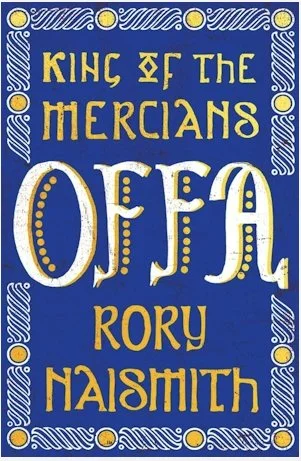
This week, I spoke with Dr. Rory Naismith about the life of Offa. Rory is Professor of Early Medieval English History at the University of Cambridge, and the author of Citadel of the Saxons: the Rise of Early London, Early Medieval Britain 500–1000, and you may remember him from being on the podcast for Making Money in the Early Middle Ages. His new book is Offa: King of the Mercians. Our conversation on Offa’s life, his rule, and his impact on Early Medieval England is coming up right after this.
Well, welcome back, Rory. We were just talking about how it's been over a hundred episodes since I've seen you last, and in that time, the book that you were here for won the Otto Grundler Book Prize, which is one of the biggest in Medieval Studies. So, congratulations and welcome back.
Rory Naismith:
Well, thank-you very much indeed for the invitation to come back, Danièle, and that's very kind of you to say so about the book.
Danièle Cybulskie:
Yes. Well, is it a coincidence that you were here and featured and then went on to win a big prize? I don't know. No, it was a fantastic book, and I was so happy to have you here. And of course, when I saw you had a new book out, I thought it is a good time to have you back. So, I'm happy to talk about this. You have – again – you've dived into the Early Middle Ages and given yourself a big challenge with this book, right?
Rory Naismith:
I did, yes. Yes. This is in a series of royal biographies, and I've always been very, very fond of this series. That was one reason why, when Yale approached me initially, they said, did I want to write a biography of another figure? And I said, not so much. But then I said, what about Offa? And they said, okay. And then I had to wrestle with what I'd actually signed myself up for, because Offa, while hugely interesting, is not ideally suited to a traditional biographical format.
Danièle Cybulskie:
Yes. Well, you have, at the beginning, this quote from Winston Churchill that basically says, you can tell that he was there by everything around him. And whenever I look at these early English kings, I think about it sort of like working with one of the bodies from Pompeii, right? There's nothing left. You just have to look at the shape around them, right?
Rory Naismith:
It feels very much like that. Yes, Offa's very early as these figures come. In fact, he's the earliest figure in this series that Yale have been publishing for a long, long time. He ruled between 757 and 796. He ruled before you have a single Kingdom of England. He's in charge of what was called the Kingdom of the Mercians, which is which is originally the Midland part of England, but Offa expands that out to rule most of what's now England south of the Humber. So, everything there except for Wessex and then the north.
Danièle Cybulskie:
Yes, and we're going to have to get into all of the ways that you did that. So, I have to ask you, as somebody who's worked with coins for so long, is that what brought you to Offa?
Rory Naismith:
It was one of the reasons, yes, because the coins are one of the highlight features of Offa's reign. He's got some absolutely stunningly beautiful ones. They tell you quite a lot about how his kingdom is organized. There are huge numbers of them that have turned up. There are a few special cases like this wonderful gold dinar, which, which is made in the time of Offa, that really transport you back to the reign in a way that is immediate and really interesting, and that helps you circumvent some of the many health warnings that apply to the major written sources for Offa.
Danièle Cybulskie:
Exactly. So, this just brings us right into the question: when you're looking at somebody who is so ephemeral in a lot of ways, what sort of sources are you looking at? So, you definitely are looking at the coins, you've gestured to the chronicles, but even then, with Offa, it's tricky, isn't it?
Rory Naismith:
It is. It is. And that's because the major written sources come from the pens of either his victims, his enemies, or much later heirs who are looking back from a hundred or more years in the… in the future. And as a result, it means that the headline, tentpole source for this period, which is The Anglo-Saxon Chronicle – this set of year-on-year annals in Old English – it doesn't say very much about Offa's reign. And what it does say is very critical. It's very negative. It focuses on Offa fighting battles, upsetting apple carts by doing things like making his own new archbishopric, killing saints – it's not a good look, basically. He comes across as a bit of a villain, and that tarnishes his reputation for a long time. You also have a body – a very interesting body – of letters written by a character called Alcuin, who was a Northumbrian scholar who spent a lot of his adult life in mainland Europe, working closely with Charlemagne. And he wrote to a lot of people in England, in both the north and the south. And so, these are a wonderful and – a bit like the coins – very direct, of-the-moment insight into what what's going on. That's great. But unfortunately, when you write letters, you don't always explain everything for the benefit of the historians coming 1,200 years later. So, those are also sometimes a little bit challenged to put in context. And of course, they come from someone who's mostly living overseas – who's well-connected, but living overseas.
Danièle Cybulskie:
Well, one of the points that you make in the book that I think is really valuable in the context of the sort of written sources that we're talking about now is that just because we don't have a source of somebody who was sitting right next to Offa and taking notes doesn't mean that there wasn't someone there at one time. It doesn't mean that it's not a literary – or literate – time, right?
Rory Naismith:
I think that's absolutely right. And it has been suggested that maybe Offa and other Mercian kings of this period perhaps were not commissioning written work on the same scale as some others, but that certainly doesn't mean there was nothing. You can see some hints of this. There's one of these letters that I mentioned from Alcuin, which casually assumes that Offa will have ready access to a copy of Bede's Ecclesiastical History. There are other letters of Alcuin where he implies that there is a kind of court school where Offa's children are being educated. There's also very, very accomplished material culture from Mercia, and not just the coins. There's lots of sculpture, there's lots of evidence for high-level artistic patronage, which would be a very natural counterpart to literary work – to copying manuscripts, maybe even commissioning new texts. But unfortunately, there's just very little of that kind of material surviving from Mercia, especially in terms of the books. That's why you've got to lean more on things like sculpture, and coins, and things like that.
Danièle Cybulskie:
Right, exactly. And you just can never rely on the whole “absence of evidence is evidence of absence” thing. And I just thought that was really worthwhile that you pulled that out, because I think sometimes when we talk about what the sources are and things, we forget to say that there are probably things that we are missing here. And that really comes down to, I mean, all of the things that happened after Offa's reign.
Rory Naismith:
That's right, yes. After Offa's reign, well, Mercia initially has a bit of a wobble in the immediate months after his death because his son also dies very soon after him. And that's from Offa's point of view, a real catastrophe because he spent a huge amount of his time – a huge amount of his energy – trying to establish a dynasty, set his son up to follow him smoothly as king. And initially, it looks like that is going to happen, but then unfortunately his son dies after five months. So, it's back to the drawing board for the… the powers that be in Mercia. They find another king who does manage to keep things together pretty well for another twenty-five years, but then as you move into the middle of the ninth century, Wessex – this other major kingdom of southwest England – starts to be a much more assertive rival to the Mercians. And then when the Vikings come along, as well, in the 860s and 870s, that really pulls the rug out from under the Mercian kings. They end up losing a big chunk of their territory to the Vikings. One of the kings has to abdicate and go to Rome. And eventually they have a ruler who sees the writing on the wall and just accepts West Saxon overlordship. And the key thing, from a later point of view, that all of this produces is just a sense that Mercia is not a kingdom, or at least not to be taken as seriously as Wessex. The kings of the Mercians are always destined to fail. They're a path not taken in English history, basically. And Offa – and Offa's reign – are a good lesson in how things looked different on the ground if you were there in the eighth century. Mercia is, as far as one can tell, the power that's dominating everyone else.
Danièle Cybulskie:
Yes. And so, if that power starts to fail, you can see how people would want to just kind of erase the traces of it in order to make themselves look better. So, let's rewind a bit. What did things look like at the beginning of Offa's reign? What does Britain look like at this moment?
Rory Naismith:
The main thing to stress is that although people did have a strong sense that Britain was an island – and within that island, you had lots of people who spoke a language they called English, who shared various other cultural connections with each other – there was no single kingdom of either Britain or of England. Politically, it's quite divided. There are a number of kingdoms in northern Britain, what's now Scotland. There are a number of kingdoms in what's now Wales. Within what's now England, by the time Offa becomes king in 757, you've got about four or five major powers, and a few major kingdoms, and a few smaller ones nibbling around the edges of them. You've got Offa's own kingdom, Mercia, which means the… the land on the marches – the land on the frontier – and that probably originally meant the frontier with the Britons. Essentially, it starts out as the Midlands of England, so the middle chunk just east of where modern Wales is. You've got Wessex to their south, you've got the East Angles to their east, you've got the Kingdom of the Northumbrians in the north. A small, but historically important and rich kingdom is Kent in the southeast, with the Archbishop of Canterbury in it. Those are the major ones. There had been others, and there were a number of kingdoms that had been absorbed by the others, but retained some sense of regional identity within them. Mercia's got quite a few of those. Northumbria's got a few of those, probably the West Saxons, as well. That was the way the kingdoms worked at this point. They were all multi-part bodies that had been welded together by a sequence of kings who'd managed to fight their way to the top.
Danièle Cybulskie:
Well, one of the things I really liked about your book is that you said that some people have criticized Offa for not wanting to become… become King of the Britons. It is such an interesting thing because since when is that the standard: that you need to be King of all the Britons? I think it's okay to have your ambition not be all of that conquest.
Rory Naismith:
I think that's absolutely right. Yes, I think that this idea of trying to see Offa as a proto-King of… of all the English, it goes back to the early twentieth century, and it was a very important step. It was really crucial in trying to establish the historical value of the Mercians, because if they're the proto-kings of the English, that makes all of these early twentieth-century British historians sit up and pay attention. You know, this is the kingdom of the English before there was a kingdom of the English, as it were. So, it served an important purpose, but it was also – for want of a better word – wrong, in that the crucial charters that were the bedrock of all of this have since been shown to be quite problematic. They're not original to the reign of Offa. They've been adjusted. They've been updated. There are a few genuine ones that refer to Offa in Latin as Rex Anglorum. That means king of – you could say king of the English – it's a term they used to mean that in later times – but it can also mean king of the Angles, as in the Angles, the Saxons, and the Jutes. These three groups that Bede described as coming over and establishing the various major kingdoms of England. So, if Offa did occasionally use that term, it's really just saying he's the ruler of one or more Anglian kingdoms. It's basically the same as saying King of the Mercians, because, of course, they were an Anglian kingdom, and they had taken over a number of other Anglian kingdoms.
Danièle Cybulskie:
Right. And at the beginning of Offa's reign, as we're talking about, it's fragmented in Britain. There's all sorts of different power players who we may never have any idea about. But you say in the book that as Offa came to the throne, he had kind of a strong place to start. So, can you tell us about how he started his reign? What do we know about it?
Rory Naismith:
Well, not as much as we would like. That's something you could say for most aspects of Offa's reign, but the beginning of his reign – it really is frustrating because he's coming on the back of a cousin of his – a distant cousin of his – called Æthelbald. And Æthelbald was a very, very long-lived ruler. Offa was king for thirty-nine years. Æthelbald was king for forty-one years. He's the longest well-attested reign in pre-conquest English history. And obviously, that meant Mercia in general was in a good position, but the challenge that Offa is faced with in the immediate context of 757 is that there's actually another king who comes between Æthelbald and Offa: this very, very obscure figure called Beornred. And what is known about him would fit on a postage stamp, basically. It's that he pops up, he succeeds Æthelbald, and then he is forced out of power by Offa, who then takes over. We don't know if that means Offa killed him, we don't know if Offa just defeats him, and then he goes off into the darkness somewhere, into exile. We also don't know what the nature of Beornred's claim was. He may have been one of the people responsible for killing Æthelbald. It's possible – we don't have any evidence one way or the other. And we also don't know for sure why Offa then is the lucky winner: why he's the one that does rise up, defeat Beornred, and become the king who lasts after that. It's really quite mysterious, because Offa is – I wouldn't quite say he's coming out of nowhere. He is from a family that had been powerful in what's now the area of Worcestershire, Gloucestershire – that southwestern portion of the Mercian Kingdom. But he's a very distant relative of the previous king. He's got a very distant relationship to the Mercian dynasty that had ruled the kingdom in the seventh century. There must have been other people with a similarly good claim to power, based on their descent. So, Offa must have had something else going for him. He might have just been an extra go-getting young guy. He might have been supported by other powerful people in the kingdom, which I think is probably quite likely. But this is not something that any of the… the sources go into. They… they put all of this in very terse, telegraphic terms.
Danièle Cybulskie:
Yes. Well, it's one of those things where you think about how there might be things that don't need to be said because everyone who's around at the time already knows it. So, why would you even bother writing it down unless you're trying to create a great chronicle – which may have been a project of somebody who has disappeared. But yes, this is why I always admire people who work in this period because you have so little to go on and then you have to build from there. So, what do we know about his priorities in the early part of his reign?
Rory Naismith:
You can tell a little bit about this from the charters, because from the 760s, you start to have a relatively good flow of these, particularly from Kent and the West Midlands. And you can see from these that he's already, quite early on, trying to extend his reach into neighbouring kingdoms. So, that suggests, first of all, he's probably got Mercia well under control. He's able to establish himself there. Whatever issues there might have been with this figure Beornred, those have been taped down. Once you get into the 760s, he seems to extend his influence into Kent because he starts appearing in charters from there, and he seems to also extend his power into East Anglia, which is something that we can tell from the coins because he starts being named on very early coins from there. And yeah, it suggests that from a very early stage, he's keen on trying to redraw the political map, trying to make his rule in these other kingdoms much, much more concrete. Because there was a tradition of earlier Mercian kings being recognized as the top dog king in this part of England – the southern part of England – but that meant a very loose kind of dominance. It meant that other people would basically just not attack you. They might go and contribute to your armies when you were attacking someone else, but there wasn't any expectation that the King of the Mercians would actually go into East Anglia or Kent, and order people around, and make them do what he said. Offa changes the way that system works. He does want to go into Kent and East Anglia, and tell people what to do, and rule it in a more direct way. So, you can see that policy already starting within the first decade of Offa's reign, and it just snowballs from there, and becomes much more visible, and much more articulate once you get into the 780s.
Danièle Cybulskie:
Yes. And I want to stick with coins for a second because you make a really interesting statement in the book where you're saying that coins are not just a sign of his success, but they could be a cause of his success. So, while we're talking about coins, tell us what you mean by this.
Rory Naismith:
I'll try. What I was thinking of here is that the coinage before Offa's reign has diminished. There was far less of it. There had been a very, very rich monetary economy in England at the beginning of the eighth century, based on the… these profuse, but small and generally uninscribed, silver coins. They're making huge, huge numbers of these and using them on a very large scale. They mostly go away in the 740s and 750s, and then Offa starts making his coins, which look quite different. They're much thinner, they're much broader, they've got the name of the king on them, which had not really been the practice before. And once you get into the… the second half or so of Offa's reign – or, especially, the last decade or two of Offa's reign – the volume of his coins increases very substantially. And it's thought that a major part of this is increasing access to silver coming from mines in western France at this place called Melle, which is being tapped by Charlemagne. And Offa probably arranges preferential access for him and his kingdom to silver coming from there. And on the back of this, essentially, Offa's got a lot of money. Offa's got a lot of cash to throw around. And so, this might have been one of the ways in which he mollifies the aristocrats in areas that he's taking over. It's one of the ways he's able to dispense patronage without necessarily diminishing the lands at his disposal. It's a resource which is coming online and being used by him in a very direct way, I think.
Danièle Cybulskie:
Yes. And coins also give us another way to get at another important part of his reign, his dynasty – even though it didn't really go anywhere – which is his queen. Because Offa's queen is somebody who shows up in the coins – which is completely unusual, isn't it?
Rory Naismith:
It is. It's the only queen in England before the Norman Conquest who appears on coins, either as a name, or as a representation. You've got both for Offa's wife. Yeah, it's really exceptional, and probably it's based on the idea of, this is what Roman emperors have done, and so we can do it, too. And the reason Offa, in particular, decides to do this is partly because the coinage is reviving, they've got more being issued in the name of the king, but also Cynethryth – that's the name of his wife – is very prominent, very important. She's central to his regime. She runs his household, she appears in lots of his charters, she's the mother of his children – of whom he's very proud – and he's grooming the… the son for succession as king. I think it suggests, partly, something about how Offa is working and how Offa wants to fashion a dynastic identity, but it also says something about Cynethryth herself – that she's powerful, she's assertive. She wants to cooperate with Offa in this project.
Danièle Cybulskie:
Yes, and she appears on charters, as well, which means that she is actually showing up, and she's being there – being part of the politics of the time. And this is one of the places where, if we can only pull threads of what Offa's doing, you know, from these charters, we can find a lot of information – the same kind of information – about his wife, which is something that is… I mean, it's not completely unheard of, but it's always exciting to find evidence of a queen at this time.
Rory Naismith:
It is. And I think that Cynethryth is one of the more active and interesting queens of this period. It's still pretty scanty. For instance, as you said, she appears in lots of the charters, she appears on the coins, but interestingly she disappears from both of those towards the end of Offa's reign – in the last few years before his death. Now, there might be lots of reasons for that. It might be something completely innocent. It might be that she's ill, she's got other… other things to deal with. We're not sure. But then, she reappears on the scene after Offa's death. She's one of the people involved in trying to secure the future of the kingdom after Ecgfrith – Offa's son – has died. So, even in the midst of grief, even in the midst of all this tumult, she is a major player. She is working with all these other key figures in the Mercian Kingdom to keep the show on the road.
Danièle Cybulskie:
Yes. And they do have four children, which implicates, you know, them being together at least sometimes. So…
Rory Naismith:
Yes. Yes. And it's worth saying, too, that Offa takes a lot of flak from his enemies, but none of them ever say anything about illegitimate children or about sort of sexual impropriety – in contrast to Æthelbald, who comes before him, who was infamous for being a bit too friendly with nuns. Various other kings are also known to have had a lot of liaisons, and Offa didn't do that. Whatever other misdemeanors could be attributed to him, he didn't do that.
Danièle Cybulskie:
Yes, and this is a time where official marriage – as in the Christian sense of official marriage here – is not necessarily the norm everywhere for everyone. And so, it is noteworthy that these 2 seem to have been the only two within this relationship – at least, as far as we can tell. And I think that you get at later that Offa is concerned with religion. It's hard to know anyone's spirituality from this distance – or maybe ever. But that this seems to be something that is important to him, and to them, as a couple.
Rory Naismith:
That's right. They seem to exercise a lot of interest in patronizing churches, choosing which ones to bestow their favour on. And this is a whole phenomenon. There's a great study by John Blair which showed that in this era – in the later eighth century – you can see that patronage of churches has not gone away, but it has narrowed down significantly to a lot of good stuff being bestowed on just a few churches rather than a much broader spread of largesse. And Offa and Cynethryth – they choose their churches in England, but they also write to the pope and they secure this very, very exceptional, special privilege from the pope that means a whole string of churches under their personal protection will remain under the protection of them and their heirs in perpetuity And the pope is okay with this. The pope writes this unusual document that says explicitly, these churches are yours and they will remain yours.
Danièle Cybulskie:
Yes. And I think that really speaks to sort of that long view where they are looking to a long dynasty – where they're looking to a Mercia that stays solidified, rather than going back to the way that it used to be. That isn't how it turns out, but that is –
Rory Naismith:
Yes.
Danièle Cybulskie:
- the goal that they're looking towards. I think you can see this from the documents that you've pulled out.
Rory Naismith:
That's absolutely right, yes. They're particularly keen on churches dedicated to St. Peter, which is partly why they're so keen on Rome and the pope – because of the St. Peter connection. Yeah, there's about a dozen churches, maybe more, around Offa's kingdom that you can see evidence for him patronizing, and most of those come from areas where you've got good charters. There are quite a few in Kent, quite a few in Sussex, quite a few in Worcestershire, but you don't really have the charters from East Anglia, or Lincolnshire, or, indeed, the heartland of Mercia, itself, in the Midlands. So, for all we know, there might have been an awful lot more. In fact, it's implied at one point in this document from Rome that there was a list of the churches this is applied to appended to this privilege, but unfortunately, it only survives as part of a kind of streamlined collection of form letters that people might want to copy in Rome for other purposes, and they forgot to edit out the name of Cynethryth. And it's so unusual that it must be our Cynethryth, and it must be her and Offa, and all of the stuff it says presumably applied to them. But unfortunately, we don't have the list of the churches.
Danièle Cybulskie:
But that must have been an amazing discovery to make. The person who discovered that must have just been so… so excited.
Rory Naismith:
Yeah, this was a big, exciting discovery. This was a major change in Offa Studies, if you want to call it that.
Danièle Cybulskie:
Yes, and for people who have always thought that England only has a couple of archbishoprics, Offa's reign also has a surprise here.
Rory Naismith:
That's right, yes. Offa creates, for a brief time, a third archbishopric. He creates an Archbishopric of Lichfield, which is one of the two Mercian bishoprics. It's in the Midlands. It's not a huge place nowadays, but for a time, between 787 and 803 or thereabouts, it is an archbishopric. And Offa again goes to considerable lengths to get this set up. We only know about it because The Anglo-Saxon Chronicle has a very negative entry saying that Offa diminished the Archbishopric of Canterbury. That's the way they saw it. Because this is coming from Canterbury, so, you know, they would say that, wouldn't they? The other major set of sources for the Archbishopric of Lichfield come from a bunch of letters written when they were disestablishing it. So, all of these things are predisposed to look at this as an aberration, a bad idea – something that was doomed to fail. But the Archbishopric of York had been created only about fifty years earlier. There were several new archbishoprics being created at about this time in the Carolingian world. So, it's not nearly as crazy as it sounds for Offa to want to make a new archbishopric. The Archbishopric of Canterbury is actually quite big by early medieval standards. It's got a lot of suffragan bishops, so dividing it is a reasonable proposition. And Offa seems to have done so along the lines of these Saxon-versus-Anglian kingdoms – areas of England – so that Lichfield took everything north of the Thames except for London – because of course that's the bishopric of the East Saxons, who look south to the Archbishopric of Canterbury.
Danièle Cybulskie:
I think this, again, sort of speaks to that far-seeing view of what things are going to be like sort of from now on, and also thinking really big and audaciously, which is something that he seems to be sort of well-known for. So, this might be a good moment to talk about another big and audacious goal, which is to create a dyke to keep the Welsh in their place. So, let's talk about Offa's Dyke.
Rory Naismith:
Offa's Dyke, yes. Offa's Dyke is the one thing that most people, at least in Britain, might have heard about Offa. Some people will have walked a chunk of it. A few, very energetic people will have walked the whole thing because it's 170 miles or so long. It runs close to the modern Welsh border. It's a huge endeavor. It's hugely impressive. It's longer than Hadrian's Wall. At its height, it would have been several meters high with a ditch several meters on the western side of it. Yeah, it's a huge statement of Offa's ambition.
Danièle Cybulskie:
Yes, and I think that it speaks to something that you say in the book: the amount of wealth that he's built, and the amount of manpower that he has managed to amass. Because something like this takes years, and it takes, you know, hundreds – thousands – of people, which is really impressive when it comes to an early kingdom.
Rory Naismith:
Absolutely, yes. There's a whole cottage industry of people who've wondered how quickly it could have been built, how many people were necessary to build it, and it's a bit of a “how long is a piece of string?” kind of question because if you've got – if you're able to muster more people, you can build it more quickly, but we don't know how many people, exactly, he could have mustered, and that depends on all sorts of factors about how big you think the population was, how good you think their logistics were. I think it could theoretically have been built relatively quickly. It could have been built in under five years if they were able to deploy about 10,000 people. But of course, if they could get more, it would have been faster. If they had fewer, it would have taken longer. There's no reference to its… its being built in any of the contemporary sources. It's first mentioned by Asser, who is a Welsh cleric in the later ninth century, who works at the court of Alfred the Great, and who casually mentions this… this dyke that's built by Offa along the Welsh border, from sea to sea. And yeah, he… he doesn't tell us how long it took to build it, or anything like that. And in fact, there's long-running debate about how much of it really was built by Offa, whether to some extent it might have been smaller than… than it looks, or whether it might have incorporated pre-existing sections. And there are a lot of differing views of this. I lean towards the optimistic ones that think it probably was at least conceived of as a whole by Offa. He may have incorporated some pre-existing bits, but that the bulk of it is… is his work.
Danièle Cybulskie:
Well, what is your sense of this in terms of what is it for? In that a dyke is not actually going to keep people out. So, do you think that this is sort of a display of power? Do you think this is just meant to give people better sightlines? Why do you think that this was built? What's your take on it?
Rory Naismith:
I think it's probably fulfilling a number of purposes. It doesn't have to be any one thing, because, as with any big project, you might start it out for one reason – maybe one immediate reason – but then it will be expanded, changed, modified in order to do other things, as well. And it probably does have a military role. You're quite right that it's not going to stop a few determined people who really want to get over that dyke. But if you've got a lot of people – and especially a lot of people trying to go over, or come back over it with a lot of supplies, especially a lot of animals – then it is going to be a much more serious impediment. It won't stop them completely, but it'll slow things down a lot. So, it is… it is… It does have a military purpose. It does have a role as a deterrent. It does have a role as an obstacle for any army that might want to invade. There may well have been other… other supports for it in the form of patrols. It may even be that there was meant to be a network of fortresses – little… little forts – a bit like along Hadrian's Wall, where these watching forces would have been based. One or two of those may be identifiable, but there certainly weren't as many as there were on Hadrian's Wall. Other purposes – it's simply just a whopping great big dyke that is carefully chosen, carefully selected in its routes to overlook the west. To be opposing. This is something that's been emphasized a lot in the recent scholarship on Offa's Dyke: that they are sometimes going out of their way a bit to make it look foreboding, to make it look oppressive. So, that suggests it's not just a friendly gesture, it's a way of trying to use shock and awe, basically. They're trying to tell the Welsh they mean business. One other extension of that, which may have been on Offa's, is… is coming out of the way it's described by Asser. He talks about it being a great bank and ditch built from sea to sea, is the terminology he uses. And that's the same language that had been used by Bede and by Gildas – these much earlier writers – about… about the history of… of early medieval Britain, when they were talking about Hadrian's Wall and the Antonine Wall. These were defenses the Romans had built from sea to sea to keep out the barbarians who were troubling their province – who were troubling the Britons of Roman Britain. So, if Offa is building a dyke from sea to sea, and it's being understood in those terms by him and by the Welsh, in a sense that's positioning the English – the Mercians – as the Romans, and the Welsh as the barbarians – even though, of course, historically, they were the descendants of the Britons who were the people of Roman Britain. So, it's a way of Offa trying to turn the historical tables, I think.
Danièle Cybulskie:
Yes. To me, it seems like it is all of these things together, as you're saying, because… it is a gesture – because, like we were saying, you know, it's not going to completely stop them – but it's really making a statement. And I think this is something that seems to be sort of consistent when we talk about Offa. He seems to be making a statement. But this brings me to the question: he's been characterized in the time since his death as being a violent man. What sort of idea do we have of his military status – or maybe his military actions? Do we really know much about it?
Rory Naismith:
We know a bit about it. Obviously, there is Offa's Dyke, which implies that he can marshal a lot of men. He can make these grand gestures – these grand defenses – in the landscape. These big military interventions. There are also a few battles referred to in The Anglo-Saxon Chronicle and a couple of other sources. There's even one that I don't think has been widely discussed, which is referred to in this otherwise very dodgy text called The Lives of the Two Offas, which is written much, much later than Offa's own life itself. It's written at St. Albans in the thirteenth century, which is the only major monastery where Offa was fondly remembered, where they wanted to make him into a hero figure. And so, they, at one point, mention how Offa fights the East Angles at this otherwise unknown location. And it probably is a little bit messy in terms of the context, but all the other specific events of that kind in The Lives of the Two Offas are drawn from other reliable sources. So, it may well be that there was this other battle with the East Angles, as well. But the key thing is that if the battles that we know about are most of the ones that existed – or, at least, they represent a good, reasonable sample – compared to other kings of the same period, Offa's not particularly belligerent. He's not fighting more battles than you might expect, given the length of his reign, and comparison with other rulers who've also got a lengthy reign in this seventh-, eighth-century period in England. The reason he gets remembered as a bit of a warmonger is because that's the only thing – more or less – The Anglo-Saxon Chronicle says. He fights battles, he kills Æthelberht of East Anglia, who then is revered as a saint, so that's also not a good look for him. And then he also tries to diminish the Archbishop of Canterbury. So, all of these things make him seem like a bit of a bully. They make him seem like someone who just wants to try and muscle in on neighbouring kingdoms, often in a very aggressive way. But that's… that's what the writers of The Anglo-Saxon Chronicle in Wessex a hundred years later – and probably drawing on a source from Canterbury in Offa's own time, another place that was as a victim of Offa – they're predisposed to pick out the bad stuff. To pick out Offa's acts of aggression, Offa's acts of violence. And that's what I think we've got to try and address when we look back at him. This is not a neutral… not a neutral source. It's not giving us an unbiased representation of what happened in the reign. It's specifically choosing the events that show Offa in a certain light.
Danièle Cybulskie:
Yes. And I think that this makes sense to me, in that if he was torching all of Britain, we might've heard even more about it – and we might've heard more about it from continental sources if he ends up being somebody who puts everyone to the sword. And so, he sort of seems to settle out in an average way. So, like, not somebody that we would necessarily want to have tea with or go on vacation with, probably more violent than we... would like, but less than others, which is maybe the most we could say.
Rory Naismith:
Absolutely, yes. I want to stress that he's not a warm, cuddly, innocent guy who would never say boo to a goose. I think that he's a tough cookie. He is willing to fight. He is willing to kill when it is required. There is a rather mysterious reference in one of Alcuin's letters written shortly after Offa's death, in fact – shortly after his son's death, as well – where Alcuin laments how much blood Offa spilt to secure the throne on his son. And it's not entirely clear what he's getting at with that. It may well be that there were other acts of violence Offa committed that we don't have any references to. But yes, he – I don't think he's necessarily any more violent than other kings of his era. That's the major thing.
Danièle Cybulskie:
Yes. And we're getting at Alcuin here. We're getting at Ecgfrith. Let's talk about Offa's relationship with Charlemagne, because this is really fascinating. Because Charlemagne doesn't have time for everybody, but he has some time for Offa. So, tell us about this relationship.
Rory Naismith:
I will. Charlemagne and Offa are rough contemporaries. Offa has been king for about a decade when Charlemagne comes to the throne in Francia in 768, and I think that the word I use in the book is frenemies. You can see them examining what each other is doing from across the Channel. They never actually meet, as far as we know, but they exchange a lot of communication. A few of these letters survive. There's also an account in a history from a monastery in northern France which hints at a dispute between Offa and Charlemagne, which arises over a marriage negotiation that goes awry. And in this, Charlemagne's son seems to have been the instigator. He contacts Offa, he asks if he can marry one of Offa's daughters. Now, Offa might have thought that was a good thing – it would have brought a lot of advantages – but the potential risk is that, generally, in Francia, princes like Charlemagne's son would normally marry the daughters of magnates who were under that king's dominance. And so, if Offa just accepted this without any other modification, it might have been seen as putting him in that position. So, Offa writes back to Charlemagne and his son with quite a clever caveat, which is, okay, I'll go ahead with this marriage if, in turn, my son can marry one of Charlemagne's daughters. So, it'll be a sort of reciprocal switch. And this is important, because I think Offa really likes the idea that these two are peers. He likes the idea that he and Charlemagne are operating on the same kind of level. But when Charlemagne is confronted with this offer, he blows a gasket. He is not happy. He says not just no, but he says that he wants to stop all traffic going across the Channel for the duration of this dispute. And eventually, things are ironed out. But it takes a bit of time, and clearly, it shows the… the level of sensitivity there was around this. Because even if when the two kings are writing each other, they maintain a pretense of camaraderie, friendship, brotherly love, all this kind of thing, when push comes to shove, Charlemagne knows he's the bigger player. He's got a bigger kingdom, he's… he's richer, he's got all these advantages on his side. Whereas Offa rules a much smaller kingdom. One advantage Offa's got is it's across the sea. So, if Charlemagne ever wanted to attack and invade, it would be a much more difficult proposition than it was for some of the other kingdoms that he's able to attack and… and take over in… in his reign. So, you can see a lot of ups and downs. There's an absolutely wonderful letter that is probably written by Alcuin, but ghostwriting for Charlemagne – it's written in the name of Charlemagne to Offa – from just a few months before Offa's death in 796. And it's filled with this very, very purple opening in which they talk a lot about how great it is that kings are friends, when they have the bonds of brotherhood and they're friends with each other, and it's all hunky-dory. They're laying it on so thick that you suspect this is because they know it's not always been that way. And then it goes on to talk about all kinds of… sometimes very practical, very sensitive stuff like exiles from England – from English kingdoms – who are living in Charlemagne's kingdom, who have perhaps suffered under Offa's hands, who are maybe even plotting to go back to England and try their luck at restoring themselves to power. There's also a bit about traders from England who've been trying to masquerade as pilgrims to get around paying tolls, and they want to sort that out. Charlemagne complains about how certain cloaks that have been sent from England have not been the right size, and they need to fix that. He also refers to Offa requesting a piece of black stone, and this probably refers to this ultra-prestigious black marble that came from the area around Charlemagne's capital in Aachen, and this was used for the memorial inscription of Pope Hadrian – Hadrian I – who died in 795. And this amazing inscription with a poem all about him is commissioned using this black marble, and then erected on St. Peter's Basilica. And it's still there, in fact. You can still go and see it in Rome. So, yes, I think it's a complicated relationship. I think they certainly recognize each other as powerful. Behind closed doors, they probably have – especially on Charlemagne's side – have been conscious that they were more powerful, But they're looking both ways. They're both conscious of what the other is doing. We mentioned the coins of Cynethryth earlier. Charlemagne and his wife copy the coins of Cynethryth, so you can see that they are both taking leaves out of the other's book.
Danièle Cybulskie:
I think it's just so interesting, because when you think about the fact that these kings are not going to each other's kingdoms, and not seeing what things are like on the ground there, they have to get reports from other people. And so, to try and manage diplomacy when you don't really have a sense of the kingdom… it's all based on vibes, in some ways. And so, this is really interesting to see these two working together, especially because, as I was saying before, Charlemagne doesn't just have time for everyone, but he does have sort of a careful respect for Offa. And I do think that this is another sort of audacious move by Offa to say, well, let's just marry my son to your daughter. Because, you know –
Rory Naismith:
Yeah.
Danièle Cybulskie:
– in a way, there's no losing. Because if he loses, then, I mean, they have to renegotiate things. But if he wins, he wins big.
Rory Naismith:
He would've done, absolutely. I mean, you know, there were not that many dynastic marriages of this kind in the eighth century. I mean, medievalists who work on the eleventh, twelfth centuries and beyond – they're very used to the idea that you've got these princes and princesses flying about all over Europe, marrying people from lots of different places. That's not so common in the eighth and ninth centuries. It happens sometimes, but usually for specific reasons and relationships. And so, for this match between Offa and Charlemagne's children even to be considered, that's a big step. And you're quite right. It does suggest that Offa is – well, I mean, Charlemagne doesn't go ahead with it, but he probably is taken seriously in a way that a lot of other neighbouring rulers were not.
Danièle Cybulskie:
Yes. So, I mean, that doesn't go so well, so they have to repair it. But this is sort of, I think, showing a high-water mark, maybe, in Offa's reign, where he has consolidated power, where he's not dealing with little fires, so he can start to look for maybe bigger steps in his reign, looking forward, looking to the future. But then he dies. And maybe… I mean, I think that you were saying – if I have this right – we don't actually know how he dies, but if he dies in his bed, that is sort of the supreme achievement of somebody living at this time. Like, at the top of the heap, to die in your bed would be a great accomplishment.
Rory Naismith:
It would, yes. I really wish that we had somebody who gave us a little narrative about how Offa took ill, or something happened to him. All I would say is that nobody says he is killed. They don't say that somebody turns up and stabs him in the night, which is basically what happened to, to Athelbald. Yeah, to my mind, that makes the odds of him dying a natural death pretty high. Bearing in mind, also, that he's been king for nearly forty years.
Danièle Cybulskie:
Mmhmm.
Rory Naismith:
And assuming he was in his twenties – possibly thirties – at that stage, that makes him very elderly, indeed, for an early medieval monarch. I mean, Charlemagne didn't make it very much older than that. Most kings didn't make it anywhere near that. So… So, Offa was definitely doing something right.
Danièle Cybulskie:
Yes. And not only that, but then the kingdom passed to his son, seemingly… seemingly – as much as we can tell – without incident, which is, again, a good accomplishment, even if his son doesn't live much longer.
Rory Naismith:
No, Offa couldn't have predicted that, unfortunately. And of course, it's bad luck, too, he's only got one son. If Offa had had multiple sons, that might have changed the picture. But yeah, it's a real shame that Offa – well, everything he did unravels really pretty fast after his reign – a lot of it in the immediate aftermath, but then, even this position that Mercia has gained in southern England, that also is seriously compromised as you get into the 820s and after.
Danièle Cybulskie:
Yes, and no one on the island could have predicted the influence of the Vikings – that the Vikings are going to appear and change everything. So, I mean, all of this careful planning… you know, you can't always plan for everything.
Rory Naismith:
No, you cannot, unfortunately.
Danièle Cybulskie:
So, as we come to the end of our time, having spent all this time with Offa and having looked at him – I think one of the moments that you pull out in the book is having looked at this stuff through a glass darkly – what do you want people to think about Offa from here?
Rory Naismith:
I suppose, really, it would go back to some of the points we touched on right at the start that, first of all, it's a great case study in how you approach a figure – a reign, a period – where you simply don't have as much information as you might like. In some areas you're quite well provided for – we mentioned the coins, we mentioned the charters, the letters of Alcuin – but you've got to try and perceive the whole from three tiny, little pinpricks of light. That's the challenge – and I'd emphasize the word challenge. It's not a problem, it's not impossible, it's just something that takes imagination and a bit of effort, and that's what I like about this period, basically. The other thing I'd say to take away about Offa is this point about how he gets vilified in all sorts of ways in later times, such that by the nineteenth century – and even into modern times – he's seen as this kind of baddie. He's seen as a villain, and I think that's a bit reductive, basically. That he is more than that. He's a figure of his time. He's certainly playing hardball, you'd say. He's playing to win. He's sometimes willing to fight and kill. But he's not, I think, any more extreme in that regard than a lot of other early kings. And you could, in fact, argue that some of the faults that he has reflect that he is a person of very strong will – very firm idea of his position, his power, his authority – so what makes him, in many ways, a very successful king is also what perhaps made him an easy target for his enemies.
Danièle Cybulskie:
Yes. And I think that is a great way to sum up this particular person, but also a lot of the figures of this time, and to sort of put them in the context of the time. So, thank-you so much, Rory, for being here. It was a pleasure to read your book, and it's a pleasure to see you again.
Rory Naismith:
Thank-you very much for inviting me.
Danièle Cybulskie:
To find out more about Rory’s work, you can visit his faculty page at the University of Cambridge. His new book is Offa: King of the Mercians.
Speaking of Early Medieval kings and how we remember them, I figured it was worth leaving you with a quote from another famous English king: Alfred the Great. In considering Boethius’ Consolation of Philosophy and his own life Alfred wrote, “I desired to live worthily as long as I lived and to leave after my life, to the men who should come after me, the memory of me in good works.” I think the discussion Rory and I had about Offa really demonstrates that we can’t control how we’re seen after we die, but Alfred’s words are a good target to shoot for. Let’s be remembered for our good works.
And speaking of good works, thank-you to all of you for listening and supporting this podcast each week by sharing, letting the ads play, rocking your sweet medieval merch, and becoming patrons on Patreon. Patrons can listen ad-free and get each episode in time for the Monday commute. And patrons also get my undying gratitude because it’s patronage that makes this work possible. To find out more, or to become a patron, please visit patreon.com/themedievalpodcast
For the show notes on this episode, a transcript, a list of the books featured on The Medieval Podcast, and more, please visit medievalpodcast.com. You can find me, Danièle Cybulskie, on social media @5MinMedievalist.
Our music is by Christian Overton.
Thanks for listening, and have yourself a wonderful day.