Mathilda of Flanders with Laura Gathagan




The Medieval Podcast uses affiliate links
Episode 333
They say that behind every successful man is a woman, and when it comes to one of the biggest medieval stories of personal success, that seems to have been true. Everyone’s heard of William the Conqueror, the illegitimate duke of Normandy who became king of England in 1066, but fewer people have heard the story of his powerful, indomitable queen: Mathilda of Flanders. This week, Danièle speaks with Laura L. Gathagan about Mathilda's unshakeable reign as duchess and queen, the way she embodied her power, and her role in the conquest of England.
-
Danièle Cybulskie:
Hi, everyone, and welcome to Episode 333 of The Medieval Podcast. I’m your host, Danièle Cybulskie.
They say that behind every successful man is a woman, and when it comes to one of the biggest medieval stories of personal success, that seems to have been true. Everyone’s heard of William the Conqueror, the illegitimate duke of Normandy who became king of England in 1066, but fewer people have heard the story of his powerful, indomitable queen.
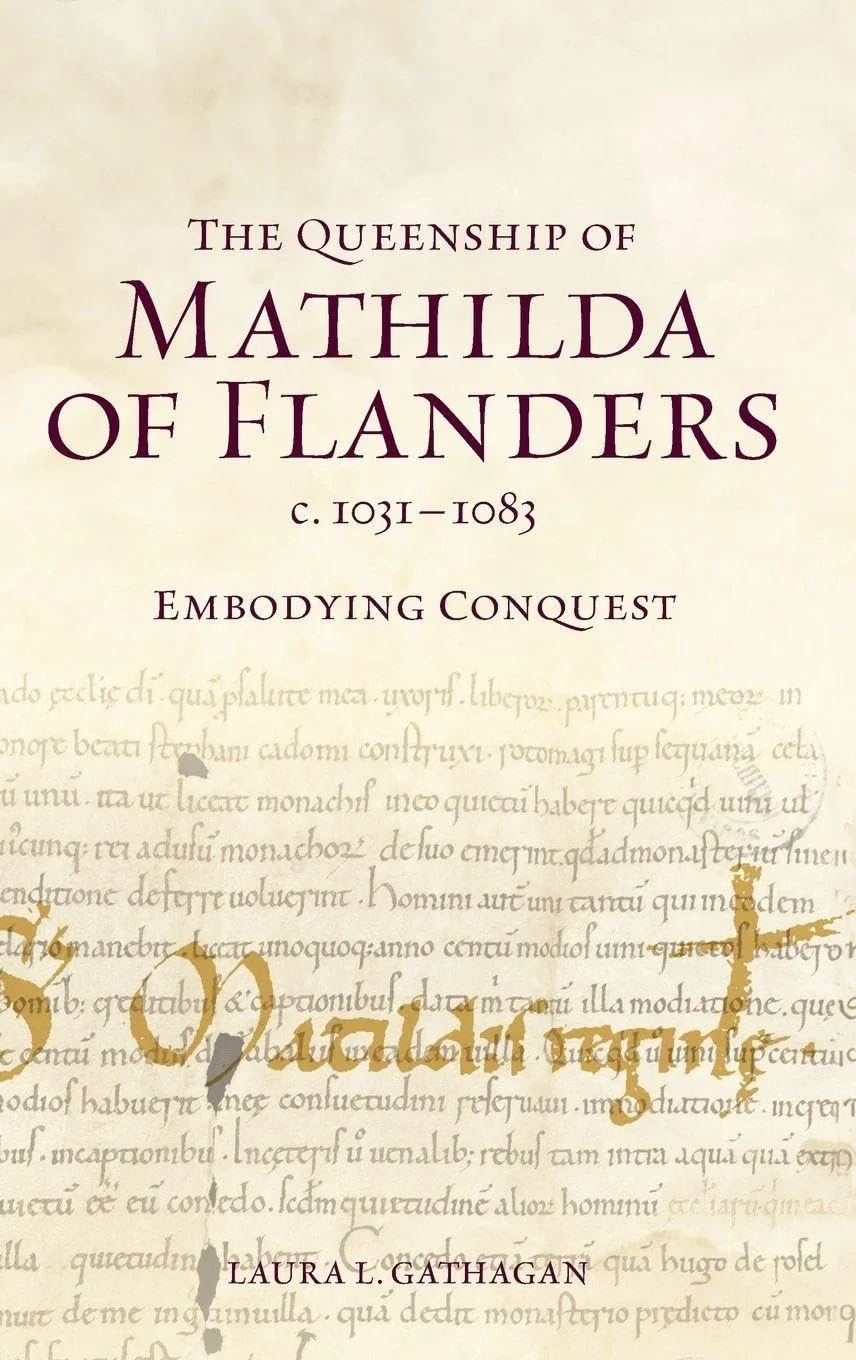
This week, I spoke with Dr. Laura L. Gathagan about Mathilda of Flanders. Laura is Professor of History at the State University of New York at Cortland, the author of many articles on queens and other powerful figures of the Middle Ages, and the President of the Haskins Society. Her new book is The Queenship of Mathilda of Flanders c.1031-1083: Embodying Conquest. Our conversation on Mathilda’s unshakeable reign as duchess and queen, the way she embodied her power, and her role in the conquest of England is coming up right after this.
Well, welcome, Laura. It is so nice to meet you. We have already been chatting for way too long because you're just an amazing person to chat with, and I can't wait to introduce you to the audience. So, welcome to the podcast.
Laura Gathagan:
Thank-you so much. It's a real honor to be here and it has been so fun getting to know you. So, this is going to be great. Looking forward to it.
Danièle Cybulskie:
Thank-you. Thank-you. Okay. So, for people who have just sort of looked at the Middle Ages, they've seen that there's a lot of Matildas, and you're working on Mathilda of Flanders. Can you tell us who Mathilda of Flanders is sort of in a nutshell before we dig into her life? Who's this woman?
Laura Gathagan:
Absolutely. So, you're right, there are a million Matildas out there. This particular Mathilda, I like to think of as the first of all the English Mathildas because she sort of is the first one who rules in that name in England. And so, you know, she is sort of the seedbed for all Mathildas. That's what I think. But this Mathilda is married to William the Conqueror. She comes to Normandy as their duchess after being an aristocratic daughter in the court of Flanders. So, her parents are aristocrats, are the count and countess of Flanders, and she marries into the Norman house and becomes the duchess of Normandy. And then she and William concoct this plan to conquer England. So, she is the first sort of conquest queen after the Norman Conquest.
Danièle Cybulskie:
Which is big news and about time that somebody started writing books about her, right?
Laura Gathagan:
I could not agree more.
Danièle Cybulskie:
So, you've laid this book out in kind of an interesting way, a way that people don't usually do when they're talking about biography. You are laying it out in terms of sort of body parts. Tell us why you did this.
Laura Gathagan:
One of the things that's most difficult, I think, about writing women's biographies is finding a way to avoid casting them as relations to someone else. So, it's typical for a biography of a woman to follow her life course. It couldn't be easier to organize your book like that, but it can fall into a trap where the central person of that biography is really defined by her relations. So, she's a daughter of this person, she's the sister of this person, the wife of, the widow of, the mother of. I think that's a really unfortunate, sometimes unavoidable way to think about women. But it's something I wanted to try to avoid. So, my construction of this biography is based on her body to find a way to avoid using Mathilda sort of as just a relation of other people. So, I wanted to center her actions – what she did, what she accomplished – her actions instead of her relationship to other people. And the body part construction allowed me to do that and center who she was as opposed to who she was related to.
Danièle Cybulskie:
Yes, I mean, we do have to definitely talk about that because that's such an important part of her identity. Right at the beginning of your book, you have that. But before we get into Mathilda herself, one of the things I think is really interesting about the way you've structured this is you talk about her embodiment of the role and how she uses her own physical self within her role as… as a duchess and then as a queen, and you kind of situate it in the context of people talking about the Eucharist at this time and how embodiment becomes such an important part of the discussion. So, what does the Eucharist have to do with any of this?
Laura Gathagan:
This is a really good question, and I always feel like my book is a bit of a bait and switch because you sort of come for the women's power and you get stuck with theology, right? So, Eucharistic philosophy is very important in this moment in the eleventh century when Mathilda is ruling and is involved. That Eucharistic debate – there is a very hot and very almost violent debate about what the Eucharist is. So, what is sitting on the altar in that church at the moment of Eucharist, or people call it communion these days. So, are those elements – the wine and the bread – are they representative of Christ, or are they actually physically his body that through some miraculous process has become actually Christ. That last position, which sounds really radical and kind of fringe, is actually the position in the end that won the day in the medieval church. So, the idea that the thing you're looking at, the bread and the wine, could in reality be something quite different and indeed part of someone's body is a philosophical move, a philosophical maneuver, if you will, that changes the nature of a signified thing and the thing that is signifying it. So, to try to make that more simple, the idea in the Middle Ages that the body and blood of Christ is actually what you're drinking and eating in that Eucharistic moment means that the distance between that symbol and its reality is shrunk into nothing. So, if you're actually eating Christ's body in reality, which is the medieval belief that won the day, that means that other symbols can embody other people too. I hope that makes sense.
Danièle Cybulskie:
It does make sense, and I think we're going to walk through it as we talk more about Mathilda's life. But this – for people who have listened to the podcast before, we sort of talked about this sort of thing when we talk about relics, right? You could capture the essence of a relic in a mirror and then you have it. The way that a physical presence can be captured or transferred is something that is in discussion at this moment. So, it is hard to explain, but I think it's going to come out more as we talk.
Laura Gathagan:
Okay, good.
Danièle Cybulskie:
So, you started the book talking about blood, and one of the things that you said that I thought was really important was you said that Mathilda's confidence in part comes from, I think you said her peerless lineage or her peerless bloodline. So, tell us about her bloodline, because I think you're right about this.
Laura Gathagan:
So, she comes into her own with sort of in her background two very powerful dynasties. The one is the Capetian French dynasty that she receives from her mother. So, her mother Adela is the daughter of the king of France, and eventually, of course, the sister of the king of France when Henry inherits. So, that side of her family is the Capetian French side, so that royal blood is incredibly important. But her father's side also has a relationship to the Saxon Ottonian house, an imperial house, which is a genealogy, I think, that is skipped over. It's maybe not as obvious to people, that Ottonian bloodline that she inherits from her father's side. So, that Ottonian bloodline, then, is another piece of her identity, and in the book I argue that it becomes, in some ways, rather central to her identity. The imperial bloodline that she inherits is the Saxon imperial bloodline. Not too long before Mathilda is born, those Saxons – Ottonian Saxons – die out, and the folks who take over the Ottonian house are the Salians, who are actually not really closely related to those Ottonian Saxons at all. So, I talk about this in my book a little, and I don't want to get too off topic here, but Mathilda's father Baldwin does not consider those people to be legitimate Ottonians, and he actually makes war against them for much of her growing up years.
Danièle Cybulskie:
Yeah, so it sounds like she's growing up with a real sense that's instilled in her by her parents of how important she is, how important her blood is. So, it begs the question: how does she get married to somebody who is known as a bastard? Even if he's powerful, this seems like kind of a dodgy thing that might be happening when somebody has such an important blood flowing in their veins.
Laura Gathagan:
Couldn't she have done better? You have to ask, right?
Danièle Cybulskie:
Well, you know, he's not legitimate. You know what I'm saying?
Laura Gathagan:
He's not legitimate, right?
Danièle Cybulskie:
Right.
Laura Gathagan:
And I think this is a crucial part of her position in that marriage, which you don't really grasp unless you understand the difference between their social position. So, while he is the duke of Normandy, just as you say, he is illegitimate. And while that legitimacy is just one of his many problems, right? He comes into his duchy as a minor. That doesn't help either. There's no question that she sort of walks on the scene as an adult, sort of cloaked in this incredible bloodline. Her decision to marry William is an interesting one. By the time she meets him, probably in 1048, when the marriage is arranged, he has just come into his own as the duke of Normandy. He has finally sort of stepped into adulthood. He's put down a lot of rebellion. He is militarily sort of victorious in putting his hands around his duchy and actually coming into his own. So, he's fresh from that victory. He, at that moment – and this will change – but he, at that moment, is very much in favor with the king of France, so that… that is a benefit as well, and so he's on the good side of her family. The other element I think that is important to remember is that this uneven marriage can serve her interests. So, her own mother marries down a step as well. Her mother Adela is a daughter of the king of France, and Adela marries Baldwin, who's the count of Flanders, which is great, but he doesn't have royal blood the way she does, and their family's status is lower than Adela's royal family. So, Mathilda has seen this model growing up: a mother who is higher ranked than her husband and who is very active at court – has a real active public administrative role to play in the governance of Flanders. So, Mathilda sees that model, and I think she embraces that model, and she looks at this man who is a very promising human being, but he also is a step below her. And I think – there's no evidence, of course, either way, because we don't know what she thinks – but I think that model appeals to her. And indeed, if you look at their marriage long term, you can see that the power in that marriage is hers. And we can get to that later. But she does some things in that marriage that really could blow back on her, and she never suffers for it. She… There's this old Seinfeld episode where it talks about hand. Who has hand in a relationship, right? The person who has the power in that relationship. Mathilda has the hand in this relationship. She is the one with the higher status. She brings more to that marriage than he does. And I think that serves her interests.
Danièle Cybulskie:
Yes. Well, it sounds like – as you're saying, from the evidence that you've laid out in the book – it sounds like she's on board with this. And I think what sort of shows that she's on board with this is that not everyone is a big fan of this marriage. The biggest not-fan of this marriage being the pope. And when the pope is against your marriage, you know, you might have second thoughts, but she's like, "Nope, we're going for it."
Laura Gathagan:
Absolutely going for it. Right. I think you're absolutely right that that is the best evidence for her response to the embrace that she makes of this marriage, the fact that this marriage is important to her and she refuses to back down from it. The other important element here that you have to remember, of course, is that to Mathilda, that pope is not necessarily legitimate either. So, that pope is a Salian, right? He's a kinsman to the Salian Ottonians. It is a pope that her father has, again, fought for, you know, most of Mathilda's growing-up years. That pope actually excommunicates her father the year before this marriage is banned. So, when we think of the Middle Ages and we think of papal authority, we often make the mistake of thinking that this is ultimate authority. Nobody wants to go against the pope. Nobody wants to be excommunicated by the pope. This is disastrous. But we forget, I think, that in this period, in the eleventh century certainly, the popes are just people They have relationships with – they have positive relationships with – certain royal houses, like the Salians in this particular case. They have negative relationships with other entities, like the counts and countesses of Flanders in this moment. So, Mathilda's reaction, you know, she almost shrugs off the idea that the pope is banning her engagement. She's not even married yet. They're just engaged, and the pope says, "Oh, no. Not happening.” She clearly doesn't mind. She doesn't care. She goes forward with the marriage, and I think a lot of this has to do with the fact that she grows up watching her father in conflict – armed conflict – with this pope and his supporters. So, her idea about papal authority – in this case especially – and our assumptions from our modern perspective about how important papal authority was, are maybe a little bit further apart than you would imagine.
Danièle Cybulskie:
Well, I love that you're bringing this up because just last week we were talking about papal supremacy and the fourteenth century – people trying to make the case for, yes, the pope is the highest authority, and they wouldn't have to make the case if it was obvious. So, you know…
Laura Gathagan:
Yes. Exactly right. Well, as I like to tell my students in class – once again – like, the pope has no standing army. All the pope has is moral authority and social pressure, and those can be really effective tools. But they don't really have… People like to talk about hard and soft power, and in some ways, papal power is soft power, right?
Danièle Cybulskie:
Yeah.
Laura Gathagan:
It's got a lot behind it. There are lots of people who are willing to go… you know, Matilda of Tuscany goes to war for the pope. So, you know, he has supporters, but it's really social pressure and moral authority. That's what they have. And in this particular case, it wasn't enough.
Danièle Cybulskie:
Yes, he's met his match. And the thing is, she is a match for another three popes after this. I think they don't get approval for ten years, I think you've said in the book.
Laura Gathagan:
That’s right. That’s correct. That’s correct. Right.
Danièle Cybulskie:
It’s incredible.
Laura Gathagan:
It is incredible. And I… I have a sense that her marriage to William is maybe not a priority for most popes. It's probably not something they're really going to pursue. But I do think – I say this in the book, and I… and I do think there's something going on here because the Normans in Sicily are being sort of courted by the papacy as his new supporters just about the same time as Mathilda and William's marriage is finally approved. So, I think there is some deal-making going on here with the two arms of the Norman family.
Danièle Cybulskie:
Yes, again, always coming back to there are people involved and there is a lot more delicate negotiation involved than it may appear on the surface.
Laura Gathagan:
Absolutely.
Danièle Cybulskie:
Speaking of power, so we have Mathilda, she's now married, she's now a duchess of Normandy. How does she flex her power here? How did she become a duchess? What does she do as a duchess of Normandy?
Laura Gathagan:
I think one of the first things she starts doing pretty quickly is moving in the direction of supporting monastic houses. She immediately has activity whereby she is either signing charters or donating land to monastic entities. At this point, it's unclear how much planning she's already doing for her own big foundation. So, she has her own monastery that she founds – a very famous one – but it's hard to know… while that entity was dedicated in 1066, right before the conquest, it's hard to know how far back a lot of that planning is going, but it probably began not too long after she came onto Normandy – on the Norman scene – as their new Duchess. One of the things she does a lot of is procreate.
Danièle Cybulskie:
Yes.
Laura Gathagan:
She has a lot of children. It is interesting to see how active she is as a duchess despite the fact that there are big chunks of time in her early life as duchess where she's either lying in, or actively having the child, or probably off the political and public scene because of churching. So, there is some regulation that governs when women – after they have had a successful or unsuccessful pregnancy – can sort of come back onto the public scene. It could be as many as six months. It could be less. Those restrictions – we don't know if she followed them. You have to be careful about that kind of evidence, right, because it's sort of theoretical. But in any case, she has a lot of her children early in her time as duchess. She still finds time, however, to be very active in governance. One of the big pieces of evidence for this is how often she signs charters. So, charters are legal documents. They are drafted anytime you have a donation or any kind of dispute, anytime something kind of legal is done in terms of property, in terms of wealth movement, charters are the things that are drawn up and signed, and she signs an awful lot of charters even early in her career as duchess, as a young woman. She immediately sort of starts taking steps to be part of that public governance of the Duchy of Normandy.
Danièle Cybulskie:
Yeah. One of the things that you say in your book – that I think you've repeated because it bears repeating – is that in her realm, she is the second-most frequent signer of charters or other documents right behind her husband. Nobody else appears as often as she does, which is rare. It's very rare for this moment.
Laura Gathagan:
Yeah, it is. And it, it's unfair in a way because she runs Normandy on her own while he's in England. She has a council, but she's at the head of that council. So, a lot of the governance that she does when he's gone, she signs things on her own. And then they flip, you know, she goes to England for a while and rules England alone for a while, and I know we're getting ahead of ourselves here, you know. So yes, there's tons of charter activity for her, but it's not actually as unusual as you might think. Her mom did the same thing. Adela is the biggest signer of charters in Baldwin's governance as well. So, this is – for her – actually not terribly exceptional. This is something that she does.
Danièle Cybulskie:
Yes, I love that, because what I get from everything that I read about Mathilda, especially in your book, is that she has this confidence. It's unfailing. She just… She just knows who she is, and I find that so admirable, just, like, on a personal level.
Laura Gathagan:
We'd all like to be confident like that, wouldn't we?
Danièle Cybulskie:
Now, you said something really tantalizing just at the beginning of our talk, which is that Mathilda and William hatched this plan to take over England together. They did this together? Tell us all about it.
Laura Gathagan:
Well, we don't have a lot of background for private conversations between medieval people, right? But I do know that she takes an active part in this conquest. And the way that she does this… there are a couple ways. Number one, her family neutralizes the one person who you would imagine would not be crazy about the duke and duchess of Normandy conquering England, and that is the king of France. So, Philip I is a minor, and as it happens, Mathilda's own father, Baldwin V of Flanders, is the guardian of this young royal ruler of France. And Baldwin – and actually Philip's mom, Anne of Kiev – are both sort of in the council that is the guardian of Philip. So, Baldwin has a role to play. We've always known that the duke and duchess of Normandy could recruit troops in Flanders without a lot of obstacles from Baldwin. He tried to be neutral as he could in this moment, but the one thing he does that really promotes this cause is to sort of defang any opposition from the French royal house. So, that allows Mathilda and William to move forward with this plan without the sort of aggressive blowback from the one person who could really stand to lose if this conquest is successful, and that's the king of France.
Danièle Cybulskie
Yeah.
Laura Gathagan:
So, that's one way in which her family sort of plays a role, and she herself is the key element of this, because without her, William's relationship with Baldwin would not, of course, be anywhere the same – anything like the same. Another thing she does to move the conquest forward looks a little bit strange from modern eyes, but it is actually the construction and dedication of the monastery of Holy Trinity – La Trinité is what we call it – in the run-up to the conquest. So, this sounds a little weird in terms of military preparation, but it actually makes perfect sense from a medieval state of mind. To gather together the spiritual firepower, if you will, to support the invasion of England was a key element for that preparation. So, when she founds and dedicates the monastery of Holy Trinity in 1066 – in the summer right before this conquest kicks off – it is quite clear both from the foundation charter and from the timing and the way they speak about that monastery that it is in every way in support of the conquest of England. The language they use in that foundation charter is about inheritance, and inheriting things, and becoming sons and daughters of God. The nuns are actually written about in that foundation charter as supplements to the armies of the conquest. They are “reinforcements”, is the term that's used, a term that Livy in the classical world uses as “military reinforcements”. So, the entire foundation of this holy abbey of women is characterized as yet another piece of the conquest effort. A key point of this, of course – a key element of that foundation – is the oblation of Mathilda and William's daughter Cecilia. So, she is a daughter that they give to the monastic house as a part of its foundation charter. They planned it from the start that she would be dedicated to Holy Trinity, and the charter of the monastery says, so that William and Mathilda might have her, their daughter, and all other good things that come from her life at Holy Trinity. So, she will be that abbey's second abbess. She comes into her own in that environment. She becomes an incredibly powerful person herself, but in that moment of oblation – of dedication of their daughter to the abbey – that is another sacrifice they are making. A down payment, you could say, on English victory.
Danièle Cybulskie:
Yes, I like the way that you've put that because it does seem to be constructed like that, and also the type of thing where “we can't be bad people because we've just created this convent and we've collected all these relics. Like, how could God not support us? We are his biggest fans.”
Laura Gathagan:
Indeed, “we have all these holy bodies that are now our army of saints, and they're going to support this effort to go, you know, take over England, and we're going to reform those English people. They need it, right? Those churches?” Well, that's their argument anyway.
Danièle Cybulskie:
Well, just before we leave Cecilia, the daughter, behind, I think it's worth mentioning one of the things that you sort of left kind of in passing in the book where you're like, I think that this is a gift to Cecilia. Not just a gift of Cecilia, right?
Laura Gathagan:
Yes, I agree. I think that's true. I think about that a lot. Of course, as medievalists, we have all kinds of nerdy obsessions. So, one of my nerdy obsessions is Cecilia. I really do think that that position gave her the kind of autonomy that was almost unprecedented in that world. That royal abbey was hers, and it was incredibly wealthy and incredibly powerful. And I've written on Cecilia before – just small pieces on Cecilia – but one of the things that's fun to watch is the way that she makes arrangements for the safety and security of her abbey's possessions, right, when her brothers – who are William Rufus and Robert Curthose, right – these two guys that are eventually fighting over Normandy and the English crown, she stands in between them and in rare moments of concord between them, sits them down and makes them sign charters for her protecting the abbey's possessions, protecting the abbey's wealth, because she's right in the middle of these two warring brothers and the first thing she thinks about is, "Let me preserve my abbey and its possessions," and she, darn it, she makes them do it. She makes them agree to it and when they go back on that agreement, she chases them down and gets her stuff back – and sometimes gets stuff back that isn't even hers. So, it's fun to think about Cecilia in that moment as a young child entering into this life where we, as modern people, think, "Oh, that poor girl. She's never going to marry. She's never going to have children. What's she going to do with herself?" But the truth is, this is a moment… this is a life of autonomy, a life of real power. That abbey is hers to run without a lot of outside interference, It's really, as I say in my book, the nest her mother feathers for her.
Danièle Cybulskie:
Yes. I didn't want to leave this point behind because there's so much about Mathilda and her progeny – it tends to be the men – and you can see how she's providing for at least one of her daughters very carefully in a way that, as you're saying, might look weird from here until you see the opportunities that she could have gotten from this. All right, we need to get to the Conquest.
Laura Gathagan:
Okay, okay.
Danièle Cybulskie:
Okay, so Mathilda is supporting the Conquest. She's built a warship and everything. She sends her husband across. Tell us about Mathilda's role in the Conquest.
Laura Gathagan:
So, I've left the warship out because I got very distracted by Cecilia, but one of the most sort of visible and important gifts – and one of the things I think that provides evidence for Mathilda's grasp of embodiment, and how that can be utilized and weaponized even – is her creation of this warship. So, she creates, commissions, and has built for William a warship that she calls the Mora, which is a funny little word, but there's been a lot of analysis about that title, about that name, and it looks like it was a reference to the moira, or the Fates – a Greek legend – these three women who sort of spin out human lives and snip them and control human fates. That would be a very fitting title for this particular warship, which is sort of traveling into the unknown. So, we have evidence that she had it constructed for William. We also have evidence of precisely the way it looked. So, we have a ship list that was written down, and the ship list is pretty short. It is being held in the Bodleian Library as we speak. That ship list, the last third of it describes Mathilda's warship for William. And the document itself is pretty small, but her portion of it takes up a huge chunk of it. So, it's clear that this is something that was important to record. So, the ship had a little human child on its prow, and in one hand it held a little flag, and the other it held a little horn to its lips pointing to England. As the ship took William across the water. At this moment… So, two things I want to make a note of. First, that little child was a really unusual element to have on a ship. Humanoid prow decorations were actually not at all the fashion in this period. You don't really see them, so this is a fashion that she is sort of carving – sorry for that pun – on her own. In other words, this is the sort of first of its kind in terms of humanoid prow elements. That's number one. Number two, she herself is pregnant at this moment. So, she is significantly pregnant with the child who would become Adela, her second-to-last child. And Adela is in her at this moment. And I theorize – and I think it's not too far of a leap to say – that that child that she has placed on the prow of that ship represents the unborn child that's in her body. She is, you know, visibly pregnant, significantly pregnant at this point, so it's no secret. People can see her body and see that it is pregnant. So, Mathilda's creation of the ship and her insistence on – or at least design of – this child on its prow, which is so unusual, not typical, we can point to that and think about the ways in which that ship is a perfect tool for her embodiment. So, she sends this ship out into the water, she sends her husband into the ship. This ship goes to England and is pulled up on that shore, all the while referencing in the most intimate way Mathilda's body – the duchess's body – her child within her body. It's really intimate when you think of it from that direction. And we've talked a little bit about the Eucharistic sort of philosophy at the first part of this podcast, but this is one of these moments where you can see how closely knit together a human being could be and the object that signifies that human being. And I won't get too deep into this philosophy, but if your listeners want to read up on it, they can. But this is not the only example of sort of medieval ideas about how close human presence is to these objects that that human creates. So, you can think about them in terms of the seals that seal documents that are figural, that have a little figure on them, right? That seal isn't just representing you, Danièle. It takes part of you and sends that part out into the world. So – not to get too crazy about theology here – but one thing I would bring up: the Incarnation of Christ into a human body. Medieval people thought about that when they thought about seals. So, Christ's flesh is the wax part. God the Father is the seal matrix, which is usually made out of metal. The impression of God onto Christ reveals his humanity in that little waxen seal, right? So, that's another really good example of the way medieval people felt about objects that represented you. That little seal isn't just reflecting you standing there, Danièle. It's taking part in you. It participates in your essence, so that when I look at that letter, and your seal is on it. You're there with me. You're kind of reading it to me.
Danièle Cybulskie:
Of course I am.
Laura Gathagan:
Of course you are. And I would expect it from you. In fact, I would demand it. All of that to say that the ship that sort of embodies Mathilda pulls her into this moment, this military moment, this war, in a way that she could never be herself. Number one, she's pregnant, so she can't go. Right? So, there are lots of women who do military actions in the Middle Ages. Of course, we've talked about Matilda of Tuscany already, but this woman can't go. But the thing that can bring her into that moment is that warship, and I believe it does.
Danièle Cybulskie:
Well, I think it's not that much of a stretch for us to understand. "I can't be with you, so I'm sending something." People love to bring tokens with them of their loved ones, and there it is. There it is again. And so, William is successful in the end. And one of the moments you pull out in the book is he goes to his coronation and he is said to have said that he really wished Mathilda was with him. And everyone's like, "Oh, that's so cute." But you think there's another reason why he might've wanted her with him.
Laura Gathagan:
I do. And it has to do with the other sort of relationship dynamic that we talked about earlier. So, it's not just affection and love – though it's very, very possible that was there – but his legitimacy in many ways rests on his wife's status. All of that illegitimate stuff that he had to sort of claw through as a young man, I think that left a mark on him. And also, there is a very clear desire to pull someone who's already royal into that frame with him. She has all this royal blood, she has imperial blood, she's got this great bloodline, and she of course has that – we imagine – self-confidence to walk in that room and own it. So, he desperately needs that in that moment. I mean, he… Despite the battle at Hastings, England is still kind of in a slippery place. It hasn't really been conquered. Parts of it are still on fire. And in fact, the Normans don't really get their hands around England and won't for another little while, right? It's going to be another ten years at least before they really have a concrete hold on this place. So, here he is standing up, and his supporters and his military men around him and generals say, "You really need to get crowned. You really need to get anointed, more importantly, because as soon as you do, rebellion against you is no longer going to be legitimate and licit. It's going to be illegitimate and illicit, and we need that." He really is not happy about this idea. And in the end, he was right to be nervous, wasn't he? The coronation was a disaster show. I laugh, but it's not funny. It's actually very sad for him. It was terrible. It was terrible.
Danièle Cybulskie:
Well, yes. What happens is, you know, people mistake this shout out in the abbey as being a war cry, and then London burns. It's not a good time.
Laura Gathagan:
Not a good time. Not a good time. I imagine in my head, there he is, you know, that shout of acclamation gets done, there's chaos and insanity, and he's left standing all by himself. And I think Orderic Vitalis says something like this – he's sort of left standing all on his own with the two archbishops on either side of him, and it's just the three of them. And this big, wonderful ceremony just feels like it was a ruined birthday party.
Danièle Cybulskie:
Yes, exactly. This was supposed to be amazing. Someone else blew out my candles. It’s the worst.
Laura Gathagan:
That's right. This was supposed to be my moment, and look at it. It's all in ashes.
Danièle Cybulskie:
Oh, my goodness. So, they do… Mathilda's holding the fort back home in Normandy. Eventually she gets over to England, and she gets a coronation of her own. And even that doesn't go as well as they hoped. So, tell us about her coronation.
Laura Gathagan:
In some ways, it was the best possible of all coronations. I mean, in some ways, the planning was clearly fantastic. She had all these liturgists at her side to help her plan this thing. She had people who had, like, Osmund of Salisbury, who was a big music person. Like, she had all of this. She had a deep bench of people to help with this liturgy, and she had lots of elements that she knew she wanted. So, a couple things: she has it done on Pentecost, which ensures that you get a vigil the night before. Ooh, the best! So, it's a two-day affair instead of just one, right? So, it's rare to have vigils in the liturgical calendar. They're just a couple, and Pentecost is one of them. So, that's really important. She loves Pentecost for a couple reasons. She has this sort of apostolic idea about her role in England. She thinks – from the services she's chosen – it seems she thinks that her role in England is to sort of bring them back to the light. So, the scripture that's chosen for this occasion is the usual Pentecost scripture, but that Pentecost scripture really is a pointed indictment of the English nobility and how they've fallen away and they haven't followed God, and this is what's happened to them, and now they've been conquered, but the Normans are going to come and save the day. They're going to make everything right. You just have to follow the Normans and you will be fine. That part of the service was not accepted with great grace and happiness by the leftover English nobility that is still hanging on. In addition, her coronation utilizes some new elements, so she has a laudes, which in itself isn't brand new, but the laudes she uses is inventive in a couple of ways. It pairs her with male apostles as her intercessors. So, a laudes is sort of this call-and-response acclamation between the crowd – or at least the priests – to sort of invoke prayers from saints that sort of line up with the subject's identity. Generally, in a laudes… a queen's laudes would have female martyr saints – Perpetua, Felicitas, these kind of people. In Mathilda's case, all of her intercessors are male apostles, so she's again grasping onto this idea of her identity as an apostolic authority. And the call-and-response, in fact, also changes. So, her audience is being asked to do the call and response with the priests, not just the priests alone, which is how they usually did it. The audience of these poor English nobility, right – who've already had a terrible, terrible couple of years – is being impressed on them: you have to call and respond and have to acclaim her as your ruler. That was not a happy, comfortable place for them. The Normans were delighted, but the English people in that audience were not delighted. The final sort of difficulty – the final slap in the face – was that Mathilda once again is pregnant – visibly pregnant, heavily pregnant – with her final child, who would be eventually Henry I. So, here is this incredibly pregnant queen who's getting crowned in front of them, this Norman jumped-up duchess. And there's, of course, the sad irony – the poignancy of this – is the English would never have been in this position if Queen Edith wouldn't have been barren. So, the last English queen and king have no offspring, they have no children, which is how we have Mathilda and William coming into England in the first place, because there is no heir of the body of King Edward and Queen Edith. So, it is a rather stark comparison. It's the kind of moment where you can imagine the English nobility is going to see and feel resentment about, and indeed, while the coronation itself was great and went off beautifully for the Normans, not too long after, we start to see little pop-ups of rebellion all over England in very sort of distant places. They're not coordinated rebellions. They're rebellions that don't seem to have a lot to do with each other, but there is one common thread, and they were all connected to that coronation. So, the people who end up rebelling were there to see this sort of – in their minds – pretty offensive power play by Mathilda.
Danièle Cybulskie:
Yeah, well, as you're saying, the pregnancy is just, like, insult to injury because I think this is her ninth child.
Laura Gathagan:
Correct.
Danièle Cybulskie:
“These Normans are like rats – we're never going to get them out. We have to do something now because the line is just established.” And so, I do think that you're right in that this seems like a critical moment because if they don't get them out now, they're never going to get them out. It turns out that they don't.
Laura Gathagan:
It turns out they can't. Right. Exactly right. Here's another Norman child.
Danièle Cybulskie:
Yeah. And he does end up being one of the kings. So, you know, they weren’t wrong, but…
Laura Gathagan:
They weren't wrong.
Danièle Cybulskie:
Okay, so I think this episode's going to go long because there are two things I still want to talk about. One is the rebellion of –
Laura Gathagan:
Cut a bunch of my stuff out. You can cut a bunch of it out.
Danièle Cybulskie:
No, it's all so interesting. One is the rebellion of her son because I think that this really shows Mathilda's power in a way that few other examples could. Because I'm thinking of Eleanor of Aquitaine, who also supported her sons against her husband, and things went badly for her. She got imprisoned. What happens with Mathilda when she supports one of her sons against her husband?
Laura Gathagan:
Well, it's interesting. The evidence we have for this is in our old friend Orderic Vitalis. So, he is one of the people who tells us – or actually the only person who tells us – a story and recounts what happens here. His source is unimpeachable. So, Orderic Vitalis tells us the story from the mouth of the man who was the head of Mathilda's sort of spy network in this moment. So, this is where we're getting the recounting of this, so this is why we can put a lot of money on this story and this recounting. So, Robert Curthose is the oldest son of Mathilda and William. He already has been – at least in name – granted the Duchy of Normandy. He is the eldest son, so that's not too surprising. But while William has lots going on and Mathilda has lots going on in England, Robert never really gets the reins of the duchy, even though he is old enough to do that, and even though he's formally invested with Normandy. His father refuses to let go of the purse strings and allow Robert to actually come into his own as an adult Duke of Normandy. So, he's really been starved financially, and he's not able to build up his own court, people who are loyal to him. It's just not happening because William refuses to let that happen. So, against the backdrop of all this wealth in England that they have just come into as a family – I mean, they are dripping with wealth in a way they never have been before – it was really difficult, probably, for Robert to look at all of these resources and not have access to any of them. So, William was very, very sort of miserly about allowing his son to come into his own. So, Robert rebels. He leaves the court – he's very angry – and he goes to Flanders, which of course is his mom's home county – birth county. She starts sending him money, and actually, she looks like she starts sending him arms. She starts supporting him in his buildup of power and influence because his plan is to come back and rebel against his father again and take over Normandy. That is his plan. Mathilda is perfectly happy to support that plan. She also seems to think that he's gotten a raw deal. She also seems to think that he's more than capable of ruling Normandy. Don't forget, when his father is in England, Mathilda and Robert are together. She sees him as a young man gaining his sort of sea legs in terms of ruling the duchy, and she seems to think that he's more than capable of doing that. So, she sends him money, she sends him – probably – arms, and according to Orderic, she gets caught once, shrugs it off. She's caught by William. And in the second case, she gets caught again, and apparently William kind of blows a gasket and says, "What are you doing? You are literally funneling money into our oldest son's pockets so that he can come back and overthrow me. How is this possible? You were not a good wife. This is not fair. And this is the second time. This is the second time and you're still doing it.” But one of the biggest scenes that typifies Mathilda's self-confidence and her sort of refusal to back down is that she basically says to William, “you have no power over me. You can complain all you want to, but if you think I won't keep supporting this child… If I was buried six feet under, I would still find a way to support him. If I had to open my own veins, I would do it. And you have no right,” she says, “you have no right to ask me not to support this child against you. No right.” And he can do nothing. He does nothing. She doesn't get, like, stuck in an abbey where she is imprisoned like poor Eleanor of Aquitaine. She doesn't get run out of town. He can't do anything to her. She is untouchable. The only thing he can find to do is to attack the head of the spy network, whose name is Samson. Poor guy. So, Mathilda hears that William's going to go after this guy, her spy chief, and blind him. And she hears the rumors, finds out about it, saves Samson, and squirrels him away. She arranges to have him given to as a monk to Saint-Evroul, which is where Orderic Vitalis is writing his history, and Samson goes into that monastery. She saves him. William never gets to take his anger out on anybody that we know of, and Samson is back in safety, squirreled away, given a new life as a monk, and he lives there to a ripe old age, a wise and well-spoken man. So, William doesn't even get to metaphorically kick the dog. He can do nothing.
Danièle Cybulskie:
Yeah, he does nothing. But I mean, when you compare their statures – when it comes to bloodlines – there is nothing that he can do about it. And she knows it.
Laura Gathagan:
She knows it. She knows her position. He needs her. He can do nothing without her. He can't get rid of her. No, he's got nothing. He's got nothing. So yeah, that is one of my favorite scenes in her life.
Danièle Cybulskie:
I think it tells us so much about the woman. She does heal the breach.
Laura Gathagan:
She does. She does.
Danièle Cybulskie:
And those two sort of get along until she dies. But yes, this is just a magical moment, I think, when it comes to history.
Laura Gathagan:
Oh, and you think about her background... I mean, I've talked before about her mom and dad, but her mom and dad pull the same kind of move. So, before Mathilda is ever born, when Baldwin and Adela are first married, the first thing they do as a married couple is throw Baldwin's father out of Flanders. And that rebellion, that armed rebellion that they clearly had been planning for years, right? The final result of that is that Baldwin – young Baldwin – is really pulled into public authority in a much more meaningful and robust way. His father comes back from that rebellion saying, "Oh, you know what? Junior here, he's a badass. He deserves to rule with me. He's proven himself to be someone who can actually take me on. You know what, buddy? Well done, Junior. Why don't you share in this governance with me?” When Mathilda looks at her son and her husband, she has to be thinking about her own parents and how that worked for them. I would imagine – this is, of course, you know, we'll never know – but when she thinks about her son rebelling against his father, her husband, in her mind she may be thinking that this is the successful strategy to pursue to finally make William wake up to the fact that Robert Curthose is ready to rule, is ready to take on that duchy, and in fact is more than capable of doing that. But it backfires terribly. Yes.
Danièle Cybulskie:
Yes. That's a whole other podcast.
Laura Gathagan:
Yeah. We're going to have to do more.
Danièle Cybulskie:
Yeah. Well, we're talking about her role as a mother, but she doesn't identify as a mother first. And I think this is something that we're getting at through this conversation, but also, like, her epitaph doesn't even mention her kids, which is a little bit weird. But I'm bringing… I'm bringing this up because I think this tells the story of the woman, but also it's a real contrast to the way people have treated her in the years since. So, I don't want to leave out the fact that people have not treated her with the respect that she deserves – her corpse at least – because this is how you end the book, is talking about her after she's deceased. How are people treating her as a person? And they have a real obsession with her pelvis. And it’s weird. Tell us about this.
Laura Gathagan:
It’s very weird. It is very weird. So, in some ways, we are very lucky about Mathilda's corpse and Mathilda's body because we still have it. That's terrific – or at least parts of it. But in some ways, it has really suffered a lot of…
Danièle Cybulskie:
Indignity.
Laura Gathagan:
That's good. I was going to say degradation. That's too strong. Indignity is the perfect… the perfect word. So. This happens in a number of different settings. The first sort of involvement in sort of trying to figure out her body and trying to get to her happens through the Wars of Religion, and the Calvinists are coming in and they are doing their best to sort of pull down and take down anything that feels kind of Popish. So, a lot of these monasteries are stripped and a lot of their riches taken away. It's that moment where the nuns of Holy Trinity lose their relics because the Calvinists burn them all, which is very sad. And one of the things they try to do is try to pull her body out of its very beautiful, gold-encrusted, no-longer-available-to-see tomb that she originally is buried in. And it has an effigy, and it has all these fabulous bits and pieces. Well, they rob the tomb, and they try to take her body out, and they take the episcopal sapphire off her finger, which is a very important token of her religious role. So, she is probably not disturbed too much, but she's certainly – the body's certainly robbed and there's stuff taken out of her tomb. So, she's covered up again and they replace some of the elements of that tomb. Later generations come along and make the tomb fancy again, but then we have the French Revolution. The French Revolution also attacks her tomb, also takes all of her pretty gold decorations away, but they leave her body pretty much intact. What happens, though, is without the tomb – and after the French Revolution without the sort of tomb structure to show where she is – after the French Revolution, the abbey is dissolved, and the abbey buildings, the abbey church where her body lies, turns into a weapons depot during the French Revolution, turns into a stable, ends up as a poorhouse. It was a jail. So, it is slowly… over the course of hundreds of years, her body and its placement is forgotten. It basically disappears. And even the epitaph stone was taken away and used as a paving stone elsewhere. So, she's been kind of just forgotten. After a number of years, there is this sort of concentrated movement to try to find her grave, to try to find her body. And they do find her body. After looking around a good deal, they finally unearth her, and here is the moment where the indignities actually really start. So, at this point, there is a sort of pseudo-historical interest in her remains. She's taken out of her tomb, she's taken off the grounds of the abbey to the University of Caen, which is not too far away, probably to a lab there where her remains are measured. So, her body's measured – all the different pieces, but especially, as you mentioned, Danièle, her pelvis. So, the measurements of her pelvis seem to be sort of the focus of the interest of these pseudoscientists. So, they measure her bones, they measure her pelvis. They put her back, they seal her up again, but, you know, the measurements are wrong. They get them wrong. They probably got the pelvis right because that mattered to them for whatever weirdo reason, but they measured the rest of her body incorrectly. So then suddenly the sort of false narrative of Mathilda being tiny is introduced to the public. So, in America, for instance, we're not going to know this rumor because Mathilda of Flanders isn't on our radar, But in France, specifically, Mathilda of Flanders – they assumed she was really tiny, like 4’ 9”, kind of tiny, really tiny, because the measurements were incorrect. So, she is unearthed again a little bit later. And in a way, this is sort of the last intervention in her actual physical body. But it is in some ways the most disturbing to those of us who are sensitive to these sorts of things. They take her body out again. But they're worried about fiddling with the bones too much. So, they make a plastic pelvis based on her pelvis, so they can manipulate it and sort of see how it works. This is the part that to me is just disturbing. They do redo – they do fix the measurements. She's 5'2". So that's basically what I am. So, she's like a normal-sized woman. So, we get that sorted out. But the plastic pelvis is a little bit strange. So, they really do take lots of measurements. And while they are surprised at the number of children that come out of that pelvis, they realize that, you know, scientifically speaking, it can be done. Well, I mean, thanks, thanks for mansplaining pregnancy for us. Thank-you. Thanks for that.
Danièle Cybulskie:
It could be done because it was done.
Laura Gathagan:
It was indeed done. By this woman. So yeah, so they, they put a box together for the rest of her remains, which at this point – they aren't all there. They have a couple things that are missing. They fill it with this inert gas, and they reinstall it into the tomb where she is today.
Danièle Cybulskie:
With the doctor's notes, I think you mentioned.
Laura Gathagan:
With the doctor’s note. Right. So, there's a little note in there. The next time in the… you know, in 2050, when they feel the undeniable urge to dig up and look at her pelvis, they can get the notes.
Danièle Cybulskie:
Because his notes are that important. I'm so glad that you added this chapter to your book about Mathilda because it is, I think, really telling about the history that has come after her. That she identified as maybe a queen first, then a duchess. She could call herself Ottonian, Capetian. These things were important to her. And then she becomes a pelvis so we can figure out how she had babies. And I think that would have been something that she would have been really upset about. And so –
Laura Gathagan:
Yeah. Furious. she would have been furious about it.
Danièle Cybulskie:
Yeah, the way that sometimes people can be reduced to their body parts, I think, is such an important part of your whole story of Mathilda and how she's embodied throughout her life and afterlife.
Laura Gathagan:
The embodiment cuts both ways, right?
Danièle Cybulskie:
Yes. Yes. Right.
Laura Gathagan:
So, her last sort of powerless body image is that of someone who is really only valued for her progeny, her ability to reproduce. Whereas, just as you say, in her epitaph, her children aren't even mentioned. So, her own self-identification was not as a mother. It was as a queen and a duchess and someone who came from a fantastic bloodline who married this guy William.
Danièle Cybulskie:
Yeah, lots of potential, that guy.
Laura Gathagan:
Yeah.
Danièle Cybulskie:
He was a fixer-upper, but she fixed him up.
Laura Gathagan:
She did. She had some work to do, but boy, she did it.
Danièle Cybulskie:
Well, thank you so much, Laura. We went long because I think that this is such an important study of such an important person, and I think people are going to just enjoy the heck out of learning more about Mathilda, and I hope they will read your book to learn even more about it. So, thank you so much for being here.
Laura Gathagan:
Thank-you so much for having me. This has been an absolute pleasure.
Danièle Cybulskie:
To find out more about Laura’s work, you can visit her faculty page at The State University of New York at Cortland. Her new book is The Queenship of Mathilda of Flanders c.1031-1083: Embodying Conquest.
Speaking of powerful women, it’s time to talk about this week’s saint: St. Hildegard von Bingen. Hildegard began her life as a Benedictine nun in childhood in the twelfth century, and made a name for herself as one of the most educated, revered, and prolific writers of the Middle Ages. Not only did she write about saints, medicine, and the natural world, but she also wrote music, and created her own language on the side. You can hear more about that in Episode 296: Mysterious Manuscripts with Garry Shaw.
Despite her reputation for being a serious spiritual heavyweight, believe it or not Hildegard was only canonized as an official saint less than fifteen years ago, in 2012, when she became one of only four women ever to be named a doctor of the church.
There are lots of quotes attributed to Hildegard, and unsurprisingly they’re focused mainly on Christian faith. But here’s something she wrote in a letter to the pope that I think is useful for all of us, especially when the world seems, as Hildegard says elsewhere, “shipwrecked.” And that is, “May you never tire on the path of justice.”
You can find this letter to Pope Eugenius III in the Penguin Classics Selected Writings of Hildegard of Bingen, translated by Mark Atherton.
Finally, a big thank-you to all of you for supporting this podcast every week, by listening, letting the ads play through, sharing your favourite episodes, and becoming patrons on Patreon.com, where next week, it’s time for our monthly live Ask Me Anything. People on the Hardcore History Buffs tier can join me live on March 27th at 1pm EST, and bring all your burning questions about history, podcasting, or my research assistant – my dog, Apollo. To find out how to become a patron, please check out patreon.com/themedievalpodcast.
For the show notes on this episode, a transcript, and a growing collection of the books featured on The Medieval Podcast, please visit medievalpodcast.com. You can find me, Danièle Cybulskie, on social media @5MinMedievalist.
Our music is by Christian Overton
Thanks for listening, and have yourself an amazing day.