Medieval Pubs with Peter Dobek




The Medieval Podcast uses affiliate links
Episode 345
It’s the local watering hole. The place where business is done, and moments are celebrated. And it’s the place where you can literally see a man about a horse. It’s the medieval pub. This week, Danièle speaks with Peter Dobek about the public houses of medieval Krakow, what they looked like inside and out, and what they actually had on tap.
-
Danièle Cybulskie:
Hi, everyone, and welcome to episode 345 of The Medieval Podcast. I’m your host, Danièle Cybulskie.
It’s the local watering hole. The place where business is done, and moments are celebrated. And it’s the place where you can literally see a man about a horse. It’s the medieval pub.
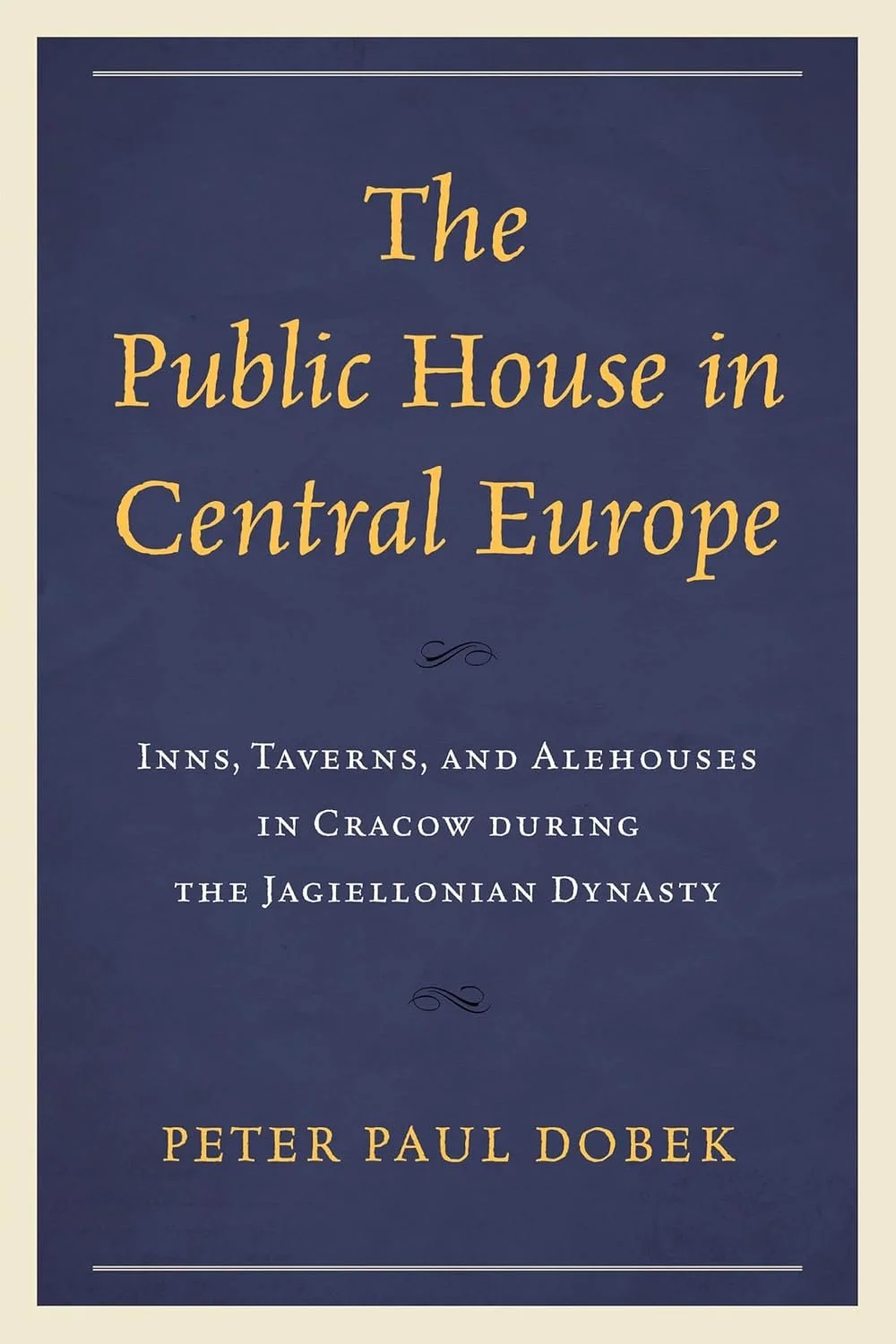
This week, I spoke with Dr. Peter Dobek about the public houses of medieval Krakow. Peter is the author of several works on Polish pubs, diplomacy, and violence. His new book is The Public House in Central Europe: Inns, Taverns, and Alehouses in Cracow During the Jagiellonian Dynasty. Our conversation on the variety of public houses in the Middle Ages, what they looked like inside and out, and what they actually had on tap is coming up right after this.
Well, welcome, Peter, to talk about Polish pubs. I'm so excited about this because I absolutely love the book and the topic. It is, like, one of the fun ones we get to talk about on The Medieval Podcast. So, welcome.
Peter Dobek
Thank-you for having me. I'm excited to talk about it.
Danièle Cybulskie:
Okay, so let's start where we always start, which is right at the beginning. What time and place are we talking about for your book?
Peter Dobek
Okay, so specifically, I look at a dynasty in Poland that is known as the Jagiellonian Dynasty, and they come to power in 1385 and they die out in 1572. Now, I do look kind of at the margins beyond that. So, I look at the previous dynasty, which is the Piast Dynasty, as well as kind of after what happens, just to give it a nice, well-rounded time period. And so, we're looking specifically at Poland, and my focus is on Krakow, which is a conurbation, which means it's actually part of three different cities that function together. And so, those cities are, you know, they're… they're kind of ruled by Krakow, but they've got some autonomy. And so, the focus is that area of the world.
Danièle Cybulskie:
Okay, so before we turned on the mics, we were talking about how you got into this, and you noticed that nobody had actually looked at pubs before, right? What's going on there?
Peter Dobek
Yes. Yeah, absolutely. It was something stunning to me. When I started my research, I originally went to Poland looking for a dissertation topic. And when I was doing the research in the archives, I kept coming across these different buildings – different establishments – such as mills, and taverns, and all these other things. And when I talked to the professors who were working in Warsaw at the time, they're like, yeah, no one's done this before. And that was just a shock, right? A total shock. To me that… I was like, this is my topic. This is what I want to do, and no one's going to stop me. So, I knew at that point that, yeah, this is… this is something that needed to be out there. I had read different books from different parts of the world – especially in Western Europe, right? There's a good amount of scholarship for that. But when I was like, Poland hasn't done this before? A place where beer is, you know, a huge part of the culture and alcohol culture? I was like, yeah, this is... this is for me.
Danièle Cybulskie:
Yeah, absolutely. It's like you stumble upon a really fun topic that you can spend your scholarly time on. It's win-win.
Peter Dobek
Yeah, it was just like, okay, this is... I don't mind spending the next seven years – you know, my dissertation – focused on this one topic. So, it was absolutely worth it.
Danièle Cybulskie:
All right, so Krakow in the late Middle Ages: what is it like as a city?
Peter Dobek
It's vibrant. That's the first word that comes to mind. It's a vibrant place because really, throughout all of Krakow's history – even prehistory – we can see that it was a nexus for trade, for religion, for culture, for all these different aspects. And as the different dynasties – the Piast Dynasty, starting with them – they start to favour the city, right? They realize that it's an important hub. And so, as they start to favour it, it grows in importance. So, that once the Jagiellonian Dynasty comes to power, they, too, realize how important it is. And so, for most of them, really, up until the last Jagiellonian kingdom, it is for them their – what we would consider a – capital. But, you know, in the Middle Ages, they don't really have that. It is their… their preferred residence. It is the place where they spend the most amount of time – because they are travelling around their kingdom, of course – but it is where they prefer it the most. And so, we know it's vibrant, right? It's a center for… for education because a university will be founded in 1364. It is a hub for economics because we know there are trade routes that are going north to south, and west to east. It is a place for religion because the kings are giving to different religious orders. They're establishing churches; a cathedral will be founded in the city, as well as a beautiful basilica. And so, all of these different aspects come together in this one location. So, it is just a bustling center for all kinds of exchanges, all kinds of activity. It really is a place that is just… Especially once Poland reaches its golden age under this dynasty, we know that it is one of the most vibrant cities in all of Europe.
Danièle Cybulskie:
Yeah. Well, on the podcast a few months ago, we were talking about Silesia, and seeing these places where you have all of this trade going – as you were saying – west to east, east, west, north and south. This is a place where you'd see all sorts of people. And one of the things that I thought was really interesting was that when Krakow is growing and it's becoming more of what it's going to be, they apply to have a university there as well. Because they're like, well, our people are travelling and this is actually a great place for us to have a university. Can we have one? And they're granted the right to have one.
Peter Dobek
Yeah, it's actually pretty funny because, like, in the document asking the pope to found the university, they're actually saying that, oh, some of our people, when they're travelling to other universities, they're getting kidnapped.
Danièle Cybulskie:
Yeah.
Peter Dobek
And so,me of them are dying along the way. And you're like, oh, okay, that's not great. So, there's definitely justification for it, especially once you get… It gets reestablished because it's established by one of the last Piast kings. And then it kind of… It dwindles a little bit because the next king is actually Louis of Hungary and he's more interested in what's going on in Hungary. And so, he neglects the university there. But then once you have the introduction of the Jagiellonian Dynasty, they reinvigorate it. And so, not only are they trying to help themselves in, like, the Polish lands, but with the union – with Lithuania, Lithuanian land – then there's an even greater need because Lithuania at this time has no university. It is converting, right? At least nominally, it's converting by accepting this agreement with the Polish nobles. And so, there's a need for not only Christianizing, but also instituting what it means to be a kingdom. And so, they're instituting all these policies that need a population that is educated. And so, it's pretty funny, the founding of this university.
Danièle Cybulskie:
Yeah, that really jumped out at me. They're like, well, we'd like to prevent our, our citizens from getting kidnapped, so let's just build the university. But when it comes to a be drinking town, it's important to recognize there is a university here because that's going to become relevant. But let's stick with the initial details. At first, we're talking about Krakow as being a place where there's lots of trade, there's university, there's diplomacy, all of this stuff happening. So, if we're looking at the city – sort of like a bird's eye view – where are we finding the pubs in town?
Peter Dobek
What we see is that they are across the entire city. The city gets its founding charter in 1257. And so, that really establishes kind of this grid-like structure for what the city will become and continue to be. And so, what we see is that these pubs will be all over the place because the population – right? any population – needs it. Wherever they're at in the city. There are certain concentrations where we do see that – kind of in the northern part of the city. There are quite a few more public houses there. And that's largely due to the fact that there is a tributary of the Wisła river right there. And so, there's access to water. And when you're brewing, you need fresh water. And so, we do see a concentration in that area. But then there's also another concentration along what is called the Royal Route. When kings would celebrate different events – whether that's a coronation or a burial, or, like, a triumphal return from battle – they would go down what is called the Royal Route. And so, they would start in kind of the northeast of the city, and they would go through the gates and walk down the Royal Route that would go through the center of the square. They would walk around the square of the city. Then they would walk up to what is called Wawel Hill. So, this is this elevated area of the city. That is where the palace is, that's where the main castle is, that's where the cathedral is. And so, they'd walk down all the way up onto this hill. And so, you have a lot of the public houses concentrated along this route so that they could pick up, you know, people who are celebrating when, you know, the king passes. Alright, let's go have a beer. So, we do have certain concentrations, but we do see that it's also spread throughout the entire city. And that really speaks to the importance of these places, right? It was needed everywhere. It was needed in every corner of the city. So, that really speaks to how important they were to the general population.
Danièle Cybulskie:
Yeah, I love this because I think that there are so many misconceptions about the Middle Ages, like people are not very smart, or things like this. But when you think about some of the marketing, or placing locations, or tourist spots, it's genius. Of course, you would put it at a place where people are – as you were saying just now and in the book – people coming out of the cathedral, you know, they've just had a funeral or they've just had a wedding or something like that, then it's time to grab a beer. So, just absolutely love that.
Peter Dobek
Yeah, absolutely. And certain scholars have, like, suggested that they were like, outside the city. And it's like, yeah, maybe there's some at a distance from the city, but Krakow actually institutes a law where you can't have public houses within a certain radius of the city, so that the only ones that are able to function legally are the ones in the city. And that brings people into the city. So, absolutely, they were all over the city.
Danièle Cybulskie:
So, I've been calling them pubs, and you were calling them public houses just now – and also in the book – because it's not just your local pub, it's all sorts of different types of buildings where alcohol is served. So, what falls under the umbrella of public house for you?
Peter Dobek
Sure, yeah, absolutely. So, public house is kind of this umbrella term. It is a technical term, but if we really look at it today, we can see that different places are called public houses, too. And so, why is that the case? Well, the unifying factor of all public are places whose main focus was to sell alcohol, whether that's beer, wine, mead, vodka, whatever it may be. That was their primary function. Did they do other things? Yeah, they certainly did. They did well beyond that. And there are also places that served alcohol, but that wasn't their main function. And so, really the... the places that we're looking at are inns, taverns and alehouses. Sometimes, cellars and warehouses, as well, can fall under that, but that's a little… little more rare. But what we see is that, yeah, the inns, taverns and alehouses, they were the main institutions that fall under this umbrella of public houses. And so, when I'm saying public houses, I'm referring to all three of these institutions. There are specifics to each of them, but just in general. Yeah, we call them public houses.
Danièle Cybulskie:
Okay, so we've time travelled back to Krakow. Let's walk into a pub. What does it look like inside? What is the structure? What is it contained in it?
Peter Dobek
Yeah, so it varies. It depends really on each of the establishments. Some of them are as simple as someone trying to make extra income and selling from their house. What we see is that there are really ingrained rights in the city that allows anyone to brew. Certainly, there are legal entities or, you know, there's… there's legal ramifications beyond that. But anyone in the city could brew if they wanted to. And so, we do see that on occasion people are just… They want extra income, so they go and they get a bunch of grain, you know, they brew it and they're going to sell it – the alcohol that comes out of it. And so, it can be as simple as someone's house just selling alcohol. But it also can be more complicated than that. Most of these public houses were simple structures, right? They were usually two levels where you see a ground level and then a lower level, which was like the cellar. And so, depending on their function, exactly, depended on what their structure would look like. But normally you'd walk in and there would be just a main hall where people would spend the most amount of time. That's where they would buy the alcohol, that's where they buy food, that's where they would converse, that's where they would do most of their activities. But we do start to see that there will be more elaborate public houses, you know, depending on, again, what they're offering – it will determine what the structure looks like. And so, some of them, for example, will welcome individuals travelling with horses. And so, they will have stables out in the back. They'll have usually a plot of land, and in the back there's going to be a stable. They might have some kind of garden so that they can provide fresh produce to the people. There's usually an outhouse out there. And then within the structure we see that the bigger ones will be kind of three-storey. They'll have the ground level, they'll have the cellar, and then they might have an upper level. And then, these upper levels where you will have private chambers. Most public houses did not have private chambers, right? That is an absolute luxury. And so, it's very rare to see a public house that's got, you know, a private chamber that is just offered for one individual, right? That would be the elite of society. They would rent out one room for themselves. Normally what we see is that people, if they wanted to sleep in these chambers, that they were sharing with other guests, right? It was very common for people to sleep in the same bed. There was no taboo of sleeping with a stranger, you know, sleeping – strictly sleeping – in the same bed as a stranger. And so, yeah, you would… you would have an upper level where people would sleep in different beds together, depending when people would show up. And so, they'd rent out, like, the whole room, but you're really paying for a space in a bed to sleep.
Danièle Cybulskie:
The reason I brought this up and the reason that I love that you have this in the book is because we do have this Hollywood idea, right? People can go and they can have one room, and it's like a hotel. But one of the things that you address – not only people sharing a bed, which, you know, we see in all sorts of medieval sources, but also you could just roll up in your cloak and sleep in the main hall. If you pay for it. Why not?
Peter Dobek
Yeah, absolutely. Yeah. People would sleep on the floors, they’d sleep on benches, they would sleep wherever they could – as close to the fire, ideally, as possible, in the winter. But yeah, it was... it was definitely not a luxurious place. Certainly, there were one or two public houses that could offer these luxuries, but it was... it was rare. It's most likely you're sleeping on the floor.
Danièle Cybulskie:
Which is really normal, as well. Like, people staying in a castle are often sleeping on the floor, as well. Unless they are the elite, too.
Peter Dobek
Yeah, absolutely.
Danièle Cybulskie:
Totally normal stuff. Okay, so I need to ask the question: I'm not sure that it came up in the book, but is there, like, a bar? Does it look like a bar? How are people being served?
Peter Dobek
Yeah, so... so, you would have an area that would be reserved for purveying the alcohol, for purveying the food and so, most likely, yeah, it would be kind of a bar – what we associate with bars today, or, you know, what we see in Hollywood. So, there would be kind of a standing area for the publicans – the people who were serving the alcohol – where people would come up and they would, you know, purchase whatever they needed to. They would rent the room or rent the space. And so, you do have that. That's not a Hollywood embellishment, but… you do have that. Is it as, you know, beautiful or complex, as, you know, Hollywood likes to depict? Probably not. It's probably just, you know, a simple little bench or a simple little, you know, standing area. We're talking about really humble institutions, right? They're not elaborate. They're not anything, you know, special, right? They're really there for function. They're there to serve alcohol. They're there to provide other resources. They're there to help people with whatever they may need.
Danièle Cybulskie:
Yes, and one of the things that I think that was awesome about the book, as well, is that you mentioned that there's different types of alcohol that you could get. Because if we're talking about Hollywood, like, you go in, you get one beer. It's going to be the same beer for everyone in the same sort of tankard. But, as you mentioned, there's different types of beer that people could get. So, let's start with beer. What could you get at a pub in Krakow?
Peter Dobek
There was a lot of variety, actually, in the beer that people could drink. And it varies because People are brewing in Krakow itself. So, we know there's a lot of local breweries. One of the studies that I've seen is that there were 140 different brewers operating at a single time in the city, right? So, they're all producing different types of beer. Whether there's lager – there's evidence of lager – there's evidence of what they would call, like, a light beer, which is really kind of the second brewing of the grains. There's also a strong beer, but most popular was the wheat beer. We see a lot of different sources that are talking about, oh, how great this wheat beer is. It usually wheat beer with… with hops. So, they are making beer, not ale. And so, what we see is that, yeah, they're, they're like, oh, this wheat beer is so good. There's different physicians who are saying how healthy it is. There's individuals who are just talking about how, you know… Its great reputation. So, that's kind of the most cherished beer. But there's also imported beers. And one of the areas that we see importation is a town that is now in Poland but wasn't at the time. It's called Śvidnica. And this is a really, like, renowned beer that is imported by the city and it's only sold in the, what is called the Piwnica Śvidnicka, which is in the city hall next to the dungeon. So, it's kind of this – yeah, it's awesome. It's got this reputation of being like what we would kind of consider Hollywood would… would imagine a public house to be. But they have exclusive rights to this beer and so they're only selling it in this one public house. And so, if you wanted this special beer, you would have to go there and, and, and get it at this place. So, there's all kinds of variety. And they're importing from other places, as well. And usually it is beer, right? Because the hops do have some of those antimicrobial properties. If it's closer, you can get an ale, as well, but it doesn't travel as well as a beer would. But yeah, they're importing, they're brewing locally. There's… there's all kinds of availability for beer itself.
Danièle Cybulskie:
Do you get the sense that people would find it useful to have different types of beer within the same establishment? Or do you find – or you speculate – that people are going to certain ones because that person has the best beer: the… the wheat beer that you want?
Peter Dobek
I think it's both. I think there's two things going on. Because when a publican would order beer, they would usually get two batches, right? They would get the strong beer, which is the initial brewing; then, they would get the weak beer, which was like the second brewing. And that is what came with an order. What they had to do is they had to use a third party to order a brewer to make beer for them. And so, they would order the grains that were necessary, whatever – hops, or whatever other ingredients. Then the brewers would brew the beer and then provide it to the publican. And so, they're automatically getting at least like, two varieties. Could they ask for more? Yeah, absolutely. And so, I think people kind of assume that when they're going in, they can get, you know, some kind of variety of beer. But then, with some of the imported beers – especially like the Piwnica Śvidnicka – they are having exclusive beer. And so, I think there's a market for that, as well. Like, if someone wanted, like, oh, man, I'm really craving this this time, they would, you know, seek out that location specifically to get that specific type of beer. Or wheat beer, right? As I mentioned, right? It's so popular that I think if you've got the wheat beer, then, you know, people will be there drinking it.
Danièle Cybulskie:
It's good for your health.
Peter Dobek:
Yeah.
Danièle Cybulskie:
Well, I mean, this is how people pick their pubs today, right? So, like, that one has the best beer, or that one has the one that I like, or that one has the most variety. And so, I'm imagining sort of the same thing.
Peter Dobek
Yeah.
Danièle Cybulskie:
And then you also have people who come into a pub and order wine. To this day, people come into a pub and they'll order wine. So, tell us about wine at this time.
Peter Dobek
Yeah, wine. So, it kind of gets this reputation of being, like, really exclusive in the Middle Ages. And certainly, like, the earlier you go in the Middle Ages, yes, that is the case. But what we do see – especially on the Jagiellonians – they're in a time period where wine starts off as really exclusive, but then it becomes more and more accessible. And so, we start to really see that in, like, the royal records, like, the importation of wine just skyrockets. And so, they're consuming a lot, you know, just in the royal court. But then, we also do start to see it pop up in the records amongst these different public houses, right? We start to see that someone paid for a barrel and owes money for it, or we start to see that somebody ordered, you know, a tankard of wine and they didn't pay for it, or whatever. It may be… We do start to see that wine does become part of the drinking culture within the city, as well. And most of that is imported. What we see is that there's very limited viticulture, right? – the cultivation of vines – in Krakow itself. There is evidence for it, right? I've got some kind of public houses who had a lot in the back, and they were growing wine – or they were grapes for wine. So, that we do see there is some… there's some home-produced wine. But for the vast majority, it's imported. And it's imported from, like, all of the regions of Europe that are typical for producing wine. Most commonly where we see it coming from is Hungary, right? Hungary is pretty close to Poland, and there's a long history of interaction between the two different areas. And so, what we see is that wine most likely is coming from Hungary. And as we know today, it's great wine, so why wouldn't you? Of course. But it is most typically coming from Hungary. And so, we do see that that is the cheapest, that is the most available, that is the most commonly-consumed of the wines in the area, but certainly beyond that, too: Germany, Italy, France. You'll see those wines pop up, too.
Danièle Cybulskie:
Yes. So, it is on the menu for those wine drinkers who show up at the pub and ask for wine. I don't know if people would be getting funny looks back in the day the way they do now. But it is available. And then the last thing that is available sort of late in this period is vodka, which, you know, we rarely see when we're looking at the Middle Ages. Because it's made from potatoes, isn't it? So… there's no potatoes.
Peter Dobek
Right, right, right. So, vodka in the sense of how we know it today, yeah, it's made from potatoes and it's, you know, distilled from that. But what we're talking about is more like… distilled wine is what we're really talking about. The sources will refer to it as vodka – what we would call vodka – or burnt wine, basically, which is distilled wine. And so, what we start to see is as the influence of distillation starts to take hold throughout Europe – and that's, you know, via the… the different Muslim empires that we see – slowly, as that trickles in, we do start to see that what we would consider vodka – or, at least, that's what it's called: vodka – start to trickle in amongst the population. And really, that starts as a medicinal kind of thing. We see that physicians will use this – what we might call aqua vitae, or – it's got a whole bunch of different names, but most commonly it's, like, burnt wine, or distilled wine is what they're calling it at first. And so, that's really used for medical treatments with physicians. But then we do start to see that, well, it's not just a medicinal thing because it has alcohol. It's got the ethanol. And so, it's going to affect you in a certain way that people are looking for. And so, we do start to see that it appears in the public houses. For example, there are different charters – or different documents issued by the kings – that give exclusive rights to different publicans to, you know, produce vodka on site, or to serve it, or to whatever it may be. They start to get rights to actually start purveying it. And so, we do start to see that it will be part of the general population consumption and people start to use it. And in fact, there's some debate where it starts first. And really, if the records that I have are to be believed, then really, it's Poland that's at the forefront of having this vodka available to the general population beyond just the medicinal use.
Danièle Cybulskie:
Yeah. There is a touch of Polish pride that comes through in your book where you're like, I think it's Poland that was first. The Russians think it's them.
Peter Dobek
Absolutely. I mean, that's going to be a debate that'll go on forever and never will be settled. Same with, you know, pierogi, and potatoes, and all these things. There's these points of pride amongst the Slavic people. But so far, right? What I've been able to see in the records is that it might actually be Poland. And yes, there's some pride to that, but my records seem to counter what others have suggested.
Danièle Cybulskie:
Yes, well, it's a good impetus to go back into the records and find more stuff so this can be settled. It's never going to be settled.
Peter Dobek
No, it won't be, but let's try.
Danièle Cybulskie:
But speaking of pierogi, what can you have at a pub? What can you eat at a pub?
Peter Dobek
Yeah. So, normally, it's pretty simple fare. What we see is that whatever is in season is what you're going to get. And so, the different publicans, they would grow different vegetables, whether that's cabbage, or things like parsley are common, or whatever they could grow on their plots. If they have plots, that's what they'll be serving. If they don't have plots – if they're just small establishments – then they're going to go to the market. Krakow has one of the largest medieval squares in Europe. And so, on this square, you have a very vibrant market that happens regularly. And so, individuals would go and buy produce, and they would serve that usually in a gruel. That was the most common kind of... It lasts long, it's easy to make, it's filling. So, usually, it's kind of a gruel. But that doesn't mean that, like, meat, for example, wasn't available, right? There's this common misconception that meat was only available to the elite. And, you know, when it's rotting, that people would use spices to be able to afford it. And that's just... It's just not the case. Not only would people not waste expensive spices on rotten meat, right? They're not going to eat rotten meat. Just like we don't eat rotten meat, they're not eating rotten meat. They're not that desperate. Maybe in times of a siege, sure. Right? You get real desperate. But in general, no. We see that people were able to afford meat. Yes, the best cuts, the best select meat would go to the elite, of course, but everything else was still consumed by the average person. And so, you could get chickens, you could get pigs, you could get beef, you can get whatever you needed to to survive. And so, on this market, you have different stalls that are specifically designated for food. And so, you can get meat, you can get vegetables as well as bread. Bread is a huge, huge part of medieval culture. Beer is liquid bread, after all. And so, people were consuming baked bread, too. And so, you've got wheat bread, you've got rye bread, you've got different types of bread, as well. So, at these public houses, you would get a choice. It'd be limited, but you still would get fed, and you'd be probably not disappointed with whatever you got. There are sources that talk about how good the food is, but there are also sources that talk about how bad the food is. So, I think it really depends on the individual, it depends on the establishment, who's cooking, what they're making, what's available in season. But certainly, there are all kinds of sources that talk about food – how great it is, and how bad it is. So, it could be a roll of the dice, depending on what kind of food you're going to get.
Danièle Cybulskie:
Yeah, you definitely want to get recommendations from the locals. And one thing that I want to bring out that I thought was really interesting, as well, is that you could find out from looking at the outside of a building – I think we all have imaginings of The Prancing Pony outside the building – but there's also markings on the building that tell you what kind of alcohol you can get there, right?
Peter Dobek
Yeah. This is super cool. So, they would have signs, right? They would have what we'd call advertising, and they would have that available usually just outside their establishment, depending on what they're serving. Some of them wouldn't have that, right? They would just be named after a person. They would be named after, you know, whatever it may be. But some of them would have specific things that they were serving. And so, if you have, for example, a place that is pretty exclusive to wine, then there'd be likely that they would have some kind of grapevine sitting outside of their establishment. So, you know, on a sign. Or if they were doing, like, wheat beer, they would have a panicle, right? A bunch of wheat sitting outside their establishment somewhere. So, you could identify different public houses by what their signs were – what they were advertising – to see, like, okay, yeah, this is what I want to get. So, this is what they would get. Not always the case, right? Most places, I think, offered whatever they could get their hands on. If it was beer, they would serve beer. If they got wine, they'd serve wine. But certain ones would be, like, specialties where they would have, you know, this exclusive whatever it may be. So, we see all kinds of different things. Whether it's, you know, again, like a panicle of different grains. You'd have grapevines, you would have just all kinds of markers that people would know. Anyone travelling throughout Europe kind of knew that this means this. Even if they didn't read the local language, they could still identify. Okay, this place is going to have these kind of things.
Danièle Cybulskie:
Yeah. And then that way you can, as you're saying, you can find them if you're new to town, or you could just find them if you are somebody who is living there already, and you could say, meet me by the sign of the whatever. I think you mentioned a few of the names of the pubs in the book. One being close to the mint, so it's just called The Mint. But I think my favourite one was just, like, The Mushroom. Like, meet me at The Mushroom. That's awesome.
Peter Dobek
Yeah, actually. And it's diminutive, too, right? It's like the diminutive mushroom, so it's like, meet me next to The Tiny Mushroom, like, basically is what they're saying. But yeah, you get all kinds of cool names. A lot of it is just what they see out in the world, right? So, it's different animals, whether it's The Rabbit, or The Lion. I mean, they're not going to see lions, obviously, but, like, just things that they hear about – The Rabbit, or whatever. Maybe The Elk. Something like that that they're seeing in the area. Or different plants, or herbs, or you know, fungi, like The Mushroom, or The Nettle Tavern is another one. So, we do see them just kind of being pretty creative. Other places are kind of designated by their name. Where they are in town. They may be named after the different street that they're on. Other ways they're identified is by the owners, right? The people who are operating the public inn. So, you do have a lot of places that are named after the individuals who are running the establishment. So, you've got all kinds of – what we would call – last names appearing on these pubs. So, yeah, there's a lot of variety of these names. Some of them don't have names, which is kind of unfortunate. When you see them in the records, you're like, oh, I wonder what this place was called because it's always fun to see just these names that they come up with. But in general, yeah, there's all kinds of variety in terms of the names.
Danièle Cybulskie:
Yeah, yeah. You figure they must be calling it something, even if it's just like Bill's Place, you know. What is it? Yeah. But I do love The Mushroom. That… that is a memorable one for me. So, we've talked about obviously getting alcohol at the pub, getting food at the pub, but you could also get other things there – like rental cars, right?
Peter Dobek
Yeah, it's really like a one-stop shop where you can just get whatever you need. They'll have it. Just go down to the public house and see if they've got it. And so, there's – from different food sources, from preservatives like what we see with salt or vinegar – we see that pretty commonly – to building supplies. They'll have wood and stone and brick. They'll also have firewood. I think that was kind of a main location where people would get their firewood to heat their homes and cook with. Because there's all kinds of places that have stacks of firewood, and that people will owe money for the firewood that they purchased. But they're also, like, renting horses and wagons, right? Presumably these are at the public houses that are bigger – that have stables, that have a plot of land. But they're able to, yeah, like, offer someone a horse. You need a horse to travel to the town over here? You can rent it. Or you need a horse and wagon to transport some stuff? Yeah, we've got that, too. Like it's… it's a one-stop shop where you can just go and get all these cool, different things. And that was one of the remarkable things in my research. Okay, so it's not just food, and alcohol, and a place to stay. It's the center. It's a hub of the city. And so, you get all these cool, different things from the place.
Danièle Cybulskie:
Yeah. I had logically assumed that you could get a horse. If you needed to get a horse, that would be the place to go, right? An inn, a tavern. But I hadn't thought about firewood. And this is actually something that I have thought about before: it's like, if you're living in a town and you need firewood, where are you going to get it from? Who stores that stuff? And you have the answer. It's the publicans. They have it.
Peter Dobek
Absolutely. So, it's not clear how they acquire the wood. I don't know if they're chopping, like, themselves, or they're reaching out to, like, a forester, but somehow they're getting, you know, cords of wood that people can buy, and people owe money for. So, it's definitely a place where you… you would go, and grab some wood, and heat your home, and cook some food. So, it's definitely a place for that.
Danièle Cybulskie:
Yes. And one of the things that you mentioned, as well, is that you can buy beer to drink at home, as well. In fact, I think you said that the town bell rings at night, and that's closing the city gates. And then it rings again, saying, we have to close the pubs, but you can take takeout to your house.
Peter Dobek
Yeah, absolutely. That was a surprising thing that I found, is that, yeah, sure, they've got... You know, most towns do have the bells that warn people that the gates are going to close, that, you know, everyone needs to be inside if you're coming inside, otherwise you're stuck outside. But then it also marks the cutoff. It's last call for alcohol. And certainly, you know, people are able to buy what they need to, but then also take it home. That's what I was kind of surprised. I mean, it's surprising in one sense that they can do that, but it's not surprising because that's essential to their living, right? That alcohol is part of the medieval diet. So, it's not something that's unusual, but it's just kind of our own sense of it is that, oh, okay, so they could go there and drink, and then also buy a bunch to take home and continue drinking if they choose, or save it for later, whatever they may, you know, be wanting to do that… that night. But it's certainly available to take home. And you can buy, you know, like tankards, you can buy a barrel. Whatever you… you wanted to do, you could definitely purchase some to take.
Danièle Cybulskie:
Yeah, that's so interesting because, I mean, the party might need to continue, so you need to take it with you.
Peter Dobek
Yeah, right. You don't have to go home, but you can’t stay here. So, you know, that definitely applies. And they can, you know, continue the party wherever they want to.
Danièle Cybulskie:
That's right. I guess – and the last thing that we haven't mentioned so far that you can do at the pub is – you can pick up your mail. So, if you're travelling, or if somebody else is travelling, that's where you can find your mail. So, it's not a… like, official post office, but that is where people expect to find mail, right? Yeah.
Peter Dobek
Yeah. And we see this all the time in the different correspondences that I have. There's an individual known as Ioannes Dantiscus – Jan Dantyszek. And he is part of this, you know, Republic of Letters where we see – in the later Middle Ages – where people are travelling, they’re corresponding with different individuals. And so, you got quite an abundance of these different correspondences. And within those correspondences, he really talks about his time in the different public houses. And that's across Europe. He's really well-travelled. You know, he's in the courts – the Habsburg courts. He will be all over Europe. And so, he does, from time-to-time, talk about his experience in these public houses. And one of the things he does mention is like, oh yeah, I got your letter that came into this public house. I picked it up. You know, he's in Krakow for extended time. He's like, oh yeah, send whatever letters, send them to Krakow. They'll be at the public house. I'll pick them up. And so, certainly, yeah, they're functioning as these proto-post offices where people can go and pick up their mail, they can go send their mail. And so, there really is this sense of this is a place for this correspondence and for information, right? If you wanted local news, you could always go there, too, because the publicans were well connected, so they knew what was going on. And so, certainly, right, you have this pretty amazing system that starts to develop. Again, it's not a formalized system, but it is really kind of what we would associate with a post office. And so, certainly, yeah, the individuals are using them in that way. And even, you know, the kings are using them in that way. It was expensive to send, like, an official courier to whatever other kingdom, or whatever other place in Europe. And so, most often, if it was just a simple message that needed to go out there, they go to the public house. Maybe not themselves, right? Some of the representatives would go to the public house and give them this message to someone who – most likely a merchant – who is travelling to whatever location it may be. And so, this offered, right, this very cheap way of sending messages. So, yeah, they definitely did. And that's why they're so fascinating. They've got all these cool things going on in this one establishment.
Danièle Cybulskie:
Yeah, exactly. Well, you got to ask yourself, if you're in the Middle Ages: what does every town have? It has a church and it has a pub. So, where are you going to send the mail? Maybe not to the church – although the church did own some of the pubs that you studied, right?
Peter Dobek
Yeah. Just to go back: they know that they… are going to be these publicans and these public houses in a city – that you can pick up your mail. So, they know it's reliable, they know it functions, and so they're absolutely using them in that way. But, yeah, for your second point. Yeah. The church, as the largest landholder in Europe at this time. And they've got this really love/hate relationship with these places because, yes, they see it as an investment, as a place to make money. It's also part of the Christian tradition of offering food and shelter to the weary traveller. So, they definitely are happy to invest or happy to use them, but at the same time, they are very cautious to the extent that people are using them, specifically in how, you know, how much they're drinking, and spending time in these places, and doing the other activities associated with these places, like gambling, or prostitution – whatever it may be. So, they have this very clear concern that, yes, these are great, they're financial places that are going to give us money. But at the same time, people need to kind of – for the sake of their souls – they need to be careful of how they're using these public houses. So, yeah, definitely.
Danièle Cybulskie:
Yeah. And we were talking earlier about students, and the students are coming up in a church education, and you have quite an extensive part in your book where it's like the churchmen are so frustrated because the students will not stop going to the pub, and drinking, and gambling, and spending time with the ladies. And they just can't stop it because students love a pub.
Peter Dobek
Yeah. Just like today, we've got the same kind of relationship with not only students, but faculty too, right? Students and faculty that are going to these public houses. And it really starts from the beginning. Krakow gets its first university in 1364. And really, that kicks off the relationship. There's a really complex relationship between the public houses and institutions of learning. And you see all throughout the records – because the university has its own jurisdiction, it has its own kind of legal records. And so, that's one of the most fun sources to look at, because it's definitely students and faculty causing problems throughout the city. And often, it is at these public houses. Officially, they weren't supposed to go, right? That's part of the statutes of the university, is that faculty and students were forbidden from going to these public houses. But that absolutely did not happen. They were absolutely in there doing all kinds of, you know, rambunctious things. Most often they were using them in the way that they were supposed to, right? Just going to get a meal, getting some alcohol, whatever it may be. They were using them normally, as they should. But there's lots of examples where things got out of hand, or where things were just not okay according to the rules of the university. And so, it's pretty remarkable to have that relationship. And a lot of the public houses were located right next to the academic buildings. There's a great record of – they're like engineering records. They're like inspectors that would look at the different physical edifices. And so, what you see is that when they're talking about where they're located in the city, sometimes they're referring to yeah, oh, yeah, we're like three buildings down from this university building. So, you know, they're like ingrained into the area of the city where there are these university buildings, where there are the dormitories, where these students and faculty are active. And so, they're definitely offering that temptation to these individuals.
Danièle Cybulskie:
Well, it is smart marketing. Where are you going to put your pub? Next to the students. It's just smart.
Peter Dobek
Absolutely. And a lot of the students are international students. They're coming from different parts of Europe. So, they're new to town. They don't know what's, you know, what's what. They don't know where the resources are, what they need. And so, they're absolutely, yeah, this is a public house. I can recognize it by whatever is, you know, sitting outside the door. I can go in there, get what I need. I just travelled. I'm hungry. I'm thirsty. They'll go in there, and then, presumably, they… they might like it and want to return when they're not supposed to, as students. So, yeah, absolutely. You have this very intricate relationship between the two: the university and the public houses.
Danièle Cybulskie:
Yeah, I think one of my favourite examples in the book was two students… One student insulted another one during their, like, theology lecture, and then it spilled over into the pub later.
Peter Dobek
Oh, yeah.
Danièle Cybulskie:
Where they started throwing insults back and forth. But it's kind of hilarious. It's, like, recorded that they were in a lecture and someone verbally threw down in the middle of a lecture. I thought that was hilarious.
Peter Dobek
Oh, absolutely. Yeah. It's two students and something comes up where one of them insults the other one, and that starts to escalate. So, that, presumably after class, it continues to escalate. And it happens right in front of the tavern. Because it specifically – it mentions the tavern and the harlots, right? So, that's kind of an indication of that there might be prostitutes in these places, but there's also people... This is a very public place, so there's a lot of witnesses. This is causing a scandal for the university, which it doesn't want. And so, yeah, absolutely. It's just a tiny snippet, right? It's really a small source that we have, but it's packed with all these goodies that are just like, oh, okay, yeah, these… these kids, they're insulting each other. So, it falls under the category of verbal violence. So, yeah, absolutely.
Danièle Cybulskie:
Yeah, yeah. I mean, it just goes to show that the more things change, the more they stay the same, right? So, speaking of violence, we're talking about verbal violence just now. It seems like one of the impetuses that you had for writing this book was ideas of violence, because it's something that you addressed sort of at the beginning and then more in depth near the end of it. Why did you want to discuss violence in terms of looking at these public houses?
Peter Dobek
Yeah. One of the main arguments and one of the main reasons for writing this is to look at the extent and types of violence that are happening in these institutions. And the reality is, for Krakow – it's different for other places – but for Krakow, the violence wasn't as prevalent as one might imagine. And this is very much this Hollywood image that we have of these places, right? You have these travellers, a bunch of people getting together in these public houses. They drink too much, and they fight right away. And that seems to be, like, every single day there's going to be a fight in this place. That's not the case. It really just is not the case for Krakow. There's a lot of scholarly debate on this. Different scholars are talking about – predominantly in Western Europe, but also other places are starting to get more scholarship – what is the true nature of this violence? How extensive is it? And for Krakow. Yeah. There's all kinds of examples of violence. And those examples are wonderful to read because you're just like, wow, some of them are really, like, really significant violence. Some of them are just insults, some of them are just hairpulling. Some of them are actual murder. You will get actual death in some of these instances, but it's rare. It really, really is rare. We're talking about percentages below 20% of all crime in the city. And so, it's just. It's just not happening, right? It's not happening the way that Hollywood imagines it. These places, they're just not places for nefarious activity. They are just common institutions where people go on the daily, on the regular, to get whatever they may need. They go in, they have a good time, they walk out. It's as simple as that. Do fights occur? Yeah, but not in the way that we imagine it, where it's like every single day you better watch out because there's going to be a fight. It's not the case.
Danièle Cybulskie:
Yeah. Well, as we're recording this, we're looking at the World Cup coming up. And if there's going to be a fight – we were talking about this before we started – if there's going to be a fight, it's going to be at the pub during the World Cup. But it doesn't mean that people are getting thrown through, like, saloon doors every day.
Peter Dobek
Yeah, no, absolutely not. I mean, they are places where violence can happen, right? There's alcohol, there's a lot of competitive… Whether that's, you know, the honor system that they have in the Middle Ages, or if they're actually playing different games, and gambling is… It is a tense environment. It can be a tense environment, but it doesn't explode into violence in most instances. And that's what will happen with the World Cup, too, right? There's going to be a lot of fans, and they're very loyal and dedicated. Some of them might be hooligans, and so there might be violence, but overall, no. It's going to be a peaceful, great event and people are going to enjoy themselves and get what they need at these places. So, I don't think so. At least not for Krakow, right? Certainly, you know, the other scholars that have looked at other places, they've got evidence to suggest otherwise – that it is far more frequent. But looking at different types of court records, looking at different time periods across the whole dynasty, there really is no suggestion that this was happening in Krakow at this time.
Danièle Cybulskie:
Yeah. In fact, when you were looking at the records, what you found most often was people not paying their bar tabs, right?
Peter Dobek
Yeah, yeah. That's one of the kind of surprising things that I had during my research is just, man, the debt that they are dealing with is just stunning. It's astounding how much debt individuals were able to either burden, or take on, whatever it may be. They are dealing with a lot of debt, and that is both on both sides. Whether that is the people who are going to the public houses, right? People who are buying on credit because that's available to them, whether it's the typical alcohol, or food, or the resources that they need, like firewood. But it's also the publicans, themselves. They are taking on debt, whether it's to purchase a barrel of beer, or whether it's to do something else. They also are burdened by this debt. And it's just so prevalent in the court records, all the different court records. That is the most common by far, right? We're talking about like 80% in some instances of a given year. 80% of the crimes – or what the city deems to be a crime – is debt. That debt is the overwhelming crime that people are committing at this time.
Danièle Cybulskie:
Well, I'm glad that you have gone so deeply into the records because there's charts and everything. People can look at it and see that this is not exactly that story that we've been sold about what it's supposed to look like in a medieval pub. And I think that this book has done a lot to correct that. And also, all those details that everybody wants to know, like, what is it actually like there? What can you buy there? How much can you buy there? Can you buy it on credit? I think that's all important stuff. So, as we come to the end of our time, what was your favourite thing that you learned in going through these records and looking at pubs and spending your seven years in this topic? What was your favourite thing that you learned?
Peter Dobek
The honest answer is everything, right? Everything that I learned was just like, this is so cool, this is so cool – every time I came across something new. But I think the most prevalent thing is learning about the violence, right? Just because we have that image so often in Hollywood that it's... Everyone goes in and fights, and that's what this place is all about. And it just wasn't. It's just so much more than a place where nefarious activity happens. It offers alcohol and food, of course, but it offers so much more. And it's not just the physical offerings. It's also kind of the discussions that are happening there. For example, there is someone who was negotiating important royal business in a public house. The king gives them permission to negotiate. It's with a bunch of Prussian envoys. He gives them permission to negotiate terms of a deal in this public house. And you're like, really? Like, in this – what you would assume is not a secure location that anyone could just listen in on? They're negotiating important things. And it's so much more. And that's my favourite part is that it goes beyond just the simple institution of alcohol, and food, and a place to stay. It goes well beyond that. And that really was something that I enjoyed really thoroughly, just learning all the new aspects of, oh, it also does this. Oh, it also does this. Right? It's just so much more than what we would think of it. Sure, that… the Hollywood image happens occasionally, but it's just so much more than that. And that's really what I enjoyed the most, was just learning about how much more there is to these places.
Danièle Cybulskie:
Well, I think that your enthusiasm and your love for the topic really comes through in the book. And like I said, there's all these details that people will be so interested to know. So, thank you so much, Peter, for coming on and telling us all about it.
Peter Dobek
I'm happy to. I'm always happy to talk about my work. Unfortunately, there isn't too much research in Central and Eastern Europe. And so, I was happy to do this and kind of, you know, if this is the beginning, then I really hope that there will be many more studies to come after this. I really hope individuals use this as a starting point. I really hope that there will be many more studies. There's so many more records out there that we can tap into. The resources are plentiful. It's tough to work with, yes. Right? The handwriting isn't always perfect and the language is difficult. Polish isn't the easiest to learn. But there is so much more to do on this topic, and so I really hope people will continue to do that.
Danièle Cybulskie:
To find out more about Peter’s work, you can visit his page at academia.edu. His new book is The Public House in Central Europe: Inns, Taverns, and Alehouses in Cracow During the Jagiellonian Dynasty.
For our inspirational quote this week, I’m returning to Carmina Burana, because Peter’s book reminded me of the celebratory atmosphere to be found not only in the medieval pub, but also in the modern month of June: the month of weddings, and graduations. So, I thought this little nugget would be an appropriate reminder. I did find it in a mildly spicy little song about why women should give their love to young men – the type of song that you might hear in a medieval pub – but regardless, the sentiment is appropriate for us all. It simply says, “Join in the rejoicing and have fun!”
You can find the rest of this joyful little song in the Dumbarton Oaks translation of Carmina Burana, Volume I, by David A. Traill.
And speaking of joy, it’s my joy to express my gratitude to you listeners every week. Thanks for listening, and for sharing your favourite episodes. Thanks for letting those ads roll on through. And thanks, especially, for being part of my Patreon community. I hope you’ve been enjoying all the exclusive articles there, and your ad-free listening. If you’d like to become a patron, please check out patreon.com/themedievalpodcast.
For the show notes on this episode, a transcript, and a collection of the books featured on The Medieval Podcast, please visit medievalpodcast.com. You can find me, Danièle Cybulskie, on social media @5MinMedievalist.
Our music is by Christian Overton.
Thanks for listening, and have yourself a happy day.