Royal Receipts with Abigail Armstrong




The Medieval Podcast uses affiliate links
Episode 346
You can tell a lot about people by their spending habits. What do they buy for themselves? And what do they buy for other people? This week, Danièle speaks with Abigail S. Armstrong about royal financial records, what they can tell us about Margaret of France during Edward I’s last days, and what one incredible inventory reveals about royal relationships in England’s turbulent thirteenth century.
-
Danièle Cybulskie:
Hi, everyone, and welcome to episode 346 of The Medieval Podcast. I’m your host, Danièle Cybulskie.
You can tell a lot about people by their spending habits. What do they buy for themselves? And what do they buy for other people? One of the fun things about studying history is having the permission to dig through old records to discover treasures in a box of receipts.
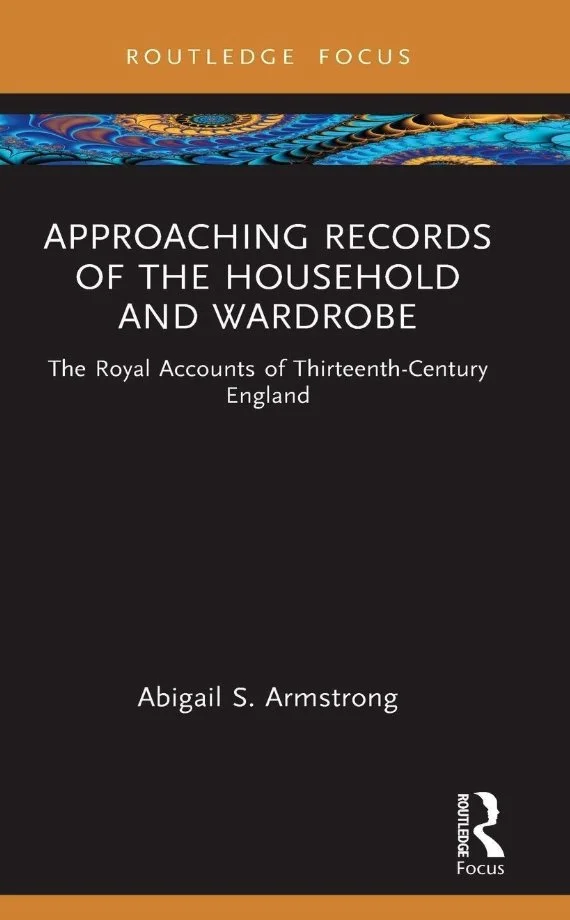
This week, I spoke with Dr. Abigail S. Armstrong about royal financial records. Abby is an independent researcher who has worked extensively on royal and aristocratic accounting in England and beyond, including her last book The Materiality of Medieval Administration in Northern England. Her latest book is Approaching Records of the Household and Wardrobe: The Royal Accounts of Thirteenth-Century England. Our conversation on what it’s like to dig into royal receipts, and what these records can tell us about Margaret of France’s actions in her husband Edward’s last days is all coming up in a minute – and be sure to stick around until the end to see how one incredible inventory can tell us about royal relationships in England’s turbulent thirteenth century because it’s all here, right after this.
Well, welcome, Abby, to The Medieval Podcast – your first podcast, and I'm so happy that it's here. Welcome.
Abby Armstrong:
Thank-you. Thanks for having me.
Danièle Cybulskie:
Well, we are here to talk about your work on approaching – this is your book – Approaching Records of the Household and Wardrobe. Okay. And at the beginning of your book, you say, to understand the accounts, you need to understand what the royal household and what the royal wardrobe are. So, tell us what these are.
Abby Armstrong:
Yeah, that's the big question, isn't it? So, I think before you can get to the household and wardrobe, you kind of need to understand how medieval government is functioning in the thirteenth century. So, you've got kind of three main departments. So, we've got the exchequer, which is the financial office. We've got the chancery, which is kind of the administrative and writing office. And then, we've got the court, which has got all the political and judicial things going on there. So, the household really kind of embodies the court, but it also kind of supplies and provides for the court. So, it's this body of departments that are staffed by various officials and servants. So, these, yeah, like I say, support the court and help facilitate public aspects of kingship. So, kind of ceremonial things that are happening, but also the household is this domestic establishment that surrounds the royal family. So, they help provide these day-to-day needs of the king, queen and their children, but also the courtiers, and anyone who's around at court. So, that's kind of the household, and it's subdivided into various different departments. So, these correspond to the different roles and functions, but also to kind of spaces or rooms that you would have in the castle – or wherever the king is located at that time. So, you have different departments that are concerned with food and drink. So, places like the kitchen, the pantry, the buttery. Then you also have places like the chamber, which is kind of the king's personal bedroom, but also a place where business is still undertaken. If you are invited to undertake business in the chamber, you know, you kind of got like a personal one-on-one session with the king, rather than trying to get through the hordes of other people begging for X, Y and Z. And then, you've got other things, such as the marshalsea, which is kind of more focused on horses and transportation, because the household and the court are itinerant. So, that means they move around with the king. It's not in a fixed position. These move as the king needs to do his business, he travels around the country, and the household tags along and helps him get from A to B and make sure that there's food and drink for everyone everywhere they go. So, that's the household. And then, the wardrobe is a department within the household. So, as the name suggests, the wardrobe is, you know, a place where you would store your cloth and clothing, but it was a bit more… broader than that. So, it would also have other precious commodities, so maybe wax, spices, jewels and plate, so metal plate, these precious commodities and expensive items. But it’d also be kind of a personal archive, so any documents that needed to be transported alongside the king would be stored here. But throughout the thirteenth century, the wardrobe kind of becomes a more and more important department. So, it then takes kind of precedent, so it becomes actually the chief administrative, financial and secretarial department, because it is attached alongside the king, and transporting and moving alongside him. So, its original function’s as this storage department. Actually, then, they have to create a new storage department, because the wardrobe is now so much bigger. So, they then create a department oddly named the “great wardrobe”, which then undertakes these original functions. So, this wardrobe, by the end of the thirteenth century, it's pretty much an itinerant exchequer that's moving alongside the king, because the exchequer itself is based in Westminster – it's down in London. And Edward, at the end of the thirteenth century, is off going up to Scotland and conducting all his wars towards the end of his reign. And so, he needs a body to finance this, and keep him moving, and keep him rolling – keeping him fed. And so, the wardrobe becomes this much greater department alongside him.
Danièle Cybulskie:
Well, it's so important to figure this out and to spell it out because – it's just making me think of Narnia. Right? You think you know what a wardrobe is until you start looking. And then, it is so much bigger on the inside than you ever imagined.
Abby Armstrong:
It is indeed, yes. And then, it gets greater with an even greater wardrobe.
Danièle Cybulskie:
Okay, so we're talking about the thirteenth century here. Why did you pick this as the focus for your book?
Abby Armstrong:
At my heart, I'm a thirteenth-century historian. So, as I was doing my undergraduate, master's degrees, I became… Well, I originally went to the university as an early modernist. I was fascinated by the Tudors because that's what we'd done at school. That's what we'd learned. And then, as I delved deeper with my history degrees at university, I realized how fantastic the thirteenth century is. And then, I was lucky enough to study alongside David Carpenter – the great doyen, the expert of thirteenth century England – during my master's. And so, I became fascinated with the thirteenth century, and haven't looked back, really.
Danièle Cybulskie:
David Carpenter was on the podcast – I don't know, last year, maybe? The timeline sort of blurs together for me – but he was here on the podcast talking about Henry III and he was fantastic.
Abby Armstrong:
Yeah, those massive tomes, those… two-volume Henry III biography that has finally been released. Yeah.
Danièle Cybulskie:
Yes. And I think they will be unsurpassed because there's so much information. But one of the things that David was talking about when he was here – and other people have talked about – is that there seems to have been sort of a boom in administration and a boom in administrative documents during the reign of Henry III. And to me, it looks like this is something that sort of starts with Henry II, where he's trying to put all of his ducks in a row. Then John is really interested in administration as well. Richard maybe not so much, but John is. And then, his son Henry is super into recording stuff. Is that the sense that you get as well?
Abby Armstrong:
Yeah, exactly. So, the records of the household and wardrobe are a product of this, you know, this increasing need to have everything written down. So, this increasing documentation of the household and wardrobe is very much a product of this increasing bureaucracy that's developing from the twelfth and into the thirteenth century. So, the earliest household and wardrobe accounts generally do date from the thirteenth century, but David Carpenter and Benjamin Wild suggest that actually the practice probably began a little bit earlier, but we're not entirely sure. But, yeah, it's very much a key aspect. So, these accounts from the household and wardrobe are being produced because the exchequer – the main financial office – needs to know what the hell is going on, really. So, it's trying to control the finances of the kingdom. However, because this is kind of… the household and wardrobe is kind of the king's own spending pot, so to speak. You know, it's this pot of cash that's following him. Sometimes, he's getting cash on the road, so it's not being diverted through the exchequer. So, he's getting cash at different sources and spending it. So, the exchequer really wants to know, what on earth are you doing with all this money? Like, how much money is coming in, how much money is going out? So, that's why they start producing records, so that they can then fulfill the audit at the exchequer. So, that's why we get these accounts produced. And it's really interesting, though, because it's the king's personal finances, so to speak. All cash is the king's personal finances in the thirteenth century. But this, you know, is his own pot that's kind of going through his own hands. It's really interesting that they are treated very differently when they are audited at the exchequer. So, they are not required to go annually. They turn up kind of as and when they, like, really. If there's a big event coming, if they're going off to war and they're like, we best get our accounts in order before something happens, that's generally when they go to the audit – and then they kind of stop being audited later on in Henry's reign. And even in Edward's reign, it kind of gives up, because the wardrobe is the dominant financial office at that point. But what's really interesting is that it's very different to how everyone else is audited, because everyone else normally has to deliver the cash that they've accumulated. You know, they're collecting the king's money on his behalf, they're meant to hand it over at the exchequer, and then anything they've had to pay for is deducted. So, you know, they're kind of working out, hang on, how much money do you still owe? That kind of thing. But with the wardrobe and the household, they don't owe any money at the exchequer, you know, so sometimes they'll have spent more money than they actually received. And that means that they've paid people on credit. So, that means that actually it's now the exchequer's job to fulfil that. So, the exchequer actually needs to know, hang on a minute, who do we owe money to? So, actually, when the household and wardrobe go and present their accounts, they often present a list of people that need paying alongside it. A very big bureaucratization – very complex – a massive paper trail that leads to the king's prerogative kind of taking over and then making almost this process somewhat redundant. Because the exchequer can't chase up any money owed from the wardrobe because it doesn't owe money, but actually it has to go and pay all these outstanding debts that is acquired and accumulated.
Danièle Cybulskie:
Well, I was speaking with Rowan Doran about usury and about Edward's expulsion of the Jews just a couple weeks ago, so, for people who were listening to that episode, maybe they're thinking about these credits and debts and how money is moving through the household of Edward and sort of where he's thinking about putting his attention when it comes to money. Especially for someone who is travelling as much as Edward did, you know, he has to think about – well, he's probably not thinking about it, but there's probably some really stressed out individuals who are thinking about his money behind him.
Abby Armstrong:
Yeah, definitely. So, the household and wardrobe are headed up by a number of individuals. So, there's kind of the steward who's the head of the household, but the main guy in charge is really the keeper of the wardrobe, and he's the one that's having to answer to everyone, and he's the one that's getting the money, and then he has to distribute the money to all the various departments who are saying, I need to buy more eggs, we need to get more chickens. You know, there's a big feast coming up. We need to feed hundreds of mouths that are coming to court kind of thing. So, these accounts are really fascinating for a different aspect of these kind of financial questions, because we get to see a lot more of the kind of personal, internal facets of kingship. So, things like piety, patronage, diplomacy – material culture, as well. Then, you've got, like, the attendants and servants, ideas of hospitality, and also fashion. So, it's expenditure, but from a different kind of viewpoint. A lot more internalized within this bubble of royal family.
Danièle Cybulskie:
Yes. And I'm hoping that this is sort of the clue that tells people why I definitely wanted to have you on the podcast because there's so much interesting personal detail that we can get from such accounts. But before we get to that – because you have some really interesting case studies, and I can't wait to get to those – but for people who want sort of a… an experience of… of imagining what this is like, because we're talking about a paper trail, we're talking about people keeping accounts. Walk us through. You're a historian, you want to go and see the records. Where do you go? What do they look like when you get there? And do you have to wear white gloves is the big question.
Abby Armstrong:
So, if you want to go and look at these – I keep saying a paper trail. More accurately would be a parchment trail. So, these documents are predominantly made of parchment. Some paper is beginning to enter royal circles in the late thirteenth century, during Edward's reign. But predominantly, these records are going to be of parchment, and it's really different. So, when we're talking about this paper trail, because, you know, we've got these tiny little bills where it's like somebody bought six chickens from somebody else, and then you've got all these tiny little notes, and memoranda, and smaller documents that are then used to produce these slightly more formal records, which are then used to… Then they are taken and presented at the exchequer to be audited. So, there's kind of like this first internal audit where they get their chickens and ducks in a row on smaller pieces of records and parchment. And then, we create formal documents which are often multiple membranes of parchment stitched together, normally head to toe. So, kind of – I love this analogy, which was provided to me by Nicholas Vincent and will stick with me forever – much like a toilet roll. So, the stitching is where the pieces are connected, or you have some which are where you would stack pieces of parchment on top of each other and stitch them together at the head, as if you were making kind of a flip book. So, those are exchequer style records or chancery style records, just based on the two different offices where these kind of different forms originated. And then, also in Edward's reign, we start to get books, or booklets, created of these records. So, some of them are very simple. A couple of sheets of parchment folded together, maybe two or three, and you get a booklet of six to eight pages, which you can then keep track of money coming in and out. Or, others are combinations where all the documents are brought together and entered within a single volume for presentation at the audit. So, they've combined all the different accounts of money coming in, income, and then their expenditure accounts, and they create these big volumes which are then bound in leather. So, you can actually go and see – considering it's a paper trail, a lot of this material still exists. And because it concerns the English royal family, a lot of it is held – English medieval government – a lot of it is still held at the National Archives in Kew, London. Unfortunately, they haven't digitized a lot, but… However, there is a website – the Anglo-American Legal Tradition – and they have digitized a lot of material from lots of medieval government documents that are held at the National Archives at Kew. And they include a number of these household and wardrobe accounts, as well – particularly from Henry's reign, and then a few going into the early years of Edward's reign. So, depending on how good your Latin is, you can take a look at them as well, yourself. But, yeah, they are written in Latin, and the text is heavily abbreviated, so it does take some practice to be able to read these. But once you get into them, they are fascinating documents.
Danièle Cybulskie:
Yes, absolutely. And I'm wondering… the ones you've seen – I mean, you see parchment from back in the day and some of it has had a really rough life, and you imagine you can't turn the pages at all. The records that you've seen – are they in good shape? Can you actually unroll the parchment pretty well?
Abby Armstrong:
Pretty much, yeah. Some of them are a bit worse for wear. You can tell they're a good few centuries old and haven't survived very well because some of them were stored in sacks and things, so not necessarily neatly shelved. And they have not necessarily been treated as well as they could have been because they are random pieces of parchment with one payment to X, Y or Z. But you can handle them fairly easily. Some of them have been very well conserved, as well, so they're in different wrappers, as well. Unfortunately, techniques in the 60s and so weren't as good as they are perhaps today, and so they can sometimes try and fight back, and try and roll themselves back up again unless you place the appropriate weights on them to keep them unrolled. But you do not need to use white gloves for these. Some of them might be a bit grimy, but, yeah. Clean hands is all you require to handle these documents.
Danièle Cybulskie:
Yes. I mean, I think that there's still this idea that you need white gloves, but parchment actually really loves the oil from people's fingers. It's actually really good for it. So, it's… moisturizing for the parchment.
Abby Armstrong:
I maybe wouldn't go in telling the archives that if you're going to handle some documents, that you're moisturizing the documents, but – they may not let you in.
Danièle Cybulskie:
Yeah, it's true. But often you do get to see – I mean, for people who are interested in seeing old manuscripts, many libraries will let you do this. I haven't been to Kew myself, probably because I'm talking about moisturizing parchment. No, I've just never been there. But I think a lot of libraries, a lot of postsecondary institutions, will let you see these parchment documents. And so, we need to have that white glove discussion. But it's great that they're being digitized, especially these ones from such a pivotal moment in English history. And hopefully there will be more of them. But I love this idea of, like, sacks full of receipts because I think that's relatable to so many of us at times. We have these sacks full of receipts.
Abby Armstrong:
Yeah. Drawers and folders full of various pieces of paper which you have to try and make sense of at one point. And I feel that's what they felt like every day because sometimes, you know, you get these little receipts where obviously they've been inserted into other documents or… how they didn't lose them. But yeah, I suppose it's... They kept on top of it because the internal audit was nightly. So, every evening everyone had to turn up with their receipts. So, they kept on top of it.
Danièle Cybulskie:
Yeah, it's a well-organized machine by this point, which I think is something that you don't really see in Hollywood, right? You never see people in the back with all of these receipts that are doing a nightly audit. But in the Middle Ages – especially when I think about this particular court, Henry III and Edward I – these are very meticulous courts that we're talking about.
Abby Armstrong:
What I do like about Hollywood – sorry, just to go back to that point – is that there is a fantastic depiction in the Disney Robin Hood. I use this all the time on my PowerPoint slides because I just love this image. So, this is the image where the Sheriff of Nottingham is coming into the exchequer with a big bag of cash. And then, you see Sir Hiss, who is the treasurer. He's got his little ink pot and quill, and he has a piece of parchment in front of him, and he's recording this money coming in. And I'm like, for all Hollywood does not do the Middle Ages justice, I was like, Disney have nailed this.
Danièle Cybulskie:
There is a good argument for Robin Hood being one of the best medieval movies out there for lots of reasons. All right, so let's get to your case studies because these are really fascinating. The first one that you have is the case study of Margaret of France. And for people who are interested in my work – or have listened to my work – Margaret is the sister of King Philip the Fair. She marries Edward I as part of a treaty. She's much younger, but it seems to be okay. Why did you pick Margaret as the person that you want to look at as a case study for this?
Abby Armstrong:
So, what I found really interesting is that Margaret – we know so little about Margaret. Even… you know, she was the second wife, as you said, of Edward. Eleanor of Castile, his first wife, always gets the limelight when you're talking about Edward because, you know, this devotion – she was always at his side. She gave birth to sixteen children. But actually, Margaret of France also was queen for a good eight years or so. Queen of England for eight years, also provided the king with another three children. I really wanted to give a balance as well, to show different household accounts, and different wardrobe accounts. Margaret, actually, for all she had only an eight-year reign as queen of England, has actually a substantial number of diet accounts – these household accounts – that survive. So, I thought she was a really interesting case study in that sense. And so, I was looking through them to see what was interesting. And then, this diet account – this household account – I came across actually covers the final weeks of Edward's life. And I thought that was really fascinating because it shows us something that I'm not entirely sure many people have really paid attention to.
Danièle Cybulskie:
Yeah, I think you're right.
Abby Armstrong:
Yeah. So, it's a list of how much Margaret had been spending daily on her daily provisions – you know, food and drink – as she is on the road. So, when Margaret marries, she is provided with her own household and wardrobe for when she is away from court. So, when she's no longer by the king's side – when they're together, the king covers her expenses, but when she's away, she has to provide for herself, and she's given money to do so. And these are the records of that. So, we see actually that the queen leaves the kingside on 29 May, 1307. So, the king and queen and the court were all based up in Carlisle, and they'd been heading north to towards Scotland for another one of the king's expeditions. However, the queen then leaves. So, they've been based up in Carlisle for a while. The king had been quite unwell, so they were, I assume, waiting it out. The queen then, for some reason, on the 29th of May, leaves and we see that she's on the road for forty days. And then, at the very end of the account, which ends on 7 July – she's in Canterbury by this point – and 7 July is also the date that the king dies. So, what I thought was really fascinating is that actually the queen is not by the king's side when he dies in Carlisle – or just north of Carlisle. He dies at Burgh by Sands. And I thought that was fascinating. Because I hadn't really come across it elsewhere. Nobody had really remarked upon this, because this is, I think, something that is remarkable – that the queen had gone with the king, intending to participate on this expedition in Scotland; however, then turned around and went back south again. But not just south, but to Canterbury, as well. So, this really interesting, when you kind of look at the detail in depth, as well, you see these fluctuations, but really her costs are increasing daily, so you see that she's having to pay more as she's on the road. But also, we see that she's taking on other costs which aren't necessarily normally shown on a household account. She's undertaking other wages and almsgiving, which can only be indicated by the fact that she's been joined by somebody who is dependent on her. And it actually states on the account that she's joined at this one point by Thomas and Edmund – the Lords Thomas and Edmund – who are two of her sons. And I think at this point they're only 5, 6, 7 years old, and they're joining her quite late on her journey. So, it seems as if she's gone back south through the country, through England, and has arrived probably in Windsor, which is the location of a lot of the nurseries. The royal nursery is generally based around Windsor. And then, she spends some time with them, and then they seem to depart again, but then re-meet at Canterbury a few days later. So, it raises a lot of questions. This account raises more questions than answers, annoyingly, because it's not as detailed as some of the other accounts that we have from Margaret's queenship. It doesn't tell us where she's staying every night. Annoyingly, it doesn't tell us if she's hosting guests, because sometimes on these accounts, if notable figures turned up at court or were being hosted, this would be entered on the accounts. So, regularly, Edward's daughters come back to court and spend time with their father, and it would always say, Lady Elizabeth has returned to court, kind of thing, and then also mark on it when she departs again. So, you know that she's also being fed on those days. But other than this brief reference to Thomas and Edmund – their alms being paid for, and then also their wages of their attendants being paid for – there's no indication of where she is, what she's doing, who she's with. Which is really frustrating because Canterbury is the centre of pilgrimage, as well. And Thomas, of course – her eldest son, Thomas of Brotherton – is purportedly named for the saint. Thomas – Thomas Becket – because Margaret had a troublesome pregnancy and delivery. And she appealed to St. Thomas and was delivered a son. So, then, this son was named Thomas in the family tradition of naming after everyone's favourite saints. So, the kind of symmetry of – the seventh is, of course, the Translation, I believe, of St. Thomas Becket. The feast day. So, so many questions I'm not sure we'll get answers to. But, yeah, I thought was just fascinating that we can see that the queen is not by the king's side as he's on his deathbed.
Danièle Cybulskie:
Yeah, this is interesting. He hasn't been well. I mean, he's in his sixties at this point. I don't think he reaches seventy. He's in his sixties, and he's not well. And then, his wife goes to Canterbury. You know, you do want to draw that line. Like, he's off to war, he's still trying to win against the Scots. So, that's not really the place for a queen. But where does she go? She doesn't go straight home. No, she goes to Canterbury. It's so interesting.
Abby Armstrong:
But she had spent time in Scotland previously on other campaigns, because we've got accounts of accommodations being prepared in various castles and locations in Scotland – or near the border – to kind of make her stay more pleasant. You know, there's even accounts that they'd replaced windows, I believe, in one of the castles that they were meant to be going to next, but they never made it because Edward then fell ill. So, she had been to Scotland before. So, again, another question mark.
Danièle Cybulskie:
Yeah, well, it's interesting because Edward is a king who brings his queens along on war campaigns, as you're saying. Eleanor of Castile also went on crusade with him, so maybe it's not weird for her to come along to Scotland on other campaigns. And it's interesting because you see these things within the accounts – as you're saying – and you can read into them. I mean, you always have to be careful how to read into them. But Edward wants her with him, which is more than his son wants with his wife, you know. So, one of the points that you make in the book is like, she's not necessarily a secondary wife. There might have been affection between them because he wants her to be with him sometimes, you know?
Abby Armstrong:
Of course, yeah. And we can see that from other sources as well. There's letters that are sent out by Edward because it seems like Edward and Margaret take different routes – go on different paths, you know – but then always kind of met up. And there's occasions where the queen fell ill, and Edward is writing to her physician saying, under no circumstances let her leave her bed until she is well again, you know. And she is writing to the king saying, which route did you take going north? I will follow in the coming days. And him responding, saying, no, you won't. You're unwell. So – and telling the physician, again, do not let her leave her bed. So, there is affection there, I think. I think this – again, with regard back to Eleanor of Provence, who is Henry III's queen. And she spends a lot of time away from the king because she spends a lot of time with the children in the nursery, who are based in Windsor. She has five children by Henry III, and they are all pretty much based at Windsor. So, you see quite regularly that Eleanor Provence also leaves the king. If they are somewhere in the vicinity, or if the king is heading north, she will leave London and go to Windsor instead, and spend some time there. So, it's not unusual. It's just the timing of this journey by Margaret that is so fascinating.
Danièle Cybulskie:
Yes. So, when people are always asking, like, how do we know these things? We look at accounts. We look at the unsexy books, right? We look at how they are spending their money. Okay, so we've talked a little bit about Margaret's travelling, so let's look at her accounts. What does she spend her money on? Like, what is it that she is really spending the most money on?
Abby Armstrong:
That's really difficult to work out because the household account of Margaret is telling us exactly how much was spent to provide food and drink those days. So, really, we just get the figures – the cold figures. So, we get – in pounds, shilling and pence – exactly how much was spent in the kitchen, in the pantry, in the hall, in her chamber, in all these different locations. The one time that we get something a little bit more telling is that she's often consuming items, as well, that have been provided as gifts. So, we see wine being provided, ale being provided. We also see then meat, as well. So, there's accounts of pigs being given, sheep being given. There's also reference to a swan, and a boar. So, that's the only way we can kind of get an idea of the feasts that are being presented to Margaret as she's on her travels. The boar is really interesting because I think that might have been some sort of hunt – that was kind of the spoils of the hunt. Because every time Edward and Margaret had been travelling between Scotland and returning back to London, some of their favourite places to stop were, like, hunting lodges. So, I wonder if maybe she's taken a similar route, and she has some of her household knights, or some attendants – or she's stopped with a local bishop, perhaps – and something's been organized, and perhaps this boar was caught on the road between locations, or there was some specific hunt launched. Again, more questions than answers, but that kind of also is reflected in the fluctuations we see. So, it's not a constant – everything getting more expensive. Some days are more expensive than others, which I thought may be related to the day of the week. So, Sundays, perhaps, were more expensive. Not necessarily. Specific feast days were more expensive. Again, doesn't necessarily correlate with the expenditure. I think it's to do with the numbers that she's feeding. How many people have joined her on the road? Has she gone and stayed the night at the Archbishop of York's residence and is being fed by him instead? These kind of things? I think, unfortunately, I can't tell you exactly what she's feeding people other than what she's been given as gifts.
Danièle Cybulskie:
Well, what I was really reaching for was that it is the food that is the most expensive part of her account books. She's not somebody who is, like, going on a shopping spree across while her husband is on the out. She's not going and shopping everywhere. It is paying for food that is the most money that's going out of her coffers at this moment. And also, you notice that there are a lot of alms that are coming out, as well. And maybe this – you know, you'd want to compare it to other points in her life, or other points within that year – but you're noticing that there are a lot of alms going out. That is an interesting thing.
Abby Armstrong:
Yeah. So, it's a massive part of their expenditure as well. Unfortunately, this account doesn't relate as much as we'd like. We get more of the sons’ almsgiving in this one. The almsgiving of the queen herself would be recorded in a different account. It's unusual that it is included in here for the sons, but I suppose it's because she's undertaking these accounts – undertaking these costs – separately. But almsgiving is always a substantial outgoing with these households. You know, daily sums are being distributed to the poor – through food provisions, generally – as well. So, again, not sums of cash going out, but sums spent on bread and other food items to then distribute to the poor. But then, you also have other, more kind of exceptional almsgiving – so, oblations – where perhaps they've stopped at a particular shrine, or house, and then they are making a donation. Or, in other accounts, we see actual items being given. So, we see maybe brooches being offered to shrines, and things like that. But those are in some of my other favorite accounts, which are some more of the inventory accounts of the jewels and plate.
Danièle Cybulskie:
Well, that brings me to your next case study, which is so amazing. That is for Eleanor of Provence, who – as you've said – is Edward's mother, Henry III's queen. And you have in here a ring account, which I've never seen before. What is a ring account?
Abby Armstrong:
So, a ring account is one of the wardrobe's accounts. It's an inventory of all the rings that it's been acquiring and what's been happening to them. So, it's a really long account. This one – I think there's maybe fourteen sheets of parchment that have been stitched together, and it looks like a table. It looks like you could make an Excel spreadsheet out of this. And I have, personally. So, it lists the type of ring we've got. So, normally, it says: one ruby ring. It then tells us how much the ring cost, how much was paid for it, and then how the ring was used. So, column one: one ring, worth X amount. Who was it given to? And if it was given to anyone, the date that was given, in this beautiful table. So, yeah, it's just this inventory of all the rings that the queen has acquired and redistributed. And this ring account in particular covers the period 1257 to 1264.
Danièle Cybulskie:
And in that period, which is relatively short considering this reign, she acquires and distributes – because she doesn't keep all of them, she only has ten fingers – she acquires and distributes over a thousand rings. That's huge.
Abby Armstrong:
So, this account itself lists 1048 rings, which is substantial. So, we're talking about a seven-year period. So, it lists – it breaks them down for every year. So, every year that rings are purchased, they're added to the account. So, the rings for 1257-58 are added, and then the next year's purchases are added in a block afterwards. But then, what's really interesting is that this account just gets longer and longer. But then, you see the clerks then going back and finding specific rings – because it may have been purchased three years ago; however, we've given it today to the king of France. So, you see them tracing back, finding the exact ring that was listed, and then writing, now this ring has left the wardrobe. It's now been given to the king of France on the feast of St. John in the thirty-sixth year of the king, kind of thing. So, yeah, 1048 rings are acquired and over seven hundred of those are distributed – not all to individuals, as you rightly say. The queen does keep a hold of some. But a lot of them – I think over five hundred – go to different, named individuals.
Danièle Cybulskie:
So, what are we seeing there when she's giving these rings away? What are you noticing about the people that she is giving them to? Is there any consistency? Is there any pattern? What are you seeing here?
Abby Armstrong:
So, there's a range of people that are getting these rings. A large group of these people are the elites. So, we see – especially the rings that are of higher value. These are going to members of other royal families, or the nobility – particularly European nobility, but also some of the English nobility, as well. So, actually, the most expensive ring isn't distributed to anyone. Interestingly, this – there's a £20 emerald ring that is kept by the queen, potentially because it was the most expensive and flashiest. Who knows? But it's not given. We've got – you know, again, we're just given pure facts in this document, just not given… No reason why. However, the second-most expensive ring is a ruby ring that was worth about thirteen pounds, six shillings and eight pence. And this is given to Louis IX, the king of France. And what's really fascinating about the kingdom of France and the kingdom of England at this time is that they are related. So, Louis IX is actually Eleanor's brother-in-law. He is married to Margaret of Provence, who is Eleanor's elder sister. And then, it gets even more tightly knit because Louis's brother is also married to another of Eleanor's sisters. And Henry III's brother, Richard of Cornwall, is also married to another of the sisters. So, the royal families of England or France are very tightly combined by the House of Provence at this point. So, I love seeing these kind of family interactions because you also see a lot of… I think the king of England himself, Henry III, is probably the recipient with the most gifts from the queen. I think she gives six rings in total, throughout the document, to the king himself. And so, we're seeing kind of an elite level there, but also you see a lot of different people. So, administrators, household attendants, and servants are also a big category in this – especially of some of the lower-value rings. You see that she is rewarding those who are serving her. So, all her laundresses, janitors – and then also, not only her attendants, but also the king's attendants, the attendants of her children. So, the future Edward I – the Lord Edward – his attendants are getting gifts, but she's also giving rings to be redistributed. Again, there's also occasions we see where she's giving her daughters… So, she has two daughters that survive into adulthood: Margaret, who marries the king of Scotland, and Beatrice, who marries the heir to the duchy of Brittany. And Beatrice, in particular, is given a number of rings because she is getting married at this point. And her mother, Eleanor, is giving her a number of rings to take with her to then kind of help her set up her own household in Brittany, so that she can then patronize, and give gifts while she's there, and kind of establish her own household – reward her servants, and kind of get her own footing in her future home. So, I think that's really interesting to see, as well. So, rings are being given for political reasons, familial reasons. I think there's a beautiful combination of lots of things going on with this gift giving.
Danièle Cybulskie:
Well, I love this because – well, first of all, I love that Beatrice has a little kit to start her own, you know, affiliations, associations, and allies in her new home. And I just love this little kit that she's given of little rings. But also, we so often talk about the gifts that people give, sort of as a way of keeping their attendants sweet, or keeping them on their side. And it's hard sometimes to know what those gifts are. We know that they're happening. We don't always know what they are. Sometimes, there are things like livery which show that you're affiliated with someone. But I love that you have rings, as well, so that, you know, you always have a token, wherever you're wearing it – on your finger, on your neck, on your hat, which I'd never seen until I looked at your book. You are showing your affiliation with people, and your gratitude towards people like this queen. And it's so important at a time that is as tumultuous as Henry III's reign. And so, to have, like, this real, tangible record of the gifts given to people, it's just so valuable, I think, for people who are researching this time.
Abby Armstrong:
Definitely. And I love that they’re rings, as well. These kind of visual cues, as well. Almost as if it says, you know, I am the queen's man, so to speak. I think that's brilliant. But, yeah – because the king is also giving masses of rings out at this same point, so you wonder if there's kind of some sort of symmetry going on there, and the use of rings, particularly in the royal family. Unfortunately, we don't have a comparable account from the king to see who exactly he is giving the rings to. So, it'd be interesting to see if there was kind of a ring from the king and a ring from the queen kind of thing. And you have one on each finger to show that you are in favour of both. But I think it's also these portable items, as well – you know, they're very easy to take with you as you're on the road, and you can distribute them at the various events and festivities that are occurring, as well. But I love, also, that she's keeping up with the times as well. She's not just using them as rings, she's also giving them to her goldsmith to be melting them down – you know, to repurpose them, refashion them. I think she uses… fifty-five rings are melted down to create a new coronet for herself. So, I think she's very much aware of these visual images of queenship that she's embodying herself, but also kind of distributing.
Danièle Cybulskie:
Yeah, well, I think there are two really important things that you just touched on there. One being it would be nearly impossible to keep track of all of Henry III's gifts because he's just giving stuff away all the time. It would probably make his accountants crazy to try and keep track of that. But also the fact that you can melt down a ring, and reuse that metal, or sell that metal, or something, so that a gift of a ring to someone who is of a lower rank – like, say, a laundress, who may not keep that job forever – this is a way of really taking care of that person, like, beyond Eleanor's life, or beyond the position. It is a really generous gift to be giving to someone because they don't only need to wear it – although there's probably a certain amount of protection you get from wearing it. Like, this shows my affiliation. But also, I think it's a resource that can be reused later – and that can't be discounted when we're talking about the relationships, and the lifetimes of these people.
Abby Armstrong:
Definitely. I do wonder, though – during Henry's reign, there is the baronial rebellion, as well. I wonder if maybe people who had received rings from the queen – suddenly they were not as visible anymore as the barons take control of government, and you switch your allegiance to the party that's in power.
Danièle Cybulskie:
Yeah. In that way, you definitely want a ring instead of livery, because you can just tuck that ring away. Exactly. Alright, so as we come to the end of our time – and this has just been so fascinating, and I hope people will read your book because it really gets into the type of details – hopefully people are recognizing this – that you can get from just looking at account books. I think it's so fascinating. So, you've been looking at these account books. You've created your own book based on this stuff. What is your favorite thing that you learned looking at accounts? Is there something that jumped out at you that you were like, this is so interesting, I need to tell everybody?
Abby Armstrong:
Oh, that's a very good question.
Danièle Cybulskie:
Because us medievalists, we're always, like, inflicting our knowledge on other people, right? So, is there something that you read that you were like, oh, this is so good, and you told everybody about it?
Abby Armstrong:
The ring account. Eleanor's ring account I will talk to anyone about, any opportunity I'm given. I have given many a paper and presentation on that ring account because there is so much detail, and so much richness that I find every time I look at it. And I think these documents are just so rich. And if you go in and just look – if you're not looking for anything in particular – you will find something. Because so many of us approach these records looking for a specific thing – and I did, originally. That's how I approached these records. I was looking for the daughters of Henry III and Eleanor of Provence for my doctoral research. And I just realized how beautifully rich, with so much information, and so much we can learn about these different – the politics, the diplomacy, the gift giving, the attendants, kind of the structures of the households that we can learn. Yeah, the ring account is my go-to I could talk about over a whole dinner, if needs be.
Danièle Cybulskie:
Well, it's going to be one of my favorite accounts I've ever come across. So, we were talking before we turned on the microphones – that your book is now coming out in paperback, so it's going to be more affordable to people, and I hope that they will pick it up just to see this ring account, because that's so interesting. So, thanks so much, Abby, for making us your first podcast. Thanks for being here. Really appreciate it.
Abby Armstrong:
Yeah, thanks again for having me. It's been great fun. Maybe I'll do another podcast now. Who knows?
Danièle Cybulskie:
To find out more about Abby’s work, follow her on BlueSky @medievalabby. Her new book is Approaching Records of the Household and Wardrobe: The Royal Accounts of Thirteenth-Century England.
As Margaret of France’s records bear out, June is a busy month for everyone. I know I’ve been run a little ragged lately with work and parenting, so for this week’s motivational quote, I returned to the wisdom of monks. You may remember my episode with Jamie Kreiner a while back about John Cassian, a monk who was always trying to better himself. One elder named Abraham gave Cassian a bit of wisdom that we all need to hear from time-to-time: sometimes, you just need to chill out. He says,
don’t take issue with my mind’s relaxation, as small and brief as it is. It takes some sort of release every now and then to lighten and loosen the tautness of the mind’s attention. When duty calls, the spirit won’t be able to step up if relentless force has made its strength go slack.
In other words, we’re not machines. Paradoxically, we can only be at our best if we allow ourselves to relax sometimes. So, give yourself permission to chill out today, and remind yourself that it’s actually wisdom.
For more of Cassian’s life lessons you can listen to the episode How to Focus Like a Monk, or pick up a copy of Jamie Kreiner’s How to Focus: A Monastic Guide for an Age of Distraction.
And in this age of distraction, thanks for spending your time with me each week to learn all about the Middle Ages. Thanks for listening, sharing your favourite episodes, and taking the time to let the ads roll through. And thank-you, especially, for being part of my Patreon community. I really hope you've been enjoying all the exclusive articles there, as well as your ad-free listening. If you’d like to become a patron, please check out patreon.com/themedievalpodcast.
For the show notes on this episode, a transcript, and a collection of the books featured on The Medieval Podcast, please visit medievalpodcast.com. You can find me, Danièle Cybulskie, on social media @5MinMedievalist.
Our music is by Christian Overton.
Thanks for listening, and have yourself a wonderful day.