The Peasant Kitchen with Luis Almenar Fernández




The Medieval Podcast uses affiliate links
Episode 347
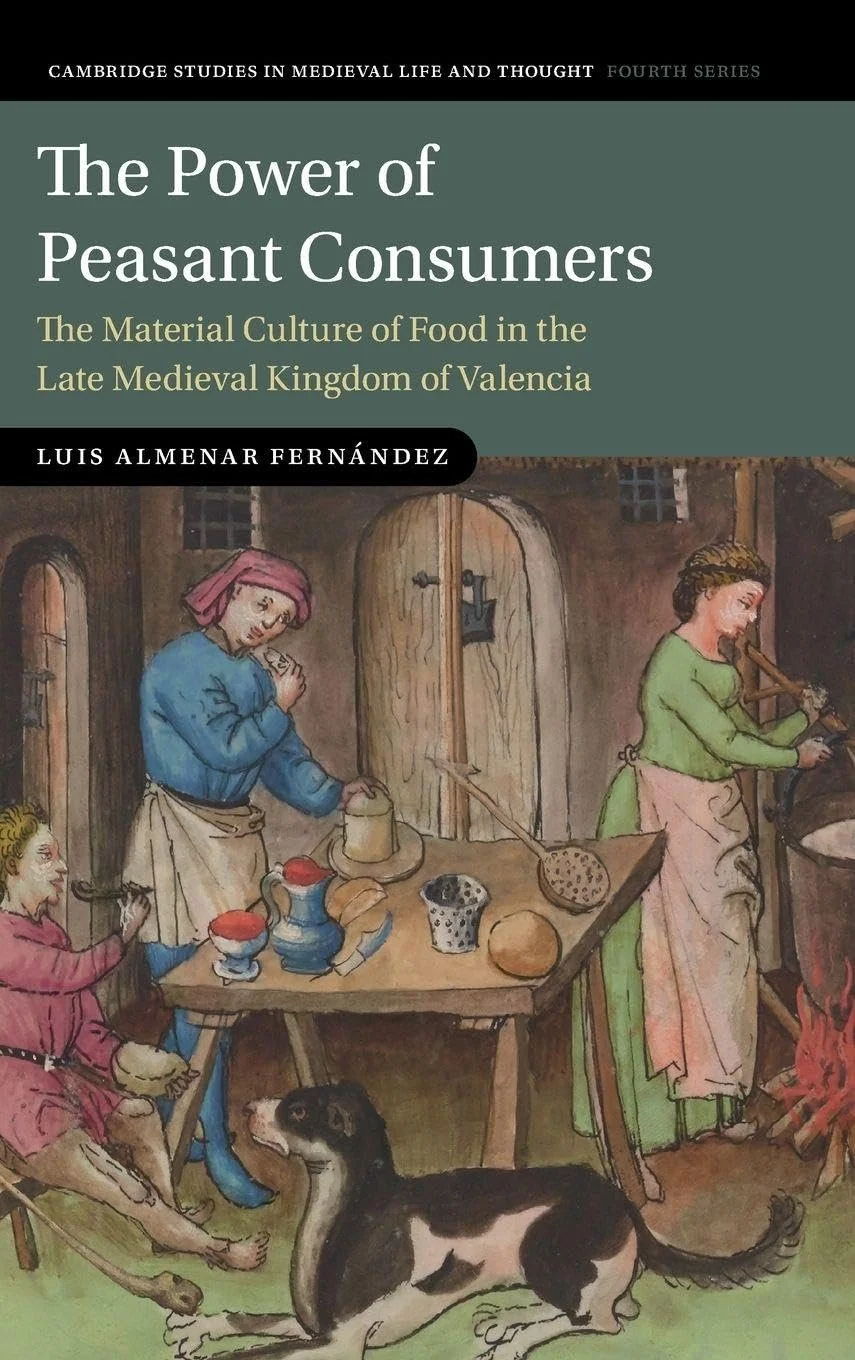
So often, we see the homes – and lives – of peasants represented as drab and empty. But the reality is bright, busy, fashionable, and colourful. This week, Danièle speaks with Luis Almenar Fernández about how peasants stored and cooked their food, how they used food culture to build relationships, and the beautiful, fashionable objects to be found in a medieval home.
-
Danièle Cybulskie:
Hi, everyone, and welcome to episode 347 of The Medieval Podcast. I’m your host, Danièle Cybulskie.
In the past couple of weeks, we’ve talked about the type of objects to be found in a pub and in a royal household. And in this episode, we get to the stuff everyone is always looking for more information about: the everyday objects of peasant life. So, often, we see the homes – and lives – of peasants represented as drab and empty. But the reality is bright, busy, fashionable, and colourful.
This week, I spoke with Dr. Luis Almenar Fernández about the vibrant objects found in peasant kitchens. Luis is Assistant Professor at the University of Valencia, and the author of many chapters and articles on the way peasants spent their money and cooked their food. His new book is The Power of Peasant Consumers: The Material Culture of Food in the Late Medieval Kingdom of Valencia. Our conversation on how peasants stored and cooked their food, how they used food culture to build relationships, and the beautiful, fashionable objects to be found in a medieval home is coming up right after the break. And be sure to stick around to the end because I have two new announcements that I think you might like.
Well, welcome, Luis, to The Medieval Podcast. It's so nice to meet you and I'm excited about this because this is a topic that I think people are going to be so interested in. We're talking about peasants, we're talking about food. It's going to be great. Welcome to The Medieval Podcast.
Luis Almenar Fernández:
Thank you, Danièle, for having me. Yes, I think people might find a lot of interest in peasants. It's a social group that it is not normally studied, but paradoxically, it was most of medieval society. So, I'm very glad that you have invited me to be here and to have the chance to speak more about my Valencian peasants. So, thank-you.
Danièle Cybulskie:
Yes, exactly. I think people are so interested in the lives of everyday people – the people that we would have been back in the day. And anytime that there is good research on this, I want to talk about it. So, for your book, where are we talking about and when are we talking about?
Luis Almenar Fernández:
Let's begin by the “where”. So, we are in the Kingdom of Valencia, which was one of the realms that were placed in the east of Spain – modern Spain – back in the late medieval period. This kingdom was also part of a confederation of polities under the sovereignty of the king of Aragon. And in many books, we will find these terms – these places – under the name of Crown of Aragon. And the Kingdom of Valencia was part of it. So, that's the “where”. It was a very dynamic kingdom back in the later Middle Ages. Just to give you some sense of magnitude, it might have hosted around, I think it's 300,000 inhabitants, being 70% of the population: peasants – like the peasants we explore in this book. And the City of Valencia, actually, which was the capital at the end of the fifteenth century and early sixteenth century, might have hosted 50,000 inhabitants. And that's very important to say because that made of the City of Valencia the largest town in Iberia in that moment – more than many other Castilian or Catalan cities back then. And “when” is the late Middle Ages. So, between the late thirteenth century, I think – I studied the book in the 1380s and I finished in mid fifteenth century. So, it's a key moment because, of course, the kingdom went through many changes. It began, actually, upon the destruction of prior Islamic polities, being basically a frontier land. And in a couple of centuries, it took the lead of the confederation, being the most dynamic and burgeoning economy. So, this is the place and the time: a very dynamic society with their peasants being the main focus of the research that we have here to explore.
Danièle Cybulskie:
Well, if you're going to look at Iberia, you have a whole wide region. Why did you pick Valencia for this? And why did you pick this late in the Middle Ages to look at?
Luis Almenar Fernández:
Well, there are subjective and objective reasons for this. The subjective reason is that I am born and raised in Valencia, so it was a very logical place to me – just to focus on my land. But there are objective reasons, as well. So, the thing is that for this chronology – the late medieval period – we have exceptional sources in the northwestern Mediterranean, and not only Iberia, but particularly in Valencia, we have perhaps some of the richest archives for exploring this period, and particularly for exploring most of society. For most of society, some of the better sources we have are the records of notaries, who were basically scribes with legal authority for many different matters. And in these records, we find documents of many times. We find economic transaction records, let's say. Things like purchases of land, purchases of possessions. But also, we have private law documents, such as last wills and private inventories – which is one of the key sources that we use in this book – which are lists of possessions of deceased individuals. So, those are the reasons. Some of them are more personal, I think, definitely. But others are very, let's say, objective. It is the quality of the sources and the possibilities for exploring well this period. What leads us to explore Valencia.
Danièle Cybulskie:
Well, I've heard this again and again from different scholars – that the Iberian Peninsula, and especially Valencia, has amazing records. So, for people who are coming up in medieval studies – they know some Spanish – Valencia is the place to be. So, looking at these records – you mentioned briefly just now what ones you thought were valuable when you were looking at peasant possessions, especially. And one of these things is inventories. So, what sort of records are you looking at when you're trying to figure out what peasants owned and what they used on the daily?
Luis Almenar Fernández:
Yeah, well, it's important to stress that these inventories are at the heart of this research. And the reason is that, first of all, peasants ordered these inventories. So, the way this worked was that when someone died, then the relatives had the right to order one inventory. And that was an exhaustive list of all the possessions of the decedent, peasants included. So, peasant families were often attending notaries to order these lists. In these inventories, we will find things like the real estates of the deceased, animals, but also all sorts of objects that the peasants possessed. Things like pieces of furniture; things like lighting objects; things, of course, like the tableware we explore in the book; cooking items; of course, their dressing, which is very important for other purposes. So, it is these exceptional sources that allow us to explore the material culture of peasants. And I'd like to say that perhaps material culture is a term that would appeal more to an archaeological approach. But in fact, what I use in this book is a quantitative and qualitative approach to these documents. And we have hundreds of these inventories of peasants. I think I studied more than three hundred peasant inventories, particularly, in this book. And what I do is to cross-reference the findings of the written documents with the archaeological record, the visual evidence, and also even contemporary literature. So, it is a book that appeals to many audiences. And also, I think that was something necessary because a one-side approach from a single source would have never worked well. We need to have all the pieces of the puzzle to understand well how peasants lived in their everyday life.
Danièle Cybulskie:
Yes, for people who think that medieval studies means getting away from spreadsheets, that's not the case, because putting in everything in the spreadsheet helps you see these longer trends, which we're going to see later on when we start talking about how things changed over time. So, spreadsheets were really your friend for this research, weren't they?
Luis Almenar Fernández:
Yeah, definitely.
Danièle Cybulskie:
Okay, so you decided specifically to look at food. When it comes to this research, when it comes to learning about peasants, why did you choose food as the place where you wanted to focus?
Luis Almenar Fernández:
Well, that was a necessary starting point because these inventories are so descriptive. There is so much stuff there to study. So, doing just a global approach to all possessions – I very early found that was just impossible. It was just too much work, with Excel files, and spreadsheets, and everything. So, at the end I just decided to pick up one range of possessions, and I found that food-related ones represented just most of medieval materiality for ordinary people, alongside perhaps the dressing. And it was also a convenient indicator because it was very sensitive. So, for the poorest people, they would still need to have some food-related objects, but they would not be the most expensive one. They would be not very luxurious, particularly. Not very specialized. But for those peasants that were more affluent, they were better off. They would, of course, have some luxuries, some specialization, and everything. So, that's why I thought of these objects as convenient indicators. So, they are not of interest just as a topic – as a topic in itself – but also because of their way to illuminate different aspects of the living conditions of the peasantry.
Danièle Cybulskie:
I think that you're absolutely right on this, and this is one of the reasons I was really interested in this book. So, let's start to get into some of these material possessions. A place where you start is with storage containers. And this is so interesting, especially from, I think, this vantage point – the modern world – where we have all these plastic containers and no one would actually ever inventory how many plastic containers you have. But back in the day, things were a little bit different. So, tell us about the storage containers that you find in these inventories after someone has died.
Luis Almenar Fernández:
Sure. Effectively, as you said, our material life is very different from the material life of our forefathers. In fact, storage containers are something that today are minute as compared to many other things that we have and we enjoy. But, particularly for peasants, storage containers were very important because it is by means of storage containers that they could, of course, store the agricultural produce to avoid the impact of a poor harvest. It was also the way to ensure something to be sold in the market – to get cash, and then to pay the rent to your lord, to the king, whatever. So, peasants just needed storage containers, and these were the first step of foodstuffs within the peasant household. The range of objects was just vast, was diverse. But in general terms, we can speak of two different sets of storage containers, or items. First ones in Valencia were large, clay amphorae or large, clay jars. And this might be seen as something strange because I found that in many – or in most of Europe – normally, the storage container by definition is the barrel – particularly a wooden barrel – for wine, or even water. But what we find here, because of the importance of the local ceramic production, is that Valencian peasants turned naturally to these large, clay amphorae for olive oil; for their wine; also, for the water they would drink within the household. They would also have flagons of different sizes, some of them for the same liquids I've just mentioned. But also, some of these flagons were, for instance, to keep and to sell honey, which was, again, an agricultural produce. Very important. It was the only sweetener for most of ordinary people. And that would be one set of these storage containers. The other one are baskets and sacks. And here I devoted a lot of work because it was very hard to find reference to these minute items in things like the archaeological record. But inventories show, really, a constellation of baskets and sacks of all sorts of textile fibers, some of them natural, some of them other kinds. And peasants would use these sacks and baskets for things like keeping their fruits, keeping bread, keeping the grounded flour that they would get from the mills. Also, for beans and all sort of other cereals. So, that's, like, the first step of foodstuffs within the peasant household. This range of storage containers that, actually, it is fair to say that until very recent times, in some rural societies – also here in Spain, until the mid-1950s or something like that, mid-twentieth century – we would still find many of these. But, of course, right now in a postindustrial society, it would be very hard to still identify them.
Danièle Cybulskie:
Well, I want to stay with this topic for a minute because I think there – this is some of the most interesting stuff that you have in the book is these actual material objects. So, I think when people picture an amphora, they're picturing something from Roman times and people are holding it in one hand or two hands, and it's sort of that thing that looks like a vase, and it might have wine in it, or something like this. But the ones that you came across aren't just ones that you could pick up with one hand or two hands. We're talking gigantic amphorae. Right? How big did these get?
Luis Almenar Fernández:
Yeah, we are speaking about gigantic amphorae. So, according to inventories, these were containers with capacity of hundreds of litres. We know through iconography – and also the archaeological record – that, in fact, we are speaking about heavy, large items that would probably occupy a space within the household and would remain there, perhaps forever, and for generations. Of course, better-off peasants would have cellars, and then they would have more room for these objects. But for many peasants, the presence of these objects within their households – or within their homes – just would occupy a lot of space. So, yeah, we have to think of something extremely big. As I said, hundreds of litres. I think that the largest ones I've identified through the written documents are three hundred litres. It's just a lot. It's much more than – I mean, of course, we need to understand that many of these produce is not just for the peasants, themselves, no? It's not just to drink in all these three hundred litres of wine. It's also to sell it in the market, of course. So, with these storage containers and their huge capacity, we always see this tension between the market and the household consumption.
Danièle Cybulskie:
Yes, exactly. And so, having something this big in your house means it's not moving around – as you're saying. It becomes part of the furniture. So, you're adding wine to it, or you're taking wine from it. And you had a really interesting illustration in the book from the Wedding at Cana, which has these huge amphorae in it, so that you can see how people might have been using that. I thought that was a really clever way of accessing what these might have looked like, because this is – as you're saying – it's made of clay. It's not likely to last to this moment. So, how do you find these? And so, I thought that picture that you had really showed me really well how these might have worked at such big sizes.
Luis Almenar Fernández:
Definitely. I like very much that picture you've just mentioned, because there we can see, in fact, the functioning of the three items. So, we see a large clay amphora, we see a flagon which is used to throw the content – which was water, because it's the Wedding at Cana. It was the water inside the amphora. And then, back at the bottom, there is a hole, and then the water comes as wine into a jug. That would be, of course, to serve – to pour it in cups in a table. So, yeah, it's a very nice picture because we see how would be the medieval functioning of all the three… the three items.
Danièle Cybulskie:
Well, and it was also a good illustration to show us how people stored water in their houses, because they didn't just run to the well the second they needed water. They would often need to have it in the house, so that they could access it regularly. They wouldn't have to run to the well all the time. And one of the things that you noticed in looking at these inventories is that sometimes the water containers don't really show up.
Luis Almenar Fernández:
Right, exactly. Yeah. In fact, water in the 99% of cases would not appear in inventories. We would find some occasional reference to amphorae for water. They would say like that, and they would be written that way in the inventory. But because water was not an economic product back then – it could not be bought, it could not be sold – therefore, it would not be listed in the inventory of these possessions. Because, of course, the purpose of these lists is to record possessions that were going to be inherited by the relatives of the decedent. That's why. But, of course, we need to imagine water stored in these large containers. And these occasional references to some amphorae for water is what gave me the key to find out where was water present in the houses of peasants.
Danièle Cybulskie:
Well, in your analysis, you get pretty in depth into talking about how they might have had a clay stopper, or a cork stopper, to keep them closed. And I think one of the things that stood out to me in the book is that somebody had covered their amphora – and I don't remember what was in it – but they covered it with a plate. And that was very relatable, I thought.
Luis Almenar Fernández:
Exactly. Yeah, yeah, yeah. That's actually one of the richness of these inventories is just that they are extremely descriptive and – yeah, exactly. There was one plate used as a lid for one of these large amphorae. And it's a very casual picture that actually we can see how we are not very different from our medieval counterparts.
Danièle Cybulskie:
Right. If you had a notary come into your house at this moment, what sort of interesting configurations would they find, right?
Luis Almenar Fernández:
Right.
Danièle Cybulskie:
Well, I want to get into baskets and sacks for a second, and I hope that the listeners are as interested as I am, because I think that these ordinary details are so fascinating and really tell us a lot about people. And one of the things that you pointed out – and I thought it was really great that you pointed it out – is that even something like the sack that you keep your beans in, it doesn't have to be super plain in that some of the weaves that you found, they would say, this is a striped one. So, it could look really, really nice. It doesn't have to look like just this potato sack that you see in the movies, right?
Luis Almenar Fernández:
That's a very good observation. Even ordinary, everyday, purely functional objects could display some sort of decoration. We see it in small sacks for flour, like the ones you've just mentioned. But I'm also thinking of things like flagons, things like clay jars. We know that even large clay jars, or amphorae, might be provided with some very rudimentary decoration. And it's just not like the potato sack you just mentioned, effectively. And it makes all the sense because things like the jars, or the clay amphorae, are going to be in your house perhaps forever, so you are going to be seeing them. And I think that it speaks a lot about peasants – this need to provide some sort of decoration just to make the object look nice – or nicer – for an observational viewpoint. So, yeah, even things like flagons. Flagons, as well. In fact, flagons tended to be more decorative than things like amphorae. There are very well-studied series of flagons by archaeologists. But it also – in all cases, we are dealing with very fundamental, basic decoration.
Danièle Cybulskie:
Yes, well, I'm always saying to people that just because you're a peasant doesn't mean that your house looks boring, or drab, or anything like that. People always decorate to the best of their ability – to the best of their economic ability. Or even, you could just make paint out of something pretty simple, so that we don't need to picture these peasant homes as being really boring to look at, right?
Luis Almenar Fernández:
Yeah. In fact, one of my obsessions with the book is to think of peasants just like we would do with ourselves. I just do not believe in this perception of movies of the peasant house as being smelly, as being dirty. Of course we should imagine some dirtiness in a medieval house, but generally speaking. But I don't think that image is just 100% fair. What sources reveal us is that peasants had a concern with things like decoration – as we just have commented – but also with things like the smell of the houses. In fact, one of the findings of the book is the presence of some aromatic waters – like the medieval air fresheners – in the houses of some of these peasants. And I think that it breaks lots of prejudices that contemporary society might have about our medieval forefathers.
Danièle Cybulskie:
Yes, I love that. I love that detail about having rose water – or, I think, lavender water – so that you could have it in your house, making your house smell nice. And I can't wait to get to the decorations that we see on the table. But I'm trying to follow a logical progression, here. So, we've gone from storage. Let's talk to cooking. What sort of cooking implements do people have that you found?
Luis Almenar Fernández:
Well, we might have the image of just a cauldron. Again, it is what we would see in the movies. In fact, our image of the green-skinned witch cooking in a large cauldron comes basically from our prejudices against medieval peasant cuisine. But, in fact, what we see is a world of cuisine for peasants in which things like just enjoying the flavour of food would occur. For instance, we see things like frying pans, grills for roasting fish, also iron spits for meat. And also, just a set of different objects concerned with flavour. Things like mortars to make spices, things like graters for cheese. Cheese graters – those existed also in medieval Valencia. So, again, there was a wide range of techniques going on in the peasant house.
Danièle Cybulskie:
Well, the cheese graters were one of my favorite details, as well, because I knew people were eating cheese and I was picturing it sort of being sliced. But actually having these cheese graters in the inventories was amazing because you're seeing the ways in which people are adding it to their food. They're not just, like, chopping it up and putting the little cubes in. They're actually grating it so that it melts in better, probably. And so, to see this sort of detail really tells you a lot about how people are cooking at the time.
Luis Almenar Fernández:
Yeah, it also tells a lot about cheese and dairy for medieval peasants. We need to remember that it was one of the ways to preserve and to keep milk, with all its nutritional properties. And also, as a source of protein, very importantly. I guess that at some point you might want to speak about feeding and the diet of the peasantry, which is the other side of the coin of this book. But it's very important to say, also, that proteins had a more important presence in the diet of peasants than many times we think. We tend to believe just the peasants ate vegetables, stew, soups, porridge, things like that – bread. But in actual fact, they also had access to things like eggs, pork, meat in different ways, and fish. And of course, also to cheese. Cheese was an important source of protein.
Danièle Cybulskie:
Yeah. Yeah. And it's a delicious source of protein, as well.
Luis Almenar Fernández:
It is a delicious source. I agree.
Danièle Cybulskie:
Well, one of the things that we're getting at here, I think is so important, as well – and I want to touch on – is that if people have an iron spit for their hearth, they've invested in it, which means that they're going to have – or they're planning to have – enough meat that it's worth the investment. Which gives you the idea that they are eating meat more often than we may have thought, which is something that you're getting at here. I think when people think about protein, they often think about fish. But having your iron spit in your hearth means that you're cooking things like pork, and maybe chicken, as well.
Luis Almenar Fernández:
Yeah, that's it. Normally, scholars have thought of iron spits as intended for chicken, as just mentioned. And the thing is that that kind of poultry meat was more expensive in the medieval period. That's why normally, we make a relationship between poultry consumption and, actually, the wealthier. But what we see effectively in inventories is that many iron spits were intended for pork meat. And of course, pork was perhaps the most affordable of the meats back then. So, it changes, as you say, our conception of meat consumption. And of course, you need to invest a lot in not only the iron spit, but also in fuel, in the… in the wood you are going to use to roast the meat every time. Because if you set a cauldron on a fireplace, you of course need to spend a lot of wood, as well. But at the same time, you are producing more food because you have a stew – something that is warm, and is going to last more time. But yeah, with iron spits, we again see how peasants wanted to enjoy their food, and not just to be fed.
Danièle Cybulskie:
Yes, exactly. They wanted to enjoy their food. That's precisely it. Because so many people, I think, have that idea of rotten meats, and things like that, right? But people are enjoying their food. And just because it's simple doesn't mean it's not delicious. You could do so many things with the same ingredients. And one of the really interesting things that you found that I thought was so great, as well, is the fact that you also found clay casserole dishes – what we might call a casserole dish – that you'd stick in the embers and totally cook in a different way.
Luis Almenar Fernández:
Exactly. Things like small clay pots, or small casseroles – we know through archaeology – that were placed directly on embers. Again, that provided a different way of cooking. A more progressive, slow way of cooking. Still, in Spain – and in many southern European countries – we use objects like that to do traditional stews, which are just part of our cuisine. Here in Valencia, we have a very well-known rice that is made in the oven. And again, we use earthen casseroles, and it would not be the same without that precise item. And it probably comes from this medieval practice – although rice was a crop that gained popularity in Valencia centuries later. But yeah, exactly. Everything changed depending on the object. So, the flavour, the sensorial experience you got was not the same in an iron spit than in a cauldron, than, effectively, in a casserole. All these things showed, again, this preoccupation for flavour and for making not only food, but actually a meal. Something to be enjoyed. Something nice to have.
Danièle Cybulskie:
Yes. And you found that this is why spreadsheets are so useful. There was a range in the way that people were cooking. So, you found sort of some people over here were preferring one way of cooking, it seems, from their equipment. Maybe some people over here were preferring something different. And so, looking at this in a statistic fashion showed you some interesting patterns, right?
Luis Almenar Fernández:
Yeah, well, that was the hard part of the work because of course, even today, different families cook differently. It's just the way it is, isn't it? But yeah, back then I just tried to find… seems like regional differences. And it was hard to find those, but I just felt that those families in the north of the Kingdom of Valencia used a range of objects that – let's say – they wanted to cook more on cauldrons, on things like casseroles. While in the mid-south, central areas of the… of the realm, they turned more to open-based objects – open-mouth objects. Things like pans, things like iron spits, things like that. Even grills for fish. Everything would be present in all places. But I just found more centrality of these cauldrons in the north. And I just thought of a climatic reason because, of course, these were the coldest areas of the realm, so it made sense to me. And also, in those places, I also found that clay, for instance, as a material – pottery – was less present in general terms, also in tableware. And I just thought that was something to do with the production centers, because those were placed basically in the centre of the kingdom. And I assumed that the transportation costs would raise the prices of these objects in the north, and then they will have a material culture of food that effectively combined those things that were, let's say, environmental with those that were economic constraints. So, it is a complex matter. In fact, as you can see, the regional cuisines that we might even find among peasants, because in the same kingdom we find different cuisines. So, we have to imagine the medieval world as full of different local varieties of cuisines.
Danièle Cybulskie:
Yes, well – and one of the things that you seem to be sort of at pains to make sure that we understood – and I think this is, again, so valuable – is that just because people are peasants doesn't mean they didn't want to put in that work. That hours-long effort of making something that tastes really good. So, when I'm thinking about putting casseroles in embers or something – that's something that you do and then by the end of the day it's going to taste really good. And so, the effort that people are putting in was something that you really wanted to stress. Why was that?
Luis Almenar Fernández:
Well, I wanted to stress it, and I also wanted to stress that it was medieval women who were behind these things. That had these actions. Medieval women were actually very busy people. Also, the peasant women, because they had to take care of all the household chores. They had to go to the fields to work just as another peasant, and they were involved in other businesses and stuff. So, effectively, women are behind many of the changes we find here. And I wanted to stress this because, of course, many people today would think of our grandmothers as being many hours in our kitchens, cooking for us. And I think that here with the peasants, we are seeing the same. So, when we see this preoccupation with flavour, what we are seeing in human terms is the preoccupation of women – as the mother of the house; as responsible for the family welfare; being preoccupied for their children, their husband, and the people in the house to be well-fed and to enjoy with their [labour]. So, that's one of the reasons why I wanted to stress it. So, when we speak about all this effort, it's not just something, let's say, economic or economical, it is something with a human face. It is people who invested their time and effort in this. And even among the peasantry, again, we have this image of – a negative image, actually, which is the one I tried to break in the book – of peasant cuisine. Well, I think that if peasant cuisine was positive, it was basically because of the women peasants that were behind these actions.
Danièle Cybulskie:
Yes, absolutely. And there was a really nice moment that you had in the book, as well, where you were envisioning women who had spent time creating bread at home, kneading it, and then bringing it to the bakery. Because while people might have had hearths on which you would cook on a spit or cauldron – whatever – they mostly baked their bread at a communal oven. A town oven. And you picture this as a place – from your research – where people were having a social life; where women were speaking to each other, getting news, and even fighting, as well.
Luis Almenar Fernández:
Yeah, exactly. That was a very nice finding. Effectively, as I said, peasant women were very busy with peasant cuisine, among other actions. And, yeah, they were in charge of doing things like fetching water, of course, cleaning in the rivers, but also making bread. And,as you've seen in the book, making bread was something very different from our modern approach to bread today. We just go to a place and buy it, and that's it. But in the Middle Ages, medieval women had to bring the cereal to the mills. The meal was grinded, then the flour was mixed with water within the household in large kneading troughs. Then we got the ball – the dough – and then you go with the dough to a public oven. And that's why public ovens were places of female sociability. So, particularly in the book, I speak about also conflicts among women because of the queue – or the line – just to cook the bread in the oven. And it's very suggestive, because I remember that comes from a judicial record from the thirteenth century, actually from a village called Alcoi, a town in the south – no, it's a village, more or less – in the mid-south of the kingdom. And I remember that the twelve witnesses of the process, they all were women, because women were those present there. Adult women, and also children, which is very interesting. Again, not only of female work, but also the involvement of children – of the kids – in all these actions.
Danièle Cybulskie:
Yes, because you need to learn this stuff. Not only do you need to help, but you need to learn it for later on when you have your own household.
Luis Almenar Fernández:
That's it.
Danièle Cybulskie:
This is so interesting, but we need to get to the tableware because – I mean, for purposes of time and because this is really interesting stuff. So, what did you find in terms of tableware in these inventories?
Luis Almenar Fernández:
Well, in terms of tableware, the first thing to say is that the approach to things like tableware and cutlery was very different in the medieval period. People ate with their hands, and that was not something rude, or something primitive. In fact, it was done also by kings, queens, and nobles. So, we need to understand that was something cultural that was present in all social ranks. So, basically, peasants ate with their hands. The table often was provided with communal objects, such as collective plates from which to get pieces of meat, or other foodstuffs. The only individual object was actually the bowls. Bowls were the place to drink soups, but also to drink just things like wine and water. That's why we don't see – and that's another finding – cups in peasant inventories. It's very strange even to find cups in the inventories of wealthier individuals. Cups seems to be something – an addition to medieval material culture of the wealthier towards the fifteenth century. So, the tableware effectively was very important for this reason, because these bowls and these plates were, in fact, most of the medieval table service items for the peasantry. So, what we see, effectively, is that tableware went from being made out of wood to be made out of ceramics. That's one of the big findings of the book. And in that change, peasants left aside what was functional wooden wares, and they began to be consumers of fashionable ceramics. So, we see ceramics of many styles. And again, this speaks about the preoccupation with aesthetics, but also with taste, because, of course, ceramics were provided with a wide range of different motifs. And – not my inventories, but archaeology – it is the discipline that allow us to cross-reference both resources and see which were the motifs that that were of the taste of many medieval peasants.
Danièle Cybulskie:
Well, let's talk about this because I think this is really interesting. So, what sort of motifs did you find? Looking at the archaeological records especially, but when people are describing what sort of bowl they might have found in the inventory.
Luis Almenar Fernández:
So basically, I must say that inventories are not very descriptive of the decoration, but it is cross-referencing with archaeology when I find what would be the style and the motifs. So, what I see is that most ceramics – the ceramics that are behind the increasing consumption, ceramic consumption by peasants – are blue [and] white ceramics. That's the technical term. And the motifs we see are diverse. Some of them are just things like flowers and animals. Some of them are just schematic without any meaning that we can really grasp. But others were very interesting. For instance, even if most of my peasants are basically Christian peasants, we see that they developed admiration and respect for the Muslim tradition because we see things like eight-point stars, which came from the North African tradition. We also see the Oms, or Tree of Life, that came from the Persian tradition. And in combination with these Islamic motifs, we also see things that were profoundly rooted in the warrior, feudal tradition of a medieval kingdom. So, for instance, we see things like fortresses, castle – and a very interesting finding are coat of arms of the kings of Aragon. That was a very nice finding because I think that this speaks a lot of some sort of patriotism that these peasants might have. And again, this breaks with our image of peasants as passive entities, because here we see them even with political ideas – or at least with some sort of loyalty, or a will to express their loyalty to their kings.
Danièle Cybulskie:
Yes. Well, there is so much that is interesting, as you're saying, about these patterns that you might find in ceramics, especially because… I'm trying to think of which scholars have worked on it. I think Geraldine Heng, among others, have made that connection between that blue and white ceramic with the Middle East, and with the Far East as well. These patterns coming from China and the Middle East. And so, this sort of trend in ceramics, and the way that people are buying these specific patterns that are fashionable, I think is so interesting. But the second point that you're making, where a regular peasant is going to get something that says, I am from here, this is my town, this is my kingdom. I think it's just a wonderful little insight into the way that people are thinking.
Luis Almenar Fernández:
Yeah, it just breaks a lot of ideas of our way of thinking of medieval peasants.
Danièle Cybulskie:
Yes. So, you noticed that people were starting to buy more ceramics and they were actually starting to buy more glass, as well. What's going on here?
Luis Almenar Fernández:
Well, I call this the revolution in semi-durable items. So, basically this is a term that appeals to both, in my book – to ceramics and glass – because these are semi-durable objects. So, that means that they are not like a durable object, like for instance, a cauldron, or a large clay jar, as we mentioned. These are not also perishable objects, or foodstuffs, things like that. We are speaking about things that are highly breakable, fashion-sensitive, and highly affordable for peasants. And that's very important for them because that means that they can replace them as they just don't want to use them anymore. They can afford that because they simply go out of fashion. So, these items are very important in scholarship. We find them over and over again in similar processes of material change in other historiographical epochs. Some scholars speak about them as semi-luxuries. Some of them speak about of them as “populuxe” items – so, objects of popular luxury. And what they appeal, again, as to this possibility of expressing luxurious meanings. So, to me, these are very important because we see clearly a rise in the consumption of these objects. At certain point in the fourteenth century, when peasants had higher disposable incomes, they wanted to invest it in these objects. And in so doing, they were enriching their material culture. And they are revealing a preoccupation for making their house just look good, as we were saying before.
Danièle Cybulskie:
Yes. And this is something that I think is so interesting and so, I think, common to human nature. You start to get a little bit more disposable income, and where do you put it? You put it into your home and making your home look nice. Because you have to look at this – as you were saying earlier – you have to look at this home all the time. So, why not make it look as good as you can make it look?
Luis Almenar Fernández:
Yeah. And it is the same between ceramics and glass. Glass, again, was a highly sensitive item, or range of items. We're speaking here about glass bottles. So, not things like glass cups, but that the main consumer object we see in the peasant houses are glass bottles. Thanks to the malleability of the material, glass makers were capable of doing glass of different shapes. Something – for instance, the body being with the shape of a chestnut, as it is stressed in one of these inventories. Some of these bodies could be provided with the shape of a fish, for instance. And the purpose of these bottles was to contain things like wine, olive oil, but mostly aromatic waters as we mentioned earlier. Something like water of roses. And it's very interesting because these were partly intending not only to provide aroma to the household or to the home, they were also an ingredient. Even today, water of roses is used in some Arabic desserts. And we think that, again, these were used with the same purposes back then in the Middle Ages. We have, for instance, different books of cuisine – books of recipes – that were written in the late medieval period in different places of the Crown of Aragon, in Catalonia particularly. And we see how this water of roses was used by the nobility for their desserts. So, why not thinking that the peasants were just doing something similar with their water of roses?
Danièle Cybulskie:
That's the thing, is that roses are not exclusive to the nobility. They're things that you can find, and you can create things like rose water. One of the best chocolates I ever had was made with roses. I found it in The Shambles, in York. So, medieval part of York. So, roses are delicious. Okay, so we're talking about tableware. And one of the things that you found in sort of… in terms of glazes that I'd never heard of was lustreware. Tell us about lustreware. What's this?
Luis Almenar Fernández:
Lusterware is a technical term for what historically one would call maiolica. Maiolica were Italian lustreware productions that, in fact, were imitating the Valencian ones. They were called maiolica because they were distributed through the island of Mallorca. That's where the term came from. So, basically, these are glazed ceramics that shine like gold. That would be the best description. It is a technique that is rooted in the high Middle Ages in the Islamic world. There was an important transference of this technology in Iberia precisely because of the Muslim past. And at some point in early fourteenth century, some Valencian lords, because they had Muslim serfs, they began to produce, let's say, maiolica – or lustrewares – there. But at the beginning, these were just luxury products. They were basically in the houses of nobles, and of wealthier urban families. But what we see, again, is that since Valencian peasants got more disposable incomes, they were willing also to invest in purchasing these lustrewares. So, we have very nice examples, there, of Valencian families having, for instance, platters of lustreware being hung from their walls, and things like that. So, it's a minority of peasants – probably the better-off. But again, we see how this particular, very exclusive item ended up also in the houses of some of the rural population.
Danièle Cybulskie:
I love this because it really sort of speaks to fashion, and speaks to the way that some people might want to impress their neighbours, right? You might have the very classy blue and white ceramics, or you might have the really shiny ones that look like gold. Still ceramic, still affordable, but there it is, looking beautiful in your house. And I absolutely love that image.
Luis Almenar Fernández:
Yeah. In fact, you've just mentioned one thing is the – well, the intention. Why would someone buy these objects, these lustrewares, to create a good impression for your neighbours? And I think that here we are speaking about representation within the house, within the home. I provide some evidence of peasants having guests and visitors in the house for various reasons. And here, what I wanted to do was to stress that the peasant home was also a place to do businesses. It was also a place where peasants could agree, with other peasants, things like the purchase of a land; to arrange a marriage; also, things like constitute a dowry, which was very important for peasant women. And in that context, what we will have is peasants being surrounded by things like these ceramics and this glass. So, it is absolutely logical that they wanted to unfold the honour and prestige of their families, or just to show off by showing their taste with these new products that were fashionable since the late fourteenth century.
Danièle Cybulskie:
Yes. And I think that that idea of display that you're talking about is so correct, in that you have people coming in, and they are going to make judgments about your home. And sometimes that's a very important thing – to manage how people are seeing you, how people are seeing your family. And one of the things I thought was really interesting, as well, is that fashionable ceramics actually go as far as those kneading troughs that you're talking about for making bread. So, if you’re making bread sort of socially. Maybe you're having someone over and they're also making bread with you, or you're just making it for yourself. People also cared about beauty when it comes to these really functional objects, like a kneading trough.
Luis Almenar Fernández:
Yeah. In the end, there are many things that we just… unknown about peasants. For instance, we find, as you just said, these kneading troughs being highly decorated. But also, I found reference to things like lustrewares in the bedroom. So, why in the bedroom? Is it because people was going to enter into the bedroom at some point, for instance, when someone was ill, or a woman was pregnant? Or is it just because peasants wanted to enjoy the sight of seeing some lustrewares before sleeping?
Danièle Cybulskie:
Yeah, because it doesn't have to be just about showing off. And I think that that is a really critical distinction, in that when we talk about peasants – or when people have talked about peasants, or people who ever want to make themselves look better – people think about it being to show off to other people. And really, it can be so personal. You just want to look at that object because it's beautiful, or you want to wear this thing because it's beautiful. It doesn't have to be about showing off. And that's one of the things that you get at, right at the end of the book, talking about the reasons why people might want to have beautiful objects around them. And people have assumed – I think, especially in that sort of nineteenth-century, really sort of snobby way – that people are making their objects beautiful in their home so that they can emulate the nobility. And you're kind of critical of that. And I agree with you. I don't think it's just about emulating the nobility.
Luis Almenar Fernández:
Yeah, I think it's just so naïve to say that peasants want it to be like their nobles. I mean, emulation, imitating elites – it's something that… it’s still very present today. I think we just do not need to deny it. It might be one of the driving forces behind many of these changes. But at the same time, as I said, I'm just… I have the convention that peasants were people with their own ideas and aspirations. So, one of my obsessions at the end of the book was to discuss emulation, as you've seen, and to discuss it with the concept of assimilation. So, not just the idea that peasants acquired things that bore resemblance to those of elites, but also, I wanted to explore the ways in which peasants could… being original, and could create their own culture. For instance, I remember the case of the display of these tablewares. So, what we see, for instance, is that in towns and in courts – in noble courts – a way of displaying tableware was to set them in objects that were pieces of furniture. In cases – in things like that. But when we see peasants, we don't see that. We see that they were hanging their tableware directly from their walls. But paradoxically, that practice is not present in towns. So, there, what we see is that peasants are adapting, perhaps, something coming from elites, but what they are producing is new. So, they are again making their own material culture and for their own purposes. So, there, what I wanted to express is the degree of innovation and originality that peasants could unfold. Again, this leads us to perhaps one of the key arguments of the book, and it’s that we need to think of peasants as active people: a social group with an agency; a social group with ideas; and a social group that, because it was the most of the population in all medieval countries, should be considered with higher dignity, perhaps, when stressing their role as historical actors.
Danièle Cybulskie:
Yes, I am 100% on board with you about this, because obviously these are people and they have their own thoughts and ideas. And as we come to the end of our time – I think we could talk about this for hours – but as we come to the end of our time, your book is actually called The Power of Peasant Consumers. So, as we finish, why did you call it that? And what do you want to tell people about peasant consumers and their power?
Luis Almenar Fernández:
Well, I wanted to stress the agency of peasants, because I think that many of the lay medieval industries we see are basically the result of the aggregated demand of a huge number of peasant families that, because of their rising disposable income, were willing to spend their money on these new objects. Things like the ceramic industry, the glass industry had been a luxury industry until a certain point in the fourteenth century. But since peasants were gaining more purchasing power, they were investing capital into these industries, and these industries transformed things like the ceramic industry. The glassware industry was different since that moment. So, perhaps the origin was not the peasantry – perhaps it had different origins, these particular industries – but it was the demand by peasants, just by general people, what made them sustainable, and what consolidated them. So, with this, I wanted to stress that, in fact, one by one, consumers are nothing, but all together, we are the driving force of an economy. So, that's the reason of the title. The Power of Peasant Consumers appeals to the capability of transforming the economy, as my Valencian peasants, I think, did in the end of the late medieval period.
Danièle Cybulskie:
Well, I love that, and I think that is a wonderful way to wrap up our conversation. So, thank-you so much, Luis, for being here. It's been so great to talk to you. Thanks for being here.
Luis Almenar Fernández:
Thanks to you, Danièle. It was good fun. Thank-you very much.
Danièle Cybulskie:
To find out more about Luis’ work, check out his page at academia.edu. His new book is The Power of Peasant Consumers: The Material Culture of Food in the Late Medieval Kingdom of Valencia.
Thinking about monastic wisdom last week brought me back to The Rule of St. Benedict, and some of the wisdom he imparts to his communities. Much of it is pretty strict, not to mention very specific to the monastery. But St. Benedict says something that I think is a good reminder. In a section on how abbots should behave, St. Benedict says, “Let him hate vices but love the brothers.” It’s a deceptively powerful little sentence that encompasses both “don’t hate the player; hate the game” and you can love people and not tolerate disrespect. I think we’re often encouraged to see things in black-and-white these days because it works really well for the algorithm. But it’s important to remember, sometimes, that we can hold enough space to love others and ourselves at the same time.
This comes from my go-to translation of The Rule of St. Benedict by Bruce L. Venarde.
Speaking of both love and the amazing objects you can find in a fashionable kitchen, I am happy to announce that finally I’ve put together some Medieval Podcast merch just for you – and I have to say, the mugs are looking particularly snazzy. So, if you’d like to share your love and support for the podcast in a whole new way, you can visit medievalpocast.com and click shop to find all sorts of really cool designs, on stickers, t-shirts, mugs, tote bags, hats, and more. Nothing says fashion like spreading the love of medieval history. So, check it out at medievalpodcast.com and click shop at the top.
And I have one more super cool announcement for you. Before now, if you wanted to listen to the podcast ad-free, you had to do it from the Patreon app, which I know hasn’t been super convenient for my commuter friends out there. But this week, I’ve put in a little time and elbow grease, and built a dedicated, ad-free RSS feed. What does that mean in plain English? It means that patrons can now listen to The Medieval Podcast ad-free and four days early each week on their favourite podcasting platform. Yep, it’s now ad-free and on the go. For all the details, check out patreon.com/themedievalpodcast.
For the show notes on this episode, a transcript, a collection of the books featured on The Medieval Podcast, and now a whole lot more, please visit medievalpodcast.com. You can find me, Danièle Cybulskie, on social media @5MinMedievalist.
Our music is by Christian Overton.
Thanks for listening, and have yourself a spectacular day.