Medieval Silesia with Sébastien Rossignol




The Medieval Podcast uses affiliate links
Episode 329
One of the best things about podcasting on all things medieval is the opportunity to learn about lesser-known places – especially when those places are full of examples of long-ago thinking on cross-cultural contact, integration, and immigration. So, today, we’re taking a trip to central Europe to learn all about Silesia. This week, Danièle speaks with Sébastien Rossignol about how this region navigated a mix of cultures and languages, its proactive immigration policies, and its own changing identity.
-
Danièle Cybulskie:
Hi everyone, and welcome to episode 329 of The Medieval Podcast. I'm your host, Danièle Cybulskie.
One of the best things about hosting this podcast is learning about places I don't know much about, especially when those places are full of examples of long-ago thinking on cross-cultural contact, integration, and immigration. So, today we're taking a trip to Central Europe to learn all about Silesia.
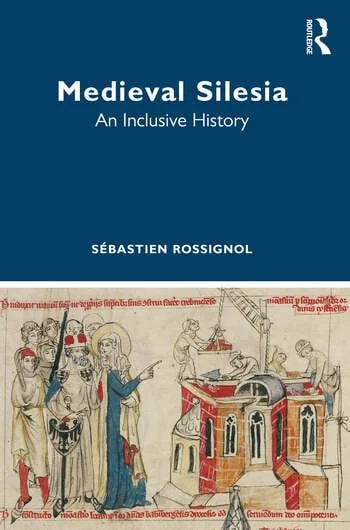
This week, I spoke with Dr. Sébastien Rossignol about the fascinating region that is Silesia. Sébastien is Associate Professor of Medieval European History at Memorial University of Newfoundland and Labrador, and the author of Silesia and Pomerania, as well as Medieval East, Central, and Eastern Europe alongside Medieval Podcast alumnus Florin Curta. His new book is Medieval Silesia: An Inclusive History. Our conversation on how this region navigated a mix of cultures and languages, its proactive policies on immigration, and its own changing identity is coming up right after this.
Well, welcome, Sébastien. It's so nice to meet you. Even though we are both in the Canadian Society of Medievalists – at least, I might need to renew my membership – we have never met before, so it's so nice to meet you.
Sébastien Rossignol:
Thank you, Danièle, for inviting me, giving me an opportunity to talk about medieval Silesia to your listeners.
Danièle Cybulskie:
Yes. So, the reason that you're on here is that this is a pretty niche topic. I think there are many medievalists who've never heard of Silesia. So, just ground this for us. When we're talking about this particular region, and for the purposes of your book, where and when are we talking about?
Sébastien Rossignol:
I would like perhaps to begin by saying I think regional history is an important thing to study. We all live in specific places, we all live in specific societies, and the places that we live always kind of shape the way we see the world; the way we understand the place we live and the rest of the world. I live in Newfoundland, I study a small place in Central Europe, so I think that gives me like a perspective based on the place that I live. There's a scholar of the global Middle Ages, her name is Geraldine Heng, and she says something that I really like. She says, no matter where people live, where they live is the centre of their world. So, I think it's an interesting thing to think about.
I think Silesia is an interesting region for all kinds of reasons. It's a region – part of Central Europe – connected to various cultures and places. It is located on the River Odra, the upper-middle course of that river that flows into the Baltic Sea. So, through that river, it is connected to the Baltic and other parts of Europe. It has a border with Brandenburg and the German lands. So, it has land routes that connects it with the rest of Poland. It has also some mountain passes that connects it with the Czech lands. So, beyond the two mountain ranges, the Sudetes and the Carpathians, that are also the border of that region. So, it's a part of Europe that's always been connected to different places through these routes and connections, but also a part of Europe that has a very moderate climate that made it good for agriculture, that had also some deposits of various minerals, that had some economic potential. And for all these reasons, it became like a really thriving region in the High and Late Middle Ages that was located in that kind of crossroads connected with the German lands, Poland, Bohemia, and beyond in all kinds of ways and things. For all these reasons, it became a really interesting place to study and to see how European history can be understood from that small part of Europe.
Danièle Cybulskie:
Yes. Well, as we're going to see throughout the rest of our conversation, it is a place where you have all sorts of cultures coming together, which really shapes this region so that people who are from there have a very distinct regional identity because of all of this collision. So, for the purposes of your book, we're looking at around the eleventh century to the end of the Middle Ages. And as you were saying, this is a region connected with Poland. So, if we're looking at the beginning of this period, what's going on there? Is it a kingdom? What kind of a nation is it? What does the region look like in terms of how it's organized?
Sébastien Rossignol:
I guess, you know, the political history of Silesia is a bit complicated. In the eleventh, twelfth, thirteenth century, it is part of the kingdom of Poland. But then in the thirteenth century, the kingdom of Poland becomes divided into, like, more or less independent lordships. Silesia is one of them, one of these provinces of Poland. And then in the early fourteenth century, the dukes of Silesia decide that they want to be affiliated with Bohemia. So, they pay homage to the king of Bohemia and they kind of gradually become, like, separated from Poland from a political perspective.
Danièle Cybulskie:
Yeah, I mean, this is already complicated because then people who are in a region that's getting absorbed into Bohemia, for example, might still be thinking about their Polish roots. So, we're already seeing the way in which this regional identity is a little bit complicated. So, when we're talking about – I think the thirteenth century was the part that really captivated me in your book, because as you say, it's no longer part of a kingdom. It is a whole bunch of duchies where there are powerful dukes who are congregated around cities for the most part. But what was really interesting to me, I think we'll get to that structure in a second, is that they started to really encourage immigration. So, can you tell us a little bit about why and how they started to really encourage immigration from elsewhere?
Sébastien Rossignol:
There's been some, you know, really kind of important movement of immigration in the thirteenth century to various parts of Central Europe, but also in various parts of Poland, in Hungary, in Bohemia. So, it really is like a broader regional phenomenon. So, that accompanied a variety of social transformations at the same time – political, social transformations, ecological transformations, urbanization, all kinds of things that really profoundly changed the lives of people in a few generations. So really, really profound changes.
So, the immigration in Silesia and other parts of Central Europe at the time was mostly motivated by economic considerations. The rulers, the dukes, the landowners wanted to have more peasants to work on the land, okay, to have more wealth. They wanted to have thriving towns that promote trade on a regional and international scale for the sake of economic development. So, it really is at the instigation of local rulers, local landowners who really want to bring about economic development and improvement in the lands where they live. So, this is the main motivation for this movement of immigration in the thirteenth century.
Danièle Cybulskie:
Well, just to give people an idea, this immigration is happening on such a scale that people are establishing new villages. They're like, we're just going to bring everybody in to work the land, and we're going to start a new village here from scratch, and we're going to allocate land. And there is a specific way to allocate land at this point that develops from this immigration policy called German Law, right? Can you tell us a little bit about German Law?
Sébastien Rossignol:
Yes. German Law is a very important concept for that context. Originally, what we call the German Law is a settler law, okay. It's devised for the newcomers. The German Law does not exist in Germany, okay. It exists only in the lands where the settlers come. So, it kind of combines various legal traditions from various parts of the German lands. So, it is meant to accommodate and organize the communities of settlers. But what is interesting is that once that kind of first phase of immigration has been completed, okay, so they have this new legal system that in many ways is more simplified, more effective than the traditional customs – customary law – so that they decide to apply the same German Law also to local villagers. You have these Polish villagers that now are attributed to the German Law, so that they have the same kind of community organization as the settlers. So, it's meant to be more effective, simpler to organize, and has some benefits for the peasants. And they end up applying the same kind of community organization to all the different villages to profit everyone.
Danièle Cybulskie:
Yes, this is really interesting because it's established so that all the settlers basically have an equal share, so that everything is distributed in a way that seems fair to everybody. And so, what happens is they look back to the way they had traditionally done things, and they saw all the inequalities there and had to apply the new law to the old system because they wanted things to be more fair. So, I think that – this didn't come out of a huge revolution or anything like that. It just seemed like the logical thing to do.
Sébastien Rossignol:
Yes, absolutely. So, it really changed their lives, right? So, they lived in these kind of traditional villages where they would owe various dues and services traditionally to the place where they live. And then so they have like a more simplified organization. They pay their rent or taxes, and they also have a kind of village organization, like a communal organization, okay, with their village headman, the kind of local community leader. They have their own small village tribunal to settle their disputes. So, all of that, you know, kind of makes their lives better organized. And not only that, but also, I guess, the general economic improvement that comes along with all of that. So, I guess now their lives are also improved in all kinds of ways. And in addition to that, urbanization means that there are market towns established across the country, and there's a really kind of dense network of towns that is established in Silesia in the thirteenth century. So much so that by the end of the century, every villager, every peasant can go to a town, go to the market, sell their produce or whatever, buy some stuff, and come back to their own village in the same day. So, the network of towns is so dense that it's possible for people to just go to the town and come back in the same day. Which allows them all kinds of economic, social opportunities in all kinds of ways. All these changes really, really changed the lives of everyone.
Danièle Cybulskie:
Yeah, it's efficient so that you can get your business done, as you're saying, buying and selling, but also law – get all that stuff done in an efficient manner. So, all of these laws being applied sort of quickly really makes a huge difference, which is why this, this century really stood out in your history to me. So, one of the things that I want to get onto now is that there is also encouragement of immigration at the higher levels of society, right? So, not just building villages, but there was recruitment for knights and things like that to come to these courts as well. So, why would you be importing knights from elsewhere?
Sébastien Rossignol:
Yeah, I guess, you know, everything wasn't entirely, you know, nice and peaceful all the time. They also had various conflicts between the different dukes. So, all these dukes end up partitioning the land in the course of the thirteenth century. So, they are like brothers and cousins and so on, but they all end up often, like, fighting with one another. So, there's often conflicts, especially in the mid-thirteenth century. And then they start to recruit knights to have a bigger army. And if you live in, I guess, in the thirteenth century in Poland, that's the age of chivalry, that's the age of modern knighthood. So, they want to recruit knights that are really, like, the upper level. Why don't they look west? Why they look to the German lands, okay, which represents the land of chivalry? France is a bit further away, but for them, Germany is not too far. So, it kind of represents also that chivalric culture that becomes really popular across Europe at the time. So, it really is an international phenomenon for the nobility at the time, and from the perspective of Poland or Bohemia, where their connections are mostly to the German lands, so this is where they have connections, so that chivalric culture comes to them through these connections. So, there's, I guess, you know, military, perhaps, you know, reasons to want to recruit knights. But also, it seems to me that, you know, there's also that attraction to that culture of nobility that is gaining popularity across Europe in that time.
Danièle Cybulskie:
Well, it seems like a good deal if you're a German knight and maybe you're a lesser son and you're not going to get lands at home. There are all these lands in Silesia that are being developed. There are new villages here. You could get land here and you might be able to work your way up in a ducal court in a way that you can't at home. So, this seems like a good opportunity to entice these German knights to come and join the courts there.
Sébastien Rossignol:
And marry Polish wives.
Danièle Cybulskie:
Yes. And marry Polish wives.
Sébastien Rossignol:
Which is, yeah, which is what they do. So, the majority of them ended up marrying a Polish wife.
Danièle Cybulskie:
Yes.
Sébastien Rossignol:
And then integrating [into] the local society.
Danièle Cybulskie:
Yes. Which begs the question – the next question – when you are integrating so many people from elsewhere that you are building new villages, is there a conflict between, for example, Polish language, Polish culture with the newcoming Germans, or do things sort of settle out pretty well from things like marital integration?
Sébastien Rossignol:
Yeah, it seems like most of the tensions between newcomers and local people are mostly in the context of the church, and the reason is that the Polish church – which Silesia is a part – is a very old institution, okay, that is very well established. So. they have their own networks, their own personnel, they have their own traditions. And also the Polish church has always been very keen on maintaining its own autonomy. So contrary, for example, to Bohemia, which for a long time has been – the Church of Bohemia has been integrated to Imperial Church, okay, Poland has its own autonomous independent church institutions, which means that all these clerics are very keen on preserving their own autonomy, so they are bit skeptical of newcomers. So, for these reasons, to maintain their autonomy, especially when the mendicant orders appear, they go to preach in the towns. They are experts at preaching, so they become very popular. They preach in German, so to German merchants – and then suddenly, you know, the Polish priests feel a bit threatened. So, with all these new people coming and kind of becoming more popular than themselves as preachers, so that is when some kind of tensions appear.
Danièle Cybulskie:
Yes, when we're talking about mendicant orders, for people who are not familiar with how these things play out, mendicant orders being Franciscans and Dominicans, these are the preachers that will come and preach wherever they can find a listener. So, if you're part of the established church, Polish church, then this is a threat to what you're trying to keep established at the time. So yeah, this is something I noticed in your book that you pulled out, was that when it comes to courtly culture, chivalric culture, it leans in the direction of German language and culture. And when it comes to church culture, that leans in the direction of Polish culture, Polish language. Not that people are preaching in Polish necessarily – maybe they are on the ground basis, although it's mostly happening, I would assume, still in Latin. Well, tell me: is the Polish church Orthodox at this moment – what we call Orthodox – or is it more tied to the Latin church?
Sébastien Rossignol:
Yeah, that's really interesting, actually. They were expected to preach in the local language, so that's kind of what is expected everywhere in Europe. But, you know, in a country where you have a bilingual population, it makes things complicated. And there's a really… there’s a really interesting character called Peregrine of Poland. He has written a collection of sermons that we have, and it's really interesting. The sermons are in Latin, the text, okay, the book is in Latin, but we know that he was sometimes preaching in Latin when he was speaking to clerics or priests or monks or nuns. He was preaching in German when he was speaking to townspeople, speaking German, and he was preaching in Polish when he was speaking to the Polish population in the towns or villages. So, he had that really amazing capacity of writing sermon texts as a kind of basis for his preachers in Latin but then he would go out with his Latin script and preach. Okay, now I'm going to speak in German, now I'm going to speak in Polish – kind of switching back and forth between three different languages. And we can probably assume that many of the priests and, and preachers were probably able to do that. So, they were trained in the schools in Latin. Latin was the main language of books They were writing in Latin, they were thinking in Latin, but they were preaching sometimes in German, sometimes in Polish.
Danièle Cybulskie:
Yes, well, thank you for the correction. I was saying preaching, but there is a difference – thank you for making the correction – between sermons and mass. And when you're speaking to the people in a sermon, yes, that is something that you do in the local language. But I think that you're right on in pointing out the necessary – but also just sort of the natural – bilingualism of people who live at a crossroads like this. And I think you mentioned at one point in your book that one of the dukes got teased for not having good German because he was expected to have good German and his pronunciation wasn't particularly good – which I can relate to.
Sébastien Rossignol:
Yeah, but he was really trying, right? So, that's what it says in the chronicle that mentions that he was, you know, he really wanted to speak German, but his pronunciation was not very good. But he was really trying.
Danièle Cybulskie:
Well, let's talk for a minute about – speaking of this being a crossroads – about its position between. Because when we talk about a lot of towns that are in Central Europe, they are obviously regionally important in themselves, but also they are a conduit between peoples further west and further east. So, can you tell us about Silesia's position on, for example, trade routes going from east to west, west to east?
Sébastien Rossignol:
Yes, it's a very well-connected region. They had routes connecting them to the Baltic through the river, the Oder. They had various routes connecting them to the German lands to the west, but also in the eastern direction connected with Eastern Europe. Kiev and later Lviv becomes also an important town for connecting East and West, so they are part of all these networks. Wrocław is the main city in Silesia. It's a kind of transit city, so they have all these merchants coming in, going to the market, and then going further in the other direction. So, it is a place to connect different parts of Europe. They also have connections in [the] southern direction, even up to like Italy, the Mediterranean. So, it really is in the kind of heart of Europe and connecting in all kinds of directions.
Danièle Cybulskie:
It's a great place to be until there's trouble, and there is trouble in the thirteenth century coming from the East in the form of the Mongols. So, what happens to Silesia in the face of the Mongol invasion?
Sébastien Rossignol:
Oh yeah, absolutely. Well, one of the important battles of the Mongol invasion takes place in Silesia near Legnica. And it's a real catastrophe for the region. The duke, Henry II, dies on the battlefield, as do many other Silesian nobles, so it creates a period of instability, political instability. There's also a lot of devastation in the region, so it's really a turning point at the time for all the instability and devastation. And they clearly remember that many decades later. There are some records that indicate that they were concerned about being able to document property in the time that went back to the time before the Mongol invasion, because all the destruction, all the instability that it had created, it became difficult to establish a continuity in land ownership between the time before and after the devastation of the invasion. So, it must have been really something traumatizing for the people who lived through these events. Even though it lasted only a few years, it was really destabilizing and probably very disturbing for the people.
Danièle Cybulskie:
Yeah, absolutely. Well, and it's another reason – yet another reason – why leaning on immigration to help you build and rebuild is so useful. It's kind of incredible the way that these villages blossomed and the towns blossomed in the aftermath, because, you know, some places didn't recover from the Mongol invasion. So, it's pretty incredible the way they – I don't want to say “bounced back” to really make it trite – but the way that they rebuilt afterwards.
Sébastien Rossignol:
Yes, absolutely. So, all the immigration agenda and all the new villages and towns, it had all begun before the Mongol invasion, but it really does get accelerated after the invasion.
Danièle Cybulskie:
So, we're talking about all sorts of ways in which Silesia is a place where there's all sorts of cultures that are coming together and also places where you have church and society clashing. And one of those places that you pulled out in the book is over the question of what place Jewish people have in society. And this was really important to your book. So, maybe you can take a second to tell us: why did you want to place so much emphasis on the Jewish history of this particular region? Because, I mean, it is important of itself, but you've spent a lot of time here, so it's important to you. Can you tell us why it was so important to put this in here?
Sébastien Rossignol:
Yes. Well, I know there's been a lot of research about Jewish history. There's been a lot of research about Silesian history, the Germans, the Poles in the region. But I felt like all of that had not really been fully integrated. And so, you have books that are about Jewish history, and they focus on the Jewish people in the region. Then you have more general histories that typically focus on interactions between Germans and Poles. And then you have some scholarship also on the, the Walloon or Francophone minorities, but kind of just separate. But I felt like there wasn't much to really integrate all of that. Okay, all these people, the German, Polish, Walloon, Francophone, and the Jewish people, they all shared the same land and lived together side by side as neighbours. And I felt it important to tell that history, taking into account all these various peoples and perspectives who lived together in that country.
Danièle Cybulskie:
Well, I think that it always makes for a richer history the more people's stories you can fit in. I mean, not every book lends itself well to that. You can't fit everything in every book, but I appreciated that there was so much of the Jewish experience in here because it is very relevant. And so, as I was saying just a moment ago, this is a place where the church and the dukes clashed. Can you tell us a little bit about what that argument was about?
Sébastien Rossignol:
Yes, absolutely. The Jewish communities were under the protection of the secular rulers, the dukes, so they had their own laws, their own community organization that was separate from that of the broader community. Okay, they lived in the towns, but they were not subjected to municipal law. They had their own special organization under the protection of the dukes. And for the Jewish communities, that protection, these guarantees were very important for them to have these protections that they could have their synagogue, that they could practice their religion and so on. So, it was very important to attract them, to tell them, okay, if you move here, we're going to give you all of these protections. And they were recruited – attracted as settlers, as immigrants – because they were seen as experts in things like long-distance trade. They had connections in different parts of Europe, so they were attracted as immigrants who had economic potential for the region, and they were willing to come because they had these protections that were promised to them. The dukes issued various statutes that would describe all the protections that they had, okay, to make that clear in writing. And so, they had all of these documents that would outline all of these rights that they had.
But here come the bishops. The bishops were a bit unhappy with that. The reason that they were unhappy was that they argued that relations between Christians and Jews were fundamentally a religious matter, and that as bishops it was their duty to regulate these interactions. And they did not agree that the secular rulers would have everything to say on regulating these interactions. The dukes argued that actually there was a very old tradition going back to the emperors of Rome, of having secular rulers offering protection to religious minorities such as the Jews. Okay, there was a very long tradition of these kind of secular protection by the rulers, and the Jews were kind of caught between all that. And then in the later ages, there's also the municipal government. They want to gain more autonomy, gradually, over, always more autonomy. And then they started to say, well, you know, we have these people who live in our community, in our towns, but they live under a separate law, under some ducal law. So, we want to be able to oversee these communities, and we want to have the protection that the dukes offer to the Jews. We want to have that protection being transferred to the municipal governments. And once some of the dukes began to agree to transfer these protections to the municipal governments, it does not end well for the Jewish communities.
Danièle Cybulskie:
Yes. So, can you tell us what happens?
Sébastien Rossignol:
Yeah. So, once they obtain these protections, well, they start by finding all kinds of ways to exploit the Jewish communities. Asking for more taxes and so on. There's some persecutions and all kinds of things happening. The dukes, the secular rulers, who would still be supposed to normally come to their rescue, well, they don't really do much. So, they are kind of left to their own devices without any, like, support they could count on.
Danièle Cybulskie:
Yes. And correct me if I'm wrong, but this is happening much later than in other parts of Europe. So – I think this is important to point out – where a lot of the persecutions that are happening in the Western – more Western – parts of Europe are happening around the time of the Black Death and in connection with the Black Death. But this is happening in Silesia later, right?
Sébastien Rossignol:
Yeah, it started a bit at the time of the Black Death, but it becomes more difficult in the fourteenth century for the Jewish communities. Widescale expulsions is mostly like, you know, later in the fifteenth century.
One of my favorite characters in the book is a Duchess Agnes of Austria, who was the Duchess, the Dowager Duchess of Świdnica. She ruled that part of Silesia on her own as a widow for more than two decades and was one of those who really took her responsibility of protecting the Jewish communities seriously. Okay, so she refused to transfer the protection to the municipal governments. She wanted to keep that herself, and she took that very seriously. In Świdnica, in the later Middle Ages, there was still a thriving Jewish community. They had, like, study centers, and they were doing really well, and the Duchess Agnes was really going out of her way to protect them. There are several cases that Jewish people were involved in the tribunal with various legal matters, and she wrote letters to the people in the tribunal how important it was to uphold the rights of these Jewish inhabitants against the Christian people that they were involved with in these court cases. She really wanted to take that seriously.
There's even an interesting case. There was this Jewish woman, her name is Shehanin. She was from Görlitz in Lusatia, the region just to the west, and the Jewish community was expelled from Lusatia. Many of them went to Silesia, to the duchy of Duchess Agnes. That woman came to her lordship and she complained about everything that had been stolen from her in Görlitz. And Duchess Agnes wanted to protect her – who now lived in her duchy – and she retaliated against the merchants of Görlitz. She confiscated their goods to make pressure on the municipal government in Görlitz so that they would restore the property of that Jewish woman. She took her authority very seriously to restore the rights of that Jewish woman who had sought refuge, come up as a refugee to her lordship. I think it's really interesting.
Danièle Cybulskie:
Well, I'm glad that you pulled that out because so many times when we're talking about history and we're talking about prejudice and we're talking about racism or whatever particular prejudice we're talking about at the moment, people will dismiss it and say it's just how things were back then. But it's really important, as you're doing now, to pull out examples of people who pushed back against a system that was exploitative and actually made a difference to individual lives and to the lives of groups. So, yeah, I'm glad you pulled that out.
Sébastien Rossignol:
Yeah, but at the same time, she knew what she was doing. She expected the Jewish communities in her lordship to pay their taxes, and when they were a bit late in paying their taxes, they received a letter from Duchess Agnes, okay, "Hey, hey, you need to pay your taxes." And we have actually some of these letters preserved. She was offering her protection, taking that seriously, but she was also expecting people to just pay their taxes on time.
Danièle Cybulskie:
Well, I mean, it's hard to pay your taxes on time sometimes. I think a letter is not so bad in the grand scheme of things. But what a woman – who is keeping track not only of her people but of every penny that's coming into her coffers. That definitely takes some organization. So, as we're coming to the later part of the fourteenth and the fifteenth centuries in Silesia, the region is moving towards affiliation – and being under the control of Bohemia, and that ends up being a problem for them, as well, because rather than being safe, they end up enmeshed in revolution and rebellion, right?
Sébastien Rossignol:
Yes. So, the Hussites are these religious dissenters, okay, in Bohemia. They have, like, a reform movement that starts in Bohemia. They had what we call the Hussite Revolution. So, they take over the country. We call that a revolution because there was a time in Bohemia when there was no king, where the country was ruled by these religious reformers, and they started some really brutal wars, and some of them expanded to Silesia. There was pushback in Silesia, so there was really kind of resistance against that reform movement, so – that organized in Silesia. One of the reasons was that the king at the time was unable to govern in Bohemia. He fled to Wrocław in Silesia and established his court there so that all the people kind of wanted to push back against them. They kind of flocked towards Wrocław and organized resistance against these religious reformers.
Danièle Cybulskie:
Well, this is pretty incredible in that it seems like Silesia is off doing its own thing in a lot of ways. It's distinctive and it's keeping itself busy integrating all peoples from all sorts of places, and then it gets drawn into this conflict. And it really… the conflict comes to them in a way that, I don't know, I might not have expected, considering the fact that it seems to be something that you would expect to be a Bohemian issue, and it finds its way over into Silesia and causes a lot of destruction, as you say. A lot of heartache as well.
Sébastien Rossignol:
Yes, one of the interesting characters also in that context is Bolko V, Duke of Opole, who was one of these kind of local dukes in the kind of partitioned, divided country of Silesia. And Bolko V of Opole was actually a supporter of the Hussite reformers when everybody else in the entire region was gathering around the king sitting in Wrocław, while Bolko V of Opole said, well, I think it's quite nice what they're doing, these reformers, and he decided to join them. And I guess it's… it's, you know, impossible to know if he really was convinced for spiritual reasons or was just an opportunist, but he definitely took his support of the reformers very seriously. When they first arrived, he decided to follow their principles which included confiscating church property, secularizing church property. Suddenly, he was, like, super rich because he had confiscated all these properties. But he also expelled his wife. He thought, okay, well, now that I'm not bound by Catholic regulations, I can get a divorce, right? And then he married his girlfriend. But, you know, he also, at his court, he also welcomed people who fled and sought refuge and protection. People were attracted to the reformer beliefs. He welcomed them at his court and offered them protection to all kinds of people. So, kind of interesting that he was doing that. And interestingly is also that whatever his reasons for doing that, he really took that seriously. And once the wars were over and calm came back, he still stuck to his reformer beliefs. To the end of his life, he refused to return the church property, and he stick to the reformer beliefs. He became a vassal of the new king of Bohemia, George of Poděbrady, who was a reformer king, and he maintained that connection to the reformers to the end of his life, even at the time when in Silesia calm had come back in the region and stability. Interesting fellow.
Danièle Cybulskie:
Yes, especially because when you have people who get rich off something like reform, you wonder if their commitment is true or if it's just cynical. And so, to have him stick to these ideas for the rest of his life, I think maybe speaks to the fact that maybe he was committed to them – or maybe he just didn't want to give the money back.
Sébastien Rossignol:
Yeah.
Danièle Cybulskie:
So, as we come to the end of our time, what is it that you find so important about Silesia that you want to tell people about it, so that they want to learn more about this region? Like, what is it that is so special about this region to you?
Sébastien Rossignol:
Well, the reason I wanted to write this book is that I think it is quite a well-known region for people who study Central Europe, people who can read German, and Polish, and Czech, but outside of the region, it's not very well known. So, I thought I wanted to just, like, bring this to a wider readership, and I think it's such a really interesting historical region where there's so many interesting things happening, so many interesting developments, so many interesting people, rulers, men, women – all kind of people did all kind of really interesting things. It's a really interesting part of Europe that was connected to immigration, to trade, to all the intermarriage with all the rulers, and there's all these people coming to Silesia from the German lands, from Francophone lands, from all kinds of places in the thirteenth century. In the later Middle Ages, you also have Silesian people moving out of Silesia, going to places like Lithuania, right? So, in Lithuania in the fifteenth century, they are recruiting well-educated people, they are recruiting knights with international experience, and many of them actually come from Silesia. They have all these educated people, these connected people, these bilingual people, and so there's a need for these people at the court of Lithuania in the fifteenth century. The same also in Bohemia, the court of Prague. So, it's kind of interesting to see how all of these regions of Europe are connected, and to investigate that from the perspective of that particular place, so to see all these connections through the perspective of that one place.
Danièle Cybulskie:
Well, I love that, and you've really given people a good overview in your book. So, hopefully more people will read your book, get more interested in Central Europe, and learn more about it so that we can all know more. So, thank you so much for coming on and telling us all about Silesia.
Sébastien Rossignol:
Well, thank you so much for allowing me to share my interest for that really interesting region.
Danièle Cybulskie:
To find out more about Sébastien's work, you can visit his faculty page at Memorial University. His new book is Medieval Silesia: An Inclusive History.
This month, I’ve been bringing you quotes on love and romance from the Middle Ages, but one of the challenges I came across is the same one I found when I was writing a chapter on courtship in my last book Chivalry and Courtesy: Medieval Manners for a Modern World. And that is that medieval ideas of love can be pretty… let’s say, outdated. I’ve written articles in the past for Medievalists.net about one particular author, Andreas Capellanus, because his take on love is – sometimes hilariously – backwards. But, as they say, even a broken clock is right twice a day, and so it is with Andreas: in the middle of his outrageous misogyny and snobbery comes a little bit of wisdom worth keeping. And that is this: “Character alone… is worthy of the crown of love.” Andreas talks a lot about how shallow and fickle both men and women can be, but when it comes right down to it, true love is all about being a good person to your favourite person.
Andreas’ book is The Art of Courtly Love, and the edition I have is by John Jay Parry. It’s well-worth a read to get at medieval conceptions of love, but following its advice? 0/10. Would not recommend.
My love, as ever, goes out to all of you for being here each week, listening, sharing, and becoming patrons on Patreon.com. As requested by you, I’m sharing brand-new written articles every week for patrons on the Medievalovers tier and up, where I delve deeper into the subject matter of each episode. And patrons on the Hardcore History Buffs tier get the articles, and the option to bring their own questions to the next Ask Me Anything livestream on February 27 at 1pm EST. So, if you’re interested in learning more, please check out patreon.com/themedievalpodcast.
For the show notes on this episode, a transcript, and a growing collection of the books featured on The Medieval Podcast, please visit medievalpodcast.com. You can find me, Danièle Cybulskie, on social media @5MinMedievalist.
Our music is by Christian Overton
Thanks for listening, and have yourself a beautiful day.