


The Medieval Podcast uses affiliate links
Episode 328
From the social media buzz we saw a couple of years ago, it seems a lot of people spend a lot of time thinking about the ancient Roman Empire and its military activities, but less time thinking about how it evolved into the Middle Ages. With the heart of the empire now in the city of Byzantium, how did the military face new challenges while holding onto its legacy? This week, Danièle speaks with Georgios Theotokis about the military culture of the Byzantine Empire, how people learned strategy and tactics, and how the Roman military machine changed over time.
-
Danièle Cybulskie:
Hi, everyone, and welcome to episode 328 of The Medieval Podcast. I'm your host, Danièle Cybulskie.
From the social media buzz we saw a couple of years ago, it seems a lot of people spend a lot of time thinking about the ancient Roman Empire and its military activities, but less time thinking about how the Roman military machine evolved into the Middle Ages. With the heart of the empire now in the city of Byzantium, how did the military face new challenges while holding on to its legacy?
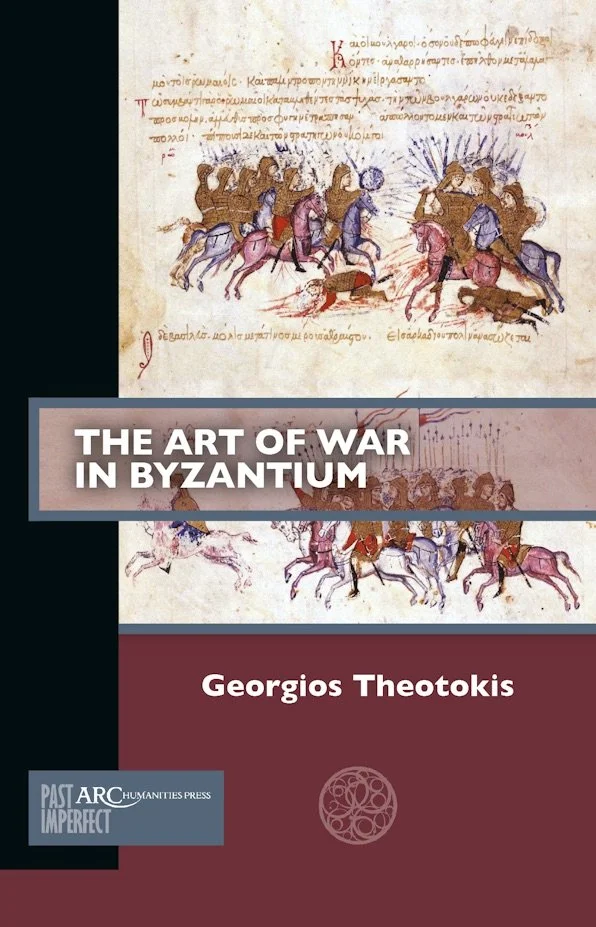
This week I spoke with Dr. Georgios Theotokis about Byzantine warfare. George is an assistant professor of history at Ibn Haldun University and the author of many books, including The Norman Campaigns in The Balkans, Twenty Battles that Shaped Medieval Europe, and The Campaign and Battle of Manzikert, 1071. His new book is The Art of War in Byzantium. Our conversation on the military culture of the Byzantine Empire, how people learned strategy and tactics, and how the Roman military machine changed over time is coming up right after this.
Well, welcome, George, to the podcast. I think there are going to be lots of people excited to learn about Byzantine warfare and especially from you. So welcome, George, to the podcast.
Georgios Theotokis:
Many thanks for inviting me. It is a pleasure to be here.
Danièle Cybulskie:
For the people who are not really familiar with Byzantium and what it means, can you tell us where we are talking about and when we are talking about?
Georgios Theotokis:
First and foremost, the term Byzantine Empire is an invention of the sixteenth century. So, the Byzantines, you know, call themselves the Romans. The Byzantine Empire was in essence the continuation of the Roman Empire, or as we could call it, the Eastern Roman Empire after Theodosius I, and you know, from the… from the fourth century – the early fourth century – until the end: 1453. And it covered the largest part of the Balkans, so south of the Danube River, Asia Minor, up to the Euphrates and the Tigris rivers, the Levant, and until the seventh century also Egypt and the entire eastern Mediterranean.
Danièle Cybulskie:
So, when we're talking about this particular empire, they are the continuation of the Roman Empire. But for people who are thinking about this, one of the big differences is that people are starting to speak Greek more often. And so, there is a sort of different influence on the Roman Empire. So, it morphs a little bit over this time, right?
Georgios Theotokis:
Exactly. I mean, we're talking about the Greek culture and the Greek civilization taking over the Roman Empire and, you know, the Greek language becoming the official language of the state, you know, by the time of Emperor Heraclius, so in the 7th century, so it morphs, transforms into a Greek empire, although of course it takes several centuries for it to do that.
Danièle Cybulskie:
Right. And for the purposes of this conversation and your book, we're not talking about the entire period until 1453. So why did you stick to just the earlier part of the empire when you're talking about warfare?
Georgios Theotokis:
I decided to exclude the later empire. Again, you know, because the Byzantine Empire changes to a great extent after the conquest of its capital by the Crusaders in 1203, 1204. Because after that period, you know, the empire essentially… it changes significantly, both in political, economic, but also military way. And I didn't want to minimize the role that these factors played in the change of the empire. So, I wanted to stick to the early and the middle period. So basically, from the fourth century until the last dynasty of the middle period, so the great dynasty of the Komnene. That goes from 1081 until more or less the 1180s.
Danièle Cybulskie:
Okay, so we've situated ourselves in time and place. We have a better idea of what this might look like in terms of geography, hopefully, maybe a little bit of culture. So, this book that you've written, sort of as an introduction to Byzantine warfare for people who are new to it or people who need a refresher, you talk about having a military culture. That's really what the focus of the book is. So, what do you mean by military culture?
Georgios Theotokis:
Culture, to put it in very simple terms – and this is what, you know, what I'm asking my students every time: to think in simpler terms – it's just what people think of war, how cultures fight, how nations fight, what are the customs of war, how they think about war, again in very plain terms. And different military cultures from different geographical regions and in different periods think in many different ways, although other cultures think in very similar manners. So, this is what we call military culture, basically: how different cultures and nations, how they think about war and how they perceive war.
Danièle Cybulskie:
Right. And this is something that is obviously going to change over time, and it definitely does in what the Roman Empire becomes later. So, if we think about the classical Roman Empire, this is a very strong military culture where there are professional soldiers. So, as we get into the Byzantine period that you're talking about, what does it look like in terms of military culture? Who, who are the people who are fighting when fighting needs to happen?
Georgios Theotokis:
Well, the Byzantine Empire was like the Roman Empire before – was a multicultural and a multiethnic empire. So, we're talking about many nations. And this is the trick here, especially, you know, where I'm situated in Greece, where, you know, the very common perception is that, you know, the Byzantine Empire was a Greek Empire, which was not – it was a multiethnic empire where we have Greeks, we have Armenians, we have Bulgarians, we have Georgians, we have many, many nations – not in how we will perceive the term nation in the nineteenth and the twentieth century, of course – and many different religions. But the dominant ideology was, of course, the Roman ideology – the actual Romans. So, who were doing the fighting? I would like to talk about the… more or less to identify them as the – to use a modern term – the conscripts and the professionals. So, not to talk about ethnicities, not to talk about religions, but to talk about, in military terms, the conscripts and the semi-professionals, more or less, and the professional armies that emerge in the eighth century onwards.
Danièle Cybulskie:
Right, this is exactly where I was hoping you'd go. So, tell us about the people who are trained and expecting to be soldiers.
Georgios Theotokis:
We have a great tradition that the Byzantine Empire inherited from the Roman Empire. So, we can say that we have – again, to use a modern term – we have conscription, we have hereditary military service, and these are the soldiers whom we call thematic soldiers out of the term thema, which was… initially, this term was used to identify the army. But around the middle of the seventh century, it came to identify the region where these armies were situated and based. And these thematic armies were what we can call in… Well, the term semi-professional is not a perfect term to use, but they were more or less something between today's conscripts and semi-professionals. On the other hand, around the eighth century, around the middle of the eighth century, we have the creation of the tagmatic armies. These were clearly professional armies that were raised, funded and led by the leading political and military elite of the capital – of Constantinople. And they were based in and around the capital. So, these were the two main divisions of the armies that we can find in the Byzantine Empire. And on top of that, we have the clearly professional armies that we find on different occasions and in different periods that were hired by the Byzantine emperors, again either on a regular or an irregular basis.
Danièle Cybulskie:
Well, I think that when you have professional soldiers – and this is very much… this is their profession, what they are meant to be doing, what they are trained to be doing, what they are expecting to be doing – it means that you have a military project that you're trying to get underway. So, for the classical Roman Empire, I think people are always thinking that the Romans are off to conquer something. What does it look like here? Because this is an important part of your book, the whole reason behind military action shifts in this form of the empire.
Georgios Theotokis:
Right, exactly. Well, again, you know, being the successors of the great Romans is... I don't know if it is a... I think it's probably a curse because we have to live up to the expectations of conquering the whole world. And when the empire actually began to shrink, then, you know, one major part of this whole ideology of reconquest was to reconquer the lands and regions that once, once belonged to the Roman Empire, that once belonged to “us”. And they use the term “us”, you know, “once, they belonged to us”, and again, you know, to denote this continuation between the imperial Roman period and the Byzantine Empire. And what I'm also emphasizing in my book is that, you know, these limits... So, the borders, the frontiers of the Roman Empire were very distinct and they were very well defined when the empire was expanding. When the empire was shrinking, these limits became very vague – and I think for obvious reasons, because we didn't want to embarrass ourselves by saying that we would like to conquer the entire world and we could not even cross the Adriatic Sea from Greece to Italy. And this is something that, again, many Byzantine scholars have emphasized when they're studying this Byzantine term of ecumene – so, basically, ecumene means the whole world – and how the Byzantines chose in different periods to reestablish this Roman ecumene.
Danièle Cybulskie:
Yes, well, it's such a large area that they're trying to hold onto, and as you say, it's made up of disparate peoples. And then there is a lot of pressure from the outside. So, where do you see the professional soldiers being deployed? Because it is a bit different from a conquering type of civilization when you're suddenly… suddenly shrinking in the amount of territory that you have.
Georgios Theotokis:
Exactly. Well, I mean, we have two main operational theatres. We have the eastern and the western operational theatre. I mean, we have more, but they are not as significant as the others. So, the Byzantines had a clearly-defined operational theatre in the east, which was more or less the operational theatre of Syria and Upper Mesopotamia, against the Arabs and later the Turks. And then we have the operational theatre of the Balkans, where we have – the main enemies were different nomadic nations that were descending upon them from the steppes of Eurasia. And we have other theatres as well that – they are not as significant as these two, of course – we have the operational theatre of Italy and perhaps, you know, the Levant and Egypt, but these were lost, again, in the seventh – and when we refer to Italy – that was lost in the eleventh century. But again, there is a clear priority between the two theatres. I mean, the eastern theatre comes first, not only because Asia Minor was politically and economically much more significant for the Byzantine Empire, but also because of the added element of holy war against Islam. That's why.
Danièle Cybulskie:
Yes, because this is not a version of the empire that is loyal to the old gods. This is a Christian empire and has been for a long time when we're talking about getting into the major part of the empire that we're talking about now. So, it becomes, as you say, sort of that binary that people think about when they think about Asia Minor later, right?
Georgios Theotokis:
Exactly, exactly. And, you know, when the Byzantine Empire… when the emperors and the generals were facing enemies in the Balkans, you know, they – especially when they were Christians, like, you know, when they were fighting against the Bulgars – you know, they were considering some sort of a civil war. Very equally important, but less… if I may use the term, more embarrassing for the empire rather than fight – or less glorious, if I, again, if I can use another term, less glorious than fighting the Muslims in the East.
Danièle Cybulskie:
Well, this is an important thing, the thing that you're talking about here – glory – because this is something that comes up in the way that the armies are described, in the way that the conflicts are described. And this is something that comes up in your book. So, when we're thinking about military… you've told us about the operational theatres and the conflicts that people might be having on the edges, the borders, of the empire. But one of the things that seems to be a throughline for much of this is that there is a discipline that really sort of throws back to the glory days of the Roman Empire. So, can you tell us a little bit about that discipline within the ranks? Because it does really jump out, especially when you're looking at pressures from nomadic peoples, for example, from the outside. This military discipline seems to be characteristic of this continuing Roman Empire.
Georgios Theotokis:
Exactly. And when this discipline breaks down, I mean, we see the outcomes, especially at the Battle of Manzikert, which is, again, a campaign that I've studied in another book of mine that was published in 2023. What I emphasized earlier is that the Byzantines were the successors of the Romans and they inherited this great military tradition of the Romans. And as part of that great tradition, one of the factors that helped them to set up and to maintain – to keep their empire alive – was, of course, you know, discipline and their great military organization, from logistics, to tactics, to strategy and ideology. And this is something that they kept alive, they maintained in a very strict manner for many, many centuries. And again, there are pivotal moments in the history of the Byzantine Empire – and the Battle of Manzikert is one of them – where we see this discipline and this organization breaking down as a result of the previous expansion that led to the Byzantine Empire actually resting on its laurels. And we see the Byzantine chronicles and historians referring to the Byzantine thematic armies, the armies of this conscript/semi-professionals I mentioned earlier, being in such a poor state that they couldn't put any kind of a resistance against the advancing Seljuk armies of Alp Arslan in the 1060s. And of course, in the campaign that led to the Battle of Manzikert in 1071. So, by the second half of the eleventh century, that discipline and that military organization had broken down and the Battle of Manzikert was the outcome of that.
Danièle Cybulskie:
Well, why don't you tell us about this battle while we are here? Because this is your favorite battle. You can tell us… tell us what happened here. It is pivotal and it's one that sometimes gets forgotten. So, tell us about your favorite battle.
Georgios Theotokis:
It is pivotal and it gets forgotten. Although it tends to be forgotten on this side of the Aegean Sea, because on the eastern side of the Aegean Sea, in Turkey, it’s one of the most glorious battles in Turkey – Turkish history. And as a Greek, as a Greek working in Turkey – in Istanbul – I'm kind of torn between two cultures. And in the last chapter of my book, I studied the perception of this battle in nineteenth- and twentieth-century Greek and Turkish nationalist historiography, and how it is portrayed in Greek historiography as the disaster – or the destruction – of Hellenism in Asia Minor, and how it is perceived in Turkish nationalist historiography of the twentieth century as the battle that established – to use the Turkish term – vatan. Vatan in Turkish means “the homeland” because it took place… the Battle of Manzikert took place in what is now eastern Turkey; so, in northeastern Asia Minor. It was the battle that, to use the term that I'm also using in my book, that opened the gates of Asia Minor to the Turks. And from 1071, both central and eastern Asia Minor were lost to the Byzantines forever.
Danièle Cybulskie:
We were just talking about discipline, so tell us about how this looked on the ground. Because you were saying discipline breaks down and it's a completely embarrassing battle, not to mention a tragic battle for the people in the Byzantine Empire. So how did this work strategically on the ground? Because there are a lot of tactics that you talk about in the book that play out here – badly, as it turns out.
Georgios Theotokis:
We're talking about the decline of the thematic armies and we're talking about the reliance of the Empire on mercenaries – both the indigenous, tagmatic troops, but also to its reliance on elite mercenaries that come from abroad. So, after the death of Basil II, The Bulgar-Slayer, 1025, where we have the empire reaching its territorial climax – both in the Balkans, but also in the east, as I said earlier – the empire rested on its laurels. And this expansion of the empire led to the decline – both the quantitative but also the qualitative decline – of these thematic armies. Again, these kind of semi-professionals, the conscripts that I mentioned so many times. And these troops that formed the backbone of the imperial armies for centuries, they lacked training, they lacked payment, and they lacked the discipline to perform even basic maneuvers. And this is one of the theories that I have about the Battle of Manzikert: that in a critical stage of the battle, in a critical moment when the second line, the rearguard of the imperial army, had to step up and reinforce an emerging gap on the first line, they couldn't even perform a very simple maneuver, and they retreated. Whereas the conception that we've had for many, many centuries – I think since the… since the eleventh century – was that it was actually treason. It was a treasonous behavior by the leader of the rearguard. But my theory is that the rearguard, that consisted of primarily thematic troops, failed to perform basic military maneuvers, and that's why they panicked and they retreated from the battlefield, and that led to the encirclement of the first line. So, that is why the Battle of Manzikert is the climax of the decline of the thematic armies that formed the backbone of the imperial armies for many, many centuries.
Danièle Cybulskie:
Well, I think it's important, as we're saying, a pivotal battle, because this is something that I think would be disillusioning for people who have always believed that the discipline of the army is never going to fail, because everyone knows what their job is. And this is one of the things that I think is so, so important in the books that you talk about within yours that teach strategy. So, it feels like everyone who is in the army knows what they're supposed to do, they understand what they're supposed to do, and that the generals are also very well educated. So, can you tell us a little bit about where they learn their tactics, where they learn all of the maneuvers that they're supposed to be doing?
Georgios Theotokis:
So, there was no military academy, there was no military school after the sixth century in the Byzantine Empire. So, basically, it was a combination of experience – primarily experience – learning from the older and more experienced officers, but an integral part of this heritage that the Byzantine Empire had from the Roman Empire – actually from the Greeks, as well, because the Roman Empire is the bridge between ancient Greece and Byzantium – is the military manuals. That's why one of the main chapters of my book is about the military manuals – the so-called strategika or taktika – where military authors put down their knowledge about military matters. And it was a precondition, let's say, if you wanted to become a leading general of the empire – something like attending a chief of staff college in any modern army today. So, if you wanted to become a senior general of the army, then you had to study these military manuals. Although – and I have had many discussions about this, you know, with many of my colleagues – it's not like, you know, we have a manual that is carried into the battle and you know, the general just before, you know, launching, you know, his attack he’ll say, okay, you know, cavalry attack. Okay, go to page 55. Just wait a minute, you know, page 55. Okay, now you attack there and then order the archers to attack from the left flank. No, nothing like that. But again, it's something like a master's degree, like a modern master's degree that chief senior staff officers attend before they become senior general, something like that. So, this is how knowledge is transmitted through the centuries through the military manual. The foundation comes through experience.
Danièle Cybulskie:
Well, I think that's so important. And something that comes up again and again throughout your book is – you first talk about the military manuals that everybody should be reading, is supposed to be reading. And then you talk about how experience really, really matters and how the successful battles – we've talked about an unsuccessful one – but the successful battles rely on someone being able to read the field very well and to improvise when it's necessary.
Georgios Theotokis:
Exactly. And this is what all the military manuals repeat and repeat, time and time again. Again, it is experience. And what they say and what they highlight is that, you know, read what you can, you know, from the military manuals, follow X number of principles – military principles. But, you know, you need to be able to adapt to the circumstances. Because, as I said earlier – and again, you know, what we were joking about with some of my colleagues – is that, you know, even though we, I and my colleagues, you know, we have studied these military manuals extensively, that doesn't make us experts in defeating the Seljuks or the Huns, for example. We need experience in the battlefield.
Danièle Cybulskie:
Yes, well, hopefully that never comes to that. But it's handy to have both that background and experience. And so, I think that this is something that is worth pointing out, especially if we look at sort of the Western… the Latin kingdoms and where those armies are sort of put together ad hoc whenever needed, that can really cause problems sometimes. So, having… having that experience within the generals and within the soldiers themselves – having a professional army – it can really make a difference, as we've seen in military history.
Georgios Theotokis:
It can make a difference. And again, many of the armies – especially the late medieval period, in both France and primarily in England– they have a professional core. And John France, the famous medievalist John France, he made the metaphor of a medieval army being like an onion. You have a professional core which is surrounded by, again, the feudal army or the conscripts, again, if I may use a modern term. So, this is an attempt by many medieval kings, you know, to try to overcome this problem of lack of experience and lack of training and lack of morale as well. Because, you know, a soldier who hasn't experienced battle – and I know it from experience because I have served in the army, I have been a conscript and have done my national service for nine months, but that doesn't make me Rambo, for example. But you need to be surrounded by a core of professional soldiers who will lead you by example, who will give you advice and who will hold the line when there is a need to hold the line. But again, these nonprofessional conscripts, they are there to increase the numbers, let's say.
Danièle Cybulskie:
Yes, well, I think that morale is such an important thing that you're getting at here – and that faith that you have in your generals. And this is something that you do see come up. I mean, one of the most famous military manuals, of course, is by Vegetius, where he's talking about how if… if the army loses morale, it's over. And so –
Georgios Theotokis:
Exactly, exactly.
Danièle Cybulskie:
– I think it's such an important point that you're talking about.
Georgios Theotokis:
It is an important point. And that's why all the military manuals – both the medieval and the Byzantine – they stress the importance, and the role, of the general in raising and keeping the morale high both before, during, and especially after the battle, if the army has been defeated.
Danièle Cybulskie:
Yes, and that actually brings me to the next point I wanted to get at, which is after the battle, when people are running away, there's, I think, conflicting ideas about the morality of killing people who are fleeing. Which brings me to the point where people, I think, when they look at medieval history, when they look at medieval warfare, I think there are a lot of baked-in ideas of chivalry and what is okay to do and what's not okay to do. And one of the things that sort of comes up – that you've pulled out in the Byzantine manuals that you've looked at, for example – is that deception is okay and trickery is okay. So, can you tell us a little bit about how that plays out in military strategy at the time?
Georgios Theotokis:
I have given a few lectures on comparing the concept of deception in the battlefield between both Eastern and Western military cultures. And the Normans in Southern Italy and Sicily is a typical example because they bring a Western European medieval culture into the east, and in a sense, they become “contaminated” by the Eastern military cultures. But in the east, it's very clear. And I'm talking about the Byzantines. Both the Byzantines and the Muslims, because they share many things and they have a, I would say, common military culture. They have more similarities than differences. And for them, it's simple. The first thing that you have to do is to deceive the enemy. For them, deception is a point of a smart general. And if you can avoid battle by deceiving an enemy, then, you know, go for it. But on the other hand, there's this conflict in Western Europe between these chivalrous ideals of an honorable battle. But on the other hand, if you study the career of the Normans in the south, you know, they are one of the most cunning military cultures that I have seen, that I have studied. And, you know, they have so many tricks up their sleeve, especially when they are expanding in Southern Italy, in Calabria and Apulia, when they are conquering the different towns. But such cunning means that it's like, you know, they are reinventing the stratagems used in the Middle Ages. So, no, they have this… they have a very practical idea about how to expand. Again, you know, if you can do it without shedding blood, then yes, then also go for it. So, this is also what the Normans are thinking. It's a conflict between ideals, and especially Christian ideals, and saving money and lives, basically.
Danièle Cybulskie:
Yes, yes, well – and it's very practical when, as you say, the borders are so huge, the borders are so long and they're getting pressure from outside. You can't have a standing army in all places at all times. And so, you need to be very smart and strategic about how you deploy them and to avoid battle whenever possible.
Georgios Theotokis:
And this is what is stressed in every single military manual in the Eastern Mediterranean cultures. And again, I include the Muslims as well.
Danièle Cybulskie:
Yes. And we were talking about retreat earlier, and we were talking about having faith and having morale and really understanding your role. And this is really essential for one of the things that you bring up quite often in the book, which is that feint, like, “we are retreating. Oh, no – we're not really retreating.” And you have to do that very delicately, very carefully, because to tip over too far into actually looking like retreat and panicking your own troops is not going to work.
Georgios Theotokis:
Exactly. This is not going to work. But this is something again, that needs lots of training and in its discipline. And this is something that… It is mirrored in the declining quality of the thematic troops that we see in Byzantium by the second half of the eleventh century.
So, when the Byzantines were dealing with armies, like different nomadic armies, they have long, centuries-old experience in dealing with these armies. And one of the questions that, you know, pops up all the time is like, why are they defeated? Well, it's because, you know, every soldier that has to deal with nomadic armies, that has to face nomadic armies, it needs very, very strong training and discipline and morale. And this is something that has to be kept up over the decades and over the centuries. So, if the quality of the army is declining, then eventually you will lose.
Danièle Cybulskie:
Yes, absolutely. And I think what maybe needs to be illustrated is because the tactics of nomadic armies, for example, are to come in and harass you – we're talking about the.. the Romans here – would come in and harass them so that they would be pulling away from a place that is safe. So, you have to really be able to withstand a lot of pain and a lot of punishment in order to win these battles, because otherwise you're definitely going to be baited into leaving a place that is secure.
Georgios Theotokis:
Exactly. And breaking formation. You know, this is an instinctive reaction. But in order to suppress your instinct that – you need training. You need training, you need discipline and you need morale. And this whole thing is based on the… Well, in… in the right organization of the imperial armies. And when this organization breaks down, as I said, in different… in different periods of the Byzantine army, then we see the results. And Manzikert is one of them, because they were facing a clearly nomadic army that was predominantly made of steppe armies using steppe tactics, so feigned retreat for hours and hours and hours. And actually, in Manzikert, they started the battle right after breakfast, so around 9:00. And the Turks only counterattacked after the afternoon prayer. So, we're talking about five in the afternoon. So, all this time they were retreating and they were bombarding the Byzantines with showers of arrows. So, to be able to do that and to withstand these showers of arrows for so long, it takes guts, to put it simply.
Danièle Cybulskie:
Yes, you have to repress your fear for hours at a time. And I think it's difficult for people to do that for minutes at a time, so.
Georgios Theotokis:
Exactly.
Danièle Cybulskie:
Yeah. So, this is all down to being able to trust your fellow soldiers and trust in the strategy. And sometimes, as you say, when that doesn't happen, everything breaks down. So, this brings me to maybe the part that people are very excited to hear about, which is what is the army made up of? Because we talk about infantry, we talk about cavalry, but what does this actually mean on the ground? Because when we're looking at again, Western armies, maybe later medieval armies, we have arrows, later we have guns, we have swords, axes, things like that. What is this army made up with? What are they equipped with?
Georgios Theotokis:
Again, it depends on whether we're talking about thematic or tagmatic armies because the equipment would have been significantly different in terms of, you know, how expensive the equipment was. We're talking about different kinds of helmets, different kinds of armour, predominantly round shields. But, you know, that changes from the early Byzantine and late Roman rectangular shields into the round, oval… oval-shaped shield. And by the eleventh century we are talking about the kite-shaped shield, which… many scholars believe that it's a Western influence. And we're talking about double-edged swords that more or less remain the same from the fifth all the way to the, I think the eleventh century, where they get a distinct curve that is an Eastern, probably Turkish – but I would like to put a question mark there, but many scholars think that it's a Turkish influence – a slight curve in the second half of the eleventh century.
And when we are talking about different units, like you know, the famous cataphracts or the kataphraktoi, to translate this term in Greek, then we're talking about, I like to use the metaphor, the “Panzers” of the Byzantines, who were dressed, you know, from head to toe with different kinds of armours. So I mean, if we go into detail, I mean, I think your listeners would be bored to death. But I mean, we are talking about different types of, you know, metallic armour, again, you know, from head to toe. And this is what clibanarii means, means literally that: to be dressed like an oven. Again, this term translates… the clibanarii: “klivanion” is “the oven”. This is how it translates. And at certain points also the horses were armoured. But this depends throughout the centuries, this depends on the unit whether it was a thematic soldier or a tagmatic soldier. And of course, depending on his income. If we are talking about thematic soldiers, depending on his income.
Danièle Cybulskie:
Well, this is one of the things that I think really sort of characterizes the Byzantine armies from the Western armies is that they really held onto ancient techniques for a longer time. So, they're still throwing javelins and they're still throwing spears in ways that other armies may have left behind. And so, this is really interesting to me to see how long things like javelins and spears and slings last in the East, because they must have been effective or you wouldn't hold on to them that long.
Georgios Theotokis:
Well, I mean. I mean, yes, you have to bear in mind that many medieval cultures, including of course, the Byzantines, they were a very conservative culture in many senses, and in many ways. And, you know, one of them was how they stuck to the principles that they inherited from their ancestors. So, to give you another example, when the author of the military treatise Praecepta Militaria, or Military Precepts, that was written probably around the year 969 – so that's the beginning of the Byzantine reconquest of Syria and Upper Mesopotamia by the Byzantines – he describes the formation of the Macedonian phalanx. And he's actually being very bold to state that although the Macedonian phalanx was a very good phalanx, and it was sixteen… sixteen rows deep, now, it's not necessary for our own phalanxes to be sixteen deep, and we can reduce the depth of our phalanx to eight. And for a conservative culture like the Byzantine culture, that's a very bold step. So, the authors of the military treatises, they are updating the tactics of the Byzantines many, many centuries later, but they are not bold enough to dismiss the great ancestors like Philip and Alexander the Great, of course. But they are saying that, listen, after so many centuries, this is how we can do it. Now, it's not necessary to have such a deep phalanx. We can use eight. Eight rows.
Danièle Cybulskie:
I mean, it is risky to say, oh, we could just cut it in half. And then to have that actually play out on the battlefield, you know, it is a risk to suggest such a thing.
Georgios Theotokis:
No, they use centuries of experience, and then they finally – they, of course, they couldn't dismiss their ancestors. They couldn't dismiss the formation used by the glorious Macedonians. But they put it very elegantly and very diplomatically that, okay, you know, that was good, but, you know, at our times, this is how we can do it.
Danièle Cybulskie:
Yes, it's time to change with the times.
Georgios Theotokis:
Exactly.
Danièle Cybulskie:
All right. So, speaking of times, I think when people look at military history, they become very enamored with classical history and then skip over this period and then get interested in things like the Crusades later. But here we are. We’ve spent this time – and you've spent your time and your book – on this period that's kind of in between. So why don't you take this moment to tell everyone: why is this such an important part of history, military history, to learn about?
Georgios Theotokis:
This is an important, really important military culture. Because, as I've repeated many times, the Byzantines and the Romans, they are the historical bridge between ancient Greece and the later medieval and Early Modern times. So, for example, many principles that we can see in the fifteenth, and in the sixteenth, and even in the seventeenth centuries, they can trace their origin back to the Roman period and of course, back to ancient Greece. So, it is both chronologically, geographically… This civilization and this military culture of the Byzantines is a bridge that spans different periods and different continents. And if you exclude this period from your knowledge and from your study, then you're missing a very important part of history. That's why.
Danièle Cybulskie:
I love it. And you've said it so succinctly. I hope that people will pay more attention to this period and when they do, they will definitely find your work. So, thank you so much, George, for coming on and telling us all about this.
Georgios Theotokis:
Thank-you very much. Thank-you very much. It's an honor and it's always a pleasure to talk about war in Byzantium.
Danièle Cybulskie:
To find out more about George's work, you can visit his page at academia.edu. His new book is The Art of War in Byzantium.
We've already talked about war in this episode, so it seems fitting to now talk about love. It's Valentine's Day this week, the perfect opportunity to revisit the first known Valentine's letter in English: that from Margery Brews to John Paston III, written in 1477. Margery opens the letter by calling John her “right well beloved valentine,” and although she hasn't got good news – her father isn't making it easy for the two lovebirds to marry – Margery is still willing to put it all on the line for love. She writes, “if you love me, as I trust verily you do, you will not leave me. For if you had not half the livelihood that you have, and I had to work as hard as any woman alive might do, I would not forsake you.” In the end, both of the lovers were true to each other, and they were married before the year was out. You gotta love a happy ending.
I pulled this letter out of a somewhat older copy of the Paston Letters that I have at home in a book called Private Life in the Fifteenth Century: Illustrated Letters of the Paston Family by Roger Virgoe. But the Paston letters are relatively easy to find, opening up a window onto the lives and loves of late medieval England.
And speaking of love, much love to all of you for being here each week, listening, sharing and becoming patrons on Patreon.com. As requested by you in the survey I sent out last year. I'm sharing brand new written articles every week, so if you're interested in discovering more about each episode's content, please check out patreon.com/themedievalpodcast. Can't wait to see you there.
For the show notes on this episode, a transcript, and a growing collection of the books featured on The Medieval Podcast, please visit medievalpodcast.com. You can find me, Danièle Cybulskie, on social media @5MinMedievalist or Five-Minute Medievalist.
Our music is by Christian Overton.
Thanks for listening and have yourself a lovely day.