Motherhood in Medieval Romance with Kirsty Bolton




The Medieval Podcast uses affiliate links
Episode 353
Motherhood is different for each person who experiences it, and yet one thing is for certain: everyone has an opinion about it. This week, Danièle speaks with Kirsty Bolton about the places mothers appeared in medieval romance, from birthing rooms to otherworldly forests, and what this can tell us about the lives of real medieval mothers.
-
Danièle Cybulskie:
Hi, everyone, and welcome to episode 353 of The Medieval Podcast. I’m your host, Danièle Cybulskie.
Motherhood is different for each person who experiences it, and yet one thing is for certain: everyone has an opinion about it. Many of our cultural ideas about motherhood show themselves in the stories we tell about mothers and children. So, what can stories tell us about medieval motherhood?
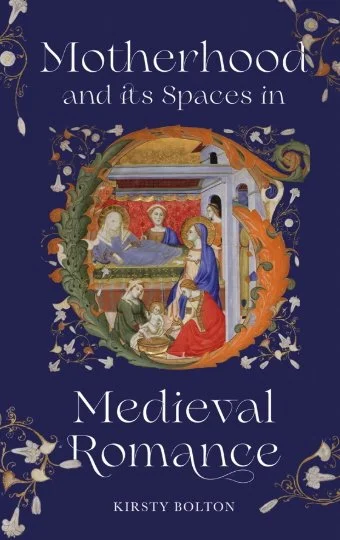
This week, I spoke with Dr. Kirsty Bolton about motherhood in medieval romance. Kirsty is a Leverhulme Early Career Fellow at the University of Oxford, and the author of many articles on motherhood, romance, and spaces. Her new book brings all three together. It’s called Motherhood and its Spaces in Medieval Romance. Our conversation on the places mothers appeared in romances, from birthing rooms to otherworldly forests, and what this can tell us about the lives of real medieval mothers is coming up right after this.
Welcome, Kirsty, to the podcast. It's so nice to meet you, and I really enjoyed your book, so welcome.
Kirsty Bolton:
Thank-you so much, Danièle. It is really, really lovely to meet you after listening to your podcasts. Thank you very much for having me on.
Danièle Cybulskie:
Well, I'm glad. I'm glad. It's nice to hear that people are listening to the podcast. It's not just going out into the ether.
Kirsty Bolton:
Oh no.
Danièle Cybulskie:
So, your book is on motherhood, and you really focus on literature here. So, of course, the question is, if we want to learn about real motherhood, why are we looking at fiction?
Kirsty Bolton:
We're looking at fiction mainly because the historical records are very focused on men and the manly things that they are up to. And so, they don't record the contributions that women and mothers have to these large world events, to smaller family events. So, women tend to be in the background of events and historical moments, but they're still there and they're still doing the work. And it is through fiction – and I work specifically on medieval romance, which is a very secular genre. So, it's through these texts that people explore their lives, their concerns, their issues. And this is where we really find the women coming through and kind of understanding what is expected of women, what they contribute, what they create. And it's, it's done through metaphors and threads. We always think of medieval romance as a very fantastical genre. There's giants and dragons and princesses, but it's all ways in which people understand the things that are important to them, like family and marriage and diplomacy. And so, this is what we're really seeing through medieval romance.
Danièle Cybulskie:
And one of the points that you make in the book, as well, is that the people who are writing these romances, the people who are performing them, they really know their audience. So, what does audience have to do with what we see in romance?
Kirsty Bolton:
Well, it's a really collaborative genre. You've made a good point there that these romances were performed, they were courtly entertainment, so they would be written down, but they were a very kind of collaborative genre where people would listen in groups, they'd talk about what they were hearing, they'd ask for specific stories. People of the court would kind of patronize particular writers, and they'd ask for specific things to be included in the tales. They'd ask for tales of particular historical figures, and so the audience was a huge part of the generation of the literature. We don't see it as much nowadays in mainstream literature, where an author will create a text and send it out there, and then the audience and the reader only get involved at that point. But in medieval romance, people were involved. It was a generative, collaborative endeavour, and things would – we have so many different versions of the same text because they were spinning off on tangents, and somebody might like a particular element more than another, and so we get these different versions of the text. And so, you can really see what matters to the audience in these texts because they helped to create it.
Danièle Cybulskie:
Yes. And it's a lot of women who are listening to these romances, a lot of people reading romances to women while they're doing maybe their ordinary work. Maybe they're sitting and embroidering, creating shirts or something, and people are reading romances to them. So, if you want patronage, you want to have women involved in the stories that they're hearing, right?
Kirsty Bolton:
Definitely. Definitely. Yes. And we've fallen into a bit of a trap, mainly through the kind of the nineteenth-century medievalists who assumed that everybody anonymous was a man. So, they assume that all these texts were written by men. And as you read them, I really don't think that that was the case. I think that women were not just the audiences of these texts. I think they were reading them and writing them and collaborating with them. And even if women could not physically write, that doesn't mean that they weren't creating these texts.
Danièle Cybulskie:
Yes. So, when we think about motherhood appearing in romances, it's something that is meant to appeal to the audiences. So, when we have that sort of perspective and dive into the romances, it colors how we're going to look at them. So, let's start looking at these romances. And you were especially looking at space in each of these romances. That's kind of what the book is all about, motherhood and space. What does space have to do with anything?
Kirsty Bolton:
Okay, so we're thinking about social spaces: spaces where people gather, private spaces, and public spaces where people live their lives – day-to-day lives. Where they interact with each other, where they create relationships and families and nations. And so, I was thinking a lot about how women contribute to these spaces. They may have been physically – like, a room, a building would be physically created by a man, but it is kind of utilized, and adapted, and recreated by the women, and the people who live there. And so, I wanted to think about how mothers use different spaces and places from very… kind of very enclosed spaces, like the birthing room, and then thinking ever bigger in the book until we… until we reach the open sea as a space that women interact with.
Danièle Cybulskie:
Yes. And we're going to get to each of these things. So, let's start with the birthing room. First of all, for people who have never heard of a birthing room, what… what are we talking about here?
Kirsty Bolton:
Okay, yes. So, obviously, in the medieval period, we didn't really have hospitals – or places that women would go to give birth. They did it at home, but they needed a particular space. They needed it to be set up for their needs, and so they would use a chamber, a bedroom, and it would be recreated as a birthing chamber or a birthing room. For the duration of the time that the women needed it. So, the furnishings would be changed, the people who would be allowed into the space would change. It was a female-only space. We didn't have doctors, we didn't have priests, unless there was a real, real problem. And so, for the duration of the time that it was needed, which was usually a couple of months – so the mother, the expectant mother, would go into what they called confinement before the birth of the baby. And she'd be attended by her women, by kind of family members, and if you are in the elite court, by ladies-in-waiting, and they would create the space, and create a kind of environment in which she could become ready to give birth, and then obviously the birth would happen there, and then she would be in that room for about six weeks after the birth of the baby, bonding with the baby, recovering physically, emotionally. And she would start to receive visitors over that time. But it was… it really was a very female space for the duration.
Danièle Cybulskie:
Yes. And we're talking about a couple weeks before the birth, and as you say, six weeks after the birth – you're in this room pretty much all the time. I'm sure there were some… some escapes that happened. This might be giving people COVID flashbacks – like, the same four walls. And so, when we're talking about like romance being a genre for women, like this is a space where people are going to be talking, and telling romance tales, because what are you going be doing 24 hours, 24/7 in this space? You're going to be taking care of the baby after it's born, but also, you're going to be doing things that keep you entertained. And so, romance, I think, is a space for the birthing room, as well. So, when you see birthing rooms appearing in romance, sometimes you say this is actually catastrophic. So, tell us what happens in romances in the birthing room.
Kirsty Bolton:
Okay, yeah. So, romances often follow our hero, or our heroine, right from their birth through their childhood into adulthood as they become the hero that they're supposed to be. And so, when we do see the birth of a baby in romance, then, yes, we know that something that – romance audiences were very familiar with their genre. It had its tropes and its conventions, and so if you kind of… you meet an expectant mother in a birthing room in these texts, then yes, you know that there is going to be something that will happen that will cause an issue that needs to be resolved. And so, a lot of these romances are very concerned with family, with lineage, with succession, and so in each of the texts that I look at in this chapter, the family unit is broken apart by a breach of the birthing room – of somebody entering the room who should not be there. Usually it's a man, and usually it's very violent, and then the family is broken. The mother is separated from her husband and from her family, and must find a way to bring it back together by the end of the narrative. Medieval audiences would have been very aware that something was going to happen when they… when they were encountering these rooms.
Danièle Cybulskie:
Right. And so, you make the argument in the book that having a man enter the space of the birthing room ends up being disastrous, which is something that, you know, you've just laid out for us here. Why do you think this is a recurring theme? So, as you're saying, people are really into their romances. They know the tropes. They want to see the tropes coming back and back and back. Why do they harp on this? Why is it so detrimental to have a man entering the birthing room?
Kirsty Bolton:
Because it's a woman's space, and we're starting to see at this point in time – in the kind of 1100s, 1200s, 1300s – that particularly elite birth is starting to get hints of being more medicalized. Men are trying to get involved. So, whether that be for reasons of succession – they've got to know that it's their baby, and nobody's doing any switcheroos or anything like that. Or there is, at this point in time – we're starting to get a lot of mistrust about women's medical knowledge, and so men are starting to try and get involved in this process. And I think what romance is doing here is saying, no, you can't get involved because things will go wrong. You've got to trust women. They know what they're doing. They've been doing it for eons. And so, if you get involved, then it's going to be disastrous. And so, it is… it's a very kind of fantastical way of thinking about these things, but it's making a point that this space is for women. The audiences, the women who were giving birth in the courts, were saying that we're not on board with this. We don't want men involved in the process.
Danièle Cybulskie:
Yes. And what I really like about this argument that you're making is that you're giving space for medieval people to use fiction as a tool to make change or to establish practices – things like that. We see this a lot in movies, and we give directors a lot of credit for the things that they're doing to, like, make social commentary. And here you have it in romance, as well. And so, I really like that argument where romance is also making social commentary back to the people who are listening to it. So, not just being sourced from people, but being sort of read back to people.
Kirsty Bolton:
Definitely. Yes, it really is. It's a cyclical and collaborative genre where the texts change over time. I work on French and English texts in the book, and you can see a lot of the older French texts are reworked into Middle English a couple of centuries later, and you see how the concerns of the audience change the stories and the narratives. They change the characters. The genre itself moves from being a very elite courtly genre to being – by the 1300s, a lot of gentry families are owning romances, are kind of involved in writing, and you see that kind of social change from the very elite to the more kind of merchant, and tradespeople, and landed gentry being involved in the romances, and it changes the stories because they have different social concerns, they've got different kind of political leanings.
Danièle Cybulskie:
Yes, there's politics underneath it all, just as there always is in literature, which is probably one of the things that captured my imagination about literature when I was first starting in medieval studies. So, for the people who are interested in romance, and they love jousts and all of that chivalric stuff, you do have women who are having their own labours and trials before we leave the birthing room behind. These are sometimes moments that are described almost in the same sort of epic terms. These women are having their moment, their ordeal. So, they do have that moment in the sun with their almost chivalric heroes.
Kirsty Bolton:
Definitely. They definitely do. And it's described in the same terms: in the kind of blood, sweat, and tears of the jousts. And it would have been very familiar to the women reading that – would have seen their own experiences on the page.
Danièle Cybulskie:
Yes, and I think that it is kind of rare – something that you mentioned in the book, as well – to see this discussion of pain and labour, because we don't often see the birthing room really outside of romance.
Kirsty Bolton:
Yes. Yeah, there's one particular text that I talk about, the Roman du Silence, where there's an extended passage about the pain and the brutality of giving birth. And I think it says, she felt it in her veins, her organs, every part of her being. And so, yeah, as you say, it's a very kind of heroic trial to go through. And yeah, tucked away in the birthing room, as they wanted to be, as it was their space, then maybe this… this is the only way to communicate to the people who would never be in the birthing room about what, actually, it's like.
Danièle Cybulskie:
Yes, it's some serious stuff. So, let's move out of the birthing room. Now, when you look at the spaces in the rest of the book, it's usually children. So, not just infants, but there's a lot of children. So, okay, so let's move outside of the birthing room to the castle, which is the next place we go. So, this is more of a diplomatic public space. What's happening with mothers in the castle?
Kirsty Bolton:
Yeah, we're moving here to a space that isn't women's space. The spaces within the castle that I look at in this chapter are kind of the great hall and the battlements, and these are very masculine spaces. Women are welcome in these spaces, but they're not supposed to be active agents within those environments. And what I'm arguing in this chapter is that when men fail in these spaces, then it's up to women to pick up the pieces. And so, we see men who are arguing about… about land, about property, and when these arguments affect more than the men that are having these arguments – so that the women and their children are being affected by what these men are arguing about – it can be up to them to say, look, we're here, your children are here, remember us when you're deciding whether you're going to go to war, or whether you're going to go and burn down the neighbouring earl's property. Just remember what else is being impacted.
Danièle Cybulskie:
Yes, and this really goes to that thing that we talk about when we talk about queenship. And I've talked about queenship on this podcast… many other people, we always end up talking about intercession. So, what's intercession when it comes to women's place in romance, or, really, in diplomacy?
Kirsty Bolton:
Yes, that is a very, very important facet of queenship. Intercession often allowed men save face when they've made a very rash decision. It allowed them to be very strong and to make a very definitive decision, but then to be tempered by their wife's influence. And so, you find this in these romances, the queens – particularly in Athelston, which is one of the romances I talk about – that the queen comes into the hall because Athelston, as king, has made a very rash decision to execute some… some kind of very important people on what is actually bad information. So, he has made the wrong decision, and the queen comes into the hall in order to temper that decision – to try and get him to change his mind. She's very heavily pregnant as she does this, and she comes and she says, I'm bringing my child to you to say, please change your mind. And this is one of the instances where it doesn't work. The king stays very angry, and – I don't know if this may require a bit of a trigger warning, but – he kicks the queen in the stomach and she loses the baby. And so, his actions essentially destroy the entire family. At the end of the narrative, his sister gives birth to another baby, and that baby has to become the new heir. So, you can see how these interactions in this space of the hall have kind of shifted the line of succession. Women were instrumental in that shift because of how they've tried to influence the outcome. Yes.
Danièle Cybulskie:
And we should probably also mention that this is a fictionalized version of Athelstan's story. This is not his actual story. This is sort of fan fiction about him written much later. So, this is not like –
Kirsty Bolton:
Yes, it is. And yes, it's actually – he's Athelston with an O to differentiate him from Athelstan with an A. So, he is a fictionalized version We're not thinking about the early English Athelstan at all, here. Yeah.
Danièle Cybulskie:
And it, sometimes it can be confusing, because people have done this with Richard the Lionheart, as well, written fiction about him. So, you know, we need to make that clear, but it is something that we… we do see in sort of retellings, for example, something that you come up with in the book, as well, where you have Froissart talking about Philippa of Hainault, who is appearing before her husband, Edward, to intercede on behalf of the burghers of Calais. Now, we're not sure if she was actually pregnant at that time, but she's pregnant in the chronicle, and that is what makes it such a big moment. And so, it's not a strange thing to see this appearing in romance, but in this case, it goes terribly wrong, and it's a real sign of things that are amiss in the court, so that people who are listening to that romance know this guy is terrible and we shouldn't root for him for the rest of the story.
Kirsty Bolton:
Definitely, yeah. So, the queen comes into the hall to intercede, as she is supposed to do, and he doesn't follow the rules of engagement. He doesn't do what is expected of him. He is supposed to say, no, you're right, dear, let's do something else. But because he is such an ineffective king and he's ruled by his emotions and ruled by his anger, then she is doing all the right things, but it doesn't work because he is not playing the role that he's supposed to play. So, you do see this in romance – how people's roles and people's identities are so dependent on the social contract and kind of the social performance. And if everybody's doing their part, it goes along nicely. But as soon as somebody decides to do something differently, then we run into issues.
Danièle Cybulskie:
Yes. And you do have other examples in here of when it goes “right”. And I do have to say this in quotation marks because sometimes it's, you know, the mother appears with her daughter, and the daughter decides to marry the enemy. Like, you know, that's maybe not how we want to solve things in the modern world, but when it comes to romance, this is the right thing to do. You show up with your children and that is the solution.
Kirsty Bolton:
Yes. Yeah. Showing up with your children reminds everybody involved of the stakes. And as you say, yes – I think we're talking about Sir Degrevant here, where the countess – her husband has failed to end the siege, and so the countess brings her daughter onto the battlements, and Degrevant sees Melidor and falls in love with her. And so, it changes from a space of siege, and war, and violence into a kind of a space of courtly love as their romance develops. And so, yes, the very act of bringing her child with her – I mean, this would have been a kind of a teenage daughter, not a small child – is what's necessary to end the siege at this point.
Danièle Cybulskie:
Right, exactly. So, I think that the spaces that you talk about in the chapter on castles are pretty familiar to people. They're very chivalric roles. This is what queens are supposed to do. Then you move to the forest, and the forest – you know, as soon as you say that word in the context of medieval romance, people start to, like… their antennae start to tingle, I think, where it's like, something is going to happen here. It is a space of magic and otherworlds, and wildness. Tell us about motherhood in the forest.
Kirsty Bolton:
Yes, the romance forest is its own magical space, and as you say, people are expecting enchantment, they're expecting otherworlds. But in these texts that I'm looking at for this chapter – I look at the Conte du Graal with Percival, and then the English version of the Percival story, and a couple of others – in these, the women are actively removing their children from a courtly environment that they feel has failed them. Usually, it's because their husband has been killed in battle or in a tournament, and the mother says, right, this isn't working for us, we are leaving the court, and they go to the forest. And so, it's really set up as kind of an antithesis to a very kind of urban courtly environment. But the women in these texts, they're not living in little burrows or anything. They're living in, like, proper houses in the forest. And they have people with them, working with them. They till the land. They kind of – it's a productive existence. But they want to raise their children outside of what they view as a very bad environment in the court. And so, they do so, and Percival is raised by his mother without ever knowing what a knight is, until he encounters some knights in the forest, realises it's his destiny, and he must go to Arthur and become a knight. And so, I think what the real social commentary that the authors are trying to get at here is that they needed more of a balance. So, the kind of chivalric education and the chivalric upbringing was failing these young elite men, and women and their mothers needed to be more involved past the usual age of about seven. So, women would kind of educate their children until they were about seven, and then they would be sent out to apprenticeships or to be squires for other lords. And so, what these texts are advocating is that women and mothers stay involved to create more of a balance because chivalry is going wrong.
Danièle Cybulskie:
Yes. And so, for people who are not really familiar with Percival, he's the one who actually finds the Grail. And in the story that you're talking about, the Conte du Graal, written by Chrétien de Troyes, it's Percival – I think it's this version of it – where he's saying, my mother taught me how to pray, or he prays the things that his mother taught him. And these are the things that allow him to access the Grail – through his mother's family, and through the teachings that she has given him. So, he shows up at the court and Arthur is like, this guy's a useless knight, but the things that he's learned from his mother are the things that allow him to complete his quest in the end.
Kirsty Bolton:
Exactly, yes. So, his mother is integral to the Grail journey because, as you say, she has educated him, she's taught him how to pray, and there's a particular point where he meets a new mentor and this mentor says, yeah, okay, everything your mother told you is good, but don't tell anyone. Don't tell anyone you were taught by her. So, then that's when things go wrong for him, because his mother instils in him to always ask questions, to ask a man's name, to find out who he is. And when he sees the Fisher King, he's been told by his new mentor to stay quiet, don't ask questions, don't draw attention to yourself. And he's told later in the text that he would have healed the Fisher King, and brought this all to an end much quicker if he'd asked the questions and instigated a conversation, which is what his mother told him to do. And so, because he hasn't, then the problems are ongoing. He could have solved it a lot quicker, but he stopped following his mother's advice.
Danièle Cybulskie:
Yes. Well, Percival, he does his mother wrong in many ways in this case, as well. In fact, people call him on it. They say, you have sinned because you disrespected your mother. Because, well, what does he… what does he do to his mother?
Kirsty Bolton:
He basically just leaves her to die. So –
Danièle Cybulskie:
Yep.
Kirsty Bolton:
– one of the interesting things about the text is… So, she has taken him out of the courtly environment to raise him by herself, but motherhood becomes her only identity at this point. So, courtly mothers would still have been wives, they would have still have been involved in the day-to-day running of the household, of the diplomatic interactions. But when Percival's mother takes him to the forest, she is his mother only. And so, when he leaves her, she basically ceases to exist. She kind of falls down and dies. And so, I think that's another balance that the texts are calling for, is to allow women to have their kind of range of identities that men are afforded. And so, yes, Percival leaves her to die and is told later in the text what he has done, and it sends him mad. And so, he is kind of absolutely distraught at what he has done to his mother without realizing. So, yeah, the texts are really – by juxtaposing what seems to be complete opposites in the court and the forest, they're really calling for a balance between patrilineal and matriarchal influences on these elite young men.
Danièle Cybulskie:
Yes. Well, Chrétien is such a sophisticated writer. So, when Percival decides he's going to be a knight, he decides, and he leaves without looking back. And that is just such a poetic moment. So, he doesn't see his mother die because he won't look back because he's just so focused on the goal. And there it is right there. Like, you can't just leave your mother behind. It's a terrible thing. So, you also have contrasted it in this chapter with another romance – which I think is pronounced Tyolet – where there is a mother. She takes her son out to the forest to raise him. And she's a better example of being a mother where Tyolet also sees there's a knight, and he's going to become a knight. And she's like, well, okay, here's your dad's armour. And this is, like, how you're supposed to be. You're supposed to be a mother who's not just a mother, but someone who also will send your children off when it's time, right?
Kirsty Bolton:
Exactly, yes. So, as you say, romances are always interested in moving forwards. And so, we have this kind of tension between what I think of as a very kind of heteronormative, masculine, linear time, and something else which is like… women's time is very cyclical. Our lives go in cycles of childbirth, and child-raising, and they move forwards, but in a very kind of cyclical way. We're always kind of coming back to a starting point. So, yes, I think part of Percival's mother's failing is that she wants to keep him. She doesn't want him to move forward. Whereas, as you say, Tyolet’s mother says, right, okay, it's time. I've taught you all I can. It's time for you to go and fulfill your destiny. And so, she is dealt with in a much, much less harsh way because she recognizes the importance of moving through the life stages.
Danièle Cybulskie:
Yes. Even out in the forest, you need to fulfill your role if you want to… to make it out of the romance, at least, looking good. So, finally, you look at the sea as a space, and there are so many, so many romances where there's a mother who ends up just stuck on a ship, and then the ship takes her somewhere – often magically. The ship will take her somewhere amazingly. So, what are mothers doing on the sea?
Kirsty Bolton:
This links quite interestingly to the first chapter on birthing rooms, because I talk about a lot of the same texts, whereby in the birthing room, it's been breached by a male presence, which fractures the family unit. And then the mother is ostracized with her child and put to sea in a rudderless boat, in order to do away with her. So, it's a punishment that they expect to end in death, but because they are the heroines of these romances, we know that that's not going to happen. And often divine providence will steer their ship, or guide them to somewhere where they meet safety. But while they are on the boats with their very infant children – these are kind of newborn children – we get to see motherhood in action. In Chaucer's Man of Law's Tale, we meet Custance, who is actively shown breastfeeding her child, singing him to sleep, comforting him while he's crying, and we don't often see motherhood acted out in this way in romance, so it's a… it's a really beautiful opportunity to see motherhood. But more than that, what these women are doing on their boats is bringing people together. They wash ashore in strange lands and marry the kings who find them, and create connections between… between countries. I mean, Custance is responsible for bringing Christianity to Britain. Her journey in a boat with her child is the start of Christianity in England, according to the text. So, what is really illuminating is how essential women are to these kind of wider world processes and connections. We know that women – historical women – travelled for marriages that were set up so that Country A and Country B would get along. So, these marriages are kind of diplomatic connections, So, what we see in the romances is these kind of historical diplomatic marriages being shown through the eyes of the women that do them. So, these women may have never met the men that they're going to marry, so it is… it's a hugely daunting journey that they're about to set off on. And so, this metaphor of a rudderless boat that’s sending them into who knows what is very apt for the experiences that these women had.
Danièle Cybulskie:
Yes, it reminds me a lot of stories that we are perhaps more familiar with, like Beauty and the Beast, where it's okay, you can marry someone who's beastly, and your love will fix him. Like, the type of story that is speaking sort of directly to an audience that might be in a marriage that they didn't choose for themselves – that this could miraculously work out, and not only for the characters' immediate futures, but for legacy. It could be amazing. And so, I think about that sort of speaking to the people who are listening to this – of this diplomacy happening, as you're talking about. Going across the sea. It could be a great adventure. You just never know.
Kirsty Bolton:
Exactly. So, I think they're trying to make these poor little princesses and duchesses – it's supposed to comfort them, to show that, yes, okay, it's big and scary, but it's something that you're going to have to do, and it could all turn out well.
Danièle Cybulskie:
Yes, you can land on your feet. And what's interesting about this, as well – and I was thinking of this because of the connections that you've made to the birthing room here – is that there seems to always be an extended time on the boat. Like you're talking about, there's enough time that passes that we can see, as you're saying, this maternal stuff happening, and then they land, and then families are built. And this is so familiar to that idea I think you were mentioning earlier about… these children are in the care of their mothers, and then they're often fostered. And so, you also see this happening, as well. Like, there is a time for mothering, and then there is a time for fostering. And you see this happening in romance, as well.
Kirsty Bolton:
Definitely. Yeah. And something else that happens in these narratives is that the children are stolen from their mothers by wild animals. And so, it's often a griffin or a leopard or something like that, that makes away with the children, and then the children are found by some foreign king who raises them as their own, and it's another metaphor for this creation of connections between territories, between nations. Romance is full of childless kings who just need an heir, and so these animals are instrumental in delivering these heirs. But the romance always needs to end with… with the mother coming back into the narrative and confirming that, yes, this is my son who is of royal stock, or is of noble stock, and therefore can be your heir. So, one of women's roles is to legitimize their sons, and so legitimize the succession that the men are trying to perpetrate.
Danièle Cybulskie:
Yes. And I think this is one of the points that really stood out to me in your book, is this idea of witnessing. This idea of being the person who legitimizes, for example, an heir. And I was delighted to read your book, as well, because you referenced one of my professors, Fiona Harris-Stoertz, in here, who has done a lot of work on this. Yeah. Yeah. So, that was nice for me. But this idea of, as time goes on – something you're talking about when we're talking about the birthing room – it becomes men's witnessing that legitimizes an heir, for example. And I thought it was really interesting in the book how you talk about these romances maybe being a way – and you can correct me if I'm misconstruing your idea here – but these romances being a way of women sort of taking that back to themselves, as being the ones who, in fantasy, at least, get to legitimize the children.
Kirsty Bolton:
Definitely, yes. I think that's exactly what's happening because women's voices weren't heard in a legal framework. So, you get instances where, say, an heir – we need to confirm how old an heir is so that he can inherit. Instead of going and asking his mum or asking the women who were there, you'll get court records saying, well, I remember – a man is saying – I remember this happening because my wife was there. And so, women's voices aren't heard directly in a courtly framework, in a legal framework. And so, part of what these romances are doing is saying, yes, this is women's job. This is women's memory. I mean, women are thought of as the keepers of memory, aren't they? And so, it's just kind of pointing out that, yeah, yeah, this is work that they are doing.
Danièle Cybulskie:
Yes. Yes. Let them have a role. And it's interesting because this happens even – I don't think in the romances that you have here – but there are often unnamed mothers. Mothers – or women – who have no names at all in romance. It's really popular. But they still have authority, which, I think, is brilliant.
Kirsty Bolton:
Yes, definitely. Yeah, I'm always incredibly excited when a woman has a name in a romance.
Danièle Cybulskie:
Yeah.
Kirsty Bolton:
It's so rare.
Danièle Cybulskie:
Yeah. And it also makes it much easier to do your scholarship, you know, when you can say this person – this named person. But there's one last thing that you are talking about when you're talking about the sea, here – and again, we're coming back to this ship – where we see these mothers, and they're often noblewomen, usually queens or princesses, and they're doing this mothering work themselves. So, tell us about this as being something that you have a noblewoman doing herself in the context of wetnurses and all of this stuff. What do you see happening here?
Kirsty Bolton:
Yeah, no, it's very interesting because this is another facet of motherhood that men are trying to get involved in. So, it's… it's very usual by the late medieval period that noble and royal children were wet-nursed – so, their mothers didn't breastfeed them. A woman was found who would breastfeed the child, partly so that the mother… her milk would dry up and she would become fertile again so she could provide more heirs – particularly if she's given birth to a daughter and they're looking for a son – but also so that she can get on with her other duties. Say, women were active in the household, and in the kind of the wider community, and active in kind of diplomatic circles, and so, these elite mothers are almost too busy to mother, they've got so much else going on. But yeah, on this space of the boat they're kind of stripped of all that and they're allowed to just be a mother for a while longer. So, you get that… you're six weeks in the birthing room before you, kind of, are returned to society, but that's such a short period of time to not only recover, but kind of work out who you are as a new persona, as a mother. And so, I think what this space of the boat is doing is allowing for a longer period where they can just be mothers.
Danièle Cybulskie:
Yes. And I think that something that you've just said is so important, where you're figuring out who you are as a mother, and it does take more than six weeks. And another point that I mentioned before we turned the microphones on is that we often see motherhood takes over a person's personhood. Their individuality gets subsumed in this role. So, as we come to the end of our time, when people come across mothers in medieval literature, what do you want them to think about?
Kirsty Bolton:
Oh, that's a really good question. Yeah, I just… I think I just want them to think about the nuance. We get such stereotypical mothers in fiction. You get your evil stepmother, you get queens who are thought to not love their children because they are put out to wet nurse and then fostered into other families. So, yeah, I just… I want to kind communicate that mothers are whole people in these texts, and there's a… there's a lot of nuance and a lot of conflict in them working out who they are now. And I think the romances delve into that because, as we've been talking about, they reflect what their audiences are concerned about, and what they're feeling, and what they want from their lives. And so, when we see mothers in romance, we see a much more complex picture than is given in a lot of other medieval sources.
Danièle Cybulskie:
Yes, absolutely. I think you have made the case for it. So, thank you so much, Kirsty, for being here and telling us all about motherhood.
Kirsty Bolton:
Thank-you very much, Danièle. That was wonderful.
Danièle Cybulskie:
To find out more about Kirsty’s work, you can visit her faculty page at the University of Oxford. Her new book is Motherhood and its Spaces in Medieval Romance.
As I was reading Kirsty’s book, I came across a quote that sums up pretty much the entire philosophy behind my work. It’s a deceptively simple bit of wisdom that comes from Perceval’s mother – that is, before he merrily jets off to Arthur’s court and leaves her in the literal dust.
Anyway, she’s talking about Perceval’s lack of courtly know-how, and she says, in Kirsty’s translation, “no one can know what he has not learned.”
I think for a lot of us, it can be a little uncomfortable when we first find out that so much of what we learned about the Middle Ages from popular culture is actually wrong. And that’s why I’ve always come to this work with the attitude that no one should be shamed for not knowing what they haven’t learned. Because, weirdly, no one is born knowing medieval history. So, if you ever feel embarrassed for not knowing something, just remember Perceval’s mom’s little nugget of wisdom, and go easy on yourself.
And thank-you for supporting this work. Because every time you share episodes with your friends, or let the ads play, or become a patron, you’re helping more people learn things they didn’t know before. Your contributions are what makes this possible. If you’d like to become a patron and help keep this podcast on the air, please check out patreon.com/themedievalpodcast.
For the show notes on this episode, a transcript, a collection of the books featured on The Medieval Podcast, and more, please visit medievalpodcast.com. You can find me, Danièle Cybulskie, on social media @5MinMedievalist.
Our music is by Christian Overton.
Thanks for listening, and have yourself a fantastic day.