The Ming Dynasty with Craig Clunas




The Medieval Podcast uses affiliate links
Episode 354
When it comes to powerful and impressive dynasties of the Middle Ages, it’s hard to compete with China’s Ming Dynasty. And yet, a lot of us didn’t learn much about the Ming in school. If you’re looking to start your journey on all things Ming, this is the episode for you. This week, Danièle speaks with Craig Clunas about how the Ming Dynasty began, how it functioned, and how it lasted for centuries.
-
Danièle Cybulskie:
Hi, everyone, and welcome to episode 354 of The Medieval Podcast. I’m your host, Danièle Cybulskie.
When it comes to powerful and impressive dynasties of the Middle Ages, it’s hard for anyone to compete with China’s Ming Dynasty. And yet, a lot of us didn’t learn much about the Ming in school. Luckily, my next guest has got it covered. If you’re looking to start your journey on all things Ming, this is the episode for you.
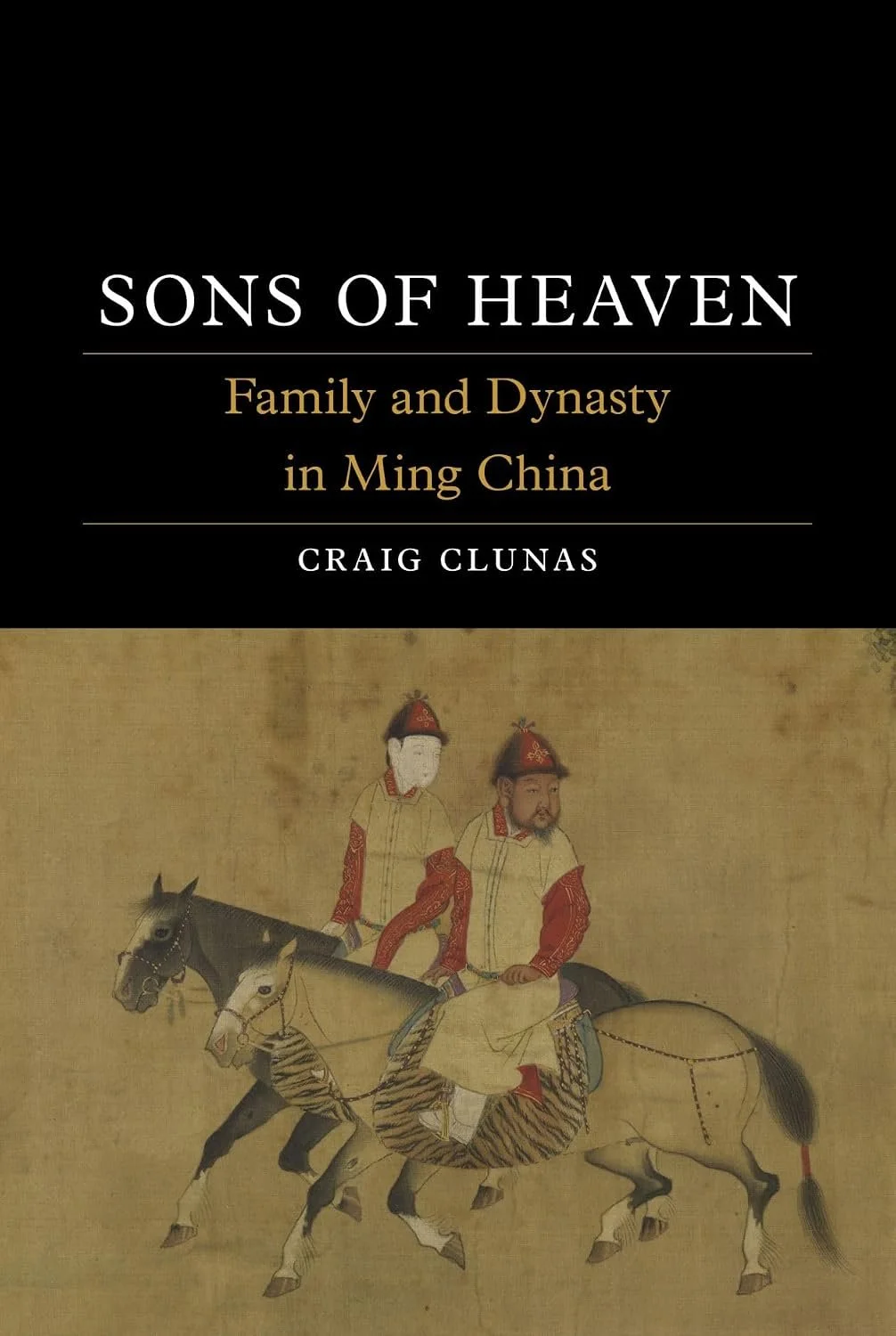
This week, I spoke with Dr. Craig Clunas about the incredible Ming Dynasty. Craig is Professor Emeritus of the History of Art at the University of Oxford, and the author of many books, including Empire of Great Brightness: Visual and Material Cultures of Ming China, 1368-1644, Screen of Kings: Royal Art and Power in Ming China, and Chinese Painting and its Audiences. His new book is Sons of Heaven: Family and Dynasty in Ming China. Our conversation on how the Ming Dynasty began, how it functioned, and how it lasted for centuries is coming up right after this.
Well, welcome, Craig, to talk about the Ming Dynasty. I am so excited because, as I was just telling you before we turned on the microphones, this is the book that I need because I'm interested and I don't know where to start. So, thanks so much for being here to tell us about the Ming.
Craig Clunas:
Thank-you very much for having me. It's a great pleasure.
Danièle Cybulskie:
So, just to start at the beginning, the Ming Dynasty is not a bunch of guys with the last name Ming, right?
Craig Clunas:
No. Chinese dynasties have usually the title of the dynasty. Most of them are geographical locations. So, they're like Wessex or Prussia, or, you know, they're the name usually of where the family immediately came from. The first dynasty that has a name that isn't a geographical name is in fact the dynasty that precedes the Ming, which is the Yuan, which is the Mongols. This is the descendants of Chinggis Khan – Kublai Khan, people might have heard of. They conquered China in the thirteenth – they ruled China in the thirteenth, fourteenth century. And of course they come from outside the, as it were, traditional borders of the empire. And so, the dynastic title they choose is Yuan, which means kind of primary, or primal, or first, or original. And the Ming that – who follow them… Ming means bright or shining. There's a lot of debate among historians about why they chose this title, and what it means, and whether it does or does not have some sort of religious connotations in sort of esoteric religions that were swirling about in the fourteenth century. But it certainly isn't a family name. The family name of the imperial family of the period is Zhu, and the founder of the Ming is a guy called Zhu Yuanzhang. He's a very, very famous figure in Chinese history. In Chinese, of course, Zhu is the surname and then Yuanzhang, the personal name, comes after the family surname in Chinese, the opposite way from English. So, they're the Zhu family.
Danièle Cybulskie:
Well, I think that it's so interesting to think about when we – I'm thinking usually about European dynasties, and how it's named after maybe people, or families. And the way in which this is structured looks towards the family as being the foundation of it, where you're talking about naming a dynasty or naming an era, which is something that the emperors are doing, as well, in terms of sort of an aspiration for this time. So, not just about the family, but also about the time that they're hoping, and expecting, and planning to have. Do I have that right?
Craig Clunas:
That's right, I think. And that's made more so by the fact that emperors aren't known by their names. The emperor's personal name is a taboo. You can't use those characters. People don't know those characters, I think – most of them at the time. And what happens is when an emperor comes to the throne, they create what's called a reign period, or it's sometimes called a reign title. Now, back in the day, in earlier Chinese dynasties, in the Tang and the Song period – that's seventh, eighth, ninth, tenth centuries – reign periods were changed quite often. Something happened, you would change the reign period, so that one emperor would have several reign periods. But the Ming are unusual and they set a pattern which continues in Chinese history to the end of the imperial system, which is that a reign title is announced when the emperor comes to the throne, and they keep that through their entire reign. So, the guy who's in charge from 1368 to 1398 – the founder of the Ming Dynasty – the reign title is Hongwu. And Hongwu means – these titles have names; they have meanings – Hongwu means kind of “enormous military power”, which is kind of a good reign title for the guy who founds the dynasty after a whole heap of battles, and conquering absolutely everybody else. And so, they have meanings. The meanings are often quite obscure, and they often relate to things in the Chinese classics. But then, of course, I don't think everybody in China – obviously educated people knew these classical allusions, but the vast majority of the population would have known that it was Hongwu, but they didn't necessarily know. So, I think sometimes these plain readings of the names – “Enormous Military Power”, “Perpetual Happiness”, “10,000 Years” – these are the kind of meanings – or the on-the-surface meanings – that reign titles have. And that's how time is structured in the Ming. So, the year that we think of as 1368 – the Anno Domini year in Western European terms, or Hijrah years in the Islamic world – in China, this is the first year of the Hongwu reign of the Ming Dynasty. And I think one of the interesting things about that is that if it's 1368 in Western Europe, you know that the next year is going to be 1369, right? But if it's the tenth year of the Jiajing era, the next year might be the eleventh year of the Jiajing era, but it might not because the emperor might die.
Danièle Cybulskie:
Yeah.
Craig Clunas:
And it might be the first year of something else. So, I think there's quite an interesting, different sense of time, and how time is structured in what's often called Late Imperial China – the Ming and the Qing periods – because of this use of these reign titles.
Danièle Cybulskie:
I think it's so interesting because so often we take it for granted that the way we have structured things like time is eternal, or it's universal, and it's definitely not those things. So, it's a really interesting example of setting an intention for your reign, even if it doesn't work out, because I think some of the shortest reigns that you have in the book are about a year or something, and they have names like “Eternal Realm”, or something like that.
Craig Clunas:
Some of these don't make it to a whole year. I mean, there's a couple of Ming emperors who are dead within a few months of taking the throne, but you still have these reign titles that have these grandiose aspirations. And of course, they become kind of, you know – towards the end – they become kind of ironic because the Ming Dynasty is going down the tubes, and they still have these titles that sound like everything is just hunky-dory, but it's sort of not.
Danièle Cybulskie:
Yes. Yes. I mean, the best intentions, right? I think we all have experience with the best intentions going agley. So, let's talk about the founding of the Ming Dynasty. And you've given us a bit of a clue here in saying that it's called Hongwu. What happens? How is this dynasty established in the first place? And, maybe, why is it established?
Craig Clunas:
Yeah, well, I suppose it's not inevitable. The Yuan dynasty, the Mongol ruling house, with their capital in the north – in what's now Beijing, the capital of modern China – they are kind of losing control of things. Throughout the fourteenth century, there's a lot of infighting within the imperial family. They're losing control. So, there's a sort of upsurge of regional power bases. It's a failed state. These guys are essentially warlords. They might control just one province. Now, of course, you have to remember that China's very, very, very big. So, when we say they control one province, that might be the size of France. It's a very large area.
Danièle Cybulskie:
Yeah.
Craig Clunas:
And the founder of the Ming is a man from the absolute bottom of society. He comes from a peasant family. His family are impoverished. They're so impoverished that they can't feed him. He's handed over as a young boy to a Buddhist monastery to become a Buddhist monk because at least – you're a Buddhist monk, you will get, well, maybe not three square meals a day, but you'll get fed. But he leaves the monastery and he joins up with one of these warlord armies, and essentially, he fights his way to the top and he comes out on top after literally decades of warfare. He must have been an extraordinarily skillful man. And you get this kind of effect where… in one of these situations where there's numerous contenders fighting, success attracts more success. That is, you're successful, you get more followers, but it takes decades. And even after the Ming Dynasty is established, is announced as being created in 1368, there's still fighting going on. Fighting going on in the north with the Mongols, fighting going on in the southwest with a number of regional powers. It really takes him a long time to absolutely make sure that there's nobody contending in arms with his project. But it is essentially a project that's born out of war, and born out of – as many Chinese dynastic foundings are. But I think everybody would accept that the founding of the Ming is unique in the fact that the guy who does it literally comes from nothing.
Danièle Cybulskie:
Yes, exactly. And I do need to ask you at this point, what do we call this guy? Because he has the name that he was born with, he's got his dynastic name, and then he's got his temple name after he dies. And this is what you use to help us keep track of the emperors in the book. What do we call this guy?
Craig Clunas:
I appreciate this. You know, compared to kind of Henry VIII, I, Henry II, Henry III. This is a bit of a nightmare. So, nowadays, the emperor in his own lifetime is usually just referred to as the emperor. There's a kind of title. Historians nowadays often tend to use these reign titles. So, they talk about the Hongwu Emperor, or they might even use his personal name because obviously the taboo on using that is gone now. And the name… So, in China, for example, the name Zhu Yuanzhang would be very familiar to any educated person. Like, anybody who's graduated high school knows the name Zhu Yuanzhang. He's one of the most famous figures in all of Chinese history. And you're right, when he dies, his successors give him this temple name. His one is Taizu, which means “Grand Progenitor”, and that's the title usually given to founders of dynasties. And so, those temple names are the ones that later Chinese historians use. So, if later in the Ming Dynasty you're writing a book about the founding the Ming, which you might well be, you're going to call him Taizu. And I've used that Chinese way of naming. So, when I talk about emperors in their own reign, I usually just call them the emperor. And when I use them afterwards, I usually use the temple names. But lots of other books in English writing about the Ming, they will either use the temple, or they will use the reign title, and say the Hongwu Emperor, or the Yongle Emperor, or so on. All of these are acceptable. There's what they did at the time, and there's what we do, and it's always just what's going to be convenient – and I hope systematic, and I hope not too mind-bendingly complex for the reader. But yes, it can be a bit of a… that can be a bit of a struggle. It's like reading, you know – it's like Russian novels where people have got lots of different names.
Danièle Cybulskie:
Yes, they have so many different names, but I was able to track it because you used the temple names.
Craig Clunas:
So, I'm enormously encouraged to hear that – that a reader like yourself could make sense of it, because that's what I was hoping.
Danièle Cybulskie:
Yes, absolutely. So, we can call him, then, Taizu. When he becomes emperor… The title of your book here is Sons of Heaven, because we have this connection between emperors and Heaven – to the gods. And so, when he becomes emperor, he's come from this completely impoverished background. He's gone through Buddhist training of some kind when he's a young man. How does he get to be a Son of Heaven? Like, is this difficult for people accept that he's ascended so far?
Craig Clunas:
Not really, because Son of Heaven – Tianzi in Chinese – is a very, very long-established title by this time. This is not a new title. This is what emperors have always been called. I think it's important to understand that for Chinese – especially for educated people – there are lots and lots of gods who are understood as having kind of arms, and legs, and weapons, and big beards. Heaven is not a guy in the sky with a big beard for the Chinese. Heaven is a kind of ruling principle, and an abstract principle. It's not personified. It's not understood as being like a human being. It kind of governs, but it doesn't have arms, and legs, and a beard. What Heaven bestows is what's called in Chinese Tianming: The Mandate of Heaven. And so, the Mandate of Heaven is the idea that this higher power chooses who is going to rule. So, in a sense, they're Sons of Heaven. I mean, that's what the Chinese literally means, but there's no problem that the guy isn't from a kind of aristocratic lineage. You know how like in medieval Europe, you sort of have to claim that you are related to previous rulers, and that you have this very distinguished lineage, which ideally goes back to some Trojan prince, or possibly Adam. But China isn't like that. It doesn't bother anybody. Everybody knows that he comes – in fact, he goes on and on, himself, about: I come from this very humble background. I fought my way up from nothing. He's really proud of that. He makes a big song and dance about the rough upbringing that he had, and how he fought his way to the top. He doesn't have to pretend to be some kind of fancy lineage, but Heaven has chosen him. So, that's the notion of kind of Sons of Heaven. It's in a sense, these are the people, this is the family that Heaven has chosen, and it's a new start. And in a sense, what the emperor's responsibility is to hang on to this, because in a way it's sort of… if you are emperor, Heaven must be on your side. If you get overthrown, it's obvious Heaven is no longer on your side, and it's given the Mandate to somebody else. This is a very long established – this idea of the Mandate of Heaven goes deep, deep, deep into Chinese past, into the Bronze Age. Really, really, really long ago. Thousands of years before the Ming. So, this idea that the possessor of the Mandate has this right to rule, but if they're overthrown – or if they overthrow their predecessors and seize the Mandate, and if they succeed, it's because Heaven wanted them to. So, you can't lose really, unless – until you do.
Danièle Cybulskie:
Yes. Well, I wanted to establish this for a couple of reasons. Number one is that if we're comparing it to European history – which I think is much more familiar to the people listening to us today – you get anointed, right? You get those holy oils, and that's that. You have joined. You are now we. You are now partially divine. And so, it's very difficult to separate that ever. There's a lot of angst about that when somebody gets overthrown because it's –
Craig Clunas:
Once you're an anointed king, yeah.
Danièle Cybulskie:
That's right. And so, when you're looking at the Ming Dynasty, one of the things that came up is there's… there's so much ritual that's very important to the whole culture and to the dynasty. And so, you have to keep getting that, keep downloading that Mandate of Heaven on the regular. And so, is this different? Do you have to keep being anointed sort of on a regular basis, on maybe a yearly basis? Because one of the things that you mentioned in the book, as well, is that it's the job of the emperor to get this Mandate and to make his sacrifices to Heaven, because if he doesn't, then the world is in trouble. So, can you tell us about how this works?
Craig Clunas:
Yeah, I think it's that sense that the emperor's connection to higher powers – and in particular to Heaven – and in a sense, the emperor is the crucial conduit between the human world and higher powers, and Heaven. So, the Chinese word, tian, Heaven, but it also means…. I mean, it's also the word that shows up in modern Chinese words for things like the weather, right? So, that, in a way, the emperor's sacrifices to Heaven are what, for example, the seasons turning – keep the world going, in a sense. So, he has this absolutely crucial role. I think one of the differences from medieval Europe, say, is in medieval Europe you have this very clear sense of the secular and the sacred. And the archbishop has the authority to anoint the king. But I mean, the pope is a secular ruler in medieval Europe. But in China, there isn't that division between what you might call sacred authority and rulership. These are sacred rulers. I mean, it's very different from, for example, Ancient Egypt – the idea that the pharaoh is a god. Emperors aren't thought of as gods. You know, they are human beings, but they are human beings who have a unique connection, and a unique role, and a unique pivotal position between the world we all inhabit and things like the changing seasons, which in an agricultural empire, absolutely crucial for just keeping the world going.
Danièle Cybulskie:
Well, this is the stuff that I needed in this book, right? Because these are questions that I have because the way that we structure our societies over the course of history is different. And I always wanted to know what's going on, here. So, we have Taizu at the top. He's reached the top, he's received the Mandate of Heaven, and then he starts building his family. Building his dynasty. And so, when – again, if we're going to compare this to medieval Europe – when somebody gets to the top and they're a king, they have one queen and then they start having children, and then those children get to be princes. What is it like in the Ming Dynasty?
Craig Clunas:
Yeah, it's monogamous Europe that is the outlier in world history. I don't know where it comes from – ancient Roman law or whatever – and obviously it's a big deal in Christianity, but this idea of one there's only one empress, but there are lots, and lots, and lots of consorts – concubines, the word sometimes used – and these are all legitimate. And there's no such thing as an illegitimate son of the emperor. You know how in medieval Europe, illegitimate children are a problem and a big issue in legitimacy. If you think of, you know, if you think of Henry VIII, or indeed the need to create – for an heir, think of, you know… Henry VIII is the obvious example in England. You know, the complete uprooting of everything because his wife doesn't give him a son. And it's enormously – the church won't let him have another wife. China in the Ming period… emperors have very large – some of them have fewer, some of them have more – Taizu has a huge number of consorts. There are twenty-six, at least legitimate, adult – twenty-six adult sons, and an equivalent number of adult daughters. So, there's a huge imperial clan from the beginning. And then there's this problem of what do you do with the ones who aren't going to inherit the actual empire? The Chinese sense is very much an idea of primogeniture. The oldest male child is going to be emperor. That's the theoretical position. But of course, sometimes that kind of doesn't work out. And there's a question: what are you going to do with the others? Well, if it's Ottoman Turkey, you know, the Sultan's brothers all get sort of strangled with a silken bowstring when he comes to the throne. Do you keep them close to you where you can keep an eye on them? Do you send them out? The Ming solution is to send them out – out of the imperial capital – to set them up in these… well, I've used the European word appanages. You know, the idea that you're a younger son of the emperor… gets a palace, and a chunk of revenue, and he's far away from the imperial palace. And at the beginning, Taizu has this idea, which is very much derived from Mongol practice: who can you trust if not your family? That these will be the kind of military bulwark of the dynasty. But very soon, subsequent Ming emperors kind of take away most of their military power. They remain economically and culturally very kind of important for the regions they're in, but they get sent out, and they never come back. They're not allowed to come back to the imperial capital ever again. When he's founding the Ming Dynasty, Taizu, the first Ming emperor, also does something that would've been quite familiar to Europeans, which is that he uses his sons and daughters to build alliances. He marries his daughters to important generals, so that these generals will be particularly loyal to him. And that's something that wouldn't have looked odd in fourteenth century Europe: that daughters of a king might be married to important aristocrats. But it's the numbers of them. Now, of course, it doesn't always work out that way because they die. They die out, lines become extinct. Some of these kingly, or princely, lines of the emperor's sons, some of them last all the way through to the end of the Ming, some of them die out. But generally, that's what emperors do for their sons. It's only very recently that historians, again, have started to take them seriously. And I've got a whole other book I've written about the princes and their role in – mostly about their cultural role in the provinces of China. But it's this idea of the wider family that is of great kind of interest to me. And also, you know, what happens to emperor's daughters? Because of course they have to be married to men who are not members of the imperial family. What then happens to their children? So, one of the things that kind of occurred to me is who did emperors have as friends? Did emperors have friends? Who did they hang out with? And actually, you dig into it and often they hang out with their sisters' husbands, which isn't odd at all in medieval European terms. But these guys are not often written about in histories of the Ming, which have tended to concentrate on, for example, the bureaucratic elite which ran the empire. But the aristocratic elite, the men who were married to the emperor's sisters – that's kind of a big deal. Being married to the emperor's sister makes you an important person. And so, I've tried to look at them, as well.
Danièle Cybulskie:
Yes, especially if you've sort of excluded your own brothers, or your own uncles, sometimes your own sons. They have to go away, so you can't hang out with them. So, it's –
Craig Clunas:
Yeah, they're not there to hang out with. So, hanging out with your sister's husband seems… They are your family. 'Cause the emperor's daughters weren't sent away from the imperial capital in the same way. They still hang around. So, they're the people who are around, you know, in terms of people that emperors might have dinner with, or might watch theater with, or go hunting with, which – early Ming emperors were very keen on hunting. Who did they go out with? They, you know, they went out with these members of their family.
Danièle Cybulskie:
Yes. And I think this is another sort of big difference, especially for people who are more familiar with English history, is the English kings are very itinerant and they're traveling the kingdom, and they're visiting, and that's how they keep control. And the Ming are very stationary, with only a couple exceptions which people don't really like very much. They're very stationary. They build and build in the two capitals – capitals moving from one place to another – but they stay in one place. And so, you want to have those friends around you, and those are established, and they stay there, which is very different from the English experience.
Craig Clunas:
And they become more static as the dynasty goes on. And this is part of a process. I mean, to use a sort of jargony word – this is a word that the anthropologists would use – but this idea of sacralizing the dynasty: the making sacred of the emperor. So, early Ming emperors… the third Ming emperor – the Yongle Emperor – he mounts these great military campaigns into Mongolia. He gets on his horse, he puts his bow and arrow on his back, and he leads the army out there. He's a hands-on, Henry V of England, military leader. But as time goes on, they become more and more bound by convention. They stay put. And as you say, when, in the late fifteenth century, one of the emperors – Wuzong – says, well, I'm going to get out there, everybody throws a fit that you can't do this. Oh my God, the emperor wants to get out of the capital. He wants to go and get on a horse, or he wants to go to Nanjing, the secondary southern capital. And people just kind of completely lose it about this. This is a totally appalling idea to them.
Danièle Cybulskie:
Yes. Well, he's not going to be everyone's favorite emperor anyway, so they had lots to criticize him about.
Craig Clunas:
Yeah. But the interesting thing is – I mean, this again, this brings us, I think, to the problem of sources. That Ming emperors – the sources that we have on Ming emperors – lots of them are written down later. And one of the key sources is this body of writing called the Veritable Records, where an emperor dies, and then there's a kind of like official history of his reign put together by the imperial court after he's dead. Now, if the new emperor is the son of the previous emperor, there's a kind of limit on – because you can't say bad stuff about Dad, you know that? Or you could say a limited amount of bad stuff about Dad, but you can't, like, really badmouth Dad. That's just not going to happen. But Wuzong – the Zhengde Emperor – he dies, he doesn't have any children. And so, the next emperor is actually a cousin of his – a remote cousin – and he doesn't owe him anything. So, he's going to load on him. This guy is just… He goes down in history: he's useless. He's a drunk. He's a womanizer. He doesn't know what he's doing. He's a complete catastrophe, waste of space. And this guy goes down in Ming history with this terrible rap still to this day. And I'm not saying he was really a lovely person and, you know, you'd want to go on holiday with him, or whatever. But one of the things I've tried to weave through this book – and I don't know how interesting this is for readers, but it's kind of important to me – is this kind of critical reading of the sources rather than just saying, well, the Veritable Records say he was a drunk and a womanizer. I've tried to ask myself, why do the Veritable Records want to say that he was a drunk and a womanizer? I mean, maybe he was, but why do they – maybe the other ones were, as well. But why don't we hear it about – you know, why don't we hear it about them? So, there's that strand through this book which is also about trying to think critically about the kinds of sources we have. And I think that's just a… that's just a basic historical task regardless whether you're writing about medieval Europe, or Ming China, or whatever. And by a critical reading, I don't mean, yeah, you know, ah, they've got it all wrong and, you know, we want to kind of overthrow. By critical, I just mean let's… let's just think about the, you know… the sources have agendas. That's quite reasonable. Why shouldn't they have agendas? But let's just take some time to think about what those agendas might be, and why they choose to tell us what they choose to tell us about certain individuals.
Danièle Cybulskie:
Yes, I was going to bring this up because, as you've said, they – these Veritable Records are extensive, but that doesn't mean they're complete. And one of the examples that I think is really interesting is the second emperor gets erased, basically. People are like, let's just forget about this guy. So, he doesn't have a Veritable Record, and people don't really want to remember him in the same way as the other emperors. And this is a huge, deliberate choice.
Craig Clunas:
So, Taizu, the first emperor, his son is going to be his successor, but he dies before. So, the throne actually passes to Taizu's grandson. And one of – Taizu's other sons basically say, this will not stand. And the most powerful of them, who is the uncle of the new emperor, starts up this great rebellion, massive war. It's a war that lasts for four or five years, overthrows his nephew. And as you've just said, he just like, this didn't happen. Nothing to see here. There was no Jianwen era. It didn't – it just gets kind of completely sort of written out of history. And it's – there's an interesting thing here because everybody knows it happened, right? You know?
Danièle Cybulskie:
Yes. Yeah.
Craig Clunas:
Everybody knows it happened. And as time goes on through the Ming Dynasty, it really gnaws away at people, particularly in the kind of elite, educated Mandarin official class. You know, we all know this happened and we're not allowed to talk about it. And it makes us think of more recent historical periods in which stuff has happened that everybody knows about. For example, one of the points is that the usurping emperor – the Yongle Emperor – Taizu's son who overthrows his nephew, he has to maintain that Taizu's empress was his mother. Now, lots of people will have known that that wasn't the case, particularly senior women in the imperial family. Come on, we know who his mother was. It wasn't her. It was another woman, quite possibly a woman of Mongol ethnicity because it was a kind of mixed ethnic group, the imperial consorts. So, there's the kind of – some people have used the term a public secret.
Danièle Cybulskie:
Yeah.
Craig Clunas:
That is something which we all know, but nobody's allowed to talk about. And I think there are quite a lot of public secrets in Ming imperial history, which are things that educated people all knew. So, they all knew that this civil war had happened and the nephew's reign had been completely erased from history. People know that, but it just can't be talked about.
Danièle Cybulskie:
Yes, exactly. And the more we talk about these public secrets, the more pop into my brain. You know, there's a lot.
Craig Clunas:
It's a useful idea.
Danièle Cybulskie:
Yes. Yes, absolutely. And it's interesting because I was just talking about motherhood with another scholar on this podcast not too long ago, and we were talking about mother's memories of birth, for example, and that being a job of women. And yet it's not always possible for women to be sort of acknowledged as the keepers of this knowledge. And so, this was in a European context, but I saw the same thing happening here where especially the dowager empresses, they have a lot of weight and clout, but only officially sometimes does their word actually count for anything.
Craig Clunas:
Yeah. I mean, obviously in a monarchical system, by definition, the emperor doesn't have a living father, but he might well have a living mother. He might even, in some instances – and this happens in the Ming – have a living grandmother as well as a living mother. And it's complicated by the fact that often he's got, as it were, two mothers in the sense of the biological mother – the woman who actually gave birth to him – and the empress of his predecessor, who is kind of ritually, and symbolically, and as it were politically, his mother. So, often what emperors do is they elevate their biological mother to the rank of dowager empress, and then you've got two dowager empresses, and then you've often got very kind of interesting power struggles between them. And so, one of the things I was trying to do in writing the book is kind of move this from the margins of the story to the center of the story – make this kind of part of the main narrative. Because it's not like… I mean, I haven't discovered a whole load of stuff that nobody knew. This is all hidden in plain sight in histories written either in the Ming period or written shortly after in the Qing period. And historians of the Ming know about this stuff, but I'm not sure that people have given it sufficient weight. It's kind of like, yeah, yeah, but now let's get back to the reform of the taxation system.
Danièle Cybulskie:
Mm-hmm.
Craig Clunas:
And I'm thinking, well, actually, no. Who the emperor's mother really was, how she got treated, where she got buried, who got a larger tomb than who, this is really, really important to them. This is not a sort of footnotes to history in terms of what people thought was important then. So, how the emperor's biological mother gets buried, as opposed to how his ritual and symbolical mother gets – that matters a huge amount. And, you know, enormous amounts of effort are put into arguing about this, and people cared about it a great deal. Emperors cared about it a great deal.
Danièle Cybulskie:
Yes. So, for people who are looking at your book, you actually have as many pictures of empresses, I think, as you have of emperors – which people who were actually recording during the Ming Dynasty would be like, well, they're important, but they're not as important, and they only really appear when they become important.
Craig Clunas:
That was a very deliberate choice to make sure that the book showed us the images that we have of these women as well as the men. Because they have – often it's at moments of crisis, dynastic crisis – because, you know, the dynasty is above all a family. And at moments of crisis… So, for example, you know, in 1449, the emperor foolishly goes on a military campaign against the Mongols, and he gets captured by the Mongols. And so, there's a real, what do we do now? moment. And you can almost read in the sources, people turn to the Empress Dowager, the emperor's mother, and they're kind of like, what do we do now? And it's her call, in a sense. That doesn't mean that she rules the empire in the way that, I don't know, Queen Elizabeth I ruled sixteenth-century England. She doesn't have that hands-on, day-to-day part. But when it's about the family, and who's going to take authority within the family, and who's going to be emperor now, if the actual emperor is in a yurt – captured by the Mongols and he's in a yurt somewhere in Mongolia – it's her call. And that's what would've happened in elite Ming families. Again, decisions about inheritance, property… senior women have a lot of authority in the Ming, as historians of – all kinds of historians are beginning to realize that more and more.
Danièle Cybulskie:
Yes, and this is something that I appreciated about your book is that it can be very easy, especially when there's a huge cast of characters – you know, Taizu has twenty-six sons that are given all of these positions – and you still take the time to not lose sight of what the women are doing. Because again, this is half the population. They are in the palace, they are walking around, they are doing things, they are having influence. So, I think it was so valuable that you made sure that they didn't get lost because I think it's very easy to lose women in history, especially when, as you've said earlier in our conversation, that the Veritable Records don't mention them very much at all.
Craig Clunas:
They often miss out. And, you know, one of the things I always think about… So, there's a painting in the museum in San Diego. One of my graduate students, Dr. Yuping Luk, who's now curator of Chinese painting at the British Museum, she wrote a wonderful doctoral dissertation about this painting. And this painting shows an empress in, the early 1490s, taking part in this very grand ritual – Daoist ritual – in which she is given power over a number of cosmic deities. It makes her a very powerful kind of religious figure. And the thing that I keep coming back to is that in the millions, and millions, and millions of words in the Veritable Records, and the Standard Ming History, and so on, this event is not mentioned. And if this scroll hadn't fortuitously… And so, what it always makes me think is there is so much more going on than we know about. You could spend a lifetime thinking about this stuff – and people have done – but there are big holes, big gaps in our knowledge, big areas where the written record that we have, which is compiled by the educated male elite. It pays attention to some things and it just doesn't pay attention to others – women being very much one of them, and religion being another one. Imperial religion being another one. So, the point at which women and religion kind of overlap, that's a real black hole. That's an absolute black hole. And if we didn't have this painting, we would never know that this ritual had taken place.
Danièle Cybulskie:
Yes. And as you say, for a ritual like that to take place, there's a huge amount of logistics. So, not even just the symbolism, but the logistics involved in a ritual like that.
Craig Clunas:
Yeah, there's a lot of people involved in this. So, a lot of people knew it happened. It just doesn't get written down.
Danièle Cybulskie:
Yeah. So, it's not a public secret, but it becomes a secret.
Craig Clunas:
Yeah, it's a public secret, again.
Danièle Cybulskie:
Well, I think that one of the things that's really valuable about this – for people who are trying to envision the structure of your book – is you go by dynasty. The chapters are each a dynasty, and you give us a little recap of all of the people who are still living at this moment. And you give us a little recap as to how important they are to the emperor, how he would know them, whether he's ever met them. And all of this stuff, I think, keeps me on par so I know where generationally we are. Because I think that especially when you have, as I said, a huge cast of characters, it can be easy to get lost. But one of the things that you remind us on the regular in this book is that the emperor is aware of who is a power player and who is not, who he's related to and who he needs to give reverence to, which is a huge part of his calendar as well.
Craig Clunas:
So, a dynasty is a family, and like all families, its shape changes over time. So, it makes an enormous difference whether the emperor's mother is living. Sometimes she's alive, sometimes she's not alive. Sometimes the emperor has a lot of sisters, and therefore he has a lot of brothers-in-law, and sometimes he doesn't have any at all. Some emperors have lots of children, some emperors have very few children. Some emperors live longer, some die very young. It's this kind of changing shape I was trying to get ahold of. Kinship in China has – so, for example, the Chinese language has a much more sophisticated language of kinship than English does. So, there's lots of words for the wife of a maternal uncle as opposed to the wife of a paternal uncle. Those are different words in Chinese. We don't have – well, we've just got like aunt and uncle, but Chinese has – differentiates very precisely. And it was that sense of it as a contingency. It's just accidents, often. How old is the emperor when he comes to reign? If the emperor's an adult, he makes all the decisions. If the emperor's a small child, that in a sense is relatively easy because his mother and the senior officials make the decisions between them. But what happens… One of the problems in the Ming is when you get a run of teenage emperors. Now, there's no concept of teenage in Ming China any more than there is in medieval Europe. You're either a child or an adult. If you're old enough to be married, and in Ming China, that's usually about fifteen, then you're an adult. But actually, fifteen-year-old boys are often quite volatile, and fifteen-year-old boys who are given unlimited power, unlimited… unlimited access to sexual opportunity, unlimited – it's a kind of combustible mix. And so, if you get an emperor who's a teenager, who's too old for his mother to tell him what to do and too young to know what he's doing, that's some of the points at which the Ming Dynasty really kind of wobbles. Things can go a bit wrong.
Danièle Cybulskie:
Yes. And each of these chapters, each of these emperors that you have – I mean, I really enjoyed reading about each of them. I think you've told their stories very well in a way that is not only comprehensible to me as a scholar of Europe, but also very readable in that I wanted to know what happened to them next. So, I guess we should… We talked about the establishment of the dynasty. We should probably talk about how it ends, and maybe why it ends, because when… when there's a huge regime change, people wonder if there is a philosophical difference. If this is because maybe the empire is just not what we wanted it to be anymore. And as you mentioned in the book, the collapse of the Ming Dynasty – or the end of it, because it has a bit of a long tail – is something that is globally significant even at the moment. So, how does the Ming Dynasty meet its end?
Craig Clunas:
Well, I think the fall of the Ming is a process rather than a single event. 1644 is the year that marks the end of Ming rule in Beijing. And I think it's overdetermined. I mean, this is a topic that many historians have thought about longer and harder than I have, but I think based on reading the work that people have done, it's kind of overdetermined. There's been some very good and interesting recent work by Tim Brook about, for example, climate crisis in the early seventeenth century. A period of prolonged climatic stress that destroys harvests, creates peasant immiseration. You get peasant rebellions. So, you've got peasant rebellions within the empire. You've got the Manchus, who are this ethnic group on the northern frontier kind of pressing on it. You've got an elite – the Ming elite, the governing elite becomes mired in an absolute sort of toxic factionalism whereby nobody can believe in the good faith of the members of the opposite faction. And so, failure is equated to: a general loses a battle, he must be a traitor, we have to cut his head off. There's no such thing as an honest kind of failure. So, it's this combination of ecological factors, political infighting, peasant rebellion, foreign pressure, and foreign invasion. And the Ming eventually implodes in 1644. But as you say, there is this long tail because of the size of the Ming imperial family. There's always another member of the imperial family to say, no, we're not done yet. And it's really decades, decades into – it's into the 1670s really before the Qing, who are the succeeding dynasty – the Manchus – before they have absolute control of the empire. Chinese intellectuals really kind of down to the present day have spent a lot of time debating the causes of the fall of the Ming. And of course, a certain amount of that blame gets loaded onto the last few emperors, that it's kind of all their fault. It may well be that it's just become an impossible job that nobody could hold it together, but it's definitely overdetermined, and there's not one single cause of the fall of the Ming. It's a multiplicity.
Danièle Cybulskie:
Well, this is kind of what we're looking for in an answer about how does an empire fall? We see the same thing with, for example, Rome. It's not just one thing, it's many things. But people do tend to blame the emperors, don't they? They say it's definitely this guy.
Craig Clunas:
Yeah, there's plenty of blame to go around, and a lot of it gets loaded on their heads.
Danièle Cybulskie:
Well, I could just talk to you about the Ming Dynasty forever because this has really sort of lit my imagination, and helped me understand this in ways that I just was not able to access before your book. So, I just want to express my appreciation again. Thank-you so much for being here and telling us about it.
Craig Clunas:
That's what I've hoped. I've always kind of written for people like you. My aim has always been to try and demystify Chinese history for historians of other places and times, and suggest that you don't need to have your brain, like, totally rewired. You maybe just need to try and have it explained in a way that is going to make sense. If I've partially achieved that, I'm… I'm very glad, and I'm very grateful to you for… for reading the book and for your kind words.
Danièle Cybulskie:
To find out more about Craig’s work, you can visit is faculty page at the University of Oxford. His new book is Sons of Heaven: Family and Dynasty in Ming China.
One of the most fun things about learning about another culture is encountering its proverbs; those timeless and popular little soundbites of wisdom that are often used as teaching tools because there are a lot of lessons we humans need to hear on the regular in order to absorb them. A bunch of these are collected in a multi-volume set called A Brief History of the Chinese Language, written by Xi Xiang. And one of them jumped out at me as being particularly relevant in the current moment, which is, “Bad news travels much faster than good news.” It’s true, and it makes sense, but maybe it’s also an invitation for us to consciously spread some good news every once in a while.
Speaking of how great it is to spread the word about good stuff, thank-you for your part in letting people know about this work by sharing episodes with your friends, and by becoming patrons on Patreon. Your contributions are what makes this possible. And I hope you’re enjoying the articles I write just for you each week. If you’d like to become a patron and help keep this podcast on the air, please check out patreon.com/themedievalpodcast.
For the show notes on this episode, a transcript, a collection of the books featured on The Medieval Podcast, and more, please visit medievalpodcast.com. You can find me, Danièle Cybulskie, on social media @5MinMedievalist.
Our music is by Christian Overton.
Thanks for listening, and have yourself a wonderful day.