Widow City with Anna Wainwright




The Medieval Podcast uses affiliate links
Episode 349
Although death is just a natural and expected part of life – especially in the Middle Ages – it’s also an event that forever alters the lives of those left behind. For medieval women, widowhood changed everything. This week, Danièle speaks with Anna Wainwright about what it was like to be an Italian widow in the fifteenth century, how widowhood and politics went together, and the rise of widows as popular writers.
-
Danièle Cybulskie:
Hi, everyone, and welcome to episode 349 of The Medieval Podcast. I’m your host, Danièle Cybulskie.
Although death is just a natural and expected part of life – especially in the Middle Ages – it’s also an event that forever alters the lives of those left behind. For medieval women, widowhood changed everything.
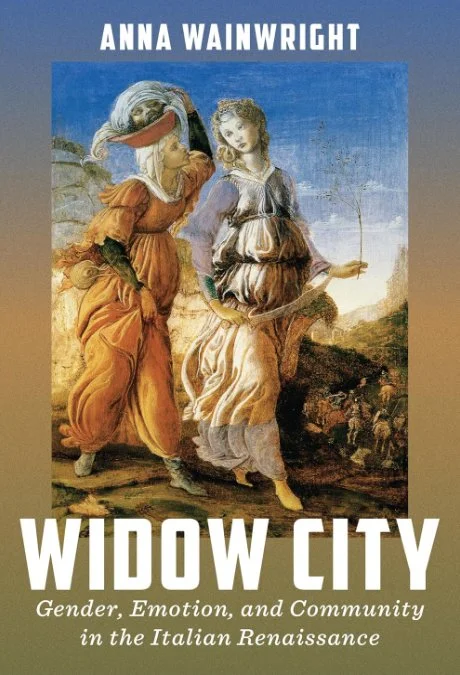
This week, I spoke with Dr. Anna Wainwright about widowhood in fifteenth-century Italy. Anna is Associate Professor of Classics, Humanities, and Italian Studies and core faculty of Women’s and Gender Studies, at the University of New Hampshire. She’s also the author and editor of many books and articles on widows, race, and Italy. Her new book is Widow City: Gender, Emotion, and Community in the Italian Renaissance. Our conversation on what it was like to be an Italian widow in the fifteenth century, how widowhood and politics went together, and the rise of widows as writers is coming up right after this.
Well, welcome, Anna, to talk about widows. This is exciting. As we were just saying before we turned on the microphones, we always need more women's history. So, it is a pleasure to have you here. Welcome.
Anna Wainwright:
Thank-you so much for that welcome. I'm thrilled to be here. And I obviously wholeheartedly agree we always need to be talking more about women's history.
Danièle Cybulskie:
Yes. And especially widows, because there are a lot of widows running around the Middle Ages. So, you've decided to talk about Italy in the later part of the Middle Ages. Why did you decide to do that?
Anna Wainwright:
Well, first of all, I just really like you saying, you know, widows running around, because that is actually how I picture them – especially some of them, like Birgitta of Sweden. I'm really... I am an Italianist. That's my background. And I am someone who believes strongly that you can't really think about the Renaissance without the late Middle Ages and vice versa, certainly in the Italian tradition. And I'm a big fan of the Three Crowns of Italian literature. We call them the Tre Corone: Dante – of course, everybody knows about Dante – Petrarch, and Boccaccio. And what I really was thinking in this project – or interested in looking at was – is the relationship between these really big canonical figures like Dante, Petrarch, and Boccaccio and what they're talking about in terms of widowhood, and then what women writers were talking about in terms of widowhood, because Italy had this fantastic explosion of published women writers, especially in the sixteenth century. So, I really didn't think you could do this kind of project without thinking about both those time periods, both in terms of watching the historical trajectory, but also the different kinds of voices talking about the subject.
Danièle Cybulskie:
So, when people are thinking about death and widowhood in the Middle Ages, I think they're mostly thinking about the Black Death. And that moment is relevant to the Three Crowns. But it’s –
Anna Wainwright:
Absolutely.
Danièle Cybulskie:
There's something else that's happening in Italy people may have heard of. And it's – we were just saying – it's, like, a super-complicated topic, but there's the Italian Wars that are happening in the later Middle Ages. So, tell us what's going on, because there's a lot of widowmaking in Italy at this time.
Anna Wainwright:
There is a lot of widowmaking, yeah. And, you know, when we think about the Italian Wars in Italy, we generally think of the specific Italian Wars from 1494 to 1559, which is – when you think about it – the major part of the Renaissance, when some of the most exciting art is happening. We think maybe of Michelangelo. We think of all of this kind of great poetry happening. But it was also a time of really intense violence and instability. And the wars began – the Italian Wars – in 1494 with the invasion of Naples. So, Naples was hardest hit. And I talk about Naples in the book – or at least at the beginning, first hit. But during this series of wars that were really initiated by outsiders – by the Holy Roman Empire, by Charles from France. So, there were all these outsiders invading the peninsula, trying to grab hold of it, wrest control of it, really, but with a lot of help from different Italian noblemen who were choosing sides. Across the peninsula, we saw major destruction of Italian cities, including really, most famously the 1527 Sack of Rome. But also, Florence was hard hit; as I mentioned, Naples. So, there was massive instability. But this also came after the really massive instability in the fourteenth century when the papacy moved from Rome to Avignon. And so, that led to a lot of political chaos, a lot of political violence, also an instability on the peninsula – on the Italian peninsula – and also a lot of real angst in terms of who were we? Who are we? Who are the Italian people? And who are these great cities that people had so much pride in – especially Rome, but also other cities?
Danièle Cybulskie:
Well, I mean, these conflicts between cities are happening sort of intermittently throughout the Middle Ages. Then you have the big Italian Wars. So, there's a lot of opportunity for there to be widows. I think one statistic that you pulled out – and I had to write it down, because this is so monumental – is that in 1427, there is a record in Florence of the population being 25% widows, which is huge.
Anna Wainwright:
It's enormous. And I mean, really, the first time I read that, I really had to keep checking.
Danièle Cybulskie:
Yeah.
Anna Wainwright:
And because it's... it's 25% of the population, right? Not of women, but of the population. And that's from this really important historical document, the catasto, or survey – census, really – 1427 in Florence. And that number is enormous. It's enormous for a couple of reasons. You know, I mean, it's certainly enormous because of death, right? 1427 is sixty years after the Black Death. So, in fact, the population had sort of built itself up again. But Florence was a city where there was an enormous amount of political violence, as well. But that statistic is due to another kind of… a little bit more mundane reason, but also kind of grim, which is that there's a really big difference in age between men and women when they got married. So, most women in the city of Florence, for example, were getting married between the ages of fourteen and eighteen, and most men were getting married in their twenties. So, already there was a difference of at least ten years, really, this age gap between most marriages. But then, of course, a lot of men were also getting married a lot older. It was a lot more common for men to get remarried than it was for women to get remarried. Although, of course, another thing is that women had virtually no control over whether they were going to get remarried or not. But because of these just a little bit more mundane reasons, there were extraordinary number of widows in the city of Florence. And that really mattered in terms of how the city of Florence looked, how things operated, and certainly just how kind of prominent the idea of widowhood was for people in the city of Florence.
Danièle Cybulskie:
Well, I think this is really making a case for why to study Italy in terms of widowhood. Because I'm thinking of Ruth Mazo Karras’ work on marriage and sexuality and… and how –
Anna Wainwright:
That’s so good.
Danièle Cybulskie:
Yeah. Wonderful, right? And how she says that Italy is a bit of an outlier, and that there is this younger tradition of getting married, which is… which is happening more there than it is elsewhere in Europe. So, it makes a good case for why we need to study Italy.
Anna Wainwright:
Yeah, I think that it's such an important work, and it's a really, really good point. And I think you kind of combine that sort of social history aspect with the fact that there was such an enormous number of women writers in the fifteenth and sixteenth century, and really because of the way Italy was organized, right? Not as a... as a country, but as a proliferation of city states that each had their own literary scene, right? And then with the explosion of print, and each had multiple printing presses, you suddenly ended up with just so many women writers. And I... I don't think it's really fair to say that there were more women writing, but there were more women being published, right? – in Italy than other places.
Danièle Cybulskie:
Yes. Yes, absolutely. You're making such important distinctions here. Okay, so when we're talking about widows – generally, when we talk about widows in the Middle Ages, these are the more powerful women because they've already been there, done that. They've been married, they have children, and all of that. But as you're seeing here – the research that you've done – you see that there are a lot of women who are having very little choice. So, tell us about this rock and hard place that these women are stuck between at this moment.
Anna Wainwright:
Definitely. And to cite another really important historian, there's a really beautiful and sad chapter – or essay – called “The Cruel Mother” by Christiane Klapisch-Zuber where she talks about the really horrible choices for especially young widows in Florence, in especially the fifteenth and sixteenth century, where women who were widowed but had children would often be forced to remarry – forced by their families to remarry – but would not be able to take their children. Would have to leave their children. But then, of course, because this is how… the sort of injustice, right? Even if they didn't want to leave their children – which I think it's fair to say, the great majority of them would not have wanted to leave their children behind – they were viewed as cruel, right? Viewed as having made this horrific choice and having gone with this new husband, even though it was almost always a choice of their fathers or their brothers. So, there was really, again, this sort of rock and hard place, right? There's... there's no way to really win, even if you do the thing that society is forcing you to do. There's also… Even though there was so much remarriage – or not so much remarriage, excuse me – but even in the case of remarriage, it was still frowned upon, right? Even if it was beneficial to the families, it was frowned upon. It was frowned upon by the church and, of course, it was really frowned upon by society. Because a good widow, – right? this sort of ideal widow, if you were following biblical models, if you were following the advice of all of these preachers and, you know, the patristic texts – a good widow was supposed to spend all of her time praying for her dead husband. And if she had time, praying also for other people in her community after the death of her husband. She was not supposed to get married. She was certainly not supposed to be having sex – even in a new marriage. So, there was quite a tension between what women were expected to do by broader society and then what kind of choices they had within their families.
Danièle Cybulskie:
Yes. And I do want to spend one more moment here, because it's not just about honour and it's not just about doing what your family says. There's also a lot of practicality here – especially if you're a widow, you have young children – there's money tangled up here in ways that have really tripped women up here. So, tell us what's happening with dowry and the money that they're supposed to be getting – and may not be getting.
Anna Wainwright:
Definitely. Well, and it varied a bit city to city, but something that was pretty universally true in Italy is that women got their dowries back when they were widowed. So, in sort of, you know, a theoretical way, that's fantastic, right? Especially if you're a rich widow, you suddenly have an exciting pot of money. But that money represented an extraordinary investment from the widow's family that they had back, and they would generally want to use again. So, usually, even if the widow got it back, that really meant more the widow's family, right? That got it back. But then there's… there's really wonderful work, also, on the dowry market and the inflation of dowries. If you want to look into work by Virginia Cox on this, in the case of Venice, it really kind of wrecked the economy, or inflated a lot of things and made things quite tricky. But, yeah, absolutely. The practicalities of this for really... for the rich and the poor were very complicated.
Danièle Cybulskie:
Yeah. And now we've got a picture, I think, of what it's like to be a widow. There are a lot of them. They are faced with these tough choices, and then they have people telling them what they should be like. So, let's start to talk about the ideal widow. So, you start with the Three Crowns. Tell us about ideal widows and widowhood.
Anna Wainwright:
So, I do think that there's a very particular kind of ideal Italian widowhood that you see in Italian literature coming out, especially of Dante and Petrarch and Boccaccio – these Three Crowns. And I'll speak to it. But they, of course, were, you know, getting ideas from lots of places. So, the sort of ideal Christian widow really comes from Paul – from St. Paul – and also from Jerome and Augustine. And they kind of all had the same idea, right? Which is essentially what I was speaking about before, which is a virtuous widow is someone who is meek, is chaste, who ideally does not remarry. St. Paul says older widows should absolutely not remarry. He'd rather younger widows not remarry. But he views women in general, but certainly widows who have had sexual experience and suddenly are deprived of sex – right? in their widowhood – he views them as really probably a risk, right? If… that they probably should get married again, so as not to – as he says – burn, right? “It is better to marry than to burn,” he says. But really, the ideal widow is someone who spends all their time praying alone – chaste – and really should do good for society. So, that's the kind of ideal Christian. There's then, also, the ideal kind of classical tradition, which has a lot of different branches, but you might think of the sort of weeping, tragic widow Andromache in The Iliad, or the widow Dido, who is supposed to remain faithful to her husband, but instead falls in love with Aeneas in Virgil. Although a lot of people will argue with you about whether that was the real Dido – it wasn't. Spoiler alert. But for Dante, Petrarch and Boccaccio, right? And especially if you look at Dante, and you look at his... certainly at his Comedy – right? At his Divine Comedy – widows are all over the place. In the most famous canto – arguably – of the Inferno, which is the canto of lust, right? Canto 5 when he enters in, and the really famous couple who he speaks to are Paolo and Francesca. No widows there. But the first people that you see are – the first shades, the first spirits that you… souls – that you see… are introduced to in Canto 5 are widows. Are the widow Semiramis and the widow Dido. And they've been put there alongside Cleopatra for their lust, right? They're being punished for their lust. So, those are what Dante would view as bad widows, right? They're widows who were lusty – not for their husbands, but after their husbands died – were lusty for other men. So, you see that kind of from the beginning, from the get-go. But then what is really interesting, I think, is in his Purgatory, right? Which is the second book of this three-book poem. And purgatory is a space where… You know, in hell – if you go to hell, you can't get out of it. That's it. It's over for you for all of eternity. Same with… with paradise, but with… purgatory is a space where you can move around. So, if you've sinned, but your sin is not so bad that you'll go to hell, you are sent to the mountain of purgatory, and you're supposed to work your way up. But what we see in purgatory is men who are there who are kind of stuck at the bottom of the mountain and would like to be farther up, but aren't. And they complain about the fact that their wives on Earth – their widows – are not praying for them. And you meet also a very... In one of kind of, I think, the more amusing scenes in Purgatory, Dante encounters an old friend and rival of his – Forese Donati – who's quite far along up the mountain for how recently he's died. And he says it's because his widow has been praying for him, you know, and he says, you know, with her weeping and tears and sighs, she has moved me up the mountain of purgatory. So, we get the sense in that poem we're meeting the souls who have died, not the widows, themselves. We're hearing about their power, for… hearing about their power on Earth. And so, there's this sense in Dante of deep loyalty, and that that is something that widows should be spending all their time on – praying for their husbands and really remaining kind of ambassadors for the dead, and specifically, keeping their husband's memory alive. So, that's sort of the Dante and what I call the ethics of widowhood. And you also see this in his earlier work, the Vita Nuova – which is the New Life – when he really is comparing himself to a widow when he's talking about the death of his own beloved Beatrice – or Beatrice – this woman who he, you know, encountered three times, never spoke to, but has dedicated his whole poetic project to. And he really compares himself to her and even talks about the city of Florence, itself, as a widow after Beatrice's death. But the idea really is that Dante is going to behave like a widow and never forget Beatrice. And that's really kind of the thrust of his project. Whereas Boccaccio, on the other hand – I think you could certainly say that he believes in the importance of the loyal widow. But what is really kind of most notable about his writing on widows is that he has a whole kind of stable of merry widows – of widows who are, in fact, what St. Paul was most worried about, right? These widows who are alone, sexually experienced, and having a really great time. And some of the widows, you know, in some of the stories by Boccaccio – it seems like a bad thing, right? It seems like you're supposed to disapprove of this woman. And there are, in fact, some stories that are really kind of egregiously misogynistic. Although sometimes I wonder if Boccaccio was actually trying a little too hard, right? Perhaps it was... This is more of a put-on. But then there are some that you're really quite sympathetic to, right? And this seems clear. So, I think that what you kind of see in both Dante and Boccaccio is both that there is an ideal – and that's someone who really plays by the rules, right? Remains faithful to their dead husband and is a contributor to community through that. But that there's an awareness of the danger of outliers and how they can kind of thrust a community – whether in purgatory or on Earth – into real disorder.
Danièle Cybulskie:
Yes. And I love that you brought up purgatory, because there is this responsibility that is put on widows. Like, if you don't keep praying for your husband, he's going to be stuck there. It's your job. You need to help him. This is something that you... you must be doing if you have any sort of compassion, right?
Anna Wainwright:
Absolutely. Yes. And that's a great point. Yeah. It's that if you have any compassion, right? And that… that is something that a widow is supposed to have. She's supposed to kind of harness that feeling, and harness that sympathy, for the greater good. Absolutely.
Danièle Cybulskie:
So, we have a lot of women who are reading at this time, and this is what they're reading. So, they're reading this before they become widows, or reading this after becoming widows, and they're seeing: this is what they're supposed to be. And as we were – we were talking about this just before we turned on the microphones – how this is kind of flat. It's… You're either on the pedestal or you're in the mud, and that's it. And you don't really have a sense of what it is actually like to be grieving, and to be conflicted, and to have all of these issues, even though you have sort of beautiful renditions of what… what widowhood is supposed to be like in poems, like Dante's poems.
Anna Wainwright:
Totally.
Danièle Cybulskie:
You have, all of a sudden, this sort of uncomplicated picture. And this is what we are working with in the fourteenth century, especially as women, right?
Anna Wainwright:
Yes, absolutely. It's so... I mean, it's… It's a clear binary, right? It's just, you know, you've either got the saintly widow, or you've got the merry widow. And one is very boring and one is very dangerous, essentially, right? Or at least, you know, that's my value judgment, let's say. And I think that what you see – or what I see first with a couple of figures, including Christine de Pizan – who, of course, you know, is definitely a French writer. She was writing in French, but she's also Italian. And she viewed herself very much, I think, as an Italian writer – was deeply, deeply engaged with, especially Dante, but also, of course, Boccaccio. What you see in her writing first and then... and then other people later is a real push against this kind of nuance-free zone, let's say. So, she first of all addresses widowhood – or almost kind of attacks the subject of widowhood – in a couple of different ways. So, Christine de Pizan herself was widowed as a young woman, and her father had died, so her mother had become widowed in the same period. So, we tend to think of her as the first woman – at least first European woman – writer who really made her living by writing. She had no choice, right? She actually needed to support herself, and she happened to be – lucky for her – very good, right? And also, very well connected. But she is really best known for her book The Book of the City of Ladies, which is a beautiful, allegorical dialogue that was a response to deeply misogynistic texts about how horrible women were and how disgusting, right? And certainly sexually, you know, gross and everything like that, and, you know, promiscuous. So, in that book, which is where she literally – or not literally, right? But allegorically – builds a wonderful community of only women. There are a lot of widows in that community. They are widows from the historical record, and they are widows from classical Greece and Rome. And so, she describes really impressive, exemplary women who are widows. Boccaccio also did this in his Book of Famous Women. But I do think it's more significant in the way Christine writes it, in terms of her kind of crafting of widows, especially because she's literally building this kind of allegorical city, whereas he was just writing biography of them. So, that's kind of her most famous work on widows. She also wrote really beautiful, impressive and unusual grief poems – poems of grief in her widowhood – where she is really lamenting in a quite extraordinary way. But I think her kind of most interesting thing that she wrote as a widow was in this book about The Mutation of Fortune, in which she describes what happened to her after her husband died. And she doesn't describe grief. I mean, she... she does. She's talking about being on a boat and being rocked by waves, and there's this fantastic shipwreck metaphor. But then she talks about what happens to her, right? Not to her reaction to her husband, what happens to her. Which is... She talks about Fortune coming and literally changing her – literally transforming her from a woman into a man. And she talks about this very literally, right? She talks about how her muscles became stronger and her voice deeper. And she's really articulating a full body transformation, or even sex change. And there's a lot of super exciting work being done on this in trans studies that takes this very literally. And I think that that is really exciting work. I think that what's also going on there is a kind of pointing to the… just kind of utter change that happens to Christine, what she is articulating when she becomes a widow, that it's... it's a full-on bodily transformation and it's a... it's a gendered change, as well. So, that's totally wild and different, right? There's a lot going on there. It's really rich, and I really do think it can be interpreted from a lot of different angles. And I… I think it's just endlessly rich. But it's very different from what you're seeing with Dante. It's very different from what you're seeing with Boccaccio. And it has to do with what happens to the widow, themselves, not to this kind of flat – you know, as you said – character. So, what is exciting, you know, in the sort of post-Christine space, as well, in Italy is you see a lot of widows writing and publishing their work, and really writing about the widowed experience – mostly in poetry, but you also see letters that are really interesting and remarkable. And then there's also some stuff happening in dialogue later, as well, where you really start to see not just, you know, whether someone is a good widow or a bad widow, but how they feel – how they feel about themselves in this space and what they kind of want to do with their time. Sometimes, it's writing a lot of poems about grief, but sometimes it's doing totally different things. Having intellectual, interesting, exciting conversations with men, or having conversations about, you know, wild, exciting feminist topics and nature with other women. In the case of Moderata Fonte’s The Worth of Women.
Danièle Cybulskie:
Yes. Well, one of the things that makes me just such a big fan of Christine de Pizan is she... She talks about her husband in sort of ideal ways, like these grief poems. As you say, they're so beautiful and they feel heartfelt to me. They don't feel like just a structure that she's built.
Anna Wainwright:
Agreed.
Danièle Cybulskie:
But she also talks about the frustrations. Like, she's very angry at him, as well, because he's left her with all these debts. He didn't even tell her they were there. And she allows this to come out in her writings. We wouldn't know about it otherwise. But… she's idealizing him in some ways. But she's also like, this is really difficult for reasons that are down to his choice. And now I'm dealing with the fallout. And so, it's really complex in ways where – I imagine Dante would want you not to talk about the debts that you're paying on behalf of your husband, right?
Anna Wainwright:
Sure. Absolutely. And you know, I mean, I think that's a really, really good point, is that there's just a kind of – I mean, this is not the best word for it, but – like, a nitty-grittiness to a lot of poems and other writings by women writers – by widowed writers – that you're certainly not seeing in the idealized depictions by Dante, or the misogynistic or typecast depictions by Boccaccio. You're seeing a real layering of grief with money, and the sort of day-to-day. And you know, Birgitta of Sweden is another really fantastic example of this, who – her national origins are a little more slippery, right? She is from Sweden, from the north, but she lived for the last two-and-a-half decades of her life in Rome. And she has some really interesting visions in her… in her revelations. And she has these kind of remarkable visions where her husband comes to her from purgatory and they're, like, very practical conversations. This is a business meeting with her husband, right? Some stuff that he had not had time to let her know. And he also tells her, you know, to pay off some debts. And here's what you should need to do. And here's… I need you to pray for me this many times, and this many times. This is very perfunctory. And it's funny because she has incredible, majestic revelations where she, you know, encounters the Virgin Mary, and encounters Jesus. These are very different, right? These are not thrilling visions at all. This is just kind of a business… really, a business meeting. So, we do see that. You're absolutely right. It's a… it's a great point. And you really don't see that in the more canonical texts about what widows should be doing.
Danièle Cybulskie:
Yeah, it does seem to be a shift. And then you have women later on – who are the women who you spend most of the time with in the book – who are talking about how they actually want to be widows. So, I'm thinking about Vittoria Colonna saying, I don't know that I want to be like these widows over here. I think I'm going to be like this. And so, this sort of self-referential way of thinking about yourself as a widow has really changed.
Anna Wainwright:
It definitely has. And yeah, I mean – and Vittoria Colonna, in many ways, is kind of the heart of the book because she is someone who I think was so attentive to her own identity as a poet and as a widow, but was in… in her own way also very slippery. But she absolutely… I mean, she is, you know, one of the most excellent, exquisite Petrarchan poets of the sixteenth century. And so, that was kind of a great part of the reason why everybody loved her so much, right? And she was already a well-known poet before she became a widow. She wrote lots of poems before her husband died, but she really came into her own after he died in 1525 – during the Italian Wars, by the way – from wounds that he sustained at the Battle of Pavia during the Italian Wars. And so, she was in that way, very much a war widow. And she, she crafted herself that way, as well. And I think that that's a big part of why she was viewed as such an ideal widow. But yes, she spent a huge amount of time in her poetry thinking about what kind of widow she was going to be. And from the proemial sonnet that I spend a lot of time on – and I think it's just a gorgeous, gorgeous poem, but also really, really interesting in how she's copying Petrarch, but then other people later really copied her. So, in the proemial sonnet, which is the opening sonnet of her Rime or Rhymes – Poems – which by the way, was pirated the first time. It wasn't her decision to put it first, but it almost always went first. And it's just totally appropriate to have it go first. She talks about her poetry and what she's doing. The first word of it is scrivo, which means “I write”. And she says I am writing only to relieve my suffering – or to really kind of, like, expiate my suffering – not because I care about style. And the whole poem is about that – is about why she's doing this. She's doing this to move through her grief and that all of her words are words of sadness. They are not words that she is choosing for any kind of, like, poetic reasons. But that's nonsense, right? Because it's a really, really good poem, and everybody who would have read it would know it was a good poem because she was best friends with the most important Petrarchan stylist of the day – Bembo – and everybody who was reading it knew exactly how good this stuff was, and she knew how good it was. So, she was using it as her subject matter, but in a very interesting way. And then, yes – as you say – there's another really fantastic poem where she's picking through all the different exemplary widows and women from the classical world and saying, like, maybe I'll be this, maybe I'll be that. She's very focused on what kind of identity she's going to have.
Danièle Cybulskie:
Well, this is such an important moment, I think, in – as we're saying – women's history, and the history of literature, where she's engaging with this. And she does have all of those tricky bits that we... we see throughout the way that people are writing in the Middle Ages, where, oh, I'm so humble, I don't actually know how to do this. It is essential to the way that you're supposed to be writing these things. But as you say, she… she knows very well what she's doing, and I think that she's such a good example because people hold her up as an example of not just putting your grief into poetry, but doing this sort of privately. So, she's almost performing a privacy, which is important to widowhood at this moment, right?
Anna Wainwright:
Absolutely. I think that's really lovely to say. I love that. Performing a privacy. You're absolutely right. She's performing privacy. And she's also really kind of modeling for people, right? What… what they should be doing with their grief, as well. And this is certainly really useful during the Italian Wars when there are so many – as you said – so many people who are becoming widows. So, many women are suddenly widowed, and they're widowed at the same time as many other people, right? So, it becomes a… becomes this kind of collective experience – as I mentioned, in terms of Dante and the city of Florence, there was a real trope in the Middle Ages and Renaissance that was picked up on during the Italian Wars of the city itself as a widow after any kind of grief or invasion. This… this comes from the Book of Lamentations in the Old Testament – or the Hebrew Bible. But it was something… You know, people would talk about the city as a widow, itself. So, she becomes a really important example for how to move through grief. And she's kind of offering a playbook in a way. You think about that poem that you mentioned where she's kind of looking through the different examples and saying, oh, maybe I could be like this. Oh, maybe I could be like that. That becomes, I think, very useful for people who are thinking about it not just in terms of the poetry that they're reading, but what they're experiencing in their own lives and experiencing kind of all around them.
Danièle Cybulskie:
Yes. And something that you're getting at is such an important part of the book, as well, where widows are… They're supposed to be sort of private in their grief, but not really, because they're supposed to be performing it, with the widow's weeds and everything like that. But they're also meant to be sort of political, and that people are looking to them for an example of how to be a good citizen. And I think this is, again, not completely specific to Italy, but very specific to Italy, in some ways. So, tell us about how widows are supposed to be political. Sort of.
Anna Wainwright:
Right. Sort of. Right. It depends on... I call the book Widow City because it's sort of an allusion to Christine de Pizan and her Book of the City of Ladies, but also to this very clear connection that you see over and over again – this connection between the widow and the city, right? Because especially in times of political crisis, when a city is invaded, who do we see as kind of the symbol of that? Are the… are the widows left behind, right? Are the widows and children left behind. So, oftentimes, widows are kind of on the front lines of loss in that way, but they also then have a major role after the loss – of both, you know, the prayer around purgatory for their husbands, but also because they're no longer in service to their husbands in life, they have a little bit more time on their hands to be of service to their community. And so, to give an example, in the city of Florence, we certainly see this in how popular the Hebrew widow Judith was, who is from the, you know, Book of Judith. And she's a famous figure who was really put up as a hero because she was a kind of meek little widow who spent all of her time alone, but then saw her – the Hebrew – people in need, when they were being attacked, and went and seduced – kind of took off her widow's weeds, put on some much more sexy clothes from when she was still married, and goes and seduces the horrible General Holofernes and ends up assassinating him. And then, you know, chops off his head with the help of her maidservant, and delivers the head to the male leaders of the Hebrews, and then goes back to her life of quiet isolation. And so, it's a very, you know, gruesome story, but it's also a story of a woman and a widow doing what she needed to do in service of her people. And this story became… People may know it from the incredible, gory Caravaggio painting of this, or there's also a really fantastic Artemisia Gentileschi – also quite gory – version of this, both from the seventeenth century. But if you've been to the city of Florence… If you're standing outside the Palazzo Vecchio – right? in the Piazza Signoria – the Palazzo Vecchio is that really beautiful stone palace that still is the town hall of Florence. And that's where the David originally stood. And it's where there's the copy of the David. If you look immediately to the left of that giant statue of David, there is a statue by Donatello of Judith, and she's standing over Holofernes and has slain him. So, that statue – and that story – were really crucial in the city of Florence, as the Medici kind of took hold of that story as a symbol of fighting against tyranny. So, she became really a symbol of anti-tyranny, of liberty, really an allegorical representation of civic virtue to a degree, right? Even if that civic virtue meant doing something pretty gross or pretty violent in order to help your city. And so, this is something that you also see in the way widows are held up and praised after their husbands die, who often take on the duties of their husband. One of Vittoria Colonna's best interlocutors, Veronica Gambara, was not just a really fantastic poet, but she was also really a prince, right? I mean, she became the ruler of her principality after the death of her husband, and she had an army. And these women really had to do a lot of things, often in order to maintain control.
Danièle Cybulskie:
Well, I think this is so important in the context of the time, because if you have huge numbers of the population – and as you say, not just the population of women, but the population – being widows, then you need them to not step back. If you're still in conflict with another city, for example, or with an enemy, you need them to still be engaged, because if they totally become unengaged, or go to a convent or something, there is chaos. So, it's interesting how women are still sort of caught in that catch-22 that we always seem to be caught in, where you're supposed to be dignified and sort of private, but you can't step back too much because we still need you to function. It's important.
Anna Wainwright:
Absolutely. Totally. I know. Couldn't you just do everything all at once? I know. No, absolutely. It's… it's such a great point. And to go back to Colonna, she is a great example of this – of someone who really wanted to step back. She really wanted to join a convent, and her brothers did not want her to, right? Because she was simply too valuable. I think they really wanted her to get remarried, and I think it was extremely shrewd to just write a lot of poems about how devastated she was over the death of her husband. Not that that's the only reason she was writing them, but it was a useful strategy, as well. But absolutely. I mean, there's a huge utility to having all these women who are unattached do things that are helpful for society, whether that is, you know, taking on the literal work of one's husband or, you know, more symbolically. And you see this – this is not something I went into in the book, because I was really looking more at the literature – but this is one thing you see both in Italy and then also in, I would wager, most countries. But I'm familiar more with the example of the Low Countries that you see, oftentimes, the widows of printers taking over the printing press, right? Because especially if you have young children, who else is going to do it? You have to if you want to keep this in the family. So, we certainly see this in the more bourgeois classes, as well.
Danièle Cybulskie:
Yes. In fact, we were talking about women working in the Netherlands just a couple months ago on the podcast, and how there is a weird space where sometimes it's better to be a widow for longer, and sometimes you don't want to be a widow. And I think that… that something that you brought up just now – that creating a personification of yourself or making this your whole personality is a way of protecting yourself in some ways. And you're talking about Colonna being someone who is maybe keeping herself from being married by making sure that everybody knows that she's a grieving widow. She's the most famous grieving widow that there is around. So, you can't really neutralize her. She's probably making things work for the family in that way. And thinking about Christine, something that you say here, I think is so valuable, where she's almost neutralizing herself – you say, I think, that she's making herself unthreatening. She's not a threat to people because she's a widow. She's taking on this personality so that people don't think that she's going to be, you know, batting her eyelashes at these French princes, for example. So… so, becoming a widow as your personality is sometimes self-defense at this moment, for sure.
Anna Wainwright:
I think that's really true. And I think you certainly see that absolutely in the case of Christine, who, you know, of necessity needed to be in public view, but did not want to, you know… that was something that was simply not… not normal – to be the only woman, but not be a courtesan. Around a bunch of men. And that's certainly the case of Vittoria Colonna, too, who had, you know… had really important correspondences with men. Had correspondences with controversial men right around the reform movement. So, I think that's really, really important. You also see it with Birgitta of Sweden, who was one of those women who I like to think of as kind of scurrying around the city, right? She was really running around Rome talking to different people, trying to really litigate for the return of the papacy from Avignon. But she was dressed in widow's weeds, right? She was not a threatening figure. She was kind of a sexless figure. Unless you were Boccaccio.
Danièle Cybulskie:
Yeah, exactly. I'm thinking about the fabliaux that Boccaccio is leaning on in that whole tradition of widows having… Having a lot of fun. One of the things that you mentioned that maybe we should mention, as well, is that widows sometimes did have to take on these relationships where it's not an official marriage, but they also need to support themselves, which is something that we need to remember, as well. So, the whole idea of widowhood is really a complex one, I think, is what you're getting at here in the book.
Anna Wainwright:
Absolutely. It's very complex. And I think that it's really like any kind of category of identity, or a category of womanhood, certainly. It is very complex, but it was also something that was just deeply visible in society, right? And so, thus, it took on a kind of specific resonance. It took on a specific resonance around grief and loss, and it took on a really specific resonance, I think, around civic responsibility. But it was absolutely quite nuanced. And the experiences of widows were, themselves, of course, totally nuanced and diverse.
Danièle Cybulskie:
Yeah. And I think that that is such a great point that you're making right now, in that as soon as you become a widow, you are so conspicuous, right? And I think we do see this in people's grief right now. People are not wearing black all the time. But if, you know, somebody has just had a bereavement, they're conspicuous in ways that maybe they're not elsewhere in their lives, right? And so, that becomes, like, thinking about a performance of grief. And I don't mean this in a cynical sense. Just, like, if everyone's looking at you, you're thinking about how you're presenting yourself. And so, there's all this pressure for women to sort of live with their own experience, their own existence – like, we're talking about Christine and how her debt is difficult – but also knowing that everyone is looking to you to see if you're doing it right. There's a lot of pressure.
Anna Wainwright:
There's a lot of pressure. I think it's very self-conscious. You know, I have been thinking a lot, sort of more contemporary examples to relate to. You know, I mean, you can certainly think about the, you know, Jackie Kennedy widow, right? as someone who really became an icon and people we're looking at. I think a lot about the pictures of her. The images of Coretta Scott King, right? As these kind of virtuous figures who are representing their husbands. And I think we're very conscious that they were representing their husbands. But you even see it in, you know, more kind of of the moment figures. Like, Erica Kirk is very, very – I think – self-consciously performing, you know, widowhood. And it's quite interesting to watch that. Or, you know, Aubrey Plaza just got a huge amount of flack for having a baby shortly after her widowhood from her estranged husband. So, it's the… You know, this is still something that is kind of in the ether and people are thinking about.
Danièle Cybulskie:
Yes, I think that that's so correct in that people are still looking and counting on their fingers. How long has it been since you became a widow? And is this appropriate? And we're still sort of navigating – well, this is appropriate here, but it's not appropriate here. And so, the people who are in it, they are aware of the spotlight that is on them and… and how they do need to be performing. And I think that your examples – Jackie Kennedy, for example, she is tied to widowhood for the rest of her life, and she has to be performing it correctly. And even though she has, you know, a life beyond that, everybody is always thinking of her in those terms. And I think we do need to look back on the Middle Ages in that way, especially in these city states you're talking about, where people are very visible. And if they're writing, they're even more visible.
Anna Wainwright:
You know, if you were a public woman in one of those city states, you probably had had a marriage portrait done, or something. And so, you are really tied kind of visually, as well, to your husband. And yeah, you'll be tied to him for the rest of your life – and into eternity, as Dante would have it, as well.
Danièle Cybulskie:
That's right. And you need to be thinking about this all the time, and it is your responsibility to save your husband from the flames. So, get on that.
Anna Wainwright:
Absolutely. Get on that. And if not, you will hear about it in your favourite literature.
Danièle Cybulskie:
You will. Yeah. So, there's one more question I don't think that you address within the book, and that is the women that we're talking about, especially in the Italian Wars – this is after the printing press. So, do you have a sense of how many other women are reading widows’ works and thinking about them sort of on their own time, when they're... It's just them and the page in front of them. Do you have a sense of how widely read these widows were amongst other widows?
Anna Wainwright:
That's such a beautiful question. I mean, I don't have exact stats, although I may sort of point people to Brian Richardson's wonderful work on readers in Italy. And he's so good at looking specifically at women as writers and readers in all of his work. But what I can say is that people like Vittoria Colonna – before her work was published, it was being passed around in manuscript, but really, really broadly, mostly amongst the elites. But then when it goes into print, her work had several printings and printings in different cities. The work also of people like Veronica Gambara was really quite widely read, and it was not only read during their lifetimes, but it was read after. So, in 1559, there's an extremely important edition that comes out out of Lucca that is a collection of poems by different women writers, and there's numerous poems in there. And that was something that, again, had many printings. So, I think that – especially of the kind of powerhouses like Colonna – if you were a literate woman in Italy, certainly of the upper classes, you were really probably reading her stuff. And the best evidence – I mean, there are people who do book history, like – and again, Brian Richardson would have a fantastic answer for this right away, I think, would be able to tell you exactly how many editions are still to be found in different cities – but I think what I have found most intriguing is that you really do see – certainly of Colonna, but also of other women – you see imitations of their widowed writing by other widows and by other widows in other cities, right? So, in the case of Colonna, for example, you see widows kind of riffing off that sonnet I mentioned about why she's writing. You see Francesca Turina Bufalini do it in Umbria, you see people doing it in Lucca, you see people doing it in Florence. And Colonna was from Rome, right? and spent a lot of her time in Naples. So, you're seeing people really kind of across the peninsula imitating her in their own widowhood poetry. So, I mean, I think that that certainly tells you that they were reading her. And Turina's gotten a lot of attention of late, right? In the last fifteen years or so, there's been a lot of really nice scholarship on her, but she wasn't a super-famous writer at the time. She was an upper-class woman who read a lot and wrote a lot of poems. So, I think what you can kind of extrapolate there is, first of all, that a lot of women were reading this, right? That this was accessible. But then also, that women were writing poems in imitation of that style, expecting other people to recognize the imitation, right? Because imitation was a good thing. So, they would want people to know that they were imitating that Colonna sonnet. So, that's kind of what I can answer you about that. I mean, especially of this Petrarchan poetry. This was the most popular thing for people to read, and Colonna's work was really, really popular and widely read.
Danièle Cybulskie:
Well, it occurs to me – thinking about this, and thinking about this tradition, and imitation as well – is that as people continue to be widowed. This is just part of human existence. You'd have some women giving these poems – these sonnets – to other women. It's a common experience, and maybe these things are comforting literature, not just high literature – you know what I mean?
Anna Wainwright:
Oh, absolutely. I think it's really… can be viewed very much as a kind of salve and almost a kind of prayer, is what I was going to say. Absolutely. I think that's really quite true and quite lovely. And you see it even… you know, people are imitating in widow poetry, people are imitating Colonna as late as the eighteenth century. It really stayed with people, and it was certainly a tool.
Danièle Cybulskie:
Yeah, for sure. So, for somebody who has spent so much time thinking about widowhood, thinking about poetry in Italy and all these things, what do you want to leave people with if they come across writing about widowhood by women, for example, in Italy? What do you want to leave them with, thinking about?
Anna Wainwright:
Oh, great question. So, I think what I would want people to really think about is what do you think that this writer is trying to get across, right? What is she trying to communicate about her own identity through this work, and not just about her identity as a widow, but her own unique nature. Because I think – especially with Colonna on out – you really do see quite a lot of originality in this work. So, that's what I would suggest that people think about when they're reading any work by a widow of any time period.
Danièle Cybulskie:
Yes. Well, thank-you so much, Anna, for coming on and telling us all about widowhood. It's been a fascinating conversation. Thanks for being here.
Anna Wainwright:
Oh, it's so fun. Thank-you so much.
Danièle Cybulskie:
To find out more about Anna’s work, you can visit her faculty page at the University of New Hampshire. Her new book is Widow City: Gender, Emotion, and Community in the Italian Renaissance.
In this episode, we mentioned Christine de Pizan – a widowed writer who’s one of my absolute favourites. In the course of Christine’s career, she didn’t just write sad songs about her late husband. She also wrote political advice to the young heir to the French throne. In her Book of Peace, I came across a good piece of advice that is typical Christine: simple, pithy, and timeless. She says, “it seems to me that wisdom in speech lies in two principal things: one is in speaking wisely, and the other is in wisely keeping silent.”
For more of Christine’s sage advice, check out The Book of Peace, edited by Karen Green, Constant J. Mews, and Janice Pinder.
Thank-you for supporting the podcast as you do each week by sharing, letting the ads play, buying yourself some sweet merch, and especially by becoming patrons on Patreon.com. I hope you patrons are enjoying the new ad-free RSS that allows you to listen on the go on your favourite podcast platform. And if you’d like to be one of these cool kids listening ad-free and reading exclusive articles each week, please check out patreon.com/themedievalpodcast.
For the show notes on this episode, a transcript, a collection of the books featured on The Medieval Podcast, and more, please visit medievalpodcast.com. You can find me, Danièle Cybulskie, on social media @5MinMedievalist.
Our music is by Christian Overton.
Thanks for listening, and have yourself a fantastic day.